October births fall 22 percent as population shrinks again
Taiwan recorded 9,458 births and 15,908 deaths in October 2025, extending its population decline to a 22nd consecutive month. Ministry of the Interior figures put the population at 23,310,853 at the end of October, down 6,178 from September.
Contents
- October births fall 22 percent as population shrinks again
- How births, deaths and migration fit together
- Why a monthly increase offers limited relief
- Housing costs and work shape family decisions
- Marriage and divorce figures add another dimension
- Taiwan approaches the super aged threshold
- Care, housing and transport needs are changing
- A smaller population would reshape employment and public finances
- Migration provides only a small buffer
- East Asia faces similar pressures
- Family support and labor measures must work together
- Key Points
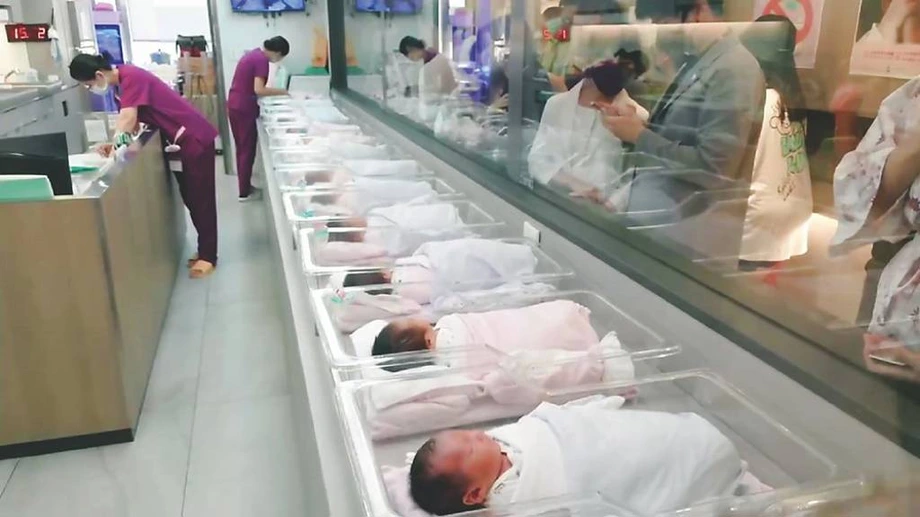
Deaths exceeded births by 6,450, creating what population statistics call a natural decrease. A net migration gain of 272 people softened the fall slightly. Births were 22 percent lower than in October 2024, despite a modest increase from September, while deaths rose from both the previous month and the previous October.
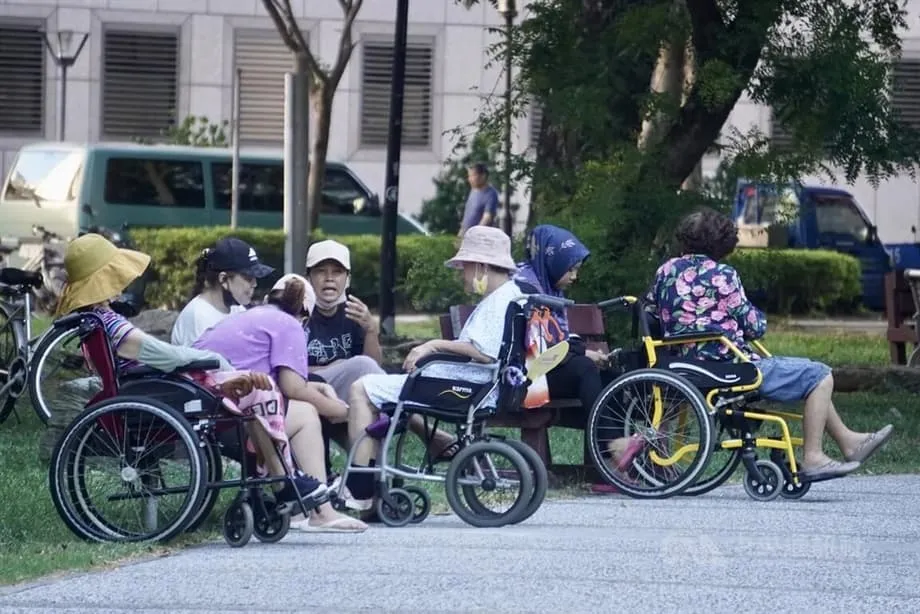
Taiwan also moved closer to becoming a super aged society. People aged 65 and older accounted for 19.9 percent of residents, just below the 20 percent threshold used by the United Nations. Children aged 14 and under made up 11.55 percent, and people aged 15 to 64 accounted for 68.55 percent.
The figures bring together two changes that affect households, employers and public services: fewer children are being born, while a growing share of residents are reaching older age. Taiwan's population began declining in 2020, with only brief pauses interrupting the broader downward pattern.
October's small rise in births from September offered little relief against the much larger fall from a year earlier. Taiwan had already registered its lowest annual birth total on record in 2024, with 134,856 babies born. The direction through 2025 remained weak, even with occasional monthly increases.
As of November 12, 2025, the latest figures placed Taiwan close to a demographic milestone that would affect everything from staffing hospitals to supporting pensions. The immediate challenge was already visible in October's totals: the number of deaths was far higher than the number of births, and migration covered only a small part of that gap.
How births, deaths and migration fit together
The Ministry of the Interior recorded a crude birth rate of 4.78 per 1,000 people and a crude death rate of 8.03 per 1,000 for October. Crude rates express births or deaths relative to the population, making it easier to compare their scale than by looking at raw totals alone.
Natural population change is calculated by subtracting deaths from births. October's 9,458 births minus 15,908 deaths produced a loss of 6,450 people. Adding the net migration gain of 272 brought the final population decrease to 6,178.
October's birth total was equivalent to roughly one baby every 4.7 minutes. The death total was equivalent to about one death every 2.8 minutes. Those figures show the size of the gap in everyday terms, even though births and deaths do not occur at evenly spaced intervals.
Taiwan has high life expectancy by global standards and broadly accessible medical care. Its expanding older population nevertheless keeps deaths at a higher baseline relative to births. With many more people reaching older ages and fewer babies arriving, a rise in births in a single month has limited power to change the national direction.
The recent demographic sequence shows how the October figures fit into a longer trend:
- 2020: Taiwan's population began a period of decline that continued with brief pauses.
- 2024: Annual births fell to a record low of 134,856.
- October 2025: Births totaled 9,458, deaths reached 15,908 and the population fell for the 22nd consecutive month.
- End of October 2025: Residents aged 65 and older accounted for 19.9 percent of the population.
Why a monthly increase offers limited relief
Taiwan's fertility rate has been estimated at around 0.85 to 0.9 children per woman in recent years, among the lowest levels in the world. The fertility rate describes the average number of children a woman is expected to have over her lifetime. It measures a different aspect of population change from a monthly birth count.
Replacement fertility is about 2.1 children per woman in developed economies. Taiwan's estimated rate is far below that level, leaving each new generation much smaller than the one before it unless migration changes the balance.
Monthly births can rise or fall because of holidays, school calendars, seasonal patterns and decisions about when to have a child. Some families aim for birth years considered lucky in the lunar zodiac. Even years regarded as auspicious have not changed Taiwan's broader pattern of flat or declining births.
October illustrates the difference between a short fluctuation and a longer movement. Births rose modestly from September but were still 22 percent below October 2024. Economic security, working conditions and practical support for raising children influence the trend over several years, and those conditions generally change slowly.
Housing costs and work shape family decisions
Young adults in Taiwan face several pressures at the point when they might otherwise start families. Later marriage, expensive housing in major cities, long working hours and substantial education spending all weigh on decisions about having children.
Home prices in Taipei, New Taipei, Taichung and Hsinchu have outpaced wage growth. Rent or mortgage payments can absorb a large share of income, leaving less room for the costs of raising a child. Financial support schemes are available, but expenses that families must pay themselves remain a deterrent.
Childcare availability adds another constraint. Places can be scarce in popular districts, while private daycare and programs after school bring substantial monthly bills. A family considering a first child must weigh both the cost of care and whether a suitable place will be available.
Long working hours, rigid schedules and limited access to flexible work make paid employment difficult to combine with caregiving. Many women report that career penalties and an uneven division of responsibilities at home make parenthood less feasible. Mothers face a greater risk of stalled earnings and slower promotion, even with legal protections.
Fathers take less leave than policy allows, leaving more caregiving to mothers. Workplace practices and social expectations change gradually, so formal support does not immediately remove the practical pressure on families. Couples who want children may delay a first birth and eventually have only one child or none.
Later family formation has also increased the role of infertility treatment. Public subsidies for assisted reproduction have expanded, and clinics report rising demand across East Asia. Costs, access and success rates still vary, making the route to parenthood complex and time consuming for many couples.
Marriage and divorce figures add another dimension
Taiwan recorded 10,735 marriages and 4,511 divorces in October. The crude marriage rate was 5.42 per 1,000 people, while the crude divorce rate was 2.28 per 1,000.
Same sex couples accounted for 307 marriages and 77 divorces within those monthly totals. The figures sit alongside a broader slowdown in family formation, with later marriage among the factors weighing on births.
Marriage decisions, housing expenses, career demands and childcare arrangements are connected in the practical choices facing couples. Delaying the point at which a family is formed can also shorten the period in which couples try to have children, contributing to the pattern of one child or no children.
Taiwan approaches the super aged threshold
Taiwan's share of residents aged 65 and older reached 19.9 percent in October, just short of the UN benchmark of 20 percent for a super aged society. The steady pace of aging and the low number of births make crossing that threshold likely soon, although no date was given.
Taipei City already had the highest share of older residents, at 24 percent. Hsinchu County had the lowest, at 14.95 percent. The gap shows why local governments face different levels of demand even while the national population moves in the same direction.
Children aged 14 and under accounted for 11.55 percent of Taiwan's residents, compared with 68.55 percent aged 15 to 64. The share in the working age group will shrink over time as larger generations retire and smaller generations move into adulthood.
Demographers use the dependency ratio to describe the number of children and older people relative to the working age population. Taiwan's ratio is rising as the older group grows and the younger group shrinks. Without a recovery in births or a sustained increase from immigration, fewer workers will be available for each retiree, complicating the funding of pensions and health care.
Median age offers another way to describe an aging population: it is the age at which half the population is older and half is younger. The October figures focus on age groups, with the near 20 percent share of older residents showing how close Taiwan is to its next demographic milestone.
Care, housing and transport needs are changing
County and city governments must plan for more long term care, assistive services and housing suited to older residents. The differences between Taipei and Hsinchu County, alongside the wider urban and rural gap, make local planning central to the response.
Health care capacity, transportation, training for home care workers and public spaces that older people can use safely are becoming core responsibilities for local authorities. Demand extends beyond medical treatment to the daily support that helps residents remain mobile and manage life at home.
Cities are testing designs that make everyday movement easier, including transit without physical barriers, safer sidewalks and community care centers. These changes address needs already growing among older residents, while the decline in births shapes the population that will use those services in the decades ahead.
A smaller population would reshape employment and public finances
National Development Council projections point to a population of about 15 million by 2070 if low fertility persists. The share of residents aged 65 and older could approach one in two. A change of that size would reshape the labor market and sharply increase demand for long term care.
Pensions and health insurance would face greater pressure as the balance between workers and retirees changes. Fewer taxpayers would have to support larger spending on health care, care services and retirement benefits. Fiscal planning is underway to stabilize health insurance and pension funds as the population ages.
Policymakers are weighing changes to retirement age, contribution rates and benefit formulas. They are also encouraging lifelong learning and participation in employment later in life. How much adjustment is needed will depend on fertility, immigration and productivity over the next decade.
Employers face a smaller pipeline of young workers, fiercer competition for talent and higher wages in key fields. Companies are already increasing their use of software and robotics to maintain production with fewer workers.
Taiwan's widespread use of digital technology, fast fixed broadband and growing adoption of cloud services can help businesses produce more with the workers they have. Applying technology to care work and service jobs is more complex, however, because those activities involve different tasks and needs.
Population change will also affect where people live. Some rural townships face steep losses of residents, while a few urban centers continue to attract people seeking jobs. National population decline can therefore occur alongside continued demand for housing and services in particular employment hubs.
Migration provides only a small buffer
Taiwan's net migration gain of 272 in October offset only part of the natural decrease of 6,450. In some earlier months of 2025, the number of people leaving slightly exceeded the number arriving.
Students, professionals, caregivers and family members moving to Taiwan can slow population loss over a full year. The inflows needed to fully counter the gap between births and deaths would be very large.
Taiwan has widened recruitment of caregivers and skilled workers in recent years. The lasting effect depends on whether migrants stay, how well they can settle into society, and how many choose permanent residence and raise families.
Immigration policy remains sensitive. Clear routes to residency, worker protections and support for families are central to successful programs. Recruitment can address immediate staffing needs, while retention and settlement determine how much it changes the population over time.
East Asia faces similar pressures
Low fertility is shared across high income East Asia. South Korea's rate is near 0.7 children per woman, Hong Kong's is below 0.8, Taiwan's is around 0.85 to 0.9, Japan's is about 1.2 and China's is near 1.0. All are far below the replacement level of about 2.1.
Each country or territory in this group is aging rapidly. Governments have tried substantial incentives, tax breaks, housing support and expanded childcare, with limited effects on births.
Experience elsewhere indicates that cash incentives can bring a temporary increase in births before the effect fades. More lasting gains tend to depend on shorter working hours, flexible jobs, reliable public childcare and changes in expectations about fathers taking leave.
Even where progress occurs, fertility often settles around 1.4 to 1.6 children per woman, still below replacement. Population decline can therefore continue without immigration. For Taiwan, the regional experience places the focus on everyday conditions for families as well as the size of financial payments.
Family support and labor measures must work together
Taiwan's government is pursuing several responses, with measures either under discussion or already in place. They include broader subsidies for assisted reproduction, an expanded maternity leave allowance, more affordable childcare and incentives for employers to adopt flexible schedules.
Artificial intelligence and automation are also being considered where they can reduce staffing needs. These measures address current labor pressures, while support for births operates on a much longer timetable.
National Development Council Deputy Minister Kao explained why an increase in births would take years to affect the workforce:
Even if the government reverses the current low birth rate, children will take 20 years to enter the labor force after their birth, meaning that the government has to address issues in parallel.
Kao's warning points to two tasks that must proceed together. One is supporting families now through fertility treatment subsidies, childbirth allowances and more childcare capacity. The other is raising productivity and expanding participation in work among older adults, women and foreign workers, backed by training, protections and fair pay.
October's figures make both tasks urgent. The fall in births affects the size of future generations, while the growing older population changes care needs and public spending today. Housing, workplace practices and support for parents influence family decisions; employment policy, migration and technology affect how Taiwan manages the population it already has.
Key Points
- Taiwan's population fell for the 22nd consecutive month in October 2025, declining by 6,178 to 23,310,853.
- October births totaled 9,458, down 22 percent from a year earlier, while deaths reached 15,908.
- The natural population decrease was 6,450; net migration added 272 people.
- Residents aged 65 and older made up 19.9 percent of the population, close to the 20 percent threshold for a super aged society.
- Taipei City's older population share was 24 percent, compared with 14.95 percent in Hsinchu County.
- Children aged 14 and under accounted for 11.55 percent of residents; people aged 15 to 64 accounted for 68.55 percent.
- October recorded 10,735 marriages and 4,511 divorces, including 307 marriages and 77 divorces among same sex couples.
- Taiwan registered a record low of 134,856 births in 2024.
- National Development Council projections point to about 15 million residents by 2070 if low fertility persists, with older people potentially approaching half the population.
- Policy responses include family support, childcare, flexible work, broader employment participation, migration and automation.