A major logistics bet takes shape in Shah Alam
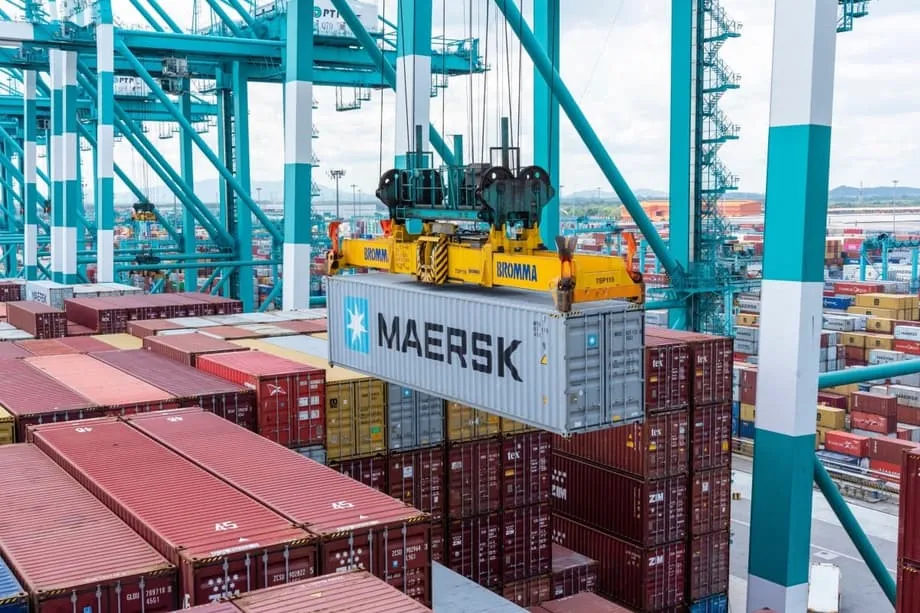
Denmark's AP Moller Maersk has invested about $118 million in a distribution center covering 180,000 square meters in Shah Alam, Selangor, its largest such facility in Asia Pacific. Beside a major expressway, robots and stacks of trays rising several stories form part of a network designed to keep goods moving as tariffs and political tensions reshape trade.
Contents
- A major logistics bet takes shape in Shah Alam
- Why Malaysia fits the network
- How the automated center handles goods
- A regional expansion extending to 2026
- Tariffs make flexibility more valuable
- Shipping adapts to conflict, drought and delays
- China Plus One drives more shipping within Asia
- Rules on origin require real local production
- Gemini puts hubs and terminals at the center
- Malaysia's gains depend on skills and reliability
- Lower emissions become part of the investment plan
- At a Glance
The center will handle products ranging from chocolates and shoes to surgical equipment. Nearby ports and airports connect it with overseas markets, while its position in Malaysia's Klang Valley gives it access to domestic retailers and a large consumer base.
Maersk's investment reflects a shift in how manufacturers organize production. Companies facing higher import duties in the United States and Europe are expanding beyond China while continuing to buy Chinese parts and materials. Known as China Plus One, this strategy is helping build manufacturing and distribution hubs in Malaysia, Vietnam, Thailand and Indonesia.
Fresh rounds of tariffs on a wide range of goods have dominated trade discussions since early 2025. Shipping companies and their customers have responded by redesigning routes, reconsidering how much stock to hold and making it easier to change plans when government policy changes.
For Maersk, the Shah Alam facility puts storage and distribution capacity closer to the places where customers are producing and selling goods. Southeast Asia offers access to growing consumer markets and another base from which companies can manage costs, supply factories and serve buyers abroad. The investment also connects a local warehouse decision to a much larger regional expansion.
Why Malaysia fits the network
Shah Alam offers access to Port Klang, one of Southeast Asia's busiest trade gateways, and Kuala Lumpur International Airport. Its location within the Klang Valley combines transport connections, consumers and an established pool of logistics workers.
Malaysia has invested steadily in industrial parks, bonded zones and digital customs processes. Bonded zones allow goods to be stored or handled under customs arrangements before they enter the domestic market or continue abroad. Together, these facilities and the local workforce have made Selangor a practical base for regional distribution.
For exporters, proximity to Port Klang and the expressway network can mean fewer transfers between companies or vehicles. Each transfer takes time and creates another opportunity for delays or handling errors. Reducing those steps can help products leave storage sooner and arrive more reliably.
The location also supports domestic retail distribution. A shipment can serve Malaysian customers or move toward an overseas destination through the same wider logistics network, giving businesses more room to adjust how they allocate stock.
How the automated center handles goods
Container trucks deliver incoming goods to automated receiving bays at the Shah Alam site. Robotics move items into smart trays and tall storage systems, reducing manual handling and helping orders move through the building with fewer errors.
The equipment must accommodate a broad mix of products, from packaged food and clothing to medical devices. Software assigns inventory to domestic and export orders while accounting for journey times, exposure to tariffs and seasonal demand.
Elaine Low, Maersk's area managing director for Southeast Asia, described the company's approach as following customers as their sourcing decisions change.
Regardless of industry, everyone is looking for a cheaper, better way to source products. And I think we will follow wherever the customer goes.
Large distribution centers can also provide a buffer against disruption. Keeping stock closer to customers gives a company more flexibility to change destinations when tariffs or other rules shift, instead of waiting for a new shipment to travel from a distant factory.
Maersk aims to reduce trading costs, which can be two to three times higher in some Asian markets than in advanced economies. Faster processing, fewer handovers and better tracking from factory to store can reduce handling costs and the risk of goods arriving late or going to the wrong place.
A regional expansion extending to 2026
The Shah Alam center belongs to a wider plan for more than $500 million of investment across Southeast Asia over several years. Maersk expects to add roughly 480,000 square meters of warehouse and distribution capacity by 2026 in Malaysia, Indonesia, Singapore and the Philippines.
The investment is intended to join ocean, air, road and rail services into a network that can redirect shipments as markets change. A warehouse becomes more useful when the transport services around it can also respond quickly.
Malaysia's Port of Tanjung Pelepas is being positioned as an integrated logistics hub connecting sea, road and rail. In Singapore, additional warehouse space on the landside of Changi Airport is intended to strengthen a regional air freight hub.
Maersk is also expanding truck fleets across Southeast Asia, introducing haulage using biodiesel and deploying electric vehicles where charging networks can support them. At sea, APM Terminals is adding capability for a redesigned shipping network and additional transshipment, the transfer of containers between ships during their journey.
Work with authorities on green fuel infrastructure forms another part of the expansion. The aim is to prepare ports and related services for a future fleet of vessels producing lower emissions.
The main dates and milestones connect the warehouse investment with changes already taking place in trade:
- Since early 2025, fresh tariff rounds have pushed shipping companies and customers to reconsider routes, inventories and sourcing.
- In late January 2025, Maersk and Hapag Lloyd launched the Gemini Cooperation shipping network.
- In February 2025, early Sea Intelligence data put Gemini's schedule reliability at around 94 percent.
- By November 10, 2025, Maersk's new Shah Alam distribution center had opened following an investment of about $118 million.
- By 2026, Maersk expects its regional expansion to add roughly 480,000 square meters of warehouse and distribution capacity.
Tariffs make flexibility more valuable
The United States has imposed broad duties as well as higher rates on key trading partners, including China. The European Union has introduced defensive measures in targeted sectors, while several countries are considering responses of their own.
A tariff is a tax on imported goods. When the tax changes, the cost of bringing the same product into a market changes too. Companies may then reconsider where they make a product, where they store it or which customers they can serve at a competitive price.
The Organization for Economic Cooperation and Development has estimated that a 10 percent increase in broad tariffs, matched by similar responses, could reduce global output by roughly 0.3 percent within three years and raise inflation by about 0.4 percentage points a year. Global output measures the goods and services economies produce; inflation measures how quickly prices rise.
Industry bodies have warned that uncertainty can be a bigger drag than the tariff rate itself. Businesses may delay investment while waiting to learn which duties will apply and how trading partners will respond.
Former World Trade Organization officials have warned that the trade rivalry between the United States and China could continue for decades. Manufacturers are responding by developing parallel production lines in Southeast Asia, retaining Chinese suppliers for inputs and spreading final assembly across countries with lower tariff exposure.
Broad tariff rounds can also reduce the number of useful alternatives. When many countries face higher duties at once, changing the route or production location becomes less effective as a way to manage costs. A deep slowdown in the United States would create another challenge because of its share of containerized imports.
Shipping adapts to conflict, drought and delays
Security concerns in the Red Sea have forced ships traveling between Asia and Europe to use longer routes around the Cape of Good Hope. Those journeys have added more than a week in many cases and up to ten days on some services.
Shipping lines have added vessels to help maintain weekly departures despite the longer trips. Keeping the same frequency with ships spending more time at sea requires more vessels in the rotation.
Drought at the Panama Canal has brought restrictions on ship weights and transit slots. Some cargo has consequently shifted to air freight or alternative sea routes. Water levels, extreme weather and security conditions can all change which route offers the most dependable journey.
Charles van der Steene, who leads Maersk's North American business, said the company expects continuing adjustments rather than a fundamental collapse of established trade flows.
The global supply chain we know today has been built over many decades. We will see adjustments, in some cases triggered by political motivations, but we do not believe it will change fundamentally as a result. For example, in Asia, the China Plus One strategy is seeing many of our customers expand their sourcing footprint to Southeast Asia.
Van der Steene pointed to Maersk's ability to switch entry points when rules change or weather and conflict interrupt normal services. The company also operates its own freighter aircraft, providing an option for critical goods when production cannot wait for a slower sea journey.
The objective is dependable arrival on a promised date at a price customers can plan around. Combining ships, aircraft and storage gives logistics operators several ways to move urgent goods or manage a delayed shipment.
China Plus One drives more shipping within Asia
Capacity on shipping routes within Asia, excluding domestic trades, has risen by about 13 percent from a year earlier to nearly 2.4 million TEU, according to industry data. A TEU, or twenty foot equivalent unit, is a standard measure of container capacity based on a container 20 feet long.
Carriers have added shuttle services connecting Chinese ports with Vietnam, Thailand, Malaysia, Indonesia and the Philippines. Maersk has expanded its regional capacity by more than 100,000 TEU over twelve months, while its partner Hapag Lloyd has nearly doubled its presence in the same market.
Trade patterns help explain the extra services. Chinese exports to the United States have fallen, while exports from China to Southeast Asian economies have increased. Parts and materials continue to move out of China even as more final production takes place elsewhere.
Factories in Vietnam and Thailand have taken on more final assembly of electronics and machinery. Malaysia has attracted investment in advanced packaging and medical devices, while Indonesia has recorded gains in furniture and consumer durables, products intended for repeated use rather than immediate consumption.
China remains a supplier of parts and materials within this arrangement. Manufacturers are spreading production stages across more countries and, in some cases, shortening the final journey between assembly and the customer.
Rules on origin require real local production
United States authorities are examining goods routed through third countries to determine where they were actually made. Extra duties can apply when processing in an intermediate country is judged insufficient to change a product's origin.
For a manufacturer, moving a box through a Malaysian or Thai port and making a product in Malaysia or Thailand are different activities. Authorities examining origin look at the production carried out, making the extent of local manufacturing central to tariff treatment.
Southeast Asian officials have pledged to act against relabeling and the simple passage of Chinese goods through their countries. Authorities in Thailand and Malaysia have signaled that they will address illegal relabeling, and scrutiny is expected to continue.
Manufacturers are responding by increasing genuine local content and distributing product families across several countries. That approach gives them more production options while reducing reliance on a single location.
Stricter origin rules could affect exporters that have depended on minimal processing to avoid duties. For Malaysia and its neighbors, attracting substantial manufacturing activity therefore matters alongside attracting the warehouses and transport services that support it.
Gemini puts hubs and terminals at the center
Maersk and Hapag Lloyd launched the Gemini Cooperation in late January 2025 with a hub and spoke structure. Large vessels call at a smaller group of central ports, while dedicated shuttle services connect those hubs with other destinations.
The design replaces long shipping loops with many port calls with a more concentrated network. Its purpose is to make schedules stable and repeatable, including when individual ports or routes face disruption.
Early Sea Intelligence data showed schedule reliability of around 94 percent in February 2025. That was above Gemini's 90 percent target during the network's early operation. Reliability measures how consistently ships keep to their schedules, a practical concern for factories and retailers planning around delivery dates.
Lars Mikael Jensen, head of hubs at APM Terminals, said control over key terminals gives the network ways to recover from delays. He described a case in Rotterdam in which all cranes were assigned to a late vessel to help it recover time and protect onward connections.
The ability to control capacity and terminal operations will give the new Gemini Cooperation the tools to reach its ambitious 90 percent reliability target.
Terminal control also gives carriers options when demand changes. If shipments from China fall while volumes from Vietnam or Indonesia rise, larger vessels can be reassigned without rebuilding an entire loop of 16 port calls.
New port fees on particular ship types can prompt another adjustment: shifting calls to nearby hubs and moving containers onward by shuttle. This approach requires substantial resources because carriers need ownership or control of key hubs over long periods.
Malaysia's gains depend on skills and reliability
Malaysia's new distribution center and related port investments can support more complex, valuable activity beyond basic storage and transport. Modern facilities can attract businesses handling medical devices, packaging for semiconductors and premium consumer products.
Domestic retailers can also benefit from more sophisticated order fulfillment. Combining stock management, transport connections and fewer handovers can help companies serve stores and customers more reliably, especially when products need to arrive within a narrow window.
Automation changes the types of jobs required. Machines reduce repetitive handling, while operators need technicians, software specialists and inventory planners to keep equipment and stock systems running.
Training partnerships among logistics companies, local colleges and state agencies will be important in filling those roles. A larger pool of skilled logistics workers can help attract further investment and strengthen a business cluster serving exporters across the region.
Operational risks continue alongside the investment. Extreme weather can close ports or change agricultural export flows, while Red Sea diversions and Panama Canal restrictions can disrupt transport plans. Keeping inventory closer to customers and using contracts that allow changes in transport mode or destination gives shippers more options when those problems occur.
Lower emissions become part of the investment plan
Maersk's regional expansion also includes efforts to reduce emissions. Biodiesel is being used more widely in haulage, and electric trucks are being introduced where charging infrastructure permits.
Terminal and warehouse upgrades are being designed around equipment that uses energy more efficiently and yard planning guided by data. At sea, the company is preparing for green fuel options as regulators tighten climate targets and customers seek lower emissions for each shipment.
Green methanol and other fuels producing lower emissions remain in the early stages of adoption. Building the infrastructure to supply ships with these fuels in Asia will be essential to wider use.
Cooperation with port authorities on power supplies and with energy companies on future fuels will help shape where logistics hubs develop. Fuel supply, charging capacity and reliable electricity become practical considerations alongside roads, cranes and storage space.
Automation and better coordination can also improve how efficiently vessels and containers are used. Reducing the time containers spend waiting and improving vessel utilization can lower fuel use for each unit of cargo moved.
Reliable schedules can keep large ships fuller and reduce idling. In that sense, dependable operations can matter as much as speed when companies try to reduce emissions per shipment.
Maersk's $118 million Shah Alam investment brings these priorities together: storage near customers, connections across transport modes, flexibility under changing trade rules and preparation for lower emissions. The stated regional capacity milestone is 2026; no exact completion date was given for the full expansion.
At a Glance
- Maersk invested about $118 million in a distribution center covering 180,000 square meters in Shah Alam, its largest such facility in Asia Pacific.
- Robotics, tall storage systems and inventory software support goods ranging from food and clothing to surgical equipment.
- The center connects domestic and export markets through access to Port Klang, Kuala Lumpur International Airport and expressways.
- A regional plan exceeding $500 million is expected to add roughly 480,000 square meters of warehouse and distribution capacity by 2026.
- Projects include a logistics hub at Port of Tanjung Pelepas, warehouse space at Changi Airport and expanded truck fleets.
- Shipping capacity within Asia rose about 13 percent to nearly 2.4 million TEU, excluding domestic trades.
- China Plus One is spreading production across Southeast Asia while Chinese suppliers continue providing parts and materials.
- Gemini's early February 2025 schedule reliability was around 94 percent, against a target of 90 percent.
- Tariffs, origin checks, Red Sea diversions, canal restrictions and extreme weather remain major risks.
- Biodiesel, electric trucks, efficient equipment and preparations for cleaner marine fuels form part of the expansion.