A beach meeting that stopped the killing
On June 26, 1945, United States Marine Lieutenant Colonel George Clark brought a small party to Utaha Beach on Aka Island, west of Okinawa. Major Yutaka Umezawa, a wounded Japanese prisoner whose help had made the meeting possible, arrived on a stretcher. Above the sand, Japanese soldiers watched from the high ground as Clark and their commander, Major Yoshihiko Noda, stepped forward, saluted and put their weapons aside.
Contents
- A beach meeting that stopped the killing
- The approach began with loudspeakers
- Food and hospitality changed the meeting
- A truce without a surrender
- Why talking carried risks
- Clark's family kept the story alive
- Noda's garrison and Osborn's later life
- Islanders lived with fear and destruction
- A chance conversation led to rediscovery
- Remembering the meeting in 2025
- Key Points
The encounter became something few soldiers in the Pacific War could have expected: enemies sharing roast pork, canned rations and sweet potatoes while discussing how to stop fighting. A tacit truce followed, along with a shared prayer for international understanding and peace. From that agreement until Japan's surrender on August 15, 1945, no more lives were lost on Aka.
The island was a small part of a catastrophic campaign. The Battle of Okinawa killed more than 240,000 people, more than half of them Okinawan civilians. Okinawa's Cornerstone of Peace memorial lists more than 240,000 names from the battle. Japanese troops fought from fortified caves and tunnels, while civilians faced shelling, military coercion and frightening claims about what would happen if they were captured.
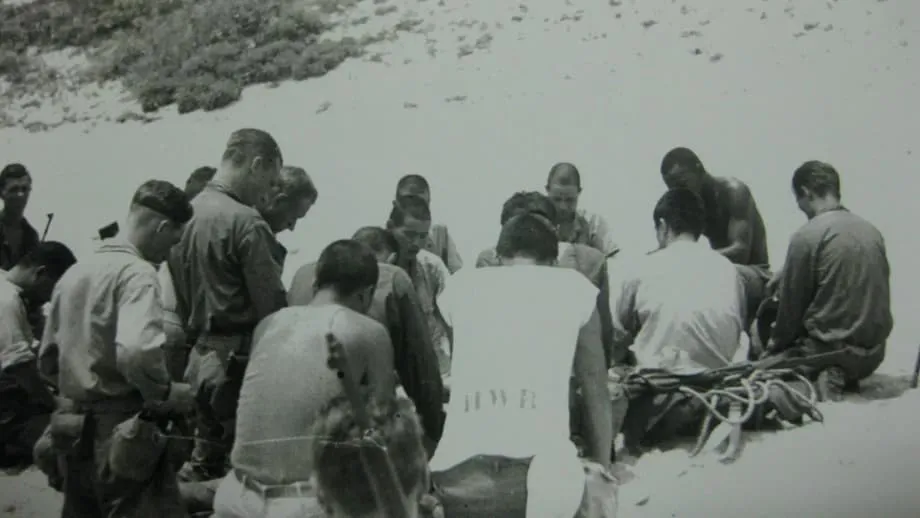
Eighty years later, in 2025, descendants, islanders and researchers returned to Aka to remember the meeting. A photograph of American and Japanese servicemen kneeling together in prayer preserves the scene. For decades, the episode had remained little known beyond those who experienced it and their families.
Scholars now argue that the Aka truce deserves a place alongside the Christmas truces on the Western Front in 1914. Its setting was different, but it offers another example of combatants choosing to meet peacefully while a larger war continued around them.
The approach began with loudspeakers
Clark received orders in early June 1945 to secure Aka, where a few hundred Japanese soldiers remained in the hills. Instead of beginning with an assault, he assembled a small group of Marines and soldiers and brought Japanese prisoners who were willing to help persuade the garrison to stop fighting.
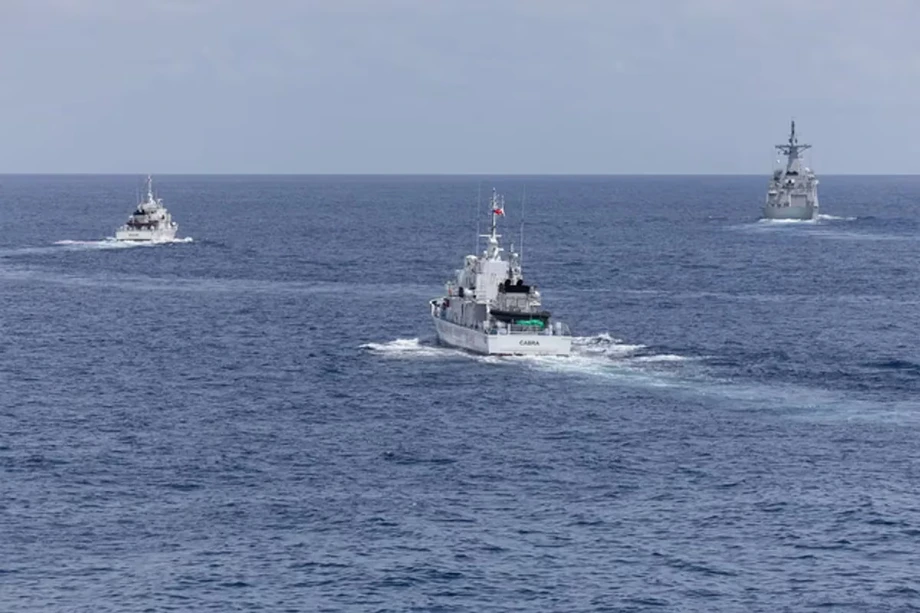
American boats began circling the shore on June 13. Portable loudspeakers carried appeals for surrender, including messages from the Japanese prisoners. Day after day, the effort produced no response.
Lieutenant David Osborn broke the impasse on June 19 by jumping into the water and swimming ashore to leave flags and messages. In the brush, he encountered a Japanese soldier who did not harm him. Contact through intermediaries then produced a condition from Noda: he would meet the Americans if they brought Umezawa.
Umezawa had been wounded and captured at the start of the battle. His treatment as a prisoner had persuaded him that continued fighting on Aka was pointless. He was willing to speak to Noda, his old comrade, and became the person who could connect the two sides.
The negotiations developed over several dates, rather than through a single unexpected encounter:
- Early June 1945: Clark was ordered to secure Aka and assembled a small party with Japanese prisoners willing to assist.
- June 13: Boats began broadcasting surrender appeals around the island.
- June 19: Osborn swam ashore, helping open contact with the Japanese garrison.
- June 26: Clark's party brought Umezawa to Utaha Beach, where negotiations and a shared meal took place.
- June 27: Noda's adjutant delivered the garrison's answer, accepting a tacit truce rather than surrender.
- August 15: Japan surrendered. No further deaths had occurred on Aka after the truce.
Food and hospitality changed the meeting
Utaha Beach became a negotiating place within sight of armed Japanese troops. After Clark and Noda set their weapons aside, the talks continued for hours. Clark ordered food brought ashore, and soldiers who had previously faced one another at a distance began eating together.
Roast pork, canned rations and sweet potatoes made the gathering resemble a picnic. Across the sand, the men talked with an understanding of what another fight would cost. For a few hours, the front line became a place where they could share a meal.
Clark, the Marine officer leading the American party, described the scene in his official report:
It was the most amazing spectacle it has been my lot to behold.
Noda extended the hospitality beyond the beach. He invited two Americans to his command post, offered them tinned pineapple and had his men dry their soaked shirts. The gestures gave both sides a way to build trust while the military question remained unresolved.
Umezawa's presence was central to that process. A Japanese officer who had experienced American captivity could speak to his former comrade from personal experience. Clark's willingness to bring him on a stretcher allowed that conversation to happen.
A truce without a surrender
Second Lieutenant Yoshiyuki Takeda, Noda's adjutant, delivered the Japanese answer the following day. The garrison could not surrender without permission from the emperor. For the officers on Aka, that requirement carried the force of a sacred command.
Noda's men were nevertheless willing to accept a tacit truce. A tacit agreement is an understanding that people act on without a formal declaration. Here, it allowed the garrison to keep its allegiance while stopping the fighting.
The arrangement was practical. If the Americans refrained from attacking, they could move freely along the beaches, including to swim or collect shells. Noda could not offer a formal capitulation, but he could agree that the soldiers under his command would cease hostilities.
Clark then asked whether the Japanese would join a short prayer to the Supreme Being of all faiths for international understanding and peace. A United States chaplain would lead it. They agreed, and the photograph of the men kneeling together became the lasting image of the encounter.
The agreement held until Japan's surrender on August 15. It left the island's residents and garrison spared from further destruction during the final weeks of the war, even though it did not change the war's outcome.
Why talking carried risks
Generals Mitsuru Ushijima and Isamu Cho had told their men to fight to the end and avoid the shame of capture as organized Japanese resistance collapsed. Those orders left little room for officers who wanted to stop the bloodshed.
Japanese officers who opened unauthorized talks with the enemy risked court martial, a military trial for breaking military law. Scholars in Japan have described such contacts as a grave breach of discipline in the former Imperial Army. Even officers who favored peace had little authority to surrender.
Clark's party faced dangers of its own. American commanders were expected to neutralize remaining garrisons, meaning to remove their ability to continue fighting. Meeting openly on a beach within rifle range required the Americans to trust that the Japanese would allow the discussions to proceed.
The Japanese prisoners who spoke through the loudspeakers also took risks. Their cooperation could later be punished. The approach depended on men willing to help despite the uncertainty about what might happen to them.
Trudy Johnson, Clark's daughter, has argued that the episode stayed obscure partly because it fitted neither side's official narrative. The Marines had secured no formal surrender, while Japanese officers had negotiated without orders. The result was a halt to killing that did not fit the usual account of military victory or obedience.
The men involved worked within those restrictions to reach an agreement they could maintain. Their decisions show how individuals could make room for restraint even under a rigid military system.
Clark's family kept the story alive
Clark was a Marine reservist leading a small detachment. Faced with a tiny island and a remaining Japanese garrison, he resisted using overwhelming force as the immediate answer. His relationship with Umezawa helped make negotiation possible.
Johnson recalled the effort her father put into persuading the captured Japanese major to assist:
One night my Dad talked to him for hours trying to persuade him to help.
Clark never returned to Japan after the war. Late in his life, he heard rumors that the Japanese officers who had met him had been executed for treason. In 1987, a Japanese journalist visited his home and told him that the men were alive and proud of what they had done.
Johnson preserved her father's photographs and correspondence and continued telling the story. Her account presents a commander who thought carefully about the human cost of his orders and remembered the agreement as a shared achievement.
Johnson also recalled how Clark described the contribution made by the group:
He used to say, I think we as a team did the world some good.
Noda's garrison and Osborn's later life
Noda commanded roughly 200 soldiers who had spent months in the hills. His decision created space for a ceasefire even though he could not authorize surrender. Takeda's role was to convey the answer that balanced allegiance to the emperor with the wish to spare lives.
The garrison's history also included violence against vulnerable people. Early in the battle, Noda's men executed starving Korean laborers for theft. That crime belongs in the account alongside the later decision to stop fighting. The same unit that had committed those killings subsequently chose restraint when faced with another decision.
Osborn's swim ashore became a turning point in the negotiations. He was an intelligence officer whose actions helped bring the commanders together. In later decades, he served as a career United States diplomat in Asia and became ambassador to Burma in the 1970s.
Friends and colleagues remembered Osborn's energy and love of sports. Residents in Rangoon called him the bicycle ambassador. His later years in public service form another part of the story of a man whose wartime initiative helped open a conversation on Aka.
Islanders lived with fear and destruction
Aka lies in the Kerama Islands, a short distance west of Okinawa. When American forces reached the area in March 1945, civilians fled into ravines and caves. Many families believed that capture would bring torture or worse.
The Japanese military had taught civilians across Okinawa that surrender was shameful. That propaganda, combined with the terror of shelling, contributed to mass suicides. In some places, civilians were coerced into group suicides; elsewhere, families acted out of fear.
Japanese forces fortified caves and tunnels and received orders to continue fighting to the end. Civilians were caught within that battle, and more than half of the campaign's more than 240,000 dead were Okinawan civilians.
The agreement on Aka came as the main battle was winding down. For villagers and soldiers still on the island, it meant avoiding another round of killing. The quiet that followed the meeting spared Aka further losses during the remaining weeks before Japan's surrender.
The wider catastrophe explains why the small beach encounter matters. Its participants could not undo the destruction already suffered, but they could decide whether the fighting in their immediate surroundings would continue.
A chance conversation led to rediscovery
Hiroshi Sakai, a Japanese journalist who later became a university lecturer, encountered the story in 2004. On a flight, he sat beside an elderly couple who told him they had been children on Aka. They remembered American and Japanese soldiers talking together on a beach instead of fighting.
Sakai began searching for documentation. In March 2024, he wrote to political geographer Nick Megoran, who had studied the Christmas truces of 1914. Sakai attached a photograph showing the soldiers kneeling together in prayer on the sand.
Megoran said the image changed how he saw that chapter of the war. Describing his response to the photograph, he said:
I was spellbound. I just sat there looking at it for a very long time and my eyes welled up with tears.
The research brought together memories that had remained with islanders and records that families had preserved. A story that might have stayed in family albums became the subject of renewed attention in Japan and Britain.
The comparison with the 1914 Christmas truces rests on the shared decision by enemies to pause hostilities. On Aka, that decision took place amid fears of capture, expectations of fierce resistance and orders against surrender. The island's particular circumstances give the episode its own place in wartime history.
Remembering the meeting in 2025
Islanders, descendants and researchers gathered on the same beach in 2025, the eightieth anniversary of the events. Pete Alston of Jesmond Parish Church led prayers in English and Japanese.
An Anglican cleric expressed the gathering's message in these words:
The men of both sides showed us that there is a better way than war.
Family members of American participants traveled to Aka, including children of Marines who had kept photographs and letters. Researchers recorded interviews with relatives and an eyewitness, adding personal recollections to the surviving record.
Some younger residents had not heard the details of the truce until this renewed attention. Older islanders still held precise memories of the wartime events. The gathering brought those generations together at the place where the soldiers had met.
Scholars working on the case have cautioned against romanticizing the episode because the Japanese garrison also committed violence earlier in the battle. Its history contains both the execution of Korean laborers and the later choice to cease fighting.
The lasting significance of Aka lies in the specific actions that made peace possible there: prisoners helping with appeals, Osborn swimming ashore, Umezawa agreeing to speak, Clark pursuing negotiations and Noda accepting restraint. Together, those choices produced a truce that held through the final weeks of the war.
Key Points
- Clark's party and Noda's garrison met on Utaha Beach on June 26, 1945, during the closing phase of the Battle of Okinawa.
- Japanese prisoners helped broadcast surrender appeals from June 13, and Osborn swam ashore on June 19.
- The wounded Umezawa helped bring the commanders together.
- The soldiers shared roast pork, canned rations and sweet potatoes during the talks.
- Takeda delivered the garrison's acceptance of a tacit truce on June 27. Formal surrender required the emperor's permission.
- Both sides joined a prayer led by a United States chaplain. No further deaths occurred on Aka before Japan surrendered on August 15.
- The Battle of Okinawa killed more than 240,000 people, more than half of them Okinawan civilians.
- Sakai began researching the story after a conversation in 2004 and contacted Megoran in March 2024.
- Islanders, families and researchers commemorated the truce on Aka in 2025, eighty years after the meeting.