A new dynasty with a reach across Eurasia
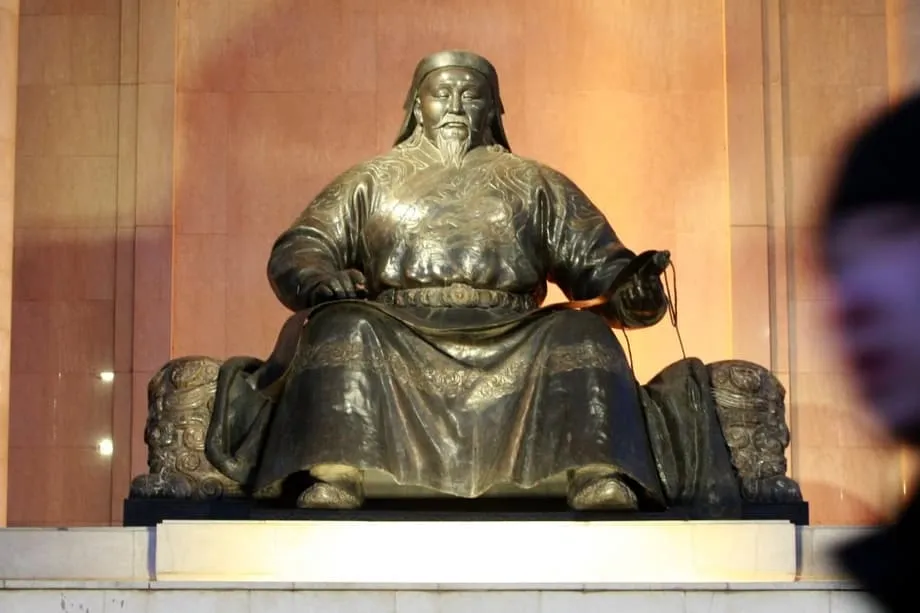
In 1271, Kublai Khan, grandson of Genghis Khan, proclaimed the Yuan dynasty. Eight years later, the defeat of the Southern Song on the waters off Yashan completed his conquest of China. The victory in 1279 ended centuries of Chinese dynastic rule by native elites and unified the country under a foreign ruler for the first time.
Contents
- A new dynasty with a reach across Eurasia
- Who held power under Mongol government?
- Trade and the promise of paper money
- Two capitals and the routes that supplied them
- Faith, language and knowledge at court
- Painting, porcelain and drama flourished
- Diplomacy reached the courts of Europe
- How military and financial pressures weakened the Yuan
- The key dates and what survived
- Key Points
Kublai adopted a Chinese dynastic name to present his government as a legitimate successor within Chinese political tradition. From Dadu, on the site of present day Beijing, he assumed the rituals and language of Chinese emperorship and claimed the Mandate of Heaven, the belief that a ruler held authority through heavenly approval. His government honored Chinese statecraft while retaining traditions of the Mongol steppe.
China also became a central hub in a wider Mongol world stretching from the Pacific to the Mediterranean. Caravans and ships carried goods, people, religious beliefs and practical knowledge between China, Central Asia, the Islamic world and Europe. The dynasty changed how China was governed and how it connected with places far beyond its borders.
Conquest brought destruction as well as new connections. Ata Malik Juvaini, a Persian official and chronicler in the thirteenth century, described the devastation that accompanied the Mongol overthrow of established orders across Asia:
With one stroke a world which billowed with fertility was laid desolate, and the regions thereof became a desert, and the greater part of the living, dead.
Kublai's court faced the task of turning conquest into lasting government. It built institutions, directed grain and taxes toward the capital, and combined Chinese administrative practices with the needs of a ruling house whose interests extended across Eurasia. This combination shaped the dynasty's achievements and its tensions.
Who held power under Mongol government?
The Yuan khan stood at the center of a powerful court supported by ministries, secretariats and provincial offices. Chinese advisers and clerks carried out much of the daily administrative work. Key posts, however, often went to Mongols or trusted allies from other parts of the empire.
Chinese bureaucracy supplied the written records, laws and offices needed to manage a large settled population. Mongol rulers brought their own preferences about loyalty and authority. Together, these produced a centralized government that preserved important Chinese institutions while changing who could exercise power within them.
Society was formally ranked into four groups. Mongols occupied the highest position. Next came semu people, a category that included communities from Central and West Asia brought east to assist with finance, engineering and government. Northern Chinese ranked below them, while southern Chinese, whose rulers had resisted longest under the Song, occupied the lowest position.
Rank affected access to government jobs, legal treatment and opportunity. The arrangement gave Mongols and their cosmopolitan allies privileged positions while reducing the influence of the traditional scholar gentry, the educated elite associated with government service and classical learning.
Some Chinese families still advanced through service, commerce or specialist skills. The hierarchy was not rigid in every situation, but it set the tone of Yuan society. The court remained wary of Confucian scholars whose ideas about proper government could place limits on imperial power. That concern influenced appointments, legal codes and recruitment.
The civil service examinations had long selected officials through their knowledge of classical texts. The Mongols suspended them during conquest and restored them only in 1315. When testing resumed, ethnic quotas and restrictions preserved advantages for Mongols and semu candidates. Many Chinese scholars received modest positions as teachers or local clerks; others withdrew into study, religion and the arts.
Written law, provincial administration, a formal bureaucracy and imperial ritual nevertheless remained central to government. Those institutions later helped shape the more centralized Ming and Qing states.
Trade and the promise of paper money
Kublai's government revitalized commerce across both land and sea. Caravans crossed Central Asia with support from the Mongol postal and relay network, whose horse stations and secure lodgings helped people and messages travel over long distances. Silk, ceramics, lacquer and metalwork moved west from China.
Goods and knowledge also traveled east. Islamic science and medicine arrived alongside textiles, glass and precious stones. Merchants from Persia and Central Asia settled in Chinese ports and cities, while Chinese traders extended their activities into Southeast Asia and the Indian Ocean. Urban markets brought together people speaking different languages and practicing different faiths.
Paper money became one of the most visible features of the Yuan economy. Earlier Chinese dynasties had already used it, but Yuan rulers made notes issued by the state the main currency. Paper made large payments and tax transactions easier and suited the demands of an empire operating across great distances.
The currency initially helped connect markets. Its value depended on people trusting that the notes would remain useful for payments and exchange. In later decades, repeated issues of too much paper money and mounting pressure on government finances weakened that confidence. Coin shortages and disputes over redemption, exchanging notes for the value they represented, contributed to inflation.
By the middle of the fourteenth century, the currency crisis added to social distress and made it harder for the government to pay soldiers and suppliers. Rising prices reduced what money could buy, creating problems for both households and the state.
Commerce nevertheless flourished through the central decades of Yuan rule. The court maintained monopolies in salt and other important goods, meaning the state controlled their trade. Grain traveled in bulk through canals and rivers to the capital, while China's ports remained active meeting places for merchants from across Eurasia.
Two capitals and the routes that supplied them
Dadu expressed the scale and organization of Yuan power. Planners laid out the capital on a grand grid, with wide avenues, walled precincts and a palace complex intended to impress subjects and visitors. The city placed the imperial court at the center of a carefully ordered urban space.
Shangdu, the summer capital later known as Xanadu, expressed another side of the dynasty. It reflected the ruling family's roots on the steppe and attachment to the open north. Together, Dadu and Shangdu showed a court that adopted Chinese imperial forms while maintaining its Mongol identity.
The government needed dependable routes to keep its northern capital supplied. Yuan authorities repaired and extended the Grand Canal to move grain from the Yangtze heartland toward Dadu. The canal connected agricultural production with the needs of the court, officials and garrisons.
Roads and postal relays carried officials, couriers and merchants across the realm. Bridges, warehouses and wharfs supported the movement and storage of supplies. This network tied rice fields and markets to imperial government, turning infrastructure into a practical foundation of political control.
Faith, language and knowledge at court
Mongol rulers used support for different religions to build legitimacy across a diverse empire. The Yuan court favored Tibetan Buddhism, giving lamas influential roles as advisers and supporting Buddhist art and ritual. Confucian temples also received support, Taoist practice continued, and Islamic and Christian communities worshiped freely in many cities.
This religious breadth reflected Mongol tradition and the practical demands of governing people with different beliefs. The court's preference for Tibetan Buddhism existed alongside a wider pattern of religious activity in cities and communities throughout the realm.
The scholar 'Phags pa devised a new script for Mongol, which the Yuan promoted for imperial use. Chinese, Mongolian, Uighur, Tibetan, Persian and other scripts appeared in documents, inscriptions and works of art. Written language served government while also recording the diversity of people moving through Yuan lands.
Muslim astronomers and physicians worked at court, recalculating calendars and sharing methods in anatomy and pharmacy. Chinese artisans borrowed techniques in glass and metal, while craftsmen from Central Asia adopted Chinese designs and glazes. Exchanges between communities carried practical skills as well as goods.
Marco Polo, the Venetian merchant who traveled in Yuan lands in the late thirteenth century, described the wealth of cities, the scale of the court and the reach of the postal system. His account shaped European views for centuries. Writing about Kublai's authority, he declared:
He is the greatest lord that ever was in this world.
The precision of every detail in Polo's book remains uncertain. His description nevertheless conveyed the impression of a formidable state bringing together many faiths, languages and talents across an unusually extensive realm.
Painting, porcelain and drama flourished
Many Chinese scholars whose prospects in government had narrowed directed their energy toward painting, calligraphy, poetry and religion. Their work placed greater value on personal expression and the movement of the brush than on meticulous realism. Art became a way to express character and maintain intellectual friendships when an official career was less accessible.
Zhao Mengfu, a gifted artist who served at court, wrestled with questions of service and integrity under foreign rule. He returned to models from earlier dynasties and reworked them, setting a new course for literati art, the painting associated with educated scholars.
Huang Gongwang, Ni Zan, Wu Zhen and Wang Meng, known as the Four Masters of the Yuan, developed distinct approaches to landscape painting. Their work influenced later generations. Landscapes could also carry moral meanings: weathered pines, solitary cottages and quiet settings expressed ideas about withdrawal, friendship or loyalty.
Bamboo painting flourished among scholars who associated the plant with endurance and uprightness. Painting offered a language for values that could be difficult to express through public office. The creativity of this period grew partly from the altered position of educated Chinese men under Mongol rule.
Jingdezhen's kilns produced blue and white porcelain on a large scale, using imported cobalt pigment beneath a clear glaze. The process placed the blue decoration under the protective surface of the ceramic. Pieces reached domestic elites and attracted buyers across West Asia and beyond, linking Chinese production with foreign materials and markets.
Yuan patrons also supported innovations in lacquer, textiles and metalwork. Literature developed through drama, especially zaju plays. Printing widened access to texts and helped storytelling in everyday language take root. These achievements gave the period an artistic influence that lasted well beyond the dynasty.
Diplomacy reached the courts of Europe
Yuan China belonged to a broader Mongol diplomatic network in which religion could provide a bridge between distant rulers. Letters passed between khans and popes. Franciscans and other clerics traveled to and from Mongol courts, helping maintain channels of communication.
Mongol envoys participated in discussions about alliances against common enemies at the Second Council of Lyon in 1274. No joint crusade emerged, but the contact supported continued exchanges of ideas and goods. Diplomacy and religious travel helped connect regions separated by immense distances.
Rabban Bar Sawma, an East Syrian monk from Chinese lands under Mongol rule, traveled to European courts in the 1280s. He met kings and sought cooperation. His journey showed that movement across Eurasia also included travelers heading west from China, rather than only visitors coming east.
Marco Polo and other lay visitors served in the Yuan administration as messengers and observers. These connections existed alongside strategic rivalry in the Middle East and Eastern Europe. The late thirteenth century nevertheless became one of the most interconnected periods before the age of sail, with religious travelers, envoys and merchants maintaining routes between distant societies.
How military and financial pressures weakened the Yuan
Yuan military power had limits even during the dynasty's expansion. Attempts to invade Japan failed in 1274 and 1281 after fierce resistance and storms. Campaigns in Southeast Asia were costly and inconclusive. Such operations placed demands on resources and supplies without delivering lasting success.
By the middle of the fourteenth century, problems within the government had deepened. Court factions multiplied, corruption spread and financial burdens grew. Floods, droughts and epidemics struck regions already under pressure from war and taxes.
Paper currency lost credibility as the government issued more notes. The weakening currency complicated payments, while the state struggled to maintain supplies and the loyalty of its troops. Financial problems and military difficulties reinforced one another.
The Red Turban movement became the best known of the rebellions against Yuan authority. It drew support from dissatisfied peasants, local elites and former officials. Opposition spread through a society facing several pressures at once, from disrupted livelihoods to declining confidence in government.
In 1368, Zhu Yuanzhang, a former monk who had risen to lead rebel forces, entered Dadu and founded the Ming dynasty. Yuan rulers withdrew to the steppe. The Northern Yuan continued to claim their legacy after the dynasty lost control of China.
The key dates and what survived
The Yuan's rise and fall unfolded across roughly a century, while several of its defining policies and connections developed between conquest and collapse:
- 1271: Kublai Khan proclaimed the Yuan dynasty.
- 1274: The first invasion of Japan failed, and Mongol envoys participated in discussions at the Second Council of Lyon.
- 1279: The Southern Song fell at Yashan, completing the conquest of China.
- 1281: A second attempt to invade Japan failed.
- The 1280s: Rabban Bar Sawma traveled to European courts seeking cooperation.
- 1315: Civil service examinations returned with ethnic quotas and restrictions.
- 1368: Zhu Yuanzhang entered Dadu and founded the Ming dynasty, while Yuan rulers withdrew to the steppe.
The Ming and later the Qing built on a stronger central bureaucracy, refined a revived examination system and closely watched frontier zones the Mongols had integrated. Yuan government left institutional practices that continued to influence rule after the ruling house itself had departed.
Literati painting and ceramics set artistic standards for centuries. Expanded trade by land and sea, together with a more cosmopolitan urban life, left a lasting imprint on China's connections with the wider world of Africa, Europe and Asia. The dynasty combined unequal access to power and the burdens of conquest with cultural creativity and far reaching exchange.
Key Points
- Kublai Khan proclaimed the Yuan in 1271 and completed the conquest of China in 1279.
- The government combined Mongol traditions with Chinese bureaucracy, with Dadu as its principal capital and Shangdu as its summer capital.
- A hierarchy of four groups privileged Mongols and semu communities over northern and southern Chinese.
- Civil service examinations resumed in 1315 with quotas and restrictions favoring Mongols and semu candidates.
- Trade, postal relays and canal improvements connected China more closely with Eurasian markets.
- Paper money supported commerce before excessive issuance and financial strain contributed to inflation.
- Tibetan Buddhism received court favor alongside wider religious activity and exchanges in language, science and craftsmanship.
- Literati painting, blue and white porcelain and zaju drama became lasting cultural achievements.
- Military setbacks, court conflict, disasters, currency problems and rebellion weakened Yuan authority.
- The Ming replaced Yuan rule in China in 1368, while Yuan institutions, arts and commercial connections continued to shape later periods.