A $244 billion partnership reaches Siberia's communities
A coal mine planning to send five million tons a year to China from 2027, new hotels around Lake Baikal and negotiations over a pipeline carrying gas across Mongolia show how deeply China's economy is becoming tied to Siberia. Russia's trade with China reached about $244 billion in 2024. Behind that national figure, individual projects are changing roads, forests, businesses and employment across Russia's east.
Contents
- A $244 billion partnership reaches Siberia's communities
- Why the trade relationship favors Beijing
- A coal project planned across a century
- Lake Baikal's tourism boom changes local business
- Tourism and language build closer regional ties
- The yuan keeps trade moving, with new risks
- Two pipelines and an unfinished commercial bargain
- Why pipeline gas matters beyond Russia and China
- Regional deals deepen China's political presence
- Economic presence and the migration debate
- Environmental promises meet construction schedules
- Infrastructure expands while sanctions add friction
- The Bottom Line
Siberia and the Russian Far East have become a strategic meeting point for wartime economics, energy security and local livelihoods. Since Russia's full scale invasion of Ukraine in 2022 and the Western sanctions that followed, Moscow has relied increasingly on Beijing for trade, technology and finance. China has gained privileged access to a resource belt stretching from Transbaikalia to the Arctic coast.
Russia and China are expanding railway and road connections across their border of about 4,200 kilometers. Coal, oil, gas, timber and metals move toward China, while manufactured goods travel into Russia. Moscow needs customers for commodities and replacements for vehicles, electronics and critical components that Western companies no longer supply.
China gains raw materials, gas delivered without passing through maritime chokepoints and greater influence in Russian regions while the Kremlin concentrates on the war. Russia increasingly depends on a buyer that can choose other suppliers, giving Beijing more room to negotiate prices and terms.
Regional governments welcome investment, infrastructure and business agreements. Residents closest to mines, roads and tourism developments have a more immediate set of concerns: whether promised jobs will arrive, whether local companies can compete and whether environmental protections will keep pace with construction. The partnership's uneven balance is becoming visible far beyond national trade statistics.
Why the trade relationship favors Beijing
Russia mainly exports energy and raw materials to China. China mainly sends finished goods and technology to Russia. The difference matters because bulk commodities often have competing suppliers, while Russian businesses have fewer alternatives for some of the products and components they need.
China has become Russia's buyer of last resort for energy and commodities, as well as an essential supplier. Chinese cars now dominate the Russian market. Electronics, household appliances and industrial components increasingly come from Chinese manufacturers. Russian exports include coal, oil, pipeline gas and metals, alongside timber and agricultural products.
Moscow's bargaining position has weakened since the war began. In many commodity markets, Russia increasingly acts as a price taker, meaning it has limited ability to demand a better price when the customer can buy elsewhere. China can choose alternative sources for many bulk materials, while Russia urgently needs export revenue.
The relationship has developed over several years, with another major coal milestone planned for 2027:
- 2019: The first Power of Siberia pipeline began delivering Russian gas to China.
- 2022: Russia's invasion of Ukraine and subsequent Western sanctions accelerated Moscow's shift toward Beijing.
- 2023: China's publication of official maps drew protests from India and public criticism followed by a restrained response from Moscow.
- 2024: Bilateral trade reached about $244 billion.
- 2025: Chinese banks became more cautious about some Russian transactions as sanctions pressure increased, and Chinese export growth into Russia slowed.
- 2027: The Zashulanskoye coal venture expects to begin shipping five million tons annually to China.
Trade growth has kept goods moving and helped Russia replace lost commercial relationships. Its structure also ties Russian exporters, importers and regional budgets more closely to decisions made by Chinese buyers, manufacturers and banks.
A coal project planned across a century
The Zashulanskoye coal deposit in Transbaikalia offers a concrete example of the scale of this shift. A joint venture between En+ Group, controlled by Russian businessman Oleg Deripaska, and China's Shenhua Group is developing the deposit under a plan stretching across a century of extraction.
Russian authorities granted tax incentives to the project. The operation is designed to supply the Chinese market for decades, with expected shipments of five million tons a year from 2027. The planned flow is comparable to about 500 truckloads each day, requiring a new road to support the traffic.
Ukraine's Foreign Intelligence Service says the road runs just 200 meters from village gardens and 1.6 kilometers from the Yamarovka mineral water spring. It also says the route crosses forests containing rare plant species. Local residents argue that earlier promises to limit environmental damage have not been honored.
Residents have repeatedly sought to move the service road away from sensitive areas, but those efforts have stalled in bureaucracy. Preparatory work continues, including the felling of cedar stands near the route. For people living nearby, the project brings industrial activity close to homes and a mineral spring valued by the community.
Employment was part of the project's appeal. Yet specialized teams from China hold key positions at the site, creating concern about how much of the promised opportunity will reach local workers. Coal and revenue can move outward quickly, while benefits for nearby villages may arrive slowly or fail to meet expectations.
Lake Baikal's tourism boom changes local business
Chinese investment is also changing tourism around Lake Baikal. Ukraine's intelligence service says Chinese entrepreneurs are buying land and building hotels along important stretches of the shoreline. Similar accounts have appeared in regional reporting, while Irkutsk region officials are promoting routes aimed at Chinese visitors.
Local tourism operators say larger businesses with stronger financing are squeezing them out. Some entrants control an entire package, including accommodation, bus transfers and meals. A company that handles every stage of a trip can keep more spending within its own network, leaving fewer opportunities for independent local providers.
Some Chinese investors reportedly describe Baikal as their own lake, language that has inflamed local sentiment. Residents' concerns extend beyond ownership: they want to know whether investment will strengthen local businesses or make them dependent on larger operators whose decisions are made elsewhere.
Lake Baikal is a UNESCO World Heritage site and the world's largest freshwater reservoir by volume. Its fragile ecosystem faces pressure from excessive visitor numbers, inadequate wastewater treatment and unregulated construction. Shorelines, wetlands and fish habitats can all be strained by rapid tourism development.
New hotels and visitor routes create jobs and bring tax revenue. They also place heavy seasonal demands on villages with limited infrastructure. Wastewater systems and other services must cope with visitor peaks, while residents face the lasting effects of construction and changes in land use.
Baikal's tourism expansion therefore presents two linked issues: who receives the income and who manages the environmental burden. Local communities are concerned that standards, enforcement and revenue sharing are falling behind investment, allowing economic opportunities to move out of their hands.
Tourism and language build closer regional ties
Tourism brings more than visitors to Siberia. It also expands Chinese language use, signage and business networks. Around Baikal, hotels, transport providers and tour companies connect local economies more closely to Chinese customers and investors.
In Blagoveshchensk, on the Amur River, regional leaders have supported deeper Chinese language instruction in schools and welcomed bridges and trade offices linking the two countries. The Amur region's governor has promoted this educational shift, and Chinese street signs have appeared in some public spaces.
Regional officials present these changes as practical responses to economic opportunity. Their decisions also show a growing acceptance among local elites that future growth depends heavily on China. Schools, transport connections and business services are adapting to that expectation.
Residents can welcome better infrastructure while worrying about cultural influence and control over local commerce. Around Baikal, those concerns are tied to practical questions about regulation and the distribution of tourism income. Closer connections can bring business, but their local value depends on the terms under which that business operates.
The yuan keeps trade moving, with new risks
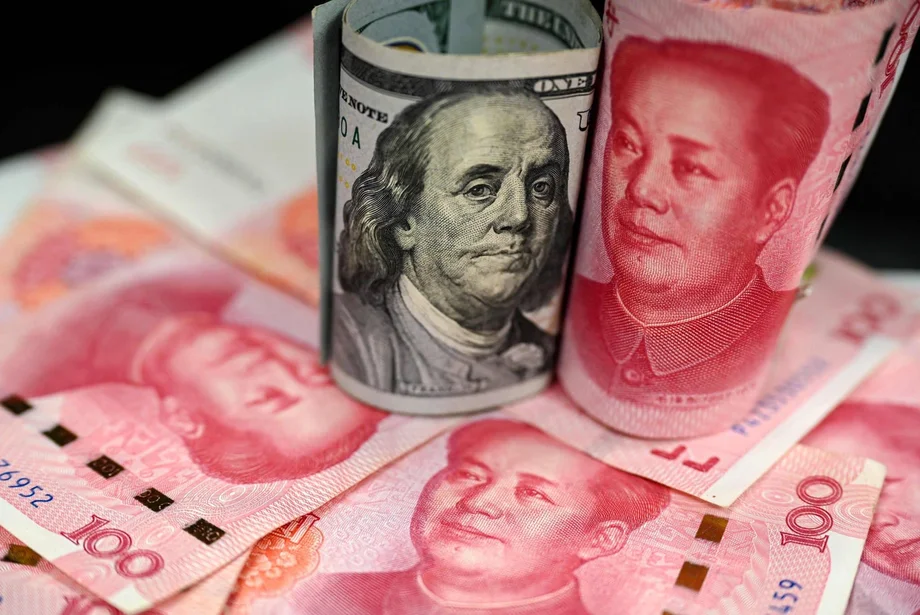
Russian businesses have increasingly turned to China's currency, the yuan. Many contracts are now settled in yuan, Russian banks offer yuan savings accounts, and companies use Chinese payment systems to work around Western restrictions. Firms have also opened yuan accounts and issued bonds in the currency.
Settlement means completing a payment between buyer and seller. Using yuan instead of dollars or euros reduces exposure to some Western financial restrictions. It also makes Russian companies more dependent on access to Chinese banks and on those banks' willingness to process transactions.
Secondary sanctions have made some Chinese institutions more cautious. Such measures can expose businesses outside Russia to penalties for certain dealings with Russian counterparties. As United States enforcement widened in 2025, several Chinese banks tightened checks or restricted transactions with some Russian customers.
Russian importers reported longer compliance checks, extra payment steps and the need for substitute channels. Chinese export growth into Russia slowed during 2025, with exports dipping late in the summer. Trade continued, but financial delays added uncertainty to orders and deliveries.
Siberian retailers usually sell goods in rubles, while their wholesale contracts may be priced in yuan. Changes in the exchange rate can alter their margins overnight: the ruble value of a purchase changes even when its yuan price stays the same. Access to Chinese finance and logistics helps keep shelves stocked, yet interruptions can hit remote regions with fewer alternative suppliers first.
Russia's financial shift therefore replaces one set of dependencies with another. Beijing's policy choices and Chinese banks' appetite for risk now influence how easily Russian companies can buy goods, receive payments and finance their operations.
Two pipelines and an unfinished commercial bargain
The first Power of Siberia pipeline began delivering gas to China in 2019 from fields in Yakutia and Irkutsk. Deliveries have risen, and Russian officials have projected annual capacity around the mid 40 billion cubic meter range.
The proposed Power of Siberia 2 would add another 50 billion cubic meters a year. Its planned route would carry gas from Yamal in Western Siberia through Mongolia into northern China, giving Russia another outlet for gas as it seeks to replace sales once directed toward Europe.
Russian leaders and Gazprom say a binding agreement is in hand, while Beijing's public statements have remained cautious. As of November 4, 2025, pricing, routing and financing remain core matters under negotiation. Those commercial details determine how costs, income and risks would be shared.
China's buyers have pressed for discounts linked to lower transport costs and their willingness to enter very long contracts. Russia needs a dependable customer, but China's demand may grow less predictably than European demand did before the war.
China is expanding renewable energy and nuclear power and has committed to peaking carbon emissions around 2030. Those changes make future gas demand less certain. Beijing has room to seek lower prices and flexibility over how much gas it buys, leaving Moscow with more of the commercial risk.
A pipeline requires substantial investment before it can earn revenue. If the customer wants flexibility over purchases, the supplier must weigh the value of a long relationship against the possibility that volumes or returns will fall short of expectations. Russia's urgent need to redirect gas strengthens China's position in that bargain.
Why pipeline gas matters beyond Russia and China
Power of Siberia 2 could change part of China's energy supply if it proceeds. More gas arriving overland could replace some liquefied natural gas, or LNG, which is gas cooled into liquid form so it can be transported by ship.
Lower growth in Chinese demand for LNG cargoes could affect supplies that the United States and Qatar aim to sell. The proposed pipeline's reach therefore extends beyond its route through Russia, Mongolia and China to competition in the wider gas market.
China would also become less dependent on seaborne routes through places such as the Malacca Strait and the South China Sea. Overland deliveries reduce exposure to disruptions affecting ships, giving Beijing another way to secure energy supplies.
Russia would gain the prospect of steady revenue and a visible demonstration that it can find new markets despite Western pressure. The accompanying risk is a pipeline network increasingly tied to one major buyer with considerable influence over the terms. Energy security for China and export security for Russia are connected, but the two sides enter negotiations with different choices available to them.
Regional deals deepen China's political presence
Beijing has cultivated governors and business elites in Russia's east, encouraging trade agreements, joint offices and transport projects. Roads and bridges can help regional partners avoid Moscow's crowded approval process, while direct connections with Chinese provinces give local officials more room to pursue business.
A major gathering in northeastern China brought together hundreds of regional officials from both countries to sign agreements covering logistics, agriculture and industry. This format allows Russian regions to strengthen ties with Chinese provinces with less Kremlin oversight.
The political effects are visible in border infrastructure, education and public symbols. China's official maps published in 2023 drew protests from India. Moscow gave a restrained response after public criticism, illustrating how Russian leaders increasingly accommodate Chinese priorities while seeking to keep trade and investment flowing.
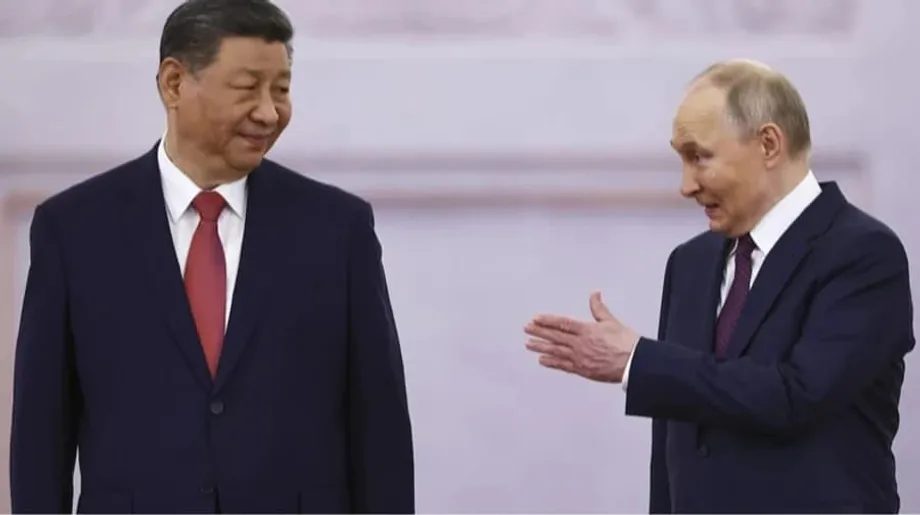
During his visit to Moscow for Victory Day in 2025, Chinese President Xi Jinping presented the relationship as a response to pressure from the United States and its allies. Xi, China's president, described that alignment in these words:
China stands with Russia against what I call hegemonic bullying.
Regional elites responsible for budgets and large companies generally regard cooperation as necessary and profitable for both sides. Residents east of the Urals often have mixed feelings. They want employment and improved infrastructure, but worry about environmental damage, cultural influence and their communities' ability to negotiate future terms.
That gap helps explain why some agreements receive little attention in national media even as they bind local economies more closely to Chinese markets. Regional politics increasingly turns on how officials distribute the gains and manage the costs of those deals.
Economic presence and the migration debate
Ukraine's intelligence service estimates that as many as two million Chinese citizens live in Russia's Far East. Russian official statistics do not support a picture of mass settlement, and migration figures are difficult to verify.
Analysts tracking China's border provinces point to a different demographic trend. Heilongjiang's population has declined in recent years, and most people leaving the province move south within China rather than into cold regions across the Amur River.
China's presence in Siberia is more visibly connected to particular industries: managers and engineers assigned to resource projects, seasonal workers in construction and agriculture, and tourism operators and hotel staff around places such as Baikal. Commerce and investment dominate the relationship.
Both countries face aging populations and low birth rates. Neither is sending settlers across the border in large numbers, while the harsh climate on both sides of the Amur discourages permanent migration. China's interests center on resources, transport routes and currency connections.
Residents' concerns about land purchases and Chinese language instruction remain part of local debate. The most immediate decisions affecting communities concern contracts, financing and regulatory enforcement, including who controls businesses and how authorities oversee development.
Environmental promises meet construction schedules
Zashulanskoye shows how quickly road building and tree felling can proceed once approvals are granted, even while arguments over environmental buffers and protected areas continue. Cedar forests, wetlands and meadows containing rare plants are difficult to restore after damage.
Heavy truck traffic near the Yamarovka spring threatens a resource that local people value beyond its commercial worth. Across Siberia's resource frontier, construction and extraction can advance faster than the rules intended to protect surrounding communities.
Employment promises carry similar tensions. Companies often bring specialists familiar with their machinery and working methods into the most valuable roles. Local workers may be concentrated in jobs with lower pay or in services supporting the project.
Wage gains can be real, but they may weaken when global commodity prices fall. Tax breaks can also reduce the revenue available to municipalities, limiting the local public benefit from a large development even while extraction continues.
Contract transparency adds another difficulty. Terms governing prices, currencies and dispute settlement are often confidential. Agreements using local currencies can reduce sanctions exposure while making oversight more complicated for regional auditors. When buyers and financiers are across the border, local officials have less bargaining power over routing, safety and pollution controls.
Infrastructure expands while sanctions add friction
Russia continues to shift toward China for trade and finance, while China deepens cooperation and tries to limit exposure to penalties against its own banks and companies. Tighter checks during 2025 added delays without reversing the broader relationship.
Physical connections are still expanding. New bridges span the Amur, border crossings have been upgraded, and railway lines and highways are being modernized to move goods faster. Along Russia's Arctic coast, the Northern Sea Route is attracting more Chinese vessels as periods without ice lengthen and insurance options improve.
Railway capacity and the amount of cargo ports can handle still constrain growth. Russian regions also compete intensely for Chinese investment and customers. Infrastructure can open opportunities, but its usefulness depends on whether goods can move through the entire transport network without major delays.
The next stage will be visible in actual deliveries and completed agreements: gas volumes through Power of Siberia 1, announcements on Power of Siberia 2, the share of trade invoiced in yuan and the extent of Chinese tourism around Baikal. At the local level, court challenges over roads near mines and environmental inspections in protected areas will help determine whether safeguards catch up with development.
Siberia's economy is becoming more closely connected to China through buyers, banks, businesses and transport routes. The national benefits are trade and access to supplies. For nearby communities, the lasting result will depend on jobs, public revenue and protection of the places where people live.
The Bottom Line
- Russia's reliance on China has deepened since 2022, with bilateral trade reaching about $244 billion in 2024.
- Zashulanskoye plans five million tons of annual coal shipments to China from 2027, alongside concerns about roads, forests, the Yamarovka spring and local employment.
- Chinese investment is expanding Baikal tourism, while local operators face stronger competition and villages face pressure on limited infrastructure.
- Power of Siberia 2 would add 50 billion cubic meters of annual gas supply, with pricing, routing and financing still central to negotiations.
- Yuan use keeps trade moving, but tighter Chinese banking checks during 2025 have delayed some transactions.
- Regional agreements, bridges, trade offices and language education are strengthening China's presence in Russia's east.
- Ukraine's estimate of up to two million Chinese residents in the Far East sits alongside Russian statistics that do not support mass settlement.
- Environmental enforcement, transparent contracts and the distribution of local benefits remain central to the partnership's effects on Siberian communities.