A small robot with a much smaller price
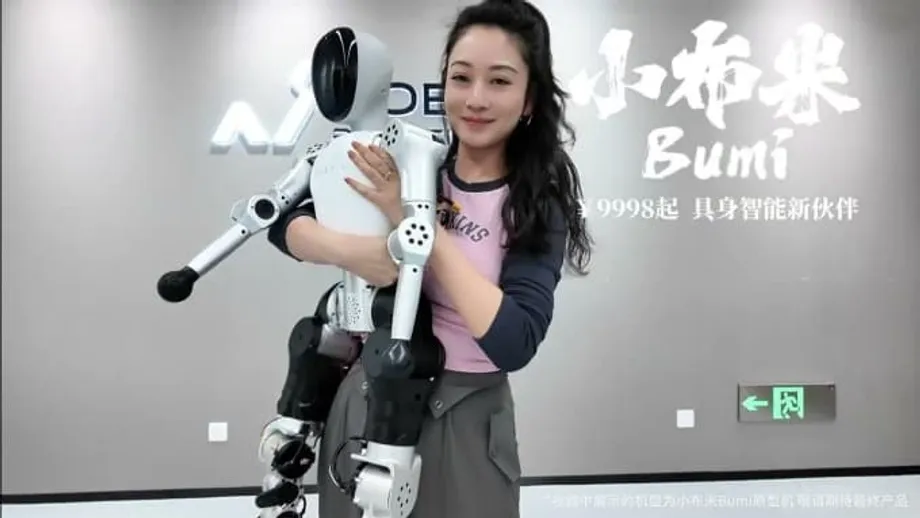
Chinese robotics startup Noetix has introduced Bumi, a humanoid robot priced at 9,998 yuan, roughly $1,380, for classrooms and homes. Standing 94 centimeters tall and weighing 12 kilograms, the machine brings the cost of a small robot that walks on two legs close to that of a premium smartphone in China.
Contents
- A small robot with a much smaller price
- What Bumi can do
- Why making the electronics matters
- A lighter frame reduces several costs at once
- China's supply chain supports the price
- Battery life sets the length of a session
- A classroom companion, not a heavy worker
- Funding and factories underpin the production target
- Where Bumi fits in the humanoid market
- Repairs, software and privacy will shape ownership
- Highlights
Noetix says more than 100 units sold in the first hour on JD.com, with the first 500 booked within two days. Those early orders give the company an initial signal of demand for a product category that often carries prices of tens of thousands of dollars.
Bumi is designed for education and family entertainment. It can walk, respond to voice commands, dance and let users create behaviors through simple visual programming tools. Its role is closer to a learning companion than a machine that takes over physical work around a house or factory.
As of November 1, 2025, Noetix is also preparing to increase production. It has raised nearly 300 million yuan in a funding round led by Vertex Ventures and aims to reach output of roughly 1,000 robots a month by late 2025. Meeting that target will require expansion beyond its existing Beijing facility.
The price is the central feature of the launch, but the engineering behind it matters just as much. Noetix says it redesigned the robot from its circuit boards to its production line, combining electronics developed internally, a lighter structure and a supply chain based almost entirely in China.
Each choice reduces a different expense. Together, they can create further savings: a lighter body needs less powerful motors and a smaller battery, while electronics designed alongside the software can be matched more closely to the robot's intended tasks.
What Bumi can do
Bumi has about 21 joints across its limbs and trunk, giving it the movement needed for walking, balancing, turning, short runs and coordinated dance routines. Public demonstrations have shown it covering short distances, turning, recovering balance and performing choreography.
Noetix has built those abilities around social interaction and learning. Cameras in the head help the robot recognize scenes and people. Inertial sensing, which detects changes in motion and orientation, and other onboard sensors support balance and interaction.
Voice commands and app controls offer ways to direct the robot without programming. For students, drag and drop graphical tools let them assemble behaviors from visual blocks rather than write code from scratch. A classroom exercise can therefore focus on how instructions produce movement, while more experienced users can work through open programming interfaces.
Those interfaces allow teachers, students and makers to script behaviors, experiment with movement and perception, and connect Bumi to other devices or services. The combination gives beginners a simple starting point while leaving room for more advanced projects.
Bumi also integrates with JD.com's Joy Inside 2.0 ecosystem. Noetix intends that connection to provide content and features from outside developers that can be delivered and updated over time. The robot's value to owners will therefore depend partly on the software and activities that become available after purchase.
Why making the electronics matters
Noetix designs and builds its own control boards and motor drivers instead of buying standard modules from outside suppliers. A control board coordinates the robot's operations, while motor drivers manage the electrical power sent to its motors.
Bringing those parts into the company removes layers of supplier margins. It also lets the engineering team adjust motion control, sensing and power management together, rather than fit separately designed components into a finished system.
Noetix's approach puts firmware, motor drivers and the control loop under the same team. Firmware is the software that runs close to the hardware. The control loop repeatedly checks what the robot is doing and adjusts its motors to keep movement on target.
Matching those elements closely can let engineers meet performance goals with simpler components. Instead of selecting more powerful or expensive parts to leave a wide safety margin between separately supplied systems, the team can tune the software to the hardware it has designed.
Noetix presents this as a way to reduce cost while maintaining responsiveness and stability. The savings come from coordinating the design, rather than simply removing capabilities from an otherwise more expensive robot.
A lighter frame reduces several costs at once
Bumi uses composite materials for most of its frame, with metal added where loads require it. That structural approach helps keep its mass at 12 kilograms. Reinforcement around joints supplies the stiffness needed for precise movement without the weight and expense of constructing the entire body from metal.
A robot's weight affects much more than its frame. Heavier limbs need motors that can apply more turning force, known as torque. Those motors can require larger gear systems and more battery capacity, adding further weight and expense.
Noetix's lighter chassis allows smaller actuators, gear trains and battery cells. An actuator is a component that produces movement. Reducing the size of these parts can lower manufacturing costs and make the machine less complex to assemble.
The lighter structure also helps balance control. When Bumi shifts from one step to the next, its controller has less inertia to manage. In simple terms, there is less moving mass to slow down or redirect as the robot changes position.
The design still has to withstand repeated movement. Light frames can flex under repeated loads, making durability an issue for a robot expected to walk, turn and dance regularly. Reinforcement at the joints is therefore part of both the movement design and the effort to keep the structure light.
China's supply chain supports the price
Noetix sources nearly all Bumi parts inside China, including motors, sensors and Rockchip processors. Most structural materials also come from domestic suppliers. The company combines that purchasing strategy with its own control boards and motor drivers.
China's dense manufacturing base offers competitive prices, short delivery routes and quick design cycles. When component suppliers, partners assembling smaller sections and final assembly plants are located in the same regions, a manufacturer can reduce transport risks and the amount of spare inventory it needs to hold.
Nearby suppliers can also make engineering changes faster to carry out. For a young company refining its first consumer product, shorter waits reduce the capital tied up in stock that may become outdated before it is used.
Noetix's three main cost measures work together: internal electronics production, structural changes that reduce weight and domestic sourcing. The resulting parts list and assembly process are intended for mass production, rather than for a laboratory prototype built in small numbers.
Bumi is consequently positioned as a consumer product first and an accessible platform for learning and development. Its price depends on designing the machine, sourcing its parts and assembling it around that purpose.
Battery life sets the length of a session
Bumi uses a battery rated at 48 volts with a capacity a little above 3.5 ampere hours. Noetix gives a runtime of about one to two hours per charge, depending on movement speed, activity intensity and the computing work being done onboard.
Voltage describes the electrical supply, while ampere hours describe how much charge the battery can provide. For a family or teacher, the practical figure is runtime: the same robot can use its battery faster during energetic movement than during a less demanding activity.
The expected operating window fits short learning sessions, guided activities and family entertainment. It may feel restrictive during a long school day or in a home where people want to use the robot repeatedly over several hours.
Bumi's movement abilities and operating cycle are tuned for education rather than heavy tasks. That decision helps keep costs and risks down, while setting limits on what owners can expect from the machine.
A classroom companion, not a heavy worker
Noetix chose Bumi's 94 centimeter height to suit classrooms and living rooms and make the robot less intimidating around children. Its smaller size and lower weight are intended to reduce the risk of impact injuries when it moves near students.
The design also aims to limit pinch points and hard edges while retaining a wide range of motion. Pinch points are places where moving parts can trap fingers or other objects, a practical concern for a machine used close to children.
Bumi is not intended to lift heavy items, climb ladders or handle hazardous materials. Noetix has built it for spaces where people gather, rather than factories or warehouses. Its battery and expected duty cycle suit supervised activities more closely than prolonged physical work.
Noetix also refers to the uncanny valley, the uneasy feeling some people experience when a machine looks almost human but still seems different. Bumi's smaller, visibly robotic form and exaggerated movements are intended to make interaction friendlier for children encountering a robot for the first time.
The product follows a pattern in consumer robotics in which machines first find uses as companions and creative tools before progressing toward more capable household assistance. For Bumi, the immediate focus remains learning, interaction and entertainment.
Funding and factories underpin the production target
Noetix has closed a funding round of nearly 300 million yuan before its Series B round, led by Vertex Ventures. The capital supports factory expansion and supplier tooling as the company moves from early advance orders toward volume production.
The company says its Beijing facility can deliver more than 200 units a month. A new plant in Changzhou, Jiangsu province, is expected to reach about 300 units a month by December. A third site under planning could add another 500 units a month.
Together, those facilities form the basis of Noetix's goal of roughly 1,000 units each month by late 2025. The third site's location and opening date were not given. The production figures describe the existing facility and planned expansion at different stages.
The launch and manufacturing schedule can be set out briefly:
- Earlier in 2025: Unitree introduced its R1 humanoid at 39,999 yuan.
- By November 1, 2025: Noetix had introduced Bumi at 9,998 yuan and reported more than 100 sales in its first hour and 500 bookings within two days on JD.com.
- December 2025: The Changzhou plant was expected to reach about 300 units a month.
- Late 2025: Noetix aimed for combined output of roughly 1,000 units a month, with a third production site under planning.
Noetix founder Jiang Zheyuan acknowledged the immediate financial pressure at a media briefing in Beijing. Describing the economics while production increases, he said:
Profit margins are indeed quite low.
Venture funding is intended to cover spending while factories and suppliers settle into steady production yields. Yield describes how much output meets the required quality standard. Noetix will need to maintain quality at the launch price while its software team delivers updates that give owners more to do with the robot.
Where Bumi fits in the humanoid market
China's push toward affordable humanoids provides the setting for Bumi's launch. Unitree introduced its R1 earlier in 2025 at 39,999 yuan, already a fraction of the price of its more advanced G1 platform.
Bumi's 9,998 yuan price is approximately one quarter of the R1's 39,999 yuan price. The comparison shows how far apart prices can be even among relatively accessible humanoids, while the robots target different features and uses.
Local and municipal programs in China are supporting robotics training and testing facilities to help companies bring designs to market quickly. Domestic chip suppliers and motor manufacturers have also benefited from the push for supply chains based within China, which helps explain Bumi's use of a Rockchip processor and Chinese actuators.
Larger Western projects have much higher price ambitions. Tesla's Optimus has been described with a target price near $20,000, alongside a different purpose and feature set. Bumi's classroom and entertainment focus places it in a different part of the market.
Noetix's launch establishes a new cost reference: a small humanoid that walks on two legs can be offered near the price of an iPhone in China. The spread between Bumi, Unitree's R1 and the price goal for Optimus also shows the range of budgets and intended tasks within the humanoid category.
Repairs, software and privacy will shape ownership
Bumi's purchase price is only one part of the ownership experience. Repairs and service matter for a robot that moves on two legs and may suffer falls or wear. Parts that are difficult to replace could make a low initial price less attractive over time.
Noetix says it will expand production and logistics. Its service operation will need to respond just as effectively when owners need replacement parts or help with a damaged machine. Durability under repeated movement is another practical consideration for schools planning regular activities.
Teachers and enthusiasts will also need more than approachable programming blocks. Reliable software libraries, clear documentation and repeatable behaviors would allow a class in one city to recreate a project developed in another.
The developer ecosystem will take time to mature. Open interfaces and Joy Inside 2.0 integration provide routes for additional content and functions, while the usefulness of those routes depends on what developers build and how consistently projects run.
Cameras and microphones bring privacy and safety concerns into classrooms and homes. Owners will need transparent information about those matters, particularly when children interact with the machine.
A more accessible price can broaden Bumi's user community. A larger group of teachers, families and makers can discover which activities work best, helping guide future software updates, accessories and course materials. Noetix's task is to support that community while turning early orders into reliable products at a price that leaves little margin.
Highlights
- Noetix Bumi costs 9,998 yuan, about $1,380, and stands 94 centimeters tall with a mass of 12 kilograms.
- Noetix reported more than 100 sales in the first hour and 500 bookings within two days on JD.com.
- The robot supports walking, balancing, short runs, dancing, voice commands and visual programming, with about 21 joints.
- A 48 volt battery rated a little above 3.5 ampere hours provides about one to two hours of use per charge.
- Internal electronics production, a lighter composite frame and sourcing almost entirely within China underpin the price.
- Open programming interfaces and JD.com's Joy Inside 2.0 integration support learning projects and additional content.
- Nearly 300 million yuan in funding supports expansion toward roughly 1,000 units a month by late 2025.
- Bumi is intended for education and family entertainment, not heavy lifting or hazardous work.
- Low margins, durability, repairs, software support and privacy remain practical concerns as production expands.