Millions of users turn a payment code into an economic force
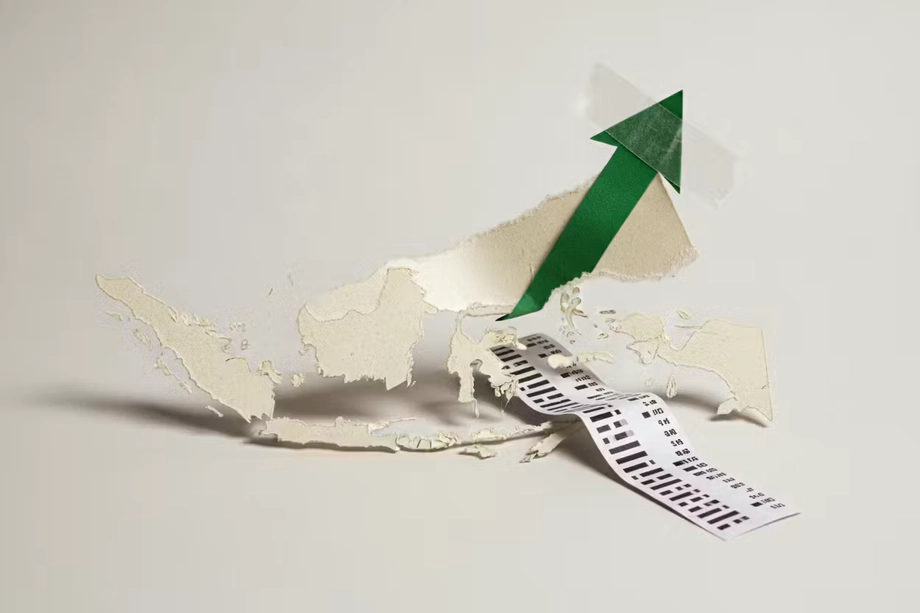
Indonesia's QRIS payment network had more than 57 million users by mid 2025, while transactions in the first half of the year reached roughly Rp 317 trillion, an increase of more than 120 percent from a year earlier. A system introduced by Bank Indonesia in 2019 now connects customers and businesses across malls, wet markets, small kiosks and taxis.
Contents
- Millions of users turn a payment code into an economic force
- How one code connects different banks and wallets
- BI FAST supports the movement of money
- Adoption spreads from major chains to small traders
- What small businesses gain from digital payments
- Payments move across borders
- Transport and cash services extend the network
- Security becomes a test of public trust
- Uneven access and merchant costs can slow growth
- How Indonesia's approach compares with India and China
- The Bottom Line
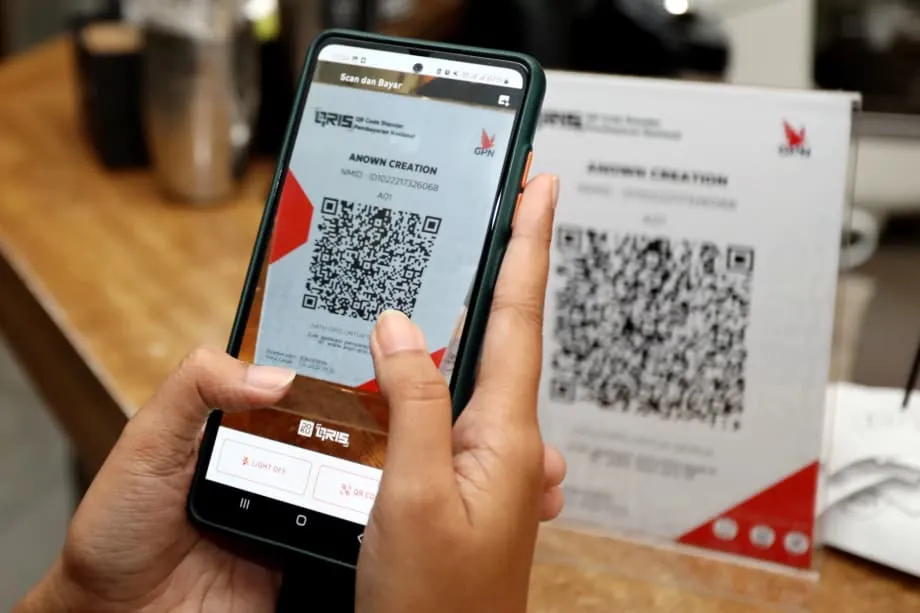
QRIS, short for Quick Response Code Indonesian Standard, lets participating banks and electronic wallets use the same payment code. A merchant can display one code instead of managing separate arrangements for different apps. Customers can pay through their preferred participating service.
Government projections put Indonesia's digital economy at around $90 billion in 2024, with a path toward $400 billion by 2030. Those figures describe an economy supported by digital payments and expanding online shopping, with QRIS helping make electronic transactions practical for businesses that once depended on cash.
The projected increase from $90 billion to $400 billion would make that economy more than four times its 2024 size. Reaching that scale involves more than adding payment accounts: merchants need affordable services, customers need reliable transactions, and payment providers need strong protection against fraud.
Bank Indonesia Governor Perry Warjiyo linked the expansion of payments to the country's wider economic momentum while addressing a packed national digital economy forum.
"Indonesia is now one of the fastest growing digital economies and payment systems in the world," said Bank Indonesia Governor Perry Warjiyo.
As of November 2, 2025, Indonesia's approach combines a common payment standard, inexpensive bank transfers and growing connections with overseas networks. Its next challenge is extending those benefits across a large and economically diverse country while keeping costs and security risks under control.
How one code connects different banks and wallets
Bank Indonesia created QRIS to bring order to a fragmented payment market. Before the standard, merchants often needed several devices and agreements to accept different wallets or banking apps. A customer might have money ready to spend but use an app the seller could not accept.
QRIS establishes common rules for generating, displaying, scanning and processing payment codes. A stall owner in Sulawesi and a cafe in Jakarta can each display a single code that works across participating Indonesian banks and wallets.
Merchants can use a static code, printed once and displayed on paper, or a dynamic code that changes for each transaction on a small screen. A compatible customer app scans the code, and the merchant's bank or payment company receives the payment through the network connecting it with the customer's bank or wallet.
Participating apps and merchant payment providers can work together because they follow the same rules. Businesses do not need additional hardware or special agreements for every customer app, reducing both expense and administrative work.
A taxi driver therefore does not need four devices, and a shopper does not need to ask which wallet a store accepts. For a small business, that simplicity can make accepting digital payments practical. For customers, wider acceptance can turn an occasional payment method into an everyday habit.
Bank Indonesia also gains a common framework for setting technical and security requirements and supervising the network. As more merchants join, customers find more places to pay. As more customers join, merchants have a stronger reason to participate. Economists call this a network effect: a service becomes more useful as more people use it.
BI FAST supports the movement of money
Bank Indonesia paired the expansion of QRIS with BI FAST, a system that moves money between accounts in real time. QRIS provides the shared rules for accepting a payment code, while BI FAST supports quick and inexpensive transfers.
BI FAST caps the transfer charge at Rp 2,500 and applies zero fees to small transactions below Rp 500,000. Lower charges matter when people transfer modest amounts, because even a small fixed fee can represent a noticeable share of the money being sent.
The two systems have become central to Indonesia's daily digital transactions. QRIS simplifies payment acceptance, while BI FAST helps people move money quickly and cheaply. As more transactions involve different payment providers, national switching systems, which route payment instructions, and settlement infrastructure, which completes the movement of funds, carry a larger load.
Adoption spreads from major chains to small traders
Industry data showed annual QRIS growth in triple digits throughout 2024 as acceptance spread beyond large retailers. By the middle of that year, the system had more than 50 million users and more than 30 million merchants.
Bank Indonesia's figures pointed to more than 57 million users and tens of millions of merchants by mid 2025. The vast majority of those businesses were micro, small and medium enterprises, commonly called MSMEs. Acceptance through a phone or a printed code fits a retail economy in which small traders and informal vendors play a large role.
QRIS payments exceeded one billion transactions by March 2025. Bank Indonesia recorded roughly Rp 317 trillion in transaction value during the first half of 2025, more than 120 percent above the same period a year earlier. That means the value more than doubled in a year.
The main milestones show how quickly the network developed:
- 2019: Bank Indonesia introduced QRIS as Indonesia's national QR payment standard.
- Mid 2024: Adoption reached more than 50 million users and more than 30 million merchants.
- Throughout 2024: Industry data showed annual growth in triple digits.
- March 2025: QRIS payments exceeded one billion transactions.
- First half of 2025: Transaction value reached roughly Rp 317 trillion, rising more than 120 percent from a year earlier.
- Mid 2025: Bank Indonesia's data pointed to more than 57 million users and tens of millions of merchants.
Vice President Gibran Rakabuming Raka praised Generation Z for adopting QRIS quickly and helping extend its use from major stores to small traders. Younger Indonesians' familiarity with mobile apps, preference for convenience and dislike of queues have helped make scanning to pay more familiar in cities and towns.
What small businesses gain from digital payments
A small warung can accept phone payments through QRIS without renting a card terminal or signing several contracts. A fish seller can put a printed code on a table and complete sales quickly. Those savings in equipment and administration matter for businesses operating on narrow margins.
Digital transactions also create a record of sales. Over time, lenders can use patterns in that record to assess cash flow rather than relying only on collateral, such as property pledged against a loan. That can help small merchants seek formal credit.
Small producers and sellers can also accept payments from local customers and tourists. Industry groups and Bank Indonesia credit QRIS with helping MSMEs reach new customers and supporting local tourism by making purchases easier at the point of sale.
Financial inclusion means making useful financial services accessible to people and businesses that have had limited access. QRIS supports that goal through familiarity, trust and convenience. Payments become habitual when nearby stalls accept them, confidence grows when transactions and dispute handling work reliably, and convenience improves when the same method is available at a park, toll gate, bus stop or neighborhood grocer.
Payments move across borders
Indonesia has connected QRIS with payment networks in Malaysia, Thailand and Singapore. Indonesians can use their usual participating apps to pay in those countries, while visitors from those markets can scan QRIS codes in Indonesia using their home apps.
The arrangement reduces the difficulty of using different currencies for small purchases and supports settlement in local currencies between central banks. In destinations such as Batam and Bali, it gives tourists and merchants another way to transact without relying as heavily on cash or cards.
Japan has launched an initial phase allowing Indonesian apps to scan compatible Japanese QR codes at selected merchants, with plans to expand acceptance. Trials with payment partners in China are underway. Officials have also placed India and Saudi Arabia on the roadmap as infrastructure and agreements develop.
The links are at different stages: Malaysia, Thailand and Singapore already support reciprocal use, Japan has begun with selected merchants, and China remains at the trial stage. No launch dates were given for connections with India and Saudi Arabia or for broader Japanese acceptance.
Bank Indonesia Governor Perry Warjiyo has presented QRIS as a way to connect Indonesia internationally while retaining national control over its core payment infrastructure.
"QRIS symbolizes the sovereignty of Indonesia's payment system," said Governor Perry Warjiyo, highlighting the country's competence in expanding interoperability across borders.
Some foreign companies have questioned whether Indonesia's approach favors certain participants. Policymakers say the standard is open to companies that follow national rules and consumer protection requirements, with inclusion, affordability and fair access intended for domestic and international players.
Indonesia's growing overseas connections reflect that combination of goals: making payments work across borders while preserving rules designed to support the domestic economy and small businesses.
Transport and cash services extend the network
Bank Indonesia has launched QRIS Tap In and Out for public transport in Greater Jakarta, covering the MRT, commuter line, TransJakarta buses and both Jakarta LRT lines. The service moves the payment process beyond scanning a displayed code.
Passengers tap a phone near a reader when entering and tap again when leaving. The system uses near field communication, a technology that lets nearby devices exchange information. Keeping the payment within the QRIS framework allows the standard to serve journeys where fast entry and exit are essential.
QRIS Antarnegara supports payments across borders, while QRIS TUNTAS extends the network beyond purchases. At participating agents, TUNTAS can support cash withdrawals, transfers and deposits, connecting digital accounts with services people still need in cash.
Regulators have adjusted merchant discount rates and technical standards to keep costs manageable for small sellers while supporting reliability as transaction volumes increase. A merchant discount rate is the fee a business pays for accepting a payment, making it an important part of the calculation for traders with small profits on each sale.
Security becomes a test of public trust
The Financial Services Authority, known as OJK, has urged banks to strengthen defenses, invest in cybersecurity and improve consumer protection as financial services become more digital. The required work includes stronger checks on users' identities, monitoring suspicious activity, responding quickly to incidents and coordinating education about scams.
Indarto Budiwitono, OJK deputy commissioner for private bank supervision, described security as a concern for both technology and the continuing operation of banks.
"Cyber resilience is not only about system defense but also bank reputations and business continuity," said Indarto Budiwitono.
Industry associations have called for three measures in parallel: regulation and supervision matched to the level of risk; responsible use of artificial intelligence and open finance under strong governance; and public education about phishing and fraud across platforms. Open finance involves services built around financial data sharing, making rules governing that use part of the security discussion.
Phishing is an attempt to trick someone into giving away information or access, often through a message that appears trustworthy. The National Cyber and Encryption Agency has warned that criminals use personal data to tailor these attacks and develop malware that changes its form to make detection harder.
Edit Prima, the agency's director for finance, trade and tourism cybersecurity, said the sector needed artificial intelligence to respond to attacks using the same technology.
"We must be ready for AI-based attacks and know how to face them. There is no other way but to also use AI," said Edit Prima.
Indonesia's Personal Data Protection Law and related rules are tightening compliance requirements. Transfers of data across borders face restrictions unless destination countries meet local standards. Companies serving a growing digital customer base must invest in security and data management to meet national and regional requirements.
Uneven access and merchant costs can slow growth
Java leads QRIS adoption, while merchant density in eastern provinces remains lower. The gap reflects differences in economic activity, internet connections and digital literacy. A standard that works across participating apps still depends on people having the connections, devices and knowledge needed to use them.
Reaching remote communities requires better internet access, more affordable phones and data, and education suited to small merchants who are new to digital finance. Expanding the number of registered users and merchants is only part of making the network useful throughout the country.
Small traders also worry about fees and chargebacks, which reverse a payment. QRIS costs less to adopt than card terminals, but the allocation of costs among customer payment providers, merchant payment providers and the systems routing transactions needs continued attention. Very small businesses can be sensitive to even modest charges.
Regulators have been active in adjusting costs and standards. Rising volumes will keep pressure on pricing and uptime, meaning the availability of the service when customers and merchants need it.
Businesses also face changing requirements for privacy, data storage and cybersecurity. Indonesia's decentralized governance means some rules vary by region, adding complexity for companies operating nationwide. Clear standards and consistent enforcement can support investor confidence and dependable service.
How Indonesia's approach compares with India and China
India's Unified Payments Interface, or UPI, and Indonesia's QRIS share an approach led by regulators, with common standards that compliant participants can join. Both seek broad connections among providers and low fees to encourage widespread use.
China's QR payments developed through private super apps, which combine multiple services in one application. Regulators later pushed for greater connections between those platforms. Indonesia sits closer to India's approach: it established a national standard early, brought banks and financial technology companies into it, and paired payment acceptance with a fast, inexpensive transfer system.
The different paths reflect different starting points and policy choices. Indonesia has placed small merchants and financial access at the center of its design while leaving room for international partnerships. The spread into tourism, transport and cash services shows how one common standard can serve several everyday needs.
QRIS growth now depends on keeping those services affordable, secure and reliable as the network expands. More users and merchants make the system more useful, while stronger connections, clear rules and practical education help people turn access into regular use.
The Bottom Line
- Bank Indonesia introduced QRIS in 2019, allowing one merchant code to accept payments across participating banks and wallets.
- By mid 2025, the network had more than 57 million users and tens of millions of merchants, predominantly MSMEs.
- QRIS transaction value reached roughly Rp 317 trillion in the first half of 2025, increasing more than 120 percent from a year earlier.
- Government projections put Indonesia's digital economy at around $90 billion in 2024, with a path toward $400 billion by 2030.
- BI FAST supports real time transfers, with charges capped at Rp 2,500 and zero fees for small transactions below Rp 500,000.
- Connections cover Malaysia, Thailand and Singapore. Japan has begun an initial phase, China is conducting trials, and India and Saudi Arabia are on the roadmap.
- QRIS Tap In and Out brings the framework into Greater Jakarta transport, while QRIS TUNTAS supports withdrawals, transfers and deposits at participating agents.
- Cybersecurity, data protection, regional access gaps and merchant costs remain central challenges as adoption grows.