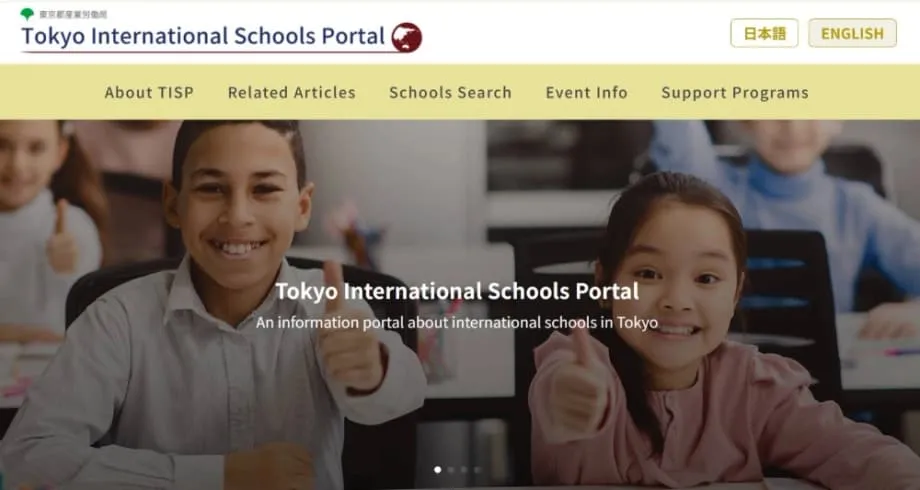
A single starting point for the school search
Tokyo Metropolitan Government launched the Tokyo International Schools Portal at 14:00 Japan time on Friday, October 24, 2025, bringing information about international schools across the capital into one bilingual website. Available in English and Japanese, it gives families a way to compare locations, capacity, average class sizes, curricula and tuition bands, alongside video introductions.
Contents
- A single starting point for the school search
- Why education sits inside a finance strategy
- What families can compare
- Different campuses, different educational routes
- What IB, AP and British qualifications mean
- Admissions depend on age, timing and support needs
- Tuition is only part of the budget
- Support for opening and expanding schools
- Turning a search into a practical shortlist
- Learning beyond the school gates
- What the launch changes for families
- Key Points
The launch addresses a practical problem for households considering a move to Tokyo. Parents have often had to piece together school information from individual websites, social media discussions and advice from friends. The portal gathers key details in a consistent format, helping families build a shortlist with less stress and fewer unknowns.
Tokyo also has an economic reason for making that search easier. The website is intended to support companies bringing global talent to the capital, where schooling can influence whether a candidate accepts a job or agrees to relocate. Recruiters and relocation managers regularly face questions about education before a family commits to moving.
The city has published an official launch announcement on its English website outlining the portal and its features. Alongside information for parents, the site includes guidance for organisations considering opening or expanding an international school in Tokyo.
Why education sits inside a finance strategy
The portal forms part of the Tokyo 2050 strategy, under strategy 12, Global Finance. Its place in that plan reflects a goal that extends beyond business licences and office districts: creating a living environment that works for international professionals and their households.
Tokyo officials have said the city cannot attract global professionals unless everyday life runs smoothly for their families. Education is central to that calculation, particularly for residents whose first language is not Japanese and who need clear information before choosing a school.
Families weigh commuting time, available courses, language support and whether siblings can attend the same campus. An attractive job offer still leaves parents needing answers about where their children will study and how the school day will fit around work.
Singapore and Hong Kong have long placed importance on making international school options clear. Tokyo's portal responds to that expectation and complements business support measures, international financial initiatives and improvements in English language public information. A simpler school search can reduce the workload for corporate human resources teams and relocation consultants while helping candidates assess whether Tokyo meets their family's needs.
What families can compare
The portal presents international school information in a shared format, with entries covering location, capacity, average class size, curriculum and tuition bands. Video introductions give schools another way to present their campuses and programmes.
Parents and guardians can search by area, school type and curriculum, then open individual school pages for information about class sizes, languages taught and admissions. Grade levels and the places where families expect to live and work also shape which options are practical.
The website is designed to serve as a starting point before campus tours and interviews. Families arriving during the school year can use it to investigate which grades have space and how waiting lists operate in different parts of Tokyo. Current availability and the details of a child's application remain matters to confirm with each school.
International education in the capital serves expatriate families as well as residents who have lived in Japan for many years and want a global curriculum. Parents already in Tokyo can use the portal to follow new programmes and campus expansions. Schools, in turn, gain another way to present their strengths to a wider audience.
Different campuses, different educational routes
Tokyo's international schools offer several routes through education, including the International Baccalaureate, British programmes leading to IGCSE and A levels, and American programmes that include Advanced Placement. Families also face a choice between spacious suburban campuses with sports facilities and schools in dense central neighbourhoods closer to business districts.
The American School in Japan offers an American style education from the early years through high school. It has more than 120 years of history and two campuses, with academic pathways that include Advanced Placement. Clubs, arts and athletics sit alongside an approach that values inquiry and independent thinking, serving a community with many nationalities.
The British School in Tokyo follows the National Curriculum for England across two central campuses. Azabudai Hills serves early years and primary pupils, while Showa serves secondary students. Its programme includes academics, music, art, sport and drama, combining examination preparation with outdoor learning trips intended to develop teamwork and leadership. Graduates go on to universities around the world.
Tokyo International School is an IB World School whose approach stresses learning through inquiry and giving students a voice in their education. Its community represents many nationalities. Staff with extensive IB experience support student choice and reflection, with the aim of building independence, creativity and the ability to work across cultures.
Nishimachi International School combines rigorous academics with language learning in English and Japanese. Small classes and a close community are part of its identity, while daily Japanese lessons help students engage with local culture. Its educational foundation balances a global outlook with local understanding as graduates continue towards higher education.
Phoenix House International School offers a British preparatory model for primary pupils, with a Tokyo campus and an enrichment campus in Hokkaido. Core subjects are paired with creative and collaborative projects, and the programme places value on character development. A learning support and therapy hub connected to the Tokyo campus gives parents direct access to services including assessments and speech and language therapy.
What IB, AP and British qualifications mean
The International Baccalaureate provides a sequence of programmes: the Primary Years Programme, the Middle Years Programme and the Diploma Programme, which covers the final two years of secondary school. Its approach centres on inquiry, encouraging students to ask questions, investigate ideas and think critically.
The IB Diploma Programme includes subjects across different disciplines, an extended essay, theory of knowledge, and creativity, activity, service. Theory of knowledge asks students to think about how knowledge is developed and understood. The diploma is accepted by universities around the world.
An American style programme usually combines a broad curriculum with Advanced Placement courses during high school. AP examinations allow students to demonstrate mastery of particular subjects at college level. Depending on the school, students may also have access to concurrent enrolment with universities, independent study or learning organised around projects.
American programmes tend to allow flexibility in course selection while requiring students to make progress towards graduation requirements. For a family changing schools, the practical issue is how a child's existing studies fit the courses and credits needed at the new school.
British schools generally follow a sequence leading to IGCSE examinations at around age 16, followed by A levels in the final two years. Students narrow their subject choices at A level, allowing deeper study in areas such as mathematics, sciences or humanities. University admissions teams in many countries are familiar with these qualifications.
Admissions depend on age, timing and support needs
Tokyo's international schools admit students throughout the year, although places in key grades can fill early. Families arriving in late summer face more competition. Many schools organise waiting lists by grade and language profile, so availability can vary within the same school.
Entry during the school year is possible in many cases, particularly when a school expands or another family leaves. A broader view of the city's options can help parents identify schools that have space and offer a suitable curriculum.
Applications typically involve an online form, recent school reports and teacher references. Some schools also require a placement assessment or interview. Younger children may take part in observations based on play and short assessments.
Language support deserves attention early in the search. Families should ask how a school supports English as an additional language and how it assesses language readiness at different grade levels. Parents moving with teenagers also need to discuss the transfer of academic credits and support for university applications.
Tuition is only part of the budget
Annual tuition at Tokyo's international schools often runs into millions of yen. The portal's tuition information gives families an initial view of affordability before they invest time in arranging visits.
Parents also need to budget for application and enrolment charges, development or capital fees, school buses, lunches, uniforms and materials. A school with an acceptable tuition figure may have other costs that change the household budget.
Some schools offer reductions for siblings or arrangements allowing a company to handle billing. Scholarships are limited, although a few schools provide aid based on financial need or merit. Families should request a breakdown of annual charges and fees paid once, then check which services and materials are included.
Cost and location also interact. A school that fits a family's educational preferences still needs to work with its daily travel plans, bus routes and working hours. Comparing those details together gives parents a more useful shortlist than looking at tuition alone.
Support for opening and expanding schools
The portal also addresses the supply of international education. Its section for school leaders and potential operators explains support systems for establishing or expanding schools, including procedures, consultations and the city's policy framework for increasing education capacity of a high standard.
Demand in particular age groups and neighbourhoods makes guidance on expansion valuable. Information about consultation, facility planning and compliance can help an existing school assess additional grades or a larger campus, and help a new operator understand what setting up in Tokyo involves.
Operators also need to consider accreditation pathways. Relevant organisations include the Council of International Schools, the New England Association of Schools and Colleges, and the Western Association of Schools and Colleges. Schools offering IB programmes need to consider authorisation by the International Baccalaureate.
Accreditation provides families and universities with an indication of quality, while local legal requirements govern a school's establishment and operation. Operators need to address both. A clearer process for growth could lead to new campuses or additional grades, benefiting families where places are tight.
Turning a search into a practical shortlist
Families can begin with curriculum and grade levels, then narrow their options by location. The aim is to find a balance between educational fit and a manageable journey, using school pages to identify admissions contacts and arrange visits.
Campus visits offer a chance to ask about class size, teacher experience, student support, language pathways, arts and athletics. Parents can also explore how a school incorporates Japanese culture and what its parent community is like.
Waiting list rules, placement tests and arrangements for children entering an unfamiliar curriculum should be discussed before a family makes firm plans. School start and finish times matter too, particularly when siblings attend different campuses or parents must coordinate the journey with work.
A focused checklist can help families compare answers rather than collecting disconnected impressions:
- Confirm the curriculum pathway, graduation requirements and examinations.
- Ask about English as an additional language and learning support services.
- Review class size, teacher experience and accreditation.
- Map commuting times, bus routes and the start and end of the school day.
- Request a breakdown of tuition, annual charges and fees paid once.
- Check waiting list policies, assessments and other entry steps.
- Discuss school culture, extracurricular activities and the parent community.
- Clarify transitions between curricula, credit transfers and preparation for university.
Learning beyond the school gates
Tokyo's museums and cultural venues add to the experience available to international families. At teamLab Borderless in the Azabudai Hills complex, digital artworks respond to movement and touch, allowing children and adults to explore large interactive rooms.
The immersive art museum encourages curiosity and creative thinking, making it a natural complement to the inquiry approach used in many international schools. It gives families a setting where exploration continues outside formal lessons.
The Odaiba Retro Museum offers a different kind of experience, recreating everyday spaces from the Showa era. Its presentation of history gives children opportunities to learn through seeing and doing.
Parks, sports facilities, libraries and community centres across Tokyo provide further places for students to spend time and build healthy routines. Those everyday facilities sit alongside the city's larger cultural attractions.
Tokyo Opera City, other concert halls and community stages host competitions and youth programmes that attract international participants. Schools often work with local institutions, giving students opportunities to develop interests in music and performance in settings suited to their talents.
What the launch changes for families
The portal gives newcomers and established residents a common starting point for a search that previously depended heavily on visiting individual school websites and gathering informal advice. Consistent descriptions make it easier to compare educational routes, locations, class sizes and costs before contacting admissions teams.
Tokyo's wider ambition connects that household task with the city's ability to recruit and retain international talent. Companies can offer candidates a clearer view of school options, while families can plan education alongside housing, commuting and work.
The service also brings the needs of parents and operators into the same policy effort. Families need suitable places and understandable information; schools considering growth need guidance on procedures, facilities and requirements. The launch addresses both sides while leaving individual admissions decisions and detailed arrangements with schools.
Key Points
- Tokyo Metropolitan Government launched the portal at 14:00 Japan time on October 24, 2025, in English and Japanese.
- School entries bring together location, capacity, average class size, curriculum, tuition bands and video introductions.
- Families can compare options before arranging visits and confirming admissions, support services and full costs.
- The capital's choices include IB, British and American educational pathways.
- A section for operators explains support for opening or expanding international schools.
- The project sits under Global Finance, strategy 12 of the Tokyo 2050 strategy, linking education with efforts to attract international talent.