A Hydlide creator struggles to get an interview
Tokihiro Naito helped build Japan's early computer game industry. Yet after a contract ended when he was around 50, the creator best known for Hydlide found that decades of experience could not reliably get him through the first stage of a job application.
Contents
- A Hydlide creator struggles to get an interview
- Why age is visible before skills are discussed
- What Japan's hiring rules leave unresolved
- A crowded market adds pressure
- When interviews become fan meetings
- Why overseas applications can feel different
- What skills need to be visible
- Changes studios can make at the first screen
- What companies stand to lose
- Policy options beyond individual studios
- Key Points
Naito says he applied widely and was rejected by nearly every company during document screening once his age became apparent. Only a handful invited him to interviews. Some meetings felt more like opportunities for fans to meet a familiar creator than serious discussions about employing him.
Persistence, luck and personal connections eventually helped him find work again. He later became a director at M2, a studio respected for its careful conversions of older games and its work preserving them. His experience nevertheless exposed a concern shared by other veteran developers: reaching their late forties or fifties can make getting an interview much harder.
The problem reaches beyond a single designer. A former T and E Soft programmer described applying to about 25 companies and receiving only two interviews. Both were short, and both raised age as a concern. Another veteran said that after turning 50, overseas studios would still offer interviews while Japanese companies would not advance the application once the candidate's age became clear.
For these developers, the immediate barrier was the chance to demonstrate their skills. Their accounts describe decisions being made before a portfolio discussion, a technical assessment or a meaningful conversation about what they could contribute.
Why age is visible before skills are discussed
Japan's standard resume, known as a rirekisho, typically asks for a date of birth and a headshot. Age and graduation year are usually visible, allowing recruiters to work out an applicant's age within seconds. That makes age part of the first impression, alongside qualifications and employment history.
Veteran developers describe a hiring culture in which those details carry considerable weight. Pay commonly rises with seniority, and many companies maintain retirement ages followed by reemployment at lower pay. An older applicant can therefore arrive with assumptions attached about salary, position and how long the company expects them to stay.
Corporate hierarchy adds another complication. A manager may have fewer years at the company, or simply be younger, than a prospective subordinate. Hiring an older person into a junior position can feel awkward within that structure, even when the applicant is willing to accept the role.
Job advertisements can also communicate an age preference without setting a firm limit. Applicants report wording such as young team, junior level only and second new graduate. The last expression points toward people who left education relatively recently and are still near the beginning of their careers.
A recruiter or an automated screening system can use graduation year or career length to narrow the applicant pool. For someone with decades of work behind them, that can mean rejection before anyone examines their code, design documents or record of completed games.
What Japan's hiring rules leave unresolved
Japan's legal framework encourages employment opportunities for older workers and discourages age limits in recruitment. Guidance tells companies to avoid stating age requirements unless there is a valid reason. The framework nevertheless contains broad exceptions and few penalties, leaving it without a strong, explicit nationwide prohibition backed by substantial enforcement against age discrimination in hiring.
Employers can often explain their preferences in broad terms. Challenging an individual recruitment decision through litigation is rare and difficult, and limited damages provide little deterrent. For an applicant rejected at the document stage, establishing why a company made its decision can be particularly difficult.
Salary expectations are one influence on those decisions. Where pay is closely tied to seniority, companies may assume that an older candidate will cost more, including when they describe recruitment as based on skill. Managers may also believe younger employees will adapt more quickly to unfamiliar tools or remain with the business for longer.
Other assumptions concern modern production schedules. Some employers view younger applicants as a better fit for games that require continuous updates, ongoing content production and close attention to player data. Those beliefs are not always grounded in evidence, yet they can shape screening before an applicant has an opportunity to explain relevant experience.
A crowded market adds pressure
The wider games market has made those barriers harder to navigate. Studios expanded during the pandemic as demand for games increased. When demand returned toward more normal levels, competition intensified, funding tightened and large publishers reorganized. Layoffs sent more experienced developers into the job market at the same time.
Greg Holt, a longtime developer who has worked through industry cycles since the 1990s, described the combination as unusually difficult. He said the market became oversaturated after the pandemic hiring surge and then returned to normal demand. In his account, this was the first downturn in which large numbers of developers in their late forties and fifties were seeking work together.
Japanese applicants face that larger pool of competitors alongside conservative staffing decisions and existing preferences for younger hires. A company receiving more applications can make its initial screening narrower, putting greater weight on details that are easy to identify, including age.
Large development teams increasingly organize work around live operations, data analytics and continuous content pipelines. Live operations means maintaining a game after release through updates, events and other ongoing work. Some managers assume older candidates will struggle with those rhythms even when their portfolios show a strong record of delivery.
When interviews become fan meetings
Naito's account also points to a less obvious difficulty: professional recognition does not always lead to a genuine hiring opportunity. A developer may be admired for a game that influenced younger employees while still struggling to persuade a company to consider them for a current position.
Other veterans describe interviews that appeared to be arranged so staff could meet someone whose work they grew up with. Such meetings consumed time without feeling like a serious attempt to fill a vacancy. For applicants, being remembered for a past achievement could coexist with being overlooked as a working developer.
Some eventually received offers through personal networks. Naito's eventual return to employment similarly involved connections as well as persistence and luck. Those routes can help experienced people find a place, but the developers' accounts describe formal applications in which age repeatedly took precedence over skills.
Why overseas applications can feel different
Foreign owned studios in Japan and overseas studios recruiting remotely often use application processes that do not request age. Resumes in many Western hiring systems omit a birthdate and photograph, leaving portfolios, work history and relevant abilities more prominent during the first review.
The legal setting also differs. In the United States, the Age Discrimination in Employment Act, or ADEA, protects workers aged 40 and older against age discrimination. European Union law also prohibits age discrimination, with limited exceptions.
Those rules operate alongside a cultural expectation that age is not a job requirement. They influence how employers write advertisements and what information they collect from candidates. A review of portfolios and code samples without age data can give older developers more opportunity to reach an interview and demonstrate what they know.
The veteran who reported receiving interviews only from overseas studios after turning 50 described that difference in practical terms. Foreign applications could lead to a conversation, while domestic applications stopped earlier. The next steps for candidates, studios and policymakers were not given a timetable.
What skills need to be visible
Developers in their forties and fifties can bring deep product knowledge, lessons learned from completed games and the ability to mentor less experienced colleagues. Companies still expect applicants to connect that experience to a particular production need. A long career becomes easier to assess when its relevance to the vacancy is immediately apparent.
Engineering roles may require engine integration, rendering, build systems, development tools or performance optimization. Those jobs cover how a game's technology fits together, how its images are produced, how working versions are assembled and how smoothly the finished product runs.
Design positions can call for senior systems work, combat tuning, level pacing and content pipelines. Art portfolios may need to demonstrate technical art, rigging, shaders, lighting or environment polish. These include preparing digital characters to move, controlling how surfaces look and refining the spaces players explore.
Production and live operations positions place value on risk management, forecasting, relationships with outside suppliers and delivering a planned sequence of work. In each discipline, an applicant's experience needs to answer the employer's immediate question about the job.
Current tools matter as well. Experience with Unreal Engine 5, digital content creation pipelines, source control at scale and live service metrics is now common in job descriptions. Digital content creation pipelines organize how art and other assets move into a game. Source control tracks changes so many people can work on the same project, while live service metrics measure activity in games maintained after launch.
Veterans whose careers began before these tools became dominant can make current knowledge visible through short case studies. Examples might explain how they fixed a performance problem, mentored junior colleagues or coordinated work across engineering, design and art. The aim is to connect experience with work a studio needs done now.
Some experienced developers pursue contracts, advisory positions or fractional leadership, in which they provide leadership for part of their working time rather than taking a full time post. Others become independent developers or join smaller teams where their knowledge can fill gaps quickly.
Changes studios can make at the first screen
Japanese studios seeking a broader pool of candidates can begin with the information they request. Removing age and photograph fields from initial application forms would direct early attention toward completed titles, live service experience, code samples and design documents.
Structured interviews offer another practical change. Rather than relying mainly on an interviewer's general impression, a studio can ask candidates comparable questions and score relevant skills and collaboration scenarios. That gives applicants a clearer opportunity to demonstrate how they would approach the work.
Managers also need support when an older employee reports to a younger lead. Training can address team relationships and give the manager concrete ways to make that arrangement productive. An applicant's age then becomes less likely to stand in for an assessment of whether the reporting relationship will work.
Those measures leave the wider pay structure in place, but they can reduce the chance that age silently decides who reaches an interview. For candidates such as those describing repeated document rejections, that first stage is where access to employment begins to narrow.
What companies stand to lose
Experienced developers bring knowledge gained through tight schedules, delayed projects and difficult production decisions. They may recognize a risk during preproduction, when a team is planning a game, or help weigh difficult compromises in the final weeks before release.
Teams with a range of ages can combine new ideas with patterns recognized across many completed titles. Recruiting only younger staff risks narrowing the range of experience available when familiar production problems return. Mentoring also gives less experienced colleagues access to lessons learned on earlier projects.
The industry's own history puts that accumulated experience in perspective:
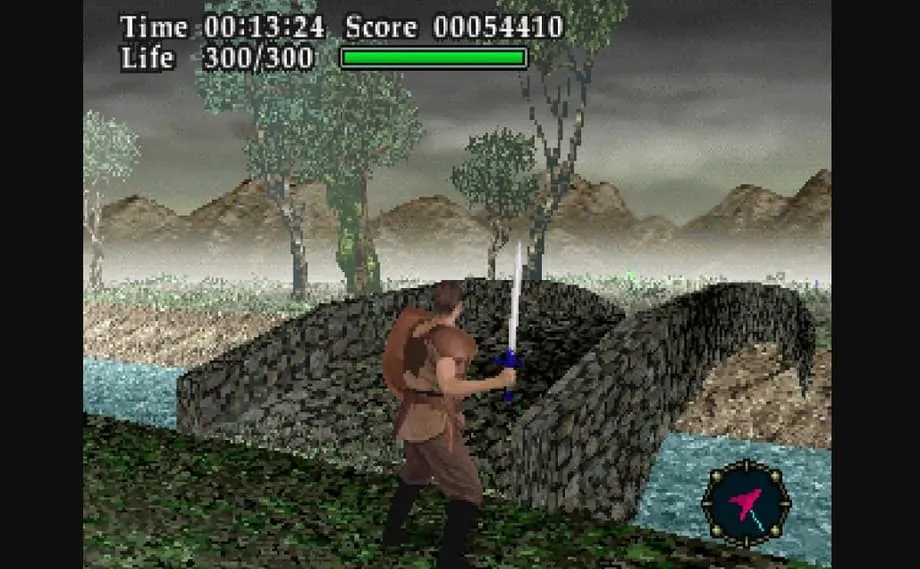
- In the 1980s, Naito created Hydlide, among Japan's early action role playing games for personal computers.
- Since the 1990s, Holt has worked through several cycles in the games industry.
- During the pandemic, studios expanded as demand rose, before a slowdown, tighter funding and layoffs increased competition for jobs.
- In 2025, Tokyo Game Show added an accessibility support area as the industry continued work to reach a wider range of players.
Japan's gaming population has grown and become more diverse over the past decade. Players span many ages, while hardware and software makers have invested in more inclusive design. Sony released the Access controller for PlayStation 5, allowing flexible control setups, and Capcom updated Street Fighter 6 with audio cues tailored to blind players.
Those developments concern access to playing games. Hiring concerns access to making them. A workforce with varied life experience can support the creative and commercial task of serving players across ages and abilities.
Policy options beyond individual studios
Authorities can strengthen recruitment guidance on age and encourage standard resume templates that do not foreground birthdates and photographs. Public campaigns highlighting successful hires in the middle and later stages of careers could also challenge assumptions about who belongs in a development team.
Grants for learning new skills and short returnship programs offer another route. A returnship is a supported period of work intended to help someone move back into a career. Such programs could help veteran developers become familiar with new engines and live operations roles.
Industry associations could publish voluntary standards promoting screening based on skills and collect anonymized information about hiring and retention across age groups. Studios could test portfolio reviews that conceal personal details, then share the results with other employers.
Policy, business incentives and professional standards would work toward the same practical goal: giving experienced candidates a serious assessment of what they can do. Naito's eventual position at M2 shows that a veteran can find another role, while his account and those of other developers describe how difficult the route can become before an interview even begins.
Key Points
- Hydlide creator Tokihiro Naito described widespread rejection during document screening after a contract ended when he was around 50. He later became a director at M2.
- A former T and E Soft programmer reported about 25 applications and only two interviews, both raising age as a concern.
- Japanese resume conventions make age readily visible, while seniority, salary expectations and corporate hierarchy can influence recruitment.
- Japan's recruitment guidance discourages age limits, but broad exceptions, few penalties and difficult litigation weaken deterrence.
- The market slowdown has put many experienced developers into competition for jobs at the same time.
- Overseas hiring processes often omit age information, giving portfolios and relevant experience greater prominence.
- Studios can change initial screening, use structured interviews and support managers leading colleagues older than themselves.
- Veteran developers offer production judgment and mentoring, while current tools and examples of recent work help connect their experience to vacancies.