Cash declarations lead a week of border checks
Four travellers carrying a combined S$1,249,666 in various currencies were caught making inaccurate cash declarations or none at all at Singapore's checkpoints on October 13, 2025. Their cases formed the largest cash discovery during a coordinated operation from October 9 to 15 that caught 88 travellers for offences involving cash reporting, customs duties, GST and prohibited tobacco products.
Contents
- Cash declarations lead a week of border checks
- How the cash cases unfolded
- Why police track physical cash
- How travellers can declare large sums
- Customs checks uncover unpaid duties and GST
- What to check before bringing purchases home
- Vaping checks follow September penalty changes
- How agencies selected and searched travellers
- October follows earlier operations in 2025
- Separate checks target foreign motorists and illegal rides
- Preparing for arrival or departure
- Key Points
Officers put more than 14,000 travellers and 280 vehicles through additional checks across land, air and sea gateways. They scanned or physically searched more than 11,700 bags during the operation, which brought together the Singapore Police Force, Immigration and Checkpoints Authority, Singapore Customs and Health Sciences Authority.
Eleven foreign nationals were caught moving cash above the S$20,000 reporting threshold without proper declarations. Six received composition fines totalling S$24,000, four received warnings, and one case remained under investigation as of October 19. A composition fine allows an offence to be settled through a payment instead of prosecution.
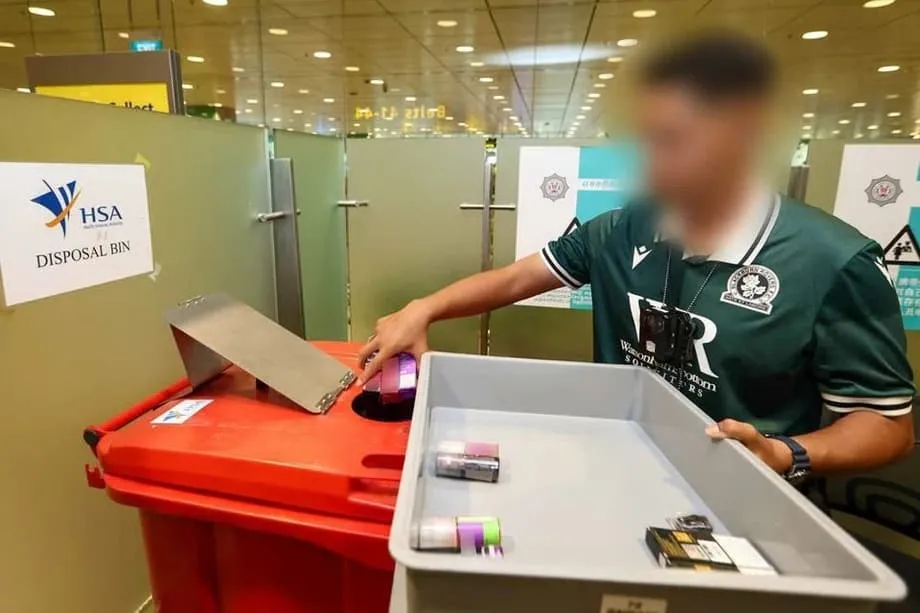
Another 62 travellers failed to declare and pay duties or goods and services tax, known as GST, on cigarettes, tobacco, liquor or other goods. Officers also caught 14 travellers with e vaporisers and a woman carrying chewing tobacco. All 15 people involved in those prohibited product cases were fined.
The operation brought several different border rules into focus. Cash above the reporting threshold must be declared when entering or leaving Singapore. Goods may attract duties or GST when brought into the country, while e vaporisers and smokeless tobacco are prohibited products. Each category carries its own requirements and penalties.
How the cash cases unfolded
The cash reporting cases occurred across several days, with the largest combined amount detected on October 13. The four travellers stopped that day were aged between 37 and 44, and together carried about S$1.25 million in separate cases.
Officers also detected undeclared Malaysian ringgit and other currencies during the week. The sequence of cases was:
- October 10: A man aged 52 arrived carrying MYR 70,000 without making a declaration.
- October 11: Four men aged between 45 and 60 were detected with a combined S$42,337 in various currencies.
- October 13: Four travellers aged between 37 and 44 made inaccurate declarations or none at all while carrying a combined S$1,249,666 in various currencies.
- October 14: Two travellers, aged 34 and 41, were stopped with undeclared sums of S$43,604 and S$50,000 respectively.
Singapore places no limit on the amount of cash a person may bring into or take out of the country. The requirement is to report it accurately when the total exceeds S$20,000, including the equivalent value in foreign currencies.
The Cross Border Cash Reporting Regime covers physical currency and bearer negotiable instruments, such as cheques, money orders and promissory notes. These instruments can be used to transfer value through paper documents rather than through an ordinary bank transfer.
Failure to make the required declaration is a criminal offence. Penalties can reach S$50,000, up to three years in jail, or both. The cash may also be seized. The obligation applies to departures as well as arrivals, so travellers carrying large sums need to check their reporting duties in either direction.
Why police track physical cash
Police focused on cash declarations because moving large physical sums across borders can help criminal groups conceal money obtained through crime. Accurate declarations give authorities information they can use to identify suspicious movements and disrupt attempts to avoid scrutiny by the financial system.
David Chew, Director of the Commercial Affairs Department in the Singapore Police Force, explained the purpose of the checks and Singapore's approach to cash smuggling.
Cross border cash smuggling is a well known method of money laundering, used by criminal groups to hide the origins of illicit proceeds. Singapore has zero tolerance for cash smuggling, and our reporting regime is designed to flag and stop suspicious movements.
Money laundering means hiding where criminal proceeds came from so that the money can appear legitimate. Moving notes or financial documents physically is one way criminals try to keep transactions outside the usual banking system. Cash declarations help authorities follow those movements.
How travellers can declare large sums
Travellers can submit an electronic cash declaration within 72 hours before entering or leaving Singapore. They can use the MyICA mobile app and select Submit Cash Declaration, or submit through the ICA website.
The declaration needs to cover the total amount subject to reporting, including relevant foreign currencies and bearer negotiable instruments. A traveller whose total exceeds S$20,000 must make an accurate declaration even though Singapore allows the money itself to be carried across the border.
Official guidance is available from the Immigration and Checkpoints Authority. Travellers should also keep supporting documents, such as bank withdrawal slips or receipts, because officers may ask about the source of the money and its intended use.
Anyone uncertain about whether a declaration is needed should declare or ask an officer. Accurate declarations can help clearance proceed more quickly and protect travellers from enforcement action arising from a failure to report.
Customs checks uncover unpaid duties and GST
Sixty two travellers were caught failing to declare and pay duties or GST during the October operation. The unpaid duty and tax totalled S$7,351, while composition sums imposed on the offenders totalled S$20,615.
The cases covered cigarettes, tobacco, liquor beyond duty free limits and other goods exceeding GST import relief allowances. Officers found undeclared items ranging from branded watches and cosmetics to car wipers and compact discs.
One traveller carried 31 packets of duty unpaid cigarettes. An air crew member was caught with undeclared compact discs, clothing and accessories. These examples show the range of goods subject to checks, from tobacco products to purchases carried in personal baggage.
Singapore imposes duties on tobacco and liquor and applies GST to most goods. GST import relief is an allowance that lets eligible travellers bring in goods up to a certain value without paying GST. The allowance depends on how long the traveller has been outside Singapore.
When purchases exceed the applicable relief, GST becomes payable. New goods bought for personal use must also be declared when they exceed the allowances. Personal ownership does not remove that payment requirement.
What to check before bringing purchases home
Liquor duty free concessions apply only in limited quantities. Cigarettes and tobacco receive no duty free concession, so travellers need to account for them separately rather than assume they are covered by a general allowance.
Travellers should keep receipts for inspection and check both their GST import relief and any relevant duty free limits before arriving. Those carrying dutiable goods or goods on which GST is payable can pay in advance online or declare them at the checkpoint.
Failure to declare and pay can lead to a fine of up to 20 times the duty and GST evaded, or up to two years in jail, under the Customs Act and related laws. The potential penalty therefore extends well beyond the tax originally owed.
Bag scans regularly uncover undeclared items. Voluntary declarations can save time and reduce the risk of penalties, while asking an officer gives travellers a way to resolve uncertainty before proceeding through clearance.
Vaping checks follow September penalty changes
Fourteen travellers were found with e vaporisers during the operation. Officers seized 395 devices and related parts. Separately, a woman aged 25 carried 11 sachets of chewing tobacco. All 15 offenders were fined.
Singapore bans the purchase, use and possession of e vaporisers, as well as their import, distribution and sale. The seizures showed that devices were still arriving among personal belongings and spare parts. Even a single device in a bag carried onto a flight can trigger enforcement action.
Higher penalties for using or possessing e vaporisers took effect on September 1, 2025. The changes also introduced mandatory rehabilitation for repeat users. A person caught using an e vaporiser for a third time may face prosecution and a fine of up to S$2,000.
Smokeless tobacco is also prohibited. Importing, distributing, selling or offering such products can bring a fine of up to S$10,000 and up to six months in jail for a first offence. Repeat offenders face higher penalties, including fines of up to S$20,000 and up to 12 months in jail.
For travellers, the practical requirement is to leave e vaporisers and smokeless tobacco out of their luggage. Paying a duty or making a cash declaration addresses different border obligations; prohibited products are subject to their own enforcement rules.
How agencies selected and searched travellers
The Singapore Police Force, Immigration and Checkpoints Authority, Singapore Customs and Health Sciences Authority worked across the two land checkpoints, the country's air hub and its seaports. K9 units and specialist teams supported targeted inspections.
Officers used scanners and physical searches to examine more than 11,700 bags. They selected travellers and vehicles for further screening using risk indicators, including travel patterns, declarations, previous records and intelligence.
Targeted screening allows officers to take a closer look at travellers and cargo identified for additional checks while managing movement through busy checkpoints. It combines routine clearance with more detailed inspections where officers identify reasons for concern.
The agencies pooled information and maintained a visible presence throughout the operation. That presence likely discouraged some attempts to bring undeclared or prohibited items through the checkpoints, alongside the offences officers detected.
October follows earlier operations in 2025
The October sweep followed other periods of increased checkpoint enforcement in February and late May. Each operation uncovered cash reporting offences alongside customs breaches, although the number of travellers and vehicles checked varied.
In February, teams checked about 11,000 travellers. They caught five cash reporting offenders, imposed composition sums totalling S$21,000 and detected 53 cases involving unpaid duties and GST.
Checks in late May covered more than 19,000 travellers and 1,600 vehicles. Officers caught 14 cash reporting offenders, including one case linked to suspected unlicensed moneylending. They also detected 153 cases involving unpaid duties, excess liquor and undeclared purchases.
October's checks covered more than 14,000 travellers and 280 vehicles, with 11 cash reporting offenders and 62 travellers caught for customs and GST breaches. The repeated findings across the three operations show that both types of offence continued to appear when agencies expanded screening for a limited period.
The figures also show the different scale of each exercise. Late May involved more travellers and vehicles than October, while February involved fewer travellers. Those differences matter when comparing the number of cases caught during each operation.
Separate checks target foreign motorists and illegal rides
Before the October 9 to 15 sweep, a separate operation at the land checkpoints focused on foreign motorists with outstanding summonses. From October 6 to 8, officers stopped 241 drivers and directed them to settle more than S$619,000 in unpaid fines.
The outstanding sums covered traffic, parking and vehicular emissions offences. Motorists who refuse to settle may be denied entry in future. Foreign drivers were reminded to check for unpaid fines and use official payment channels to clear them before entering Singapore.
Foreign motorists should also ensure that their vehicles meet emissions rules. Settling outstanding fines and checking vehicle requirements before travelling can help avoid delays at the land checkpoints.
Authorities were also acting against illegal rides between Singapore and Johor Bahru. A recent joint operation resulted in 10 vehicles being impounded after drivers were caught offering unlicensed transport across the border.
Unlicensed vehicles may lack insurance coverage, creating safety risks for passengers. Commuters were urged to use licensed operators for journeys between Singapore and Johor Bahru.
Preparing for arrival or departure
Travellers can address the most common issues found during the sweep before reaching a checkpoint. The rules are public, and officers can guide people who volunteer information about the cash or goods they are carrying.
Anyone travelling with more than S$20,000 in cash or bearer negotiable instruments should submit an accurate declaration within the permitted 72 hours before arrival or departure and keep documents explaining the money's source and purpose. Those carrying purchases should check their allowances, retain receipts and pay any duties or GST due.
E vaporisers and smokeless tobacco should not be brought into Singapore. Foreign motorists should check outstanding fines and vehicle emissions requirements, while passengers travelling between Singapore and Johor Bahru should choose licensed transport.
As of October 19, one of the 11 cash reporting cases remained under investigation. The other 10 had resulted in six composition fines and four warnings, while customs and prohibited tobacco enforcement accounted for the remaining travellers caught during the week.
Key Points
- The October 9 to 15 operation caught 88 offenders after additional checks on more than 14,000 travellers, 280 vehicles and more than 11,700 bags.
- Eleven foreign nationals committed cash reporting offences. Four cases on October 13 involved a combined S$1,249,666.
- Six cash offenders received composition fines totalling S$24,000, four received warnings and one case remained under investigation.
- Sixty two travellers committed customs or GST offences involving S$7,351 in unpaid duty and tax. Composition sums totalled S$20,615.
- Officers seized 395 e vaporisers and related parts from 14 travellers, plus 11 sachets of chewing tobacco from a woman aged 25. All 15 offenders were fined.
- Cash above S$20,000 must be declared when entering or leaving Singapore. Declarations can be submitted through MyICA or the ICA website within 72 hours before travel.
- Separate checks from October 6 to 8 stopped 241 foreign drivers and directed them to settle more than S$619,000 in outstanding fines.