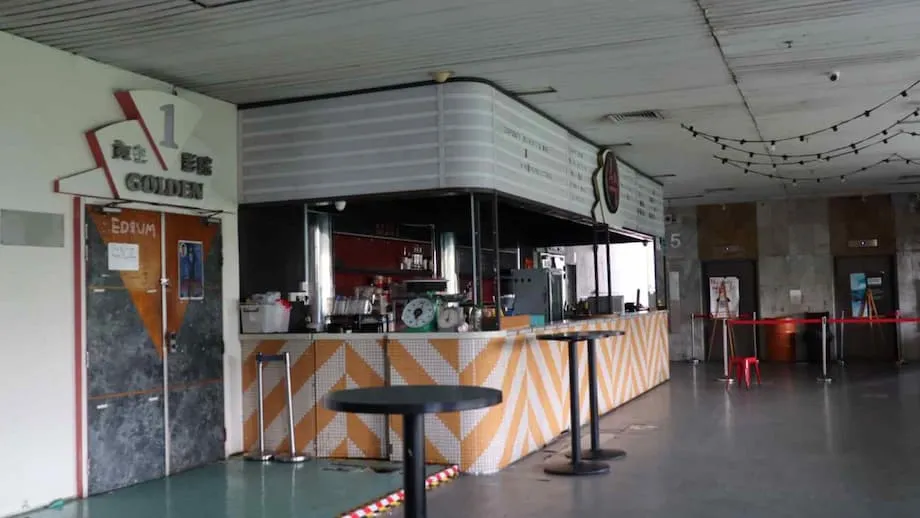
Fewer tickets, mounting debts and disappearing venues
Singapore cinemas sold roughly 8.4 million tickets in 2024, about 54 percent fewer than in 2019 and around 16 percent fewer than in 2023. Against that steep decline, Cathay Cineplexes shut its final four outlets and entered creditors' voluntary liquidation. Independent operator The Projector also closed a site, showing that the pressure reaches beyond the large commercial chains.
Contents
- Fewer tickets, mounting debts and disappearing venues
- Why Cathay's last four outlets closed
- What the company and union said
- How the decline unfolded
- Why streaming kept viewers at home
- The worldwide disruption behind thinner film schedules
- Singapore's costs and competition across the border
- What stronger cinema markets have done differently
- How remaining operators are trying to bring people back
- Support options and the relationship with streaming
- Workers, families and a smaller cinema network
- Key Points
As of October 10, 2025, those closures have brought a familiar national pastime to a difficult turning point. For decades, a cinema visit offered Singaporeans an escape from the heat and a shared outing after school or work. Operators now have to persuade customers that the trip is worth their time and money when films and other entertainment are readily available at home.
COVID 19 accelerated changes already affecting the business. Lockdowns and limits on seating capacity pushed households toward streaming services, larger televisions and better soundbars. Studios sent some films directly to digital platforms and shortened the period when others could be watched only in cinemas. When restrictions eased, many viewers kept their new habits.
Cinema operators returned to a market with weaker attendance while carrying rent and other costs accumulated during the slow years. Higher operating expenses squeezed already narrow margins. Singapore's relatively small population, expensive premises and competition from cinemas across the border in Johor Bahru have made the recovery harder.
The result is a shrinking cinema footprint alongside investment by remaining operators in better projection, seating and different kinds of screenings. Cathay's collapse exposes the financial strain, while those investments show how the surviving businesses are trying to give audiences a reason to return.
Why Cathay's last four outlets closed
Cathay Cineplexes, operated by media group mm2 Asia, ceased operations at its remaining four locations with immediate effect after the announcement of creditors' voluntary liquidation. The process winds down a business that cannot continue paying its obligations, with creditors involved in dealing with its remaining finances.
mm2 Asia had been negotiating with several landlords over arrears linked to performance during and after the pandemic. Those discussions failed to produce an agreement that would allow the cinema chain to remain a going concern, meaning a business able to keep operating.
Landlords had demanded payments ranging from seven figure sums to claims of several million Singapore dollars. At a key venue in Jurong East, the lease was terminated over arrears exceeding S$4 million. Closures at West Mall and other locations had already pointed toward a wider retreat as the company tried to consolidate its operations.
Cathay had also closed outlets at AMK Hub, Orchard Cineleisure, Cathay Building and Parkway Parade in recent years. It briefly took on a site at 321 Clementi. Those changes formed part of an effort to adjust the network while management told investors that recovery was slower than expected and that it would consider reducing operations and restructuring.
The final shutdown came quickly, leaving ticket holders seeking refunds and employees facing uncertainty about their jobs. The account of the closure gives no timetable for resolving refunds or completing the liquidation.
mm2 Asia said its exhibition business had been making losses since 2020. After reporting heavy losses across the group, it presented the liquidation as part of an effort to stabilize its finances and concentrate resources on its core content and live events businesses.
What the company and union said
mm2 Asia acknowledged the pressure on the cinema business in statements about individual closures before the liquidation. It thanked partners that had supported the chain through difficult periods and pointed to pandemic restrictions, a sluggish recovery, rising costs and changing audience habits.
In a statement explaining the termination of a key lease, mm2 Asia described the difficulties facing its cinema operations:
In view of the challenges facing the cinema industry since the onset of COVID 19, the cinema business has seen significant challenges and unprecedented difficulties.
The group later said the exhibition arm had been a drag on cashflow. Cashflow is the money moving into and out of a business, and a company needs enough available money to meet bills even while trying to recover sales. mm2 Asia said ending its involvement in the loss making chain was expected to improve the finances of the wider listed group:
Voluntary liquidation of the cinema chain is expected to improve the group's cashflows and profitability, while we concentrate on core content and live events.
The Singapore Manual and Mercantile Workers' Union said it would contact members employed by the operator and offer support as the liquidation progressed. The union set out its commitment to those workers:
The union is committed to supporting the affected members during this challenging time and will provide guidance and assistance where needed.
Management's response reflects a shift toward content and events that it considers better aligned with demand since the pandemic. For employees, the immediate concern is more personal: what happens to their work and how they can obtain guidance during the closure.
How the decline unfolded
Singapore's attendance figures show that cinema demand had a much higher peak before streaming became such a large part of household entertainment. Admissions exceeded 22 million in 2011, when the blockbuster release schedule was broader.
The key dates show how the pandemic and the weak recovery changed the business:
- 2011: Singapore cinema admissions peaked at more than 22 million.
- 2019: Attendance stood at the level against which the later decline of about 54 percent is measured.
- Early 2020: Cinema closures and restrictions spread across Asia, Europe and North America. Cathay's exhibition business began the period of losses that mm2 Asia said continued from 2020.
- 2021 and 2022: Easing restrictions and major releases, including superhero franchises, helped cinema takings recover.
- 2024: Singapore admissions fell to roughly 8.4 million, about 16 percent below 2023.
- By October 10, 2025: Cathay had shut its final four outlets following the liquidation announcement, while The Projector's site closure added to the retreat.
The 2024 total of 8.4 million was less than two fifths of the more than 22 million admissions recorded in 2011. Cinema halls have declined only slightly, leaving a network of screens competing for a much smaller audience.
Why streaming kept viewers at home
Households changed their viewing routines during the pandemic and did not return to their patterns before 2020. Research described in the account points to a worldwide shift toward streaming and digital platforms after cinemas closed or restricted capacity.
Studios accelerated the development of their own streaming services. Some films went directly to those platforms, while others reached home viewers sooner after their cinema release. The theatrical window is the period during which a film is available exclusively in cinemas. A shorter window reduces the wait for people willing to watch at home.
Audiences became accustomed to that quicker route from cinema to living room. Spending on subscriptions and advertising moved away from cinemas and cable television bundles toward digital platforms. Some markets recovered better where local films were strong or policy support was substantial, but many still lagged.
Singapore fits that wider pattern. Its domestic market is small, internet connectivity is high and audiences are comfortable using technology. Larger screens, better sound and extensive streaming catalogues have made staying home a more attractive choice than it was a decade ago.
Subscription bundles, annual promotions and partnerships involving devices make it easier to try new films and programmes without visiting a mall. When the flow of new theatrical releases slows, households can turn to the entertainment they already have at home.
Cinemas consequently compete with more than another ticket price. They compete with convenience, flexible viewing times and a large selection of titles available without travel. Operators seeking repeat visits need both films that people want to see and a presentation that makes the outing worthwhile.
The worldwide disruption behind thinner film schedules
Early in 2020, lockdowns closed cinemas across Asia, Europe and North America. Cinema revenue plunged, studios postponed releases and productions stopped. Closures in China during the Lunar New Year cost the industry billions of dollars, while North America recorded its weakest box office weekend in decades.
The disruption to the 2020 release schedule was so extensive that an anime feature led the global box office chart, the first film outside American cinema to do so in years. The usual pattern of major studio releases had been broken.
Studios responded with streaming releases, premium video on demand and hybrid approaches combining cinema and home availability. Premium video on demand lets viewers pay to watch a particular release at home. Award eligibility rules were relaxed to accommodate streaming releases, and cinemas where customers watched from their cars enjoyed a brief revival where permitted.
Production faced difficulties beyond closed venues. Insurance became more complicated and expensive because of exclusions involving disease, slowing the pipeline of new films. Together with delays and interrupted filming, that left fewer theatrical releases and a more fragmented calendar.
Major films helped audiences return as restrictions eased in 2021 and 2022. Superhero franchises were among the releases drawing viewers back to premium screens. A portion of the audience nevertheless returned less frequently, keeping the convenience of home viewing and the continuous choice offered by streaming.
Singapore's reliance on international films makes those changes particularly relevant. Production lulls or strikes can leave gaps in the release schedule, and a small local production base gives operators fewer domestic films to fill them.
Singapore's costs and competition across the border
Singapore's population is relatively small and diverse, requiring operators to match different films to different audiences. High rents and substantial labour costs remain part of running a cinema even when fewer customers enter its halls. Changes in mall footfall after 2020 have added another difficulty.
Nearby Johor Bahru offers some Singaporeans an alternative. Ticket prices are often lower, and newer multiplexes have introduced large format screens, premium presentation and plush seating. A cinema trip can become part of a wider day out.
Families and students watching their spending may find those trips appealing because of lower costs, the currency gap and ease of travel. Cinemas in Singapore then have to compete with both the price and quality of the experience across the border.
Local operators cannot rely as readily on busy weekends to offset quieter periods. They need to offer a combination of comfort, reliable presentation and value that persuades people to stay in Singapore for their screening.
What stronger cinema markets have done differently
France has kept attendance resilient through a combination of strong local films, ticket schemes and cultural policy. Strict rules delay streaming access after theatrical releases, preserving a longer period in which the cinema is the place to see a film.
Public funding in France supports film production and cinema renovations. Film also has a place in education, helping develop viewing habits that can continue into adulthood. Those measures address both the supply of films and the audience for them.
Indonesia and Vietnam have grown through youthful populations, affordable tickets and strong domestic releases. Homegrown films dominate their box office charts, reducing dependence on the timing of international releases.
Streaming has expanded in those countries too, but language and content availability leave room for cinemas to attract audiences. Their experience shows how a compelling local film schedule can support attendance even while digital viewing grows.
Australia has recovered more gradually, helped by stable pricing and a large network of independently owned screens. Smaller operators can adjust their programming with festivals, older films and community events between major studio releases.
Singapore faces a different mix of population size, costs and local production. The useful comparison is that the more resilient markets give people reasons to visit beyond the arrival of a major international blockbuster, whether through local stories, price, cultural support or varied programming.
How remaining operators are trying to bring people back
Shaw Theatres is renovating flagship venues with new laser projectors and screens. Its work includes addressing problems with large format presentation that had frustrated some patrons. Better equipment matters when customers can already get good pictures and sound at home.
Golden Village and other operators are expanding event screenings, including K pop concert films, anime marathons and live sports. Those programmes make use of a cinema's large screen and shared audience for occasions beyond a conventional film release.
Distributors have reported growing interest in Asian films, documentaries and niche genre showcases. Filmmaker talks, themed food and partnerships involving music can turn a screening into a social outing. Some operators are also exploring subscription passes and weekday bundles to make casual visits easier.
Comfort and service are another part of the response. Spacious seats, wider aisles, reliable sightlines and crisp projection become more valuable as home equipment improves. Flexible showtimes and straightforward services through apps can help customers decide to go.
Partnerships with schools and community groups can build audiences for local and regional films that might otherwise receive less attention than major studio releases. Such programming also gives venues something to offer between blockbuster peaks.
Independent operators face particularly difficult finances. Renovating older halls is expensive, and a fall in attendance can quickly turn into a rent dispute. The Projector's site closure affected fans of independent and repertory cinema, including screenings of older films, a small part of the market with a substantial role in film culture.
Curated programmes and temporary screenings could keep that activity alive if affordable venues can be secured. The practical challenge is finding space where distinctive programming can cover its costs.
Support options and the relationship with streaming
Singapore's experience with targeted arts support offers possible ways to assist cinemas. Options discussed in the account include selective grants for technical upgrades and training for projection and sound teams, aimed at making presentation consistently good.
Film education in schools could help develop the next generation of cinema audiences. Festivals, regional showcases and collaboration across borders could also give Southeast Asian films more visibility and audiences more reasons to watch them on a large screen.
Release windows and rules affecting platforms are sensitive policy questions. Clear and consistent arrangements help distributors and cinema operators plan, while any changes would need to balance consumer choice with sustaining cultural spaces.
Studios and streaming platforms also have a role in the release schedule. A successful cinema run can build word of mouth before streaming brings a film to more viewers. Sending films between small productions and major blockbusters directly to digital platforms can leave cinemas with a weaker programme.
Studios have begun recalibrating, keeping their biggest films exclusive to cinemas before streaming debuts. Partnerships involving event releases or limited theatrical tours can give subscribers and fans a shared experience as well.
Live events, gaming showcases and international sports screenings offer other possible income. The common aim is to use the cinema as a premium venue for something people want to experience together, alongside rather than simply against home entertainment.
Workers, families and a smaller cinema network
Cinema closures affect projectionists, ushers, concessions workers and marketing teams, including people who built careers around films. Unions and industry bodies have a role in supporting retraining and job placement as the business contracts.
Families also feel the change. People who once made weekly cinema visits now weigh the cost against a growing choice at home. Younger audiences still turn out for major events, but attend fewer films between them. Restoring regular visits depends on appealing content and comfortable, dependable venues.
The release schedule for 2025 and 2026 points to more major franchise films and regional hits that could generate bursts of demand. Cinemas with strong sound, projection, seating and distinctive programmes can still sell out when a film connects with its audience.
Operators are likely to run smaller networks, concentrating on fewer venues of higher quality and more flexible costs. Singapore's big screen experience is becoming a choice that must justify itself through value, quality and occasion. The closures show how difficult that adjustment has been; the investments and programming changes show where surviving operators are placing their efforts.
Key Points
- Cathay Cineplexes shut its final four outlets after creditors' voluntary liquidation was announced and negotiations over rent arrears failed.
- mm2 Asia said its exhibition business had made losses since 2020 and that exiting it would allow greater focus on content and live events.
- Singapore recorded roughly 8.4 million cinema admissions in 2024, down about 54 percent from 2019 and 16 percent from 2023.
- The Projector's site closure also affected independent and repertory film programming.
- Streaming habits, shorter theatrical windows, high costs and competition from Johor Bahru are putting pressure on local cinemas.
- Remaining operators are investing in presentation, comfort and programmes such as concert films, anime, sports and curated screenings.
- The Singapore Manual and Mercantile Workers' Union pledged guidance and assistance for affected members.
- The market is moving toward smaller cinema networks that compete through quality, value and shared experiences.