A faster journey faces a difficult financial reset
Indonesia has begun formal talks with China to restructure the debt behind Whoosh, the 142 kilometer railway linking Jakarta and Bandung, as the government seeks to stabilize a project costing about $7.3 billion and reduce the risk of missed payments. As of October 10, 2025, the negotiations focus on loans that paid for most of the line's construction, after delays and rising costs pushed the bill well beyond its original estimate.
Contents
- A faster journey faces a difficult financial reset
- Who owns the railway and who financed it?
- How delays increased the bill
- Passenger growth has not closed the revenue gap
- Why KAI's finances are under pressure
- What could change in the loan agreements?
- Who would carry the financial burden?
- China ties and the proposed Surabaya extension
- What passengers and station communities gain
- Quick Facts
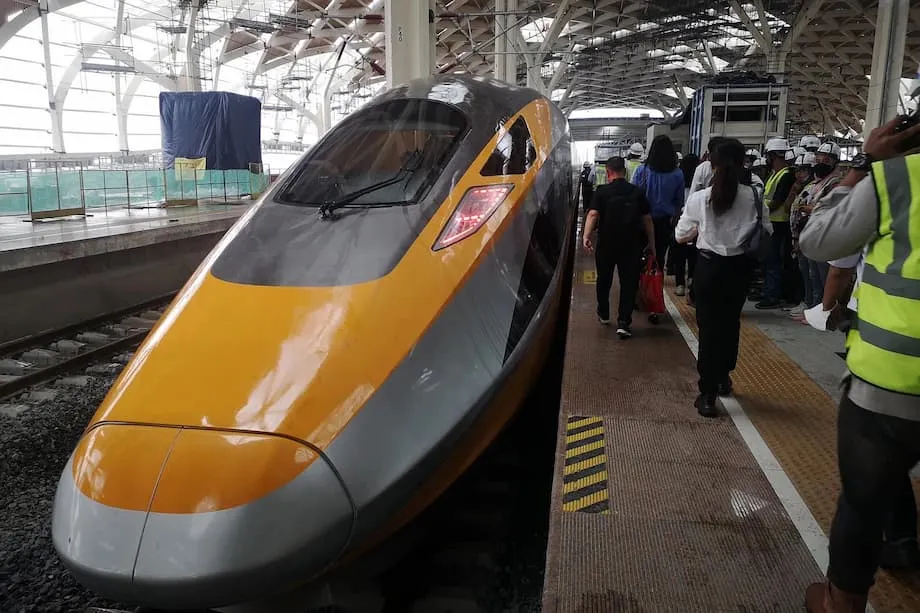
Whoosh began passenger service in October 2023 as Southeast Asia's first high speed railway. Trains designed for speeds of up to 350 kilometers per hour cover the route in about 40 to 45 minutes, compared with a road journey that can take three hours or longer in heavy traffic. The service has become a symbol of Indonesia's infrastructure ambitions and its close economic relationship with China.
The financial challenge is less visible to passengers. Ticket revenue must pay for running the trains while also supporting repayment of a large construction debt. Passenger numbers are rising, yet lawmakers and company executives say ticket sales still fall short of covering operating costs and debt service together.
Investment Minister Rosan Roeslani, who also leads Indonesia's sovereign wealth fund Danantara, has described the negotiations as an effort to secure a lasting solution. He said the government wants:
a comprehensive reform so that after the restructuring there will be no more issues like the possibility of default in the future.
Default means failing to meet a debt payment obligation. The government's immediate aim is to prevent that risk from undermining a railway that is already operating, while giving its finances a more durable foundation.
Who owns the railway and who financed it?
PT Kereta Cepat Indonesia China, known as KCIC, operates Whoosh as a joint venture between Indonesian and Chinese state companies. The Indonesian consortium, PT Pilar Sinergi BUMN Indonesia, or PSBI, holds 60 percent. The Chinese partner holds the remaining 40 percent.
PT Kereta Api Indonesia, or KAI, Indonesia's national railway company, leads PSBI and owns roughly 58.5 percent of that consortium. Its partners include construction company Wijaya Karya, toll road operator Jasa Marga and a plantation company with a small stake. KAI's ownership share is in PSBI, which in turn holds the Indonesian stake in KCIC.
About 75 percent of the project's funding came from China Development Bank loans. KCIC and its shareholders supplied the remaining quarter as equity, meaning money invested in return for ownership. On those proportions, borrowing provided three times as much construction funding as shareholder investment.
Loans bring scheduled interest and principal payments. Equity gives investors an ownership stake and exposes them to the project's financial performance. Whoosh's heavy reliance on borrowing therefore makes the timing of its revenue growth especially important: payments become due according to loan agreements, while passenger demand may take years to build.
The line connects Jakarta's eastern gateway with West Java and forms part of a wider effort to improve transport across Java. New economic activity around stations is another goal. Those ambitions extend beyond ticket sales, but the operator still needs enough cash to run the service and meet its financial obligations.
How delays increased the bill
Construction began in 2016, with an initial opening target of 2019. Land acquisition difficulties, engineering changes and restrictions during the pandemic delayed passenger service until 2023. Higher construction and financing costs accompanied the longer timetable.
A cost overrun of about $1.2 billion was formalized in 2023. The original loan reportedly carries an annual interest rate of 2 percent, while additional borrowing for the overrun carries a rate near 3.4 percent. That makes the rate on the additional borrowing about 1.4 percentage points higher.
The extra expense created two pressures at once. The railway cost more to build, and the borrowing used to finish it was more expensive than the original financing. With demand still developing, that leaves less room between the money coming in and the payments going out.
The project's main milestones show how the construction schedule and the financial challenge developed:
- 2016: Construction began on the Jakarta Bandung railway.
- 2019: The initial target for opening passed before the line was ready.
- 2023: A cost overrun of about $1.2 billion was formalized.
- October 2023: Whoosh began passenger service.
- 2024: PSBI recorded losses.
- First half of 2025: Whoosh carried about 2.9 million passengers, while PSBI recorded further losses and KAI reported a net loss through June.
- October 10, 2025: Indonesia had begun formal discussions with China over restructuring the railway's debt.
Large transport projects can face delays and rising costs, but Whoosh now has to manage their financial consequences while keeping an existing passenger service running.
Passenger growth has not closed the revenue gap
Whoosh carried about 2.9 million passengers in the first half of 2025, an increase from the same period a year earlier. Cumulative passenger totals across its first two years of operation are in the tens of millions. The growing use of the railway has nevertheless fallen short of the most optimistic early forecasts.
Feasibility studies had pointed to daily passenger numbers of around 50,000 in a lower scenario and about 76,000 in a higher one. Executives and legislators now describe actual demand as closer to the lower scenario and, at times, well below it. That gap matters because the project's finances depend on turning passenger journeys into enough revenue to meet both operating expenses and loan payments.
Ticket prices, connections for the final part of a journey in Bandung, and travel habits that still favor cars for trips directly between homes and destinations all affect demand. A fast train journey is one part of the trip; getting to and from the stations also shapes whether travelers choose rail.
The operator has added feeder buses and adjusted schedules. Integrated ticketing with conventional rail, better station access and a larger base of regular passengers could help increase use. Those changes can improve revenue over time, while restructuring could give the railway more time for that growth to develop.
Major rail projects often need several years to build stable passenger demand. Interest and principal payments follow a fixed timetable, however. When revenue grows more slowly than expected, the operator can face a cash shortage even while passenger numbers are increasing.
Why KAI's finances are under pressure
PSBI recorded losses in 2024 and again in the first half of 2025. KAI reported a net loss through June 2025, citing the burden of the high speed railway. Those results have brought the financial position of the Indonesian shareholders into focus and raised concern in parliament.
KAI president director Bobby Rasyidin told lawmakers that the project's finances require active management involving the government and Danantara. He described the debt burden from Whoosh as:
a ticking time bomb.
Bobby's warning was a call to reset the financial arrangements so the operator can continue running reliable trains while building a larger passenger base. He was pressing for government and sovereign fund involvement in managing the debt burden.
KAI and PSBI have limited room on their balance sheets, which record what they own and what they owe. Taking on further financial pressure could affect the companies beyond the Whoosh investment. The negotiations therefore concern both the operator's ability to meet its payments and the financial health of the Indonesian companies behind it.
Danantara chief operating officer Dony Oskaria has said a settlement needs to protect KAI's performance. He stated that:
the steps for settlement must be comprehensive and not disrupt the performance of PT Kereta Api Indonesia.
Danantara's leadership wants a solution to the mismatch between cash coming in and obligations falling due, while avoiding the transfer of the same financial strain from one state entity to another.
What could change in the loan agreements?
Officials have not released specific restructuring proposals or a timetable for reaching an agreement. The options under discussion include changes to repayment periods, interest charges, the timing of principal payments and the balance between debt and ownership.
Extending a loan's tenor, meaning its repayment period, could spread payments across more years and lower the amount due annually. Reducing the interest rate on borrowing for the cost overrun could ease the cost of that more expensive portion of the debt.
A grace period could postpone the start of full principal repayments. Principal is the amount borrowed, separate from interest. Such an arrangement would give the operator time to build revenue before facing the full repayment schedule.
Another possibility is converting part of the debt into equity held by a public investment vehicle. In a debt to equity conversion, a payment obligation is exchanged for an ownership stake. That could reduce loan payments while changing who owns the operator and how financial risk is shared.
Danantara has been tasked with driving the negotiations and shaping the options. Any package would need to give the operator workable cash flow in the near term while keeping the Chinese lender whole over time.
Restructuring means renegotiating debt terms. For Whoosh, its purpose is to bring repayment obligations closer to the project's actual ability to generate money, particularly after the pandemic, construction difficulties and higher costs disrupted the original plan.
Who would carry the financial burden?
Danantara could assume part of KCIC's obligations and refinance them on longer terms at lower cost. A debt to equity conversion could instead give a public vehicle a larger ownership stake in exchange for relief from loan payments. Both approaches would change where the project's financial exposure sits.
Some lawmakers have suggested turning Whoosh into a state asset, moving debt service to the government budget. Others favor attracting new investors, including members of the public, through bond sales or private placements. Bonds raise money that must be repaid, while private placements bring funding from selected investors.
Each option has a cost. Moving more liabilities into Danantara could reduce the fund's returns in the near term and concentrate risk there. Direct government assumption of obligations would require room in the budget and put taxpayer money on the line.
New investors could supply cash, but they would want clear rules on fares, subsidies and expansion. Decisions about ticket prices and government support affect the revenue available to repay investors and maintain the railway.
The Ministry of State Owned Enterprises has also floated a different division of responsibilities. KAI would focus on railway facilities and operations, while the state would take responsibility for core infrastructure such as tracks and stations.
That arrangement would require renegotiation with the Chinese partner because Whoosh is a joint venture. The government would also need a clear plan to finance and maintain any assets it assumes. Across the options, daily operations need protection so that safety, punctuality and service quality continue while the financial structure changes.
China ties and the proposed Surabaya extension
Whoosh is a flagship of Indonesia China cooperation and is often cited at high level meetings as a successful partnership. It sits within wider connectivity goals and a vision of a more integrated transport corridor across Java. Both governments have a stake in maintaining reliable service and stable finances.
China faces a balance between the value of the relationship, the railway's public profile and financial discipline at its policy bank. Indonesia is seeking flexibility while protecting its reputation in capital markets, where lenders and investors assess its ability to meet obligations.
A well designed restructuring could reduce immediate pressure, maintain lender confidence and set measurable targets for revenue growth and more efficient operations. The practical challenge is to agree on terms that support the railway without simply relocating its financial problems.
President Prabowo Subianto has expressed interest in extending the line east toward Surabaya. A legal framework for the extension is being prepared, and the proposal has support because it would connect major cities across Java.
An extension could attract new passengers, open additional travel markets and spread fixed costs across a larger network. Fixed costs are expenses that do not rise directly with every extra passenger. A larger network could make better use of those expenses, but it would also require more capital and introduce additional construction complexity.
Authorities say expansion financing must be sustainable and draw on lessons from the first segment. Policymakers are signaling that restructuring the current debt and establishing a clear operating plan should come first. That sequence would give the government and lenders actual performance data when assessing the next phase.
What passengers and station communities gain
Whoosh has delivered its central transport benefit: a journey that once took hours can now take well under one hour on the train. Commuters save time, business travelers can arrange meetings and return the same day, and families can avoid uncertainty on congested roads.
Feeder services and revised schedules are helping passengers reach and use the line. Survey data and passenger counts suggest more people are trying Whoosh as familiarity grows, travelers share their experiences and service patterns develop.
The railway also supports jobs in its operations and in businesses gathering around stations. Developers have proposed projects near Halim and in West Java to serve new demand. The value of that activity depends on dependable trains and better connections to local transport.
A stable financial base would make it easier to invest in station access, digital ticketing and promotions that could broaden the passenger base. The government's effort to arrange an orderly restructuring is partly an effort to protect benefits already being delivered outside the project's accounts.
Indonesia is not alone in facing financial strain during the early years of a new high speed railway. Policymakers point to passenger growth in 2025 and rising public familiarity with Whoosh. The task is to match costs and repayment obligations with actual revenue while keeping trains safe, punctual and useful to travelers.
Quick Facts
- As of October 10, 2025, Indonesia had begun formal talks with China to restructure Whoosh debt and reduce default risk.
- The 142 kilometer Jakarta Bandung line opened in October 2023 and carries passengers in about 40 to 45 minutes.
- The project cost about $7.3 billion, with roughly 75 percent funded by China Development Bank loans and 25 percent by shareholder equity.
- A cost overrun of about $1.2 billion was formalized in 2023. The original loan reportedly carries 2 percent annual interest, compared with about 3.4 percent on additional borrowing.
- PSBI holds 60 percent of operator KCIC, while the Chinese partner holds 40 percent. KAI owns roughly 58.5 percent of PSBI.
- Whoosh carried about 2.9 million passengers in the first half of 2025, but ticket sales do not yet cover operating costs and debt service together.
- PSBI recorded losses in 2024 and the first half of 2025. KAI reported a net loss through June 2025, citing the project's burden.
- Possible solutions include longer repayment periods, lower interest rates, grace periods, debt conversion into equity and changes in responsibility for infrastructure.
- Danantara is leading the effort. Specific restructuring terms and a timetable for agreement have not been released.
- A proposed extension toward Surabaya remains under review, with sustainable financing and lessons from the existing line central to the next phase.