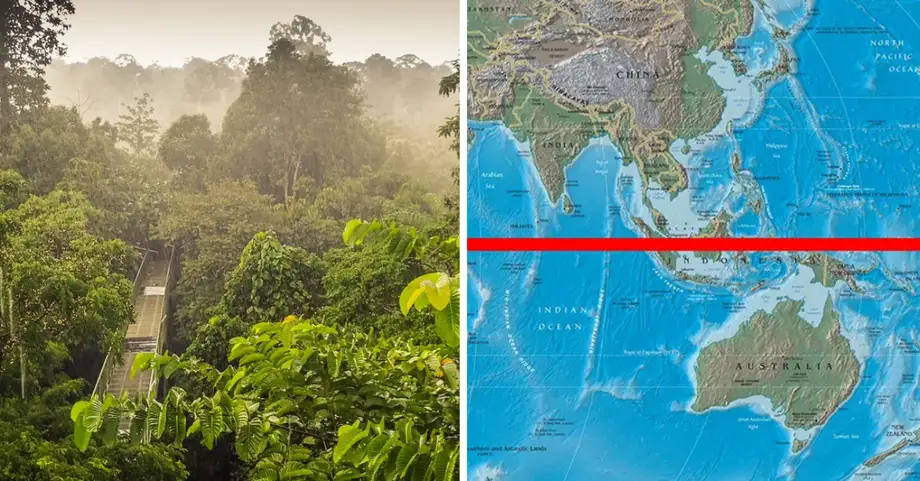
A forest history reaching back to the dinosaurs
Malaysia's tropical rainforests have a history often estimated at about 130 million years, compared with roughly 55 million years for the Amazon. In Taman Negara and on the high ridges of Gunung Tahan, that continuity of life reaches back to a time when dinosaurs roamed the planet. These forests are also older than famed natural landmarks such as Yellowstone, the Serengeti and Banff.
Contents
- A forest history reaching back to the dinosaurs
- How forests survived the ice ages
- What lives beneath the canopy
- Where the ancient forests can be explored
- Why river corridors matter in Sabah
- What scientists are learning above the ground
- Listening for wildlife and threats
- Logging, plantations and a changing climate
- Protection beyond isolated parks
- Forest communities and the value of tourism
- Why the forests matter beyond their boundaries
- Key Points
Malaysia's position near the equator helped make that survival possible. While enormous ice sheets repeatedly scraped landscapes and reset ecosystems in Europe and North America, peninsular Malaysia and Borneo remained warm and wet. Valleys, sheltered slopes and river corridors provided pockets of moisture and warmth where plants and animals could survive cooler periods.
Geology supplied another part of the foundation. Much of the region lies on the Sunda Shelf, a stable platform of continental crust. Mountains, ridges and river networks shaped during the Jurassic and Cretaceous periods created habitats across different elevations and soils. Over millions of years, species diversified across those landscapes.
Dipterocarps, the tree family that dominates many Southeast Asian rainforests, grew into towering canopies. Beneath and among them, increasingly complex relationships developed between plants, mammals, birds, insects and fungi. Long periods of environmental stability allowed that diversity to accumulate.
Malaysia now maintains a policy commitment to keep at least half its land under forest. Estimates put national forest cover at around 54.58 percent, or about 18.05 million hectares. Those forests include mangroves, peat swamps, lowland dipterocarp forests, hill forests and montane forests. Their ancient history sits alongside a modern challenge: keeping habitats connected while logging, plantations, hunting and a changing climate place them under pressure.
How forests survived the ice ages
The last glacial maximum peaked about 21,000 years ago. Ice sheets expanded at high latitudes, and sea levels fell by more than 100 meters. Land bridges connected present day Malaysia, Borneo, Sumatra and the Asian mainland across the exposed Sunda Shelf.
The expanded landmass remained tropical. Seasonal rain continued, while humid forests persisted on hillsides and in sheltered basins. Glaciers never reached this far south, allowing rainforest structure to survive wherever suitable local conditions remained.
Scientists call these surviving pockets refugia. In Malaysia, they included valleys with reliable water, mountain slopes that caught moisture from clouds and forests beside rivers. Species could shelter there during cooler or drier conditions, then spread again when warmer, wetter conditions returned.
Repeated contraction and expansion helped create a varied web of life. Ancient lineages remain represented by animals and plants such as the Malayan tapir, hornbills, giant flowering rafflesia and carnivorous pitcher plants. Different species occupy lowland forests, hills, mountains, peat swamps and mangroves.
Several dates frame the forests' long history and more recent protection:
- About 130 million years ago: the commonly cited estimate for the origins of Malaysia's ancient rainforest ecosystems.
- About 21,000 years ago: the last glacial maximum peaked, exposing land connections across the Sunda Shelf.
- 1938: protection began for Taman Negara.
- 1973 to 2015: analyses indicate that about half of Borneo's rainforest was lost.
- 2007: Malaysia, Indonesia and Brunei launched the Heart of Borneo initiative.
What lives beneath the canopy
Peninsular Malaysia alone hosts more than 15,000 species of flowering plants. A single hectare of mature rainforest can contain up to 300 tree species. Malaysian Borneo supports at least 600 bird species, including eight hornbill species, helping place Malaysia among the world's megadiverse nations.
Dipterocarp canopies can reach 60 meters or more. Orchids, ferns and numerous endemic plants, meaning plants native to a particular place, occupy the vegetation below. The layers provide different conditions for forest mammals, birds, amphibians, insects and fungi.
Malaysia's best known wildlife includes the critically endangered Malayan tiger, Asian elephant, Bornean orangutan, proboscis monkey, pygmy elephant, sun bear and clouded leopard. Their survival depends on more than the presence of trees. Feeding grounds, breeding areas and routes between them also matter.
Hornbills and primates move seeds through the forest. Predators help control herbivore populations, while insects pollinate flowers and recycle nutrients. These relationships connect the canopy, the forest floor and everything between them into a system built over immense stretches of time.
Where the ancient forests can be explored
Taman Negara covers about 4,300 square kilometers across Pahang, Kelantan and Terengganu. Protected since 1938, it is a prominent example of Malaysia's ancient rainforest, with a canopy walkway, night safaris, river journeys and demanding treks. The ascent of Mount Tahan takes several days.
The Batek, an indigenous community with deep forest knowledge, maintain cultural ties to these lands. Visitors commonly plan trips between March and September, when conditions are usually drier. Other activities include exploring caves, visiting the Kelah Sanctuary by river and learning to recognize tracks and bird calls with guides.
Perak's Belum Temengor landscape supports wildlife watching from houseboats and forest trails. All 10 of Malaysia's hornbill species can be found across the broader complex. Endau Rompin National Park, on the border between Johor and Pahang, offers rugged trails, waterfalls and old lowland forests.
Sabah and Sarawak contain some of the last large expanses of ancient forest in Malaysian Borneo. The Danum Valley Conservation Area is a reference site for studying lowland rainforest ecology. The remote Maliau Basin, often called Sabah's Lost World, protects an amphitheater of forest and waterfalls.
Sepilok offers visitors a view of orangutan rehabilitation. In Sarawak, Gunung Mulu National Park is renowned for its karst towers and the evening departure of bats. Together, these places show the variety of Malaysia's forest landscapes, from river corridors and lowlands to mountains and limestone formations.
Why river corridors matter in Sabah
The Kinabatangan floodplain in Sabah is both an Important Bird Area and a Key Biodiversity Area. Its river corridors provide routes for elephants, proboscis monkeys and orangutans moving between habitats. Sabah lists about 215 mammal species, with about 40 percent considered to be of conservation concern.
Forest fragmentation divides large habitats into smaller, isolated pieces. Animals that range widely can lose access to feeding and breeding areas, making connected strips of forest especially valuable. Conservation projects increasingly seek to rebuild those connections.
The Keruak Species Corridor and Keruak Virgin Jungle Reserve are among initiatives intended to connect forest patches. Restoration on former plantations, including the Genting Species Corridor initiative, is turning degraded land back into forest pathways.
Native trees also help stabilize riverbanks and reduce erosion. Less sediment entering rivers can improve water quality and support fisheries. Those fisheries provide essential protein for nearby communities, including the orang sungai, or river people.
Community reforestation involving partners such as HUTAN is helping reconnect fragments along the Kinabatangan River. The work links wildlife conservation with practical benefits for people who depend on the river and surrounding forest.
What scientists are learning above the ground
Penang Hill has hosted a comprehensive survey of forests and streams by an international team that included scientists from the California Academy of Sciences and Universiti Sains Malaysia. The work included the first concerted attempt in Malaysia to study canopy biodiversity, reflecting how much tropical life exists high above the forest floor.
Researchers sampled different levels of tree crowns and archived leaves in herbaria, collections where plant specimens are preserved for study. Those samples create a baseline against which future changes can be measured.
Leaf morphology, meaning leaf shape and structure, can be compared alongside stomata, the tiny pores through which leaves exchange gases. Stable carbon isotopes provide another measure scientists can use to track tree responses as temperature, rainfall and carbon dioxide levels change.
Canopy walks at The Habitat give the public access to forest layers once largely accessible only to scientists. Local partners are also working toward recognition of the broader landscape as a UNESCO Biosphere Reserve.
Genting Highlands provides another example of discovery alongside public engagement. Field programs, nature photography and youth ranger activities are raising awareness of its forests. Nature trails have become attractions in their own right, while documentation of the tiny forest plant Thismia limkokthayi shows how much remains to be discovered.
Thismia limkokthayi is critically endangered, and tissue culture work is underway to safeguard it. Tissue culture allows plant material to be grown under controlled conditions. Collaborations among researchers, local groups and private partners can connect such discoveries with protection on the ground.
Listening for wildlife and threats
Bioacoustics uses sound to study living things. Weatherproof recorders can capture gibbon songs at dawn, hornbill wingbeats and the evening chorus of insects and frogs. Distinctive calls allow researchers to track many species without needing to approach them.
Recorders can operate across large areas and for long periods with little human disturbance. Solar power and remote transmission can extend that reach. In Sabah, the SAFE Acoustics Project is building sound libraries to compare intact forests, logged areas and plantations. Similar work in Penang is documenting changes through time.
Artificial intelligence can help sort the growing volume of recordings. Algorithms can learn to recognize chainsaws or trucks and alert rangers to suspected illegal activity. The same approach can identify changes in the sounds of wildlife.
In elephant habitat, predictive models drawing on acoustic cues and movement patterns can warn communities when herds approach plantations. Such warnings can reduce conflict while helping keep animals safe.
Listening across large areas can also reveal unusual silences after fire or drought. Sound recordings give conservation teams evidence they can use when deciding where protection or restoration is needed.
Logging, plantations and a changing climate
Borneo experienced a surge in forest loss during the late twentieth century, continuing into the new millennium. Analyses indicate that about half the island's rainforest was lost between 1973 and 2015. In Sabah and Sarawak, the share of primary forest fell by about 17.9 percent between 2002 and 2019.
Logging, conversion to plantations and fire are the main drivers. Clearing exposes soils to erosion, reduces fertility and sends heavy sediment loads into rivers. Fragmentation leaves smaller habitats that can struggle to sustain populations of mammals needing large areas.
Hunting and the wildlife trade add pressure to those remaining habitats. Climate change brings further risks through heatwaves and drought, making peat swamps more prone to fire. Forests that survived ancient climate swings now face these pressures alongside land conversion.
Palm oil is central both to the environmental challenge and to the regional economy. Malaysia and Indonesia together supply about 87 percent of the global market. The oil is used in food, household goods, cosmetics and biofuel, supports substantial employment and has raised incomes for many producers.
Large scale conversion for plantations has also been a major cause of habitat loss and fragmentation. Research suggests that a large share of forests cleared in Borneo since 2000 has been replanted with oil palm. One analysis indicated that roughly 39 percent of cleared forests became plantations between 2000 and 2018.
For producers and communities, the challenge is to protect livelihoods while keeping remaining ancient forests standing. Decisions about already altered land, forest connections and further clearing affect both wildlife and people who depend on these landscapes.
Protection beyond isolated parks
The Heart of Borneo initiative, launched in 2007 by Malaysia, Indonesia and Brunei, seeks to secure a large block of intact forest through protected areas and sustainable forest management. Its approach reflects a wider shift from protecting isolated parks toward maintaining connected landscapes.
Research in Malaysian Borneo also shows that logged forests retain substantial conservation value. A study comparing mammals in virgin forest, logged forest and oil palm found that logged areas can have fewer species at very small scales, yet greater variety between sites.
Ecologists call that variation beta diversity: the difference in which species occur from one location to another. A landscape containing sites with different mammal communities can support a broad range of species, even when each individual site has fewer.
At the landscape scale, large logged forests can support mammal communities comparable to old growth, provided hunting is controlled and further conversion is halted. Keeping those extensive forests intact offers much greater value for biodiversity than replacing them with plantations.
Corridor projects, native tree planting and protection of altered forest therefore work alongside national parks. They preserve routes between habitats, protect riverbanks and retain living communities in places where timber has already been removed.
Forest communities and the value of tourism
The Orang Asli of peninsular Malaysia, including the Batek associated with Taman Negara, hold knowledge about edible plants, medicinal herbs, wildlife behavior and seasonal patterns built through generations of forest life. Their participation in decisions and respect for customary rights are essential to lasting conservation.
Industrial logging and oil extraction have displaced some communities and introduced illnesses, threatening health and culture. Stronger safeguards, shared management and fair benefits can connect forest protection with community wellbeing.
Ecotourism provides another link between standing forests and livelihoods. Local guides interpret wildlife signs, lead river trips and help visitors explore places such as Taman Negara, Belum Temengor, Danum Valley and Maliau Basin. Visitor spending supports work in guiding, research and park management.
Responsible travel helps keep those benefits from coming at the forest's expense. Choosing local guides, staying on marked paths, avoiding litter and respecting wildlife reduce visitor impacts. Forests can then continue providing income while retaining the habitats that attract travelers.
Why the forests matter beyond their boundaries
Tropical forests cover only about 6 percent of Earth's surface yet hold more than half of known species. Their trees store large amounts of carbon, cool the air through transpiration, the release of water vapor from plants, and help generate rain across regions.
Malaysia's forested watersheds regulate water flows and help reduce flood risk downstream. Roots stabilize slopes and soils, lowering the chance of landslides during intense storms. Along the coast, mangroves break waves and trap sediment, helping shield communities from storm surge.
Rainforests also hold scientific and medical possibilities. More than a quarter of modern medicines trace back to compounds first found in plants, while only about one percent of tropical plant species has been screened for pharmacological use, meaning potential use in medicines.
Losing forests removes opportunities for science, food security and resilience to climate change. Keeping Malaysia's ancient ecosystems intact protects wildlife and the people who rely on clean water, stable soils, fisheries and forest livelihoods. Their value reaches from an individual riverbank to the global climate.
Key Points
- Malaysia's tropical rainforests are often estimated to have a history of about 130 million years, compared with roughly 55 million years for the Amazon.
- Equatorial conditions and sheltered refugia helped forest life survive the ice ages.
- National forest cover is estimated at 54.58 percent, or about 18.05 million hectares, alongside a commitment to retain at least half the country's land under forest.
- Peninsular Malaysia hosts more than 15,000 flowering plant species, and a hectare of mature rainforest can contain up to 300 tree species.
- Analyses indicate that about half of Borneo's rainforest was lost between 1973 and 2015.
- Corridor restoration in Sabah supports wildlife movement, riverbank stability and fisheries.
- Canopy research and acoustic monitoring help scientists track biodiversity and identify threats.
- Large logged forests retain high conservation value when hunting is controlled and further conversion is halted.
- Indigenous participation, responsible tourism and connected forest protection link conservation with local livelihoods.