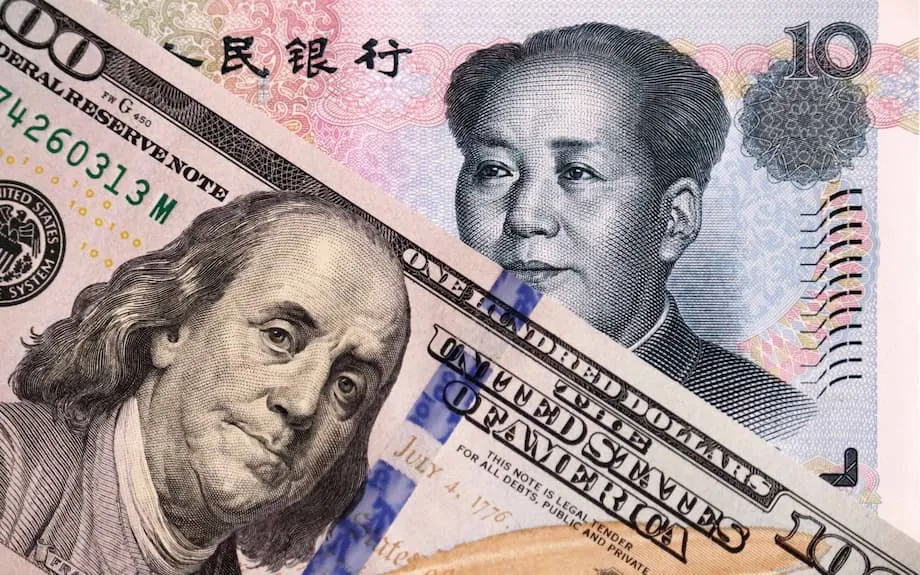
A weaker dollar gives Beijing room to act
China is widening access to its financial markets, developing new payment channels and promoting more trade in yuan as a sharp dollar decline creates an opening for its currency. As of September 14, 2025, the dollar has suffered its weakest start to a year since 1973 on key indexes, while the offshore yuan has strengthened modestly. Foreign money has begun returning to Chinese assets, though the inflows have been uneven.
Contents
- A weaker dollar gives Beijing room to act
- China opens more routes into its markets
- Payment networks and the digital yuan
- Asia's trade is using more local currencies
- Why direct currency transactions matter
- The dollar still anchors global finance
- What China learned from its earlier push
- Energy and commodities offer a testing ground
- BRICS seeks more options, with limits
- What changes for China and the United States
- The indicators that will show progress
- At a Glance
Beijing's immediate ambition is practical: give businesses and governments more ways to price goods, borrow money, manage currency risk and settle transactions without relying on dollars. Officials frame the effort as risk management, seeking to reduce dependence on any single sovereign currency and limit exposure to sanctions. Turbulence in United States policy and doubts about its fiscal and monetary management have added urgency to work that China has pursued for years.
The gap between the two currencies remains large. The Bank for International Settlements (BIS) triennial survey for 2022 put the dollar on one side of 88 percent of foreign exchange trades, compared with roughly 7 percent for the yuan. Every currency trade involves two currencies, so those figures describe participation in transactions rather than slices of a total that must add up to 100 percent.
SWIFT figures for May put the yuan at about 3 percent of global payments by value, ranking sixth. The dollar accounted for close to half and the euro near a quarter. China is therefore building from a small global payments base, even as its trade relationships give the yuan opportunities to become more useful abroad.
Central banks are also spreading their holdings across more assets. The dollar's share of official reserves has fallen to a low spanning two decades, while gold's share has risen, particularly among emerging economies seeking protection against policy shocks and sanctions risk.
China opens more routes into its markets
The People's Bank of China has argued that excessive reliance on one dominant currency creates vulnerabilities. Its response is to expand the tools that make yuan transactions workable, including plans for a Shanghai center supporting international use of the digital yuan and encouragement for yuan foreign exchange futures and related products.
Futures help businesses manage uncertainty by agreeing terms for a transaction in advance. A company expecting to receive yuan can use a currency hedge to reduce the risk that exchange rate movements will change the value of its payment. A broader choice of such tools makes the currency easier to use for regular business.
Three major mainland exchanges have opened 16 additional futures and options contracts to qualified foreign institutional investors. The contracts cover materials including natural rubber, lead and tin, building on earlier measures that widened foreign access. Options give their holders a right to buy or sell under agreed conditions, providing another way to manage price risk.
The Shanghai Futures Exchange has proposed accepting collateral in foreign currencies for trades settled in yuan. Collateral is money or another asset pledged to support a trading obligation. Accepting it in other currencies could allow global firms to hedge through Chinese markets without first setting aside yuan for that purpose.
Authorities have also approved participation by eligible foreign investors in options traded on exchanges for exchange traded funds. They have waived a fee for opening local accounts through which international financial institutions access China's bond market. Global banks are expanding commodity brokerage, yuan clearing and other services connecting overseas customers to these channels.
Payment networks and the digital yuan
China has built an offshore network of yuan clearing banks and continued expanding the cross border Interbank Payment System (CIPS). Clearing and settlement move a payment from an instruction to a completed transfer. CIPS processes international yuan payments and connects them with China's domestic settlement system.
The digital yuan, often called e CNY, is already live for retail use within China. Authorities are preparing it for carefully controlled trials across borders. The planned Shanghai center adds an institutional base for supporting its international use.
The mBridge project is testing nearly instant wholesale transfers using central bank digital currencies. Developed with the BIS Innovation Hub and monetary authorities including Hong Kong and the United Arab Emirates, it focuses on payments between financial institutions rather than ordinary purchases by shoppers.
CIPS and digital currency arrangements create payment routes that do not need to pass through systems based on the dollar. China's aims include faster settlement, lower costs and backup routes for trade and finance involving Chinese counterparties. Having another route becomes useful when the usual channel is costly, disrupted or restricted.
Payment technology is one part of the effort. Broader hedging choices and easier market access can help businesses price commodities, borrow and settle in yuan. Capital controls and restrictions on converting the currency still keep the pace measured.
Asia's trade is using more local currencies
Southeast Asian authorities have promoted transactions in local currencies and developed payment links that allow purchases through QR codes across borders without using the dollar. Several countries have currency swap agreements with the People's Bank of China, while major banks in Thailand, Indonesia, Singapore and Malaysia connect directly to CIPS.
A currency swap agreement lets monetary authorities exchange currencies under agreed terms, providing a way to access another currency when needed. Such arrangements support the wider effort to make local currencies usable in international business.
Officials say the share of trade within ASEAN settled in local currencies has risen from less than 10 percent in 2019 to more than a quarter. Those figures indicate that the share has grown to more than two and a half times its earlier level. The shift involves local currencies generally, with the yuan playing a growing role in commerce linked to China.
For goods trade between ASEAN and China, yuan receipts and payments across borders exceeded 2 trillion yuan in 2023. That represented more than 30 percent of the bilateral total. Businesses buying from or selling to China consequently have more opportunities to receive and spend the same currency.
Dealers also report greater demand for hedges that bypass the dollar. Firms are pairing the yuan with the Hong Kong dollar, the dirham, the yen and the euro, while banks in Southeast Asia are establishing desks dedicated to the Chinese currency. Demand for yuan loans is increasing for projects involving suppliers and buyers linked to China.
Why direct currency transactions matter
A company can face extra currency exposure when it routes a transaction through dollars before reaching the currency it needs. Borrowing, receiving payments and hedging in yuan can help a business with Chinese suppliers or customers keep those activities aligned. It can also reduce the need to hold dollars for day to day payments.
Some importers in India and Bangladesh have paid for Russian goods in yuan. More Russian energy cargoes are being settled in currencies other than the dollar. The reasons vary, including cost savings and sanctions risk, but the transactions reduce the number of payments that must pass through New York.
Companies trading with China can therefore hold smaller working balances in dollars. For firms that need money readily available to pay suppliers, a wider choice of settlement currencies changes how they organise their cash and borrowing.
Emerging economies may also benefit from a weaker dollar and better access to funding and hedging in other currencies. Bonds issued in local currencies in several countries become more attractive when United States interest rates retreat. Businesses connected to Chinese supply chains gain options to borrow and hedge in yuan without extra basis risk from routing transactions through the dollar. Basis risk occurs when a hedge and the transaction it protects move differently, leaving some exposure uncovered.
The dollar still anchors global finance
The dollar retains advantages that extend far beyond payments. It offers exceptionally deep markets, ready access to funding for short periods and a legal framework trusted by global investors. Its 88 percent participation in foreign exchange trades in the 2022 BIS survey reflects that broad role.
Dollar funding still accounts for the majority of international debt issuance by borrowers outside the United States. Most commodity benchmarks are priced in dollars, and liabilities across borders at banks are largely denominated in dollars. Businesses often need the currency because their borrowing, contracts and financial obligations already use it.
Central bank reserve managers are adjusting their holdings gradually. The dollar remains the largest component of official reserves even after its share fell to a low spanning two decades. Emerging economies have been especially active in increasing gold holdings, helping push gold prices higher while seeking a buffer against exchange rate swings and sanctions.
Foreign investors now own about 30 percent of the United States Treasury market, down from more than half during the global financial crisis. When foreign buyers provide less demand, borrowing costs can rise at the margin because bond sellers may need to offer higher yields to attract purchasers.
Households and companies in many emerging economies still prefer bank deposits in dollars. China has moved differently: the share of dollar deposits has declined since 2017. Regulators have promoted yuan use in transactions across borders and domestic finance, while residents have gained confidence in their access to tools for managing risk in yuan.
What China learned from its earlier push
China's present strategy follows an earlier attempt to give the yuan a much larger international role. After the 2008 financial crisis, Beijing maintained a soft peg to the dollar that supported exports. Its foreign exchange reserves approached $4 trillion by 2014, and the yuan won inclusion in the International Monetary Fund's Special Drawing Rights basket.
The Belt and Road Initiative and large overseas lending by policy banks were expected to expand global currency use. The approach later encountered the policy trilemma: a country cannot simultaneously maintain a fixed exchange rate, allow money to move freely across borders and run an independent monetary policy. Keeping control over two requires giving up some control over the third.
When the Federal Reserve raised interest rates in 2015 and China's economic outlook cooled, the yuan appeared overvalued. Capital outflows surged in 2016 as households moved savings abroad and state owned companies purchased overseas assets. The central bank allowed the currency to fall, tightened capital controls and moved toward a managed float, under which the exchange rate changes but authorities continue to guide it.
The main stages of that shift were:
- After 2008, China maintained a soft dollar peg and pursued wider international yuan use.
- By 2014, foreign exchange reserves had approached $4 trillion.
- In 2015, rising United States interest rates and a cooler Chinese outlook put pressure on the currency strategy.
- In 2016, capital outflows surged, prompting tighter controls and exchange rate adjustments.
- Since 2017, China's share of dollar deposits has declined as yuan use expanded.
China has since kept reserves near $3 trillion, restricted outbound mergers and acquisitions for years and allowed more movement in both directions in its currency. The focus has shifted from ambitions for a global yuan standard toward settling more trade in yuan and building the legal and technical infrastructure for that purpose without fully opening the capital account.
Energy and commodities offer a testing ground
Russia is selling more energy products in local currencies to friendly buyers. Some cargoes settle in yuan, others in dirhams or rubles. China, India and Turkey are involved in deals that avoid the dollar, making commodity trade one of the clearest places to see the shift.
Buyers and sellers can reduce the dollars they keep available for working capital and hedge in the same currency as the underlying transaction. China's broader access to commodity futures, proposed foreign currency collateral arrangements and expanding clearing capacity are designed to make such business easier.
Gulf producers are exploring closer connections with Chinese settlement systems and digital currency trials. The petrodollar system, in which dollars play a central role in oil transactions and the management of export earnings, still frames oil pricing and reserve decisions.
A gradual expansion of yuan settlement for part of the oil trade could occur while dollar benchmarks continue to guide pricing. Pricing and settlement serve different purposes: a contract can refer to a dollar benchmark to determine its value while the eventual payment is made in another currency.
The digital yuan and mBridge provide a possible route to faster wholesale payments across borders. No timetable is given for the proposed Shanghai center, broader digital yuan trials or increased yuan settlement by Gulf oil producers. Those developments remain steps to monitor, alongside actual use of the new commodity market channels.
BRICS seeks more options, with limits
BRICS governments and many countries in the Global South want greater financial autonomy. They have pledged wider use of local currencies in trade, expanded swap lines and developed yuan infrastructure through clearing banks and payment links. The renminbi, another name for China's currency, is the most advanced of these alternatives, particularly in bilateral business tied to Chinese supply chains and lending.
China's capital controls and limits on yuan convertibility constrain that ambition. Investors using an international currency need confidence that they can move money and exchange it when required. Beijing's approach seeks greater use abroad while retaining control over those movements.
The euro also faces constraints on its appeal as a safe haven outside Europe. Other BRICS currencies can be volatile or lack markets where businesses can easily hedge large transactions. A common currency for such a diverse group remains a distant prospect.
Local currency settlement and cooperation on central bank digital currencies that can work together across borders are gaining more traction. Work on alternatives to SWIFT and parallel payment systems is intended to reduce dependence on a single channel.
Surveys of central banks point to growing concern about United States politics and fiscal sustainability, alongside interest in more gold and some additional euro holdings. The dollar still offers the deepest pool of assets regarded as safe and the broadest legal protections. The resulting system is becoming more varied through gradual diversification.
What changes for China and the United States
The United States faces the possibility of a steady erosion of dollar use at the edges. More trade invoiced and settled in other currencies would reduce some demand for dollars. A smaller foreign share of Treasury purchases could add upward pressure to yields, increasing the cost of financing large deficits.
A weaker dollar can help United States exporters because their goods become cheaper for buyers using other currencies. It can also complicate efforts to keep inflation expectations stable. Confidence in United States institutions and consistent policy remain central supports for dollar demand.
China gains strategic room when businesses can use its currency more easily. Commodity producers selling to China acquire payment and pricing choices that match their customers, while companies in emerging economies gain more funding options.
A credible international yuan also requires predictable rules, deep and open markets, transparency and legal certainty. Progress in market access and the rule of law will affect how quickly investors change their allocations. Trading products provide useful tools, but stable policy and clear communication matter alongside them.
The indicators that will show progress
The yuan's share in SWIFT's payments tracker, participation in CIPS and trading volumes in yuan futures and options will show whether the infrastructure is attracting sustained use. Energy cargo payments and Gulf producers' settlement decisions will help reveal how far commodity trade is moving.
Growth in People's Bank of China swap lines, digital yuan trials across borders, yuan loans in emerging economies and Asian trade invoices that avoid the dollar will provide further measures. The practical test is whether businesses repeatedly choose these channels for their everyday transactions.
United States decisions will shape demand on the other side. Its fiscal course, the scope and use of financial sanctions and the steadiness of monetary policy influence global appetite for dollars. Improvements to payment infrastructure using dollars and clear rules for tokenized deposits and stablecoins could reinforce the currency's position. These are digital forms of financial instruments and money designed to move through electronic networks.
China is working to embed the yuan in a payments system with more routes and more currencies. The immediate shift is toward greater choice in particular trades and financial transactions, while the dollar retains its central role.
At a Glance
- The dollar has had its weakest start to a year since 1973 on key indexes, creating an opening for China's yuan strategy.
- China has opened 16 additional futures and options contracts to qualified foreign institutional investors and plans a digital yuan center in Shanghai.
- CIPS, offshore clearing banks and digital currency trials provide more routes for international yuan payments.
- Local currencies now settle more than a quarter of trade within ASEAN, up from less than 10 percent in 2019.
- Yuan receipts and payments for goods between ASEAN and China exceeded 2 trillion yuan in 2023, more than 30 percent of the bilateral total.
- The dollar participated in 88 percent of foreign exchange trades in the 2022 BIS survey; the yuan participated in roughly 7 percent.
- Capital controls and limited convertibility constrain yuan expansion, while commodity trade offers opportunities for wider settlement use.
- China's current approach prioritizes practical trade settlement and financial tools rather than fully opening its capital account.