Malaysia's main gateway still lacks a secure terminal connection
Kuala Lumpur International Airport handled more than 57 million passengers in 2024, yet travelers changing between terminal 1 and terminal 2 still have to leave the secure airport area and make their way through a public transport connection. For Malaysia's main aviation gateway, that missing link is a practical obstacle to becoming a more effective global hub.
Contents
- Malaysia's main gateway still lacks a secure terminal connection
- Two terminals face different pressures
- Why a terminal change becomes a second departure
- Public transport connects the buildings, with extra steps
- Long walks and late screening add to terminal 2 frustrations
- Aerotrain disruptions weaken confidence inside terminal 1
- What the secure coach proposal would require
- Premium transfers cover only part of the journey
- Competing hubs organize around the connection
- Practical improvements passengers would notice
- Key Points
As of September 11, 2025, Malaysia Airports Holdings Berhad, the airport operator, is working with the Ministry of Transport on a proof of concept for secure transfers between the terminals. The proposal involves coaches operating on the airside, the restricted area beyond immigration and security, alongside arrangements to move checked baggage directly between terminals.
Passengers currently face a much longer chain of tasks. They must clear immigration where required, collect checked bags, pass customs, travel to the other terminal and check in again. Security screening and, for an international departure, another immigration check follow. Travel advisers commonly suggest allowing 2.5 to 4 hours for the transfer, with one forum adviser recommending at least four hours.
KLIA anchors the networks of Malaysia Airlines, AirAsia, Batik Air Malaysia and other carriers. Its two terminals serve different markets, but their separation makes journeys involving both buildings harder to plan. Long immigration queues, crowded halls and recurring service disruptions add to the uncertainty.
Terminal 1's Aerotrain problems create another difficulty within the airport. The train connects its main building and satellite terminal, while the proposed secure coach service would connect terminal 1 and terminal 2. Passengers need dependable transport on both routes for connections to work smoothly.
Two terminals face different pressures
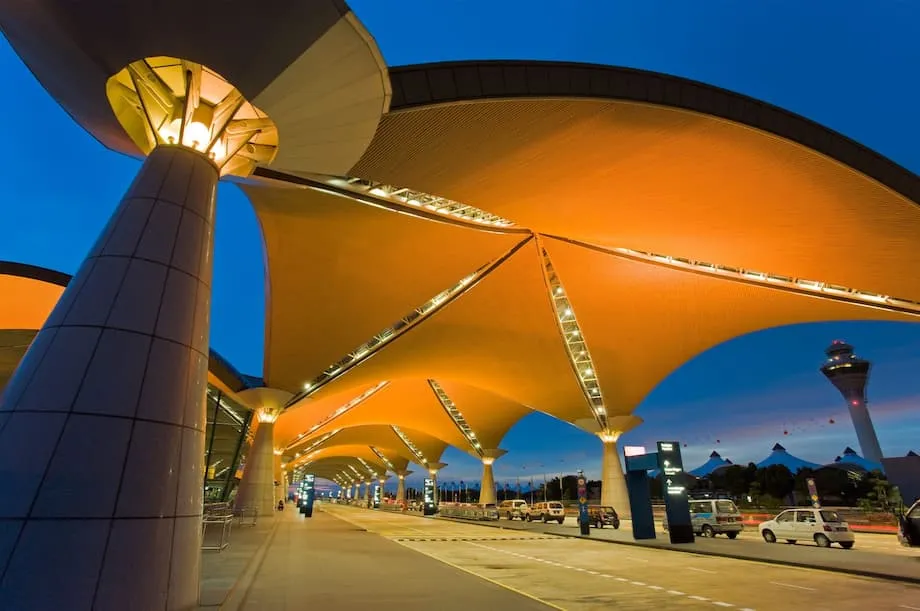
Terminal 1, designed by Japanese architect Kisho Kurokawa, remains KLIA's flagship for full service airlines and long haul connections. Terminal 2 was purpose built for low cost carriers such as AirAsia, with modern retail space and capacity available for further growth.
Publicly available figures put KLIA's passenger traffic above 57 million in 2024. Industry figures placed terminal 1 at around 30.7 million passengers, above its optimized operating capacity, and terminal 2 at about 26.4 million, below its design limit.
Those figures show why the transfer proposal matters beyond convenience. Terminal 1 is carrying more traffic than its optimized operation allows, while terminal 2 has room to accommodate more. Moving some connecting traffic through terminal 2 could ease pressure, provided passengers and their bags can reach onward flights reliably.
Arrival halls show some of the strain, particularly at immigration counters for foreign visitors. The timing of incoming flights, the placement of counters and the management of queues all affect how quickly passengers move through passport control.
Self check in kiosks and automated bag drops help with routine tasks, but staff still have to deal with document checks, baggage size problems and other exceptions. More machines alone cannot remove a queue when passengers need an officer or airline employee to resolve a problem.
Why a terminal change becomes a second departure
Connecting passengers benefit when an airport lets them stay inside its secure area, sends their checked bags onward and provides the documents needed for the next flight. At KLIA, a journey involving both terminals can instead require much of the arrival and departure process to happen again.
A typical transfer follows these steps:
- Leave the arriving aircraft at terminal 1 or terminal 2 and proceed to immigration.
- Clear immigration, collect checked baggage and pass customs.
- Take a public shuttle bus or the express rail link to the other terminal.
- Find the airline check in area, obtain any necessary boarding documents and drop off baggage.
- Pass security and, where required, departure immigration before reaching the next flight.
A TripAdvisor forum adviser discussing transfers between the terminals urged passengers to leave a generous margin:
There is no airside connection between KLIA and KLIA2. It is recommended to allow at least 4 hours between flights when transferring between KLIA2 and KLIA1.
Immigration queues, slow baggage delivery or a ticketing problem can use up that margin. A first time visitor or a family carrying several bags also has to navigate unfamiliar buildings while watching the clock. Few airlines sell these mixed terminal journeys under a single booking reference, leaving passengers with fewer options when a connection fails.
Public transport connects the buildings, with extra steps
The express rail link carries passengers between terminal 1 and terminal 2 within minutes. Reaching the platforms and buying a ticket take additional time, however, and travelers must first complete the arrival procedures needed to enter the public area.
Airport shuttle buses provide another option. Their loops include both terminals and the long term car park, making them useful for travelers watching their spending or moving with heavy bags. Waiting times and the time spent at stops can be difficult to predict during busy periods.
Both services serve passengers starting or ending a journey at KLIA. Connecting passengers need a transport system coordinated with flight transfers, including a secure route, clear directions and baggage arrangements that spare them another check in.
Travelers discussing their experiences commonly advise against tight connections across the terminals. A short rail ride covers only one part of a journey that also includes queues, baggage collection, walking and the next airline's departure procedures. Many passengers therefore avoid booking their own connections involving both terminals unless they can leave a generous buffer.
Long walks and late screening add to terminal 2 frustrations
Terminal 2's walking routes are another frequent complaint. Retail outlets line much of the route through the building, some gates require long walks, and corridors can feel narrow when passenger traffic peaks. Seating near boarding areas can also be tight.
Travelers want broad passageways, direct routes and enough places to sit near their gates. Shopping generates airport income, but it also competes for space with the movement of passengers. A route that feels like a maze can make even a modern terminal tiring to use.
Security screening at many terminal 2 gates creates a further pressure point close to boarding. Passengers may buy water in the departures area and then have to discard it at the gate checkpoint. The usual cabin baggage liquids restriction caps containers at 100 milliliters, but the location of screening affects when passengers encounter that rule.
A visitor describing a first trip in a Malaysia Reddit forum raised a complaint about water access after gate screening:
A water bottle bought in the airport had to be thrown away at gate security, and there was no water fountain at the gate. Water is a necessity, and if you are in a situation where you cannot leave, it should be provided for free.
Airports with centralized screening often provide fountains and clear options beyond the checkpoint. Screening near the gate leaves passengers fewer choices close to departure. Fountain placement, signs, seating and the timing of checks are practical decisions that shape the final part of the journey.
Aerotrain disruptions weaken confidence inside terminal 1
Terminal 1's Aerotrain links its main building with the satellite terminal, an essential route for passengers using gates in the satellite building. Its reliability has become another source of uncertainty after a stop start relaunch in mid 2025.
The system broke down again in early August, prompting passengers to be moved onto shuttle buses. The airport apologized and attributed the short suspension to a door malfunction before services resumed.
Even a brief stoppage can lead to crowding at bus boarding areas and uncertainty about the route to a gate. Passengers with tight connections can miss flights when an unexpected transport delay consumes their remaining time.
Terminal 2 has also experienced a power outage, raising concerns about contingency planning. Large airports use backup power, spare people mover equipment and other forms of redundancy so that a failed component causes only a minor interruption. Repeated outages or stoppages make travelers less confident about routing a journey through the airport.
The recent developments span several stages:
- 2024: KLIA handled more than 57 million passengers, with around 30.7 million using terminal 1 and 26.4 million using terminal 2.
- Mid 2025: Terminal 1's Aerotrain went through a stop start relaunch.
- Early August 2025: A door malfunction caused another short Aerotrain suspension, with shuttle buses carrying passengers until service resumed.
- September 11, 2025: Malaysia Airports and the Transport Ministry are working on a proof of concept for secure transfers between terminals 1 and 2.
What the secure coach proposal would require
Malaysia Airports and the Ministry of Transport are examining a service that would carry connecting passengers between terminals by airside coach, with screening completed once and baggage routed directly between the buildings. Aviation specialists have said the arrangement could help relieve terminal 1 by directing some connections through terminal 2.
A predictable transfer would bring KLIA closer to competing hubs, but the passenger journey depends on more than a bus route. Airline systems must exchange the information needed to tag bags to the correct destination. Ground handlers at both terminals need common procedures and clear responsibility when something goes wrong.
Through checked baggage means a bag is accepted at the start of a journey and sent onward to the final destination, rather than returned to its owner during the connection. For transfers across KLIA's terminals, that requires a reliable handover between the organizations moving, sorting and loading the bags.
Airlines have previously raised concerns about costs and control. More recent signals include support from Malaysia Aviation Group, the parent of Malaysia Airlines, and growing alignment with low cost carriers.
A full rollout still needs government endorsement and coordination across agencies. No firm implementation date has been given. The proof of concept is the step intended to establish how the service would work before a wider introduction.
Premium transfers cover only part of the journey
Batik Air has introduced an upgraded private transfer service using electric vehicles for business class passengers moving between terminal 1's main building and satellite terminal during Aerotrain suspensions. The service helps those customers maintain their journeys within terminal 1.
The much larger group traveling between terminal 1 and terminal 2 still needs a secure connection between those buildings. All passengers using terminal 1 also need a dependable people mover, backed by a clear bus arrangement when the train stops.
Airlines have other ways to reduce transfer work. Through checked baggage can remove the need to reclaim a suitcase between flights. Transfer desks can issue onward boarding passes, including for partner airlines, while passengers remain inside the secure area.
Virtual interline platforms can help combine flights from full service and low cost airlines. These services help assemble journeys across carriers, but passengers still face the airport's physical transfer process and the baggage arrangements attached to their booking. Without a secure terminal connection and common handling procedures, much of the risk remains with the traveler.
Competing hubs organize around the connection
Singapore's Changi Airport keeps transit passengers inside the secure zone, connects terminals with a frequent train and provides transfer counters. Mixed airline journeys supported by interline agreements can also have baggage tagged through to the final destination. An interline agreement lets participating airlines coordinate parts of a passenger's journey, including baggage handling.
Dubai International moves large passenger flows through concourses connected by an automated train, supported by published minimum connection times. Doha's Hamad International Airport organizes transfers around a single large terminal, a people mover and short walking distances for journeys linking long haul and regional flights.
These airports make the connection a central part of the design. Secure transport, baggage routing and airline support work together so passengers can move from an arriving flight to a departing one with fewer repeated procedures.
KLIA retains strengths of its own. Terminal 1's architecture remains striking, and its satellite terminal can support substantial long haul operations when the people mover works reliably. Terminal 2 has space and works efficiently for traffic starting or ending there.
The divide between the terminals remains KLIA's central transfer problem, alongside the friction created by late gate screening at many terminal 2 gates. A secure shuttle, steady Aerotrain service and better immigration queue management would make journeys through the airport more coherent.
Practical improvements passengers would notice
KLIA can address several passenger frustrations without starting with a new terminal. The priorities are coordinated decisions, reliable services and visible improvements during the next planning cycle, particularly where travelers now face repeated procedures or uncertain waits.
A secure shuttle would need frequent departures and signs leading passengers from arrival gates to transfer lounges. Baggage integration would need common tracking, shared sorting arrangements and agreed service standards for every participating airline. Staffed transfer desks and digital kiosks could provide boarding passes, rebooking and directions without requiring passengers to enter the public area.
Terminal 2's passenger routes could benefit from wider corridors, more seating near gates and more moving walkways on longer routes. Water fountains near gate screening areas and beyond checkpoints would give passengers a way to refill bottles before boarding.
Terminal 1 needs tested Aerotrain equipment, a published maintenance plan and an easily understood backup bus procedure. Immigration queues could be addressed with more automated gates, additional officers during groups of closely scheduled arrivals and screens showing expected waits before passport control.
Terminal 2's e hailing pickup area also needs attention, including more vehicle bays, shade, traffic marshals and live queue time displays. If a fee is charged for each vehicle, setting aside part of that income for improvements would connect the charge to better pickup conditions.
Each measure addresses a concrete part of the journey: reaching a gate, collecting or transferring a bag, clearing a queue, finding water or meeting a car. Together, those changes would give passengers fewer reasons to build extra uncertainty into a connection through Malaysia's main hub.
Key Points
- As of September 11, 2025, KLIA has no secure passenger connection between terminal 1 and terminal 2.
- Passengers changing terminals face immigration where required, baggage collection, public transport and another check in.
- KLIA handled more than 57 million passengers in 2024. Terminal 1 exceeded its optimized operating capacity, while terminal 2 remained below its design limit.
- Travel advisers commonly suggest 2.5 to 4 hours for a terminal transfer, with one forum adviser recommending at least four hours.
- Malaysia Airports and the Transport Ministry are developing a proof of concept for secure coach transfers and direct baggage handling. No firm rollout date has been given.
- An Aerotrain door malfunction caused a short suspension in early August after a stop start relaunch in mid 2025. Terminal 2 also experienced a power outage.
- Long walks, limited seating, late gate screening and water access add to terminal 2 frustrations.
- Reliable transport, shared baggage procedures, airline cooperation and better passenger facilities are central to improving connections.