A parish built after war, tucked behind a Tokyo theater
Setagaya Catholic Church, whose permanent sanctuary was consecrated in 1948 with help that included building materials sent from France, stands a few minutes from Shimokitazawa Station in Tokyo. Behind the Suzunari Theater in Kitazawa, the parish brings together a wooden sanctuary, a former military hut used for community events, and a Lourdes style grotto made from donated concrete scraps.
Contents
- A parish built after war, tucked behind a Tokyo theater
- How the parish took shape between 1946 and 1948
- What the wooden sanctuary contains
- A Lourdes grotto made from donated fragments
- Mass, family life and accessible facilities
- Study and prayer beyond Sunday services
- The military hut's second life as a community hall
- How a 2008 art project brought people together
- Finding the church in Shimokitazawa
- What visitors should know before stopping in
- What to Know
The church is dedicated to St John the Baptist and belongs to the Catholic Archdiocese of Tokyo. Its community began in 1946, when Father Petro Takemi Konda gathered local Catholics for prayer in rented rooms at a private home. The buildings that followed tell a story of rebuilding after World War II and of neighbors finding new uses for modest materials.
Shimokitazawa's lanes are lined with cafes and vintage shops. Within the church grounds, birdsong and rustling leaves often take the place of the city's steady noise. Climbing plants cover parts of the sanctuary exterior, softening its outline against nearby homes and streets.
Catholics who live and work in Setagaya come here for worship, study and shared prayer. Other visitors stop to sit quietly or take a break from the neighborhood's busy streets. The small yard and grotto offer room for that pause, while the sanctuary remains the center of an active parish.
How the parish took shape between 1946 and 1948
The Archdiocese of Tokyo traces the parish's beginnings to Father Konda's prayer gatherings in 1946. Before a permanent sanctuary existed, the community used borrowed space and buildings adapted for a new purpose.
In 1947, a small chapel was moved from Fuchu cemetery to the present site and adapted for parish use. Around the same time, a surplus Nissen hut from the U.S. Army became an early chapel on the grounds. Parishioners called it the kamaboko barrack because its curved profile resembled kamaboko, the familiar Japanese fish cake.
The main stages of the church's early development were:
- 1946: Father Petro Takemi Konda gathered local Catholics for prayer in rented rooms at a private home.
- 1947: A small chapel was moved from Fuchu cemetery to the current grounds and adapted for the parish. A surplus U.S. Army Nissen hut also became an early worship space around this time.
- 1948: The permanent sanctuary was consecrated, with materials sent from France helping to complete the building.
The Nissen hut served as the main prayer space until the sanctuary opened. French assistance helped the community complete a lasting church during the difficult years after the war. Together, the relocated chapel, military hut and permanent sanctuary show how the parish developed through successive practical steps.
What the wooden sanctuary contains
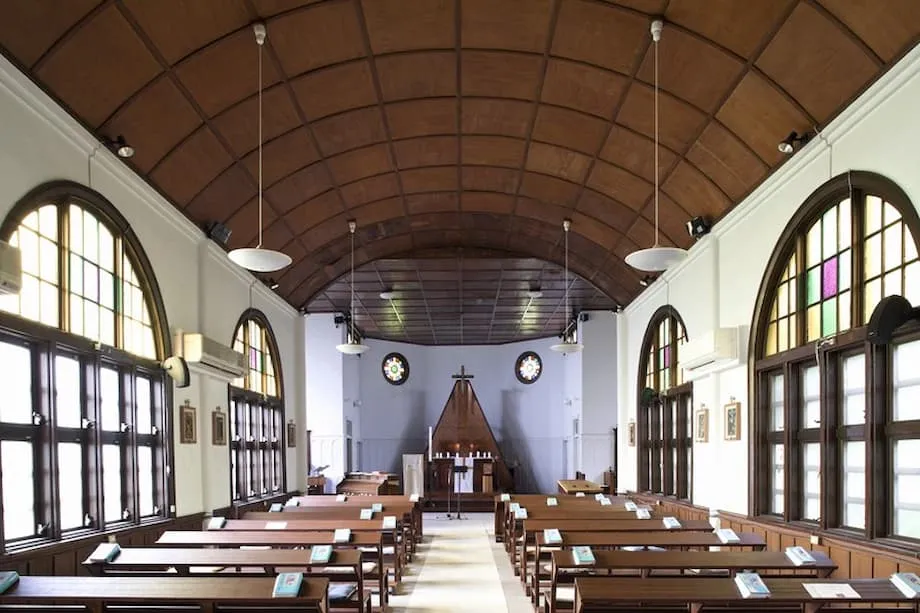
Inside the sanctuary, warm wood tones lead the eye toward a barrel vaulted ceiling. A barrel vault is a continuous arch running along the length of a room, giving the ceiling a gently rounded form.
The shape appears in many Romanesque buildings because it can span wide spaces while remaining strong and stable. At this compact urban church, the vault gives the interior breadth and a sense of shelter without elaborate buttresses or heavy ornament. The room feels sturdy but gentle, with its form supporting the quiet purpose of the space.
Greek letters above the altar refer to Jesus Christ as the Lamb of God. Stained glass panels on either side bring soft color into the area around the pews. Icons and a simple cross frame the sanctuary without filling it with decoration.
The timber, curved ceiling and restrained details create a room shaped for listening and prayer. Visitors encounter a small parish interior whose individual features can be noticed without competing for attention.
A Lourdes grotto made from donated fragments
On the north side of the church grounds, a small grotto recalls Lourdes in southern France. Catholic devotion to Lourdes dates to 1858, when Bernadette Soubirous, then 14, reported a series of visions of the Virgin Mary at a cave on the edge of the town.
Parishes around the world have since built their own grottoes. These places recall the prayer, water and healing associated with the original site. Setagaya's version brings that devotion into a compact corner of Tokyo.
Parishioners provided concrete scraps and other donated materials to build the grotto. Making a place of prayer from fragments gave the project both a practical purpose and a symbolic quality. A statue of Mary looks upward from a niche shaped like a cave, while nearby trees soften the sounds of the city.
Visitors pause to light a candle, whisper a prayer or sit without speaking. The grotto is modest and visibly handmade, with a scale that encourages people to linger quietly rather than hurry through.
Stanislaus Fusao Sekine, the parish priest, described the peace people find when they stop at the church, including those who arrive without a plan while passing through the neighborhood. He said:
"The church is where people find peace while they stand quietly," said Priest Sekine.
His description connects the grotto with the sanctuary and yard: each gives people a place to pause, whether they have come specifically to pray or simply stepped away from a busy day.
Mass, family life and accessible facilities
Sunday Mass is celebrated in Japanese at 10:30 am, according to the Archdiocese of Tokyo's directory. Weekday Mass is available in the morning, afternoon and evening, offering opportunities for commuters and families to attend at different points in the day.
The parish also holds Sunday School once a month in a Room of Parents and Children. A sloped entrance and an accessible restroom help worshippers with mobility needs use the building.
Setagaya Catholic Church had 641 registered members as of late 2019. That dated figure gives a sense of the community's size, with parish life on a scale that encourages people to know one another by name.
The church serves people living and working in Setagaya, the most populous of Tokyo's special wards. Its local role extends from regular worship to activities for children and opportunities for adults to gather during the working week.
Study and prayer beyond Sunday services
Bible classes, a reading group on the Catechism, and study sessions on early church writers and the Old Testament form part of the parish's regular life. These gatherings give members opportunities to study their faith alongside the services held in the sanctuary.
At scheduled times, the community also prays with Taize hymns and the Liturgy of the Hours. The Liturgy of the Hours is a pattern of psalms and readings used by Christians around the world to mark morning, evening and night.
The Archdiocese notes that people are welcome to join these prayers after work. That timing fits a neighborhood where residents and commuters may pass the church at the end of the day.
The range of activities gives the parish several rhythms: Sunday worship, weekday Mass, study groups and shared prayer. For those who regularly return, the church is both a place for individual reflection and a community with recurring gatherings.
The military hut's second life as a community hall
The former Nissen hut remains part of the church's story through its use as the kamaboko hall. After serving as the main chapel before the permanent sanctuary opened, it became a venue for music, cultural gatherings and charity events.
Priest Sekine has explained how the hut's later role serves neighbors as well as parishioners. Its simple shape, like half a cylinder, allows the room to be arranged for small concerts, lectures, workshops and exhibitions.
Charity concerts have helped the parish support causes beyond its own grounds. They also give neighbors a reason to enter the church community through music and a shared event.
The hall's changing use links the parish's early years with its present activities. A structure first used to meet an urgent need for worship space has continued to accommodate people gathering for other purposes.
How a 2008 art project brought people together
In 2008, the parish marked the 60th anniversary of the sanctuary's consecration with a collaborative art project involving artist Minha Lee. Called The Wings of an Eagle, it brought parishioners and neighbors together over ten months.
Participants made large panels using used tea bag paper, Korean paper and simple drawing materials. The completed work was installed for Christmas Eve Mass, bringing the shared project into the sanctuary's worship life.
The project team described the process as a shared ritual. Making the panels encouraged participants to express hopes, work through tensions and recover a sense of togetherness through art.
The church continued presenting the exhibition through the middle of 2009 as a gift to the community that had helped build it. The project added another chapter to the parish's use of ordinary materials for a common purpose, alongside the practical reuse seen in its early buildings and grotto.
Finding the church in Shimokitazawa
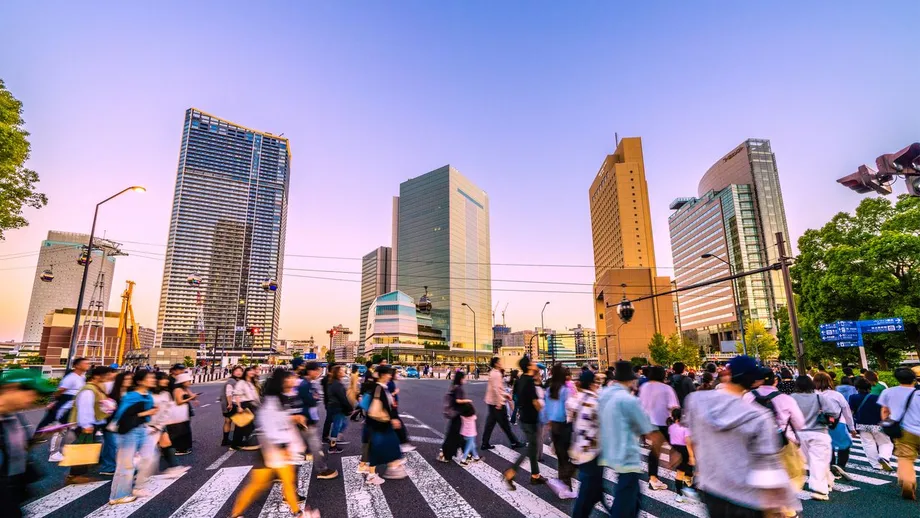
Setagaya lies in the southwestern part of Tokyo's core area. Its districts combine quiet residential streets with creative centers, and the Kitazawa neighborhood around Shimokitazawa Station is known for small theaters, live houses and independent shops.
Setagaya Catholic Church sits within that setting, behind the Suzunari Theater on a quiet street. The modest green grounds offer a different pace from the surrounding shopping and entertainment streets without being far from them.
Both the Odakyu Odawara Line and the Keio Inokashira Line serve Shimokitazawa Station. Ikenoue Station, also on the Keio Inokashira Line, is another nearby option. The church is about a five minute walk from either station.
The rail connections and compact grounds make a short stop practical before a theater performance, after shopping or on the way home from work. Visitors can move from the neighborhood's busy lanes to the church without a lengthy journey.
What visitors should know before stopping in
Setagaya Catholic Church is an active parish rather than a museum. Visitors are welcome to look inside the sanctuary when it is open, light a candle at the grotto or attend Mass.
Quiet is expected, especially during services. Modest dress and respectful behavior are appreciated. Visitors should leave aisles clear, avoid flash photography and refrain from taking photographs during prayer.
Mass times, prayer gatherings, concerts and exhibitions can change at short notice. The parish calendar is the place to check before making a visit around a particular service or event.
The church publishes updates and contact details on its official parish site. The Archdiocese of Tokyo directory also gives information about the church's programs and a broader view of parish life across the city.
A visit can be brief, but the grounds bring together several parts of the community's history: a sanctuary completed after the war, a former military hut still used for gatherings, and a grotto made through parishioners' donations. Worship and neighborhood activity continue alongside those reminders of how the church was built.
What to Know
- Father Petro Takemi Konda began gathering the parish community in rented rooms in 1946.
- The permanent sanctuary was consecrated in 1948, with help that included building materials sent from France.
- The church is dedicated to St John the Baptist and belongs to the Archdiocese of Tokyo.
- The former U.S. Army Nissen hut, nicknamed the kamaboko barrack, now accommodates community and charity events.
- The wooden sanctuary has a barrel vaulted ceiling, stained glass beside the altar and Greek letters referring to Jesus as the Lamb of God.
- The Lourdes style grotto on the north side of the grounds was built from donated concrete scraps and other materials.
- Sunday Mass is listed at 10:30 am in Japanese. The parish had 641 registered members as of late 2019.
- A sloped entrance and accessible restroom assist worshippers with mobility needs.
- The church is behind the Suzunari Theater, about a five minute walk from Shimokitazawa or Ikenoue station.
- Visitors should check the parish calendar for current services and events and respect prayer taking place inside.