From 28 million pairs of socks to a shop of its own
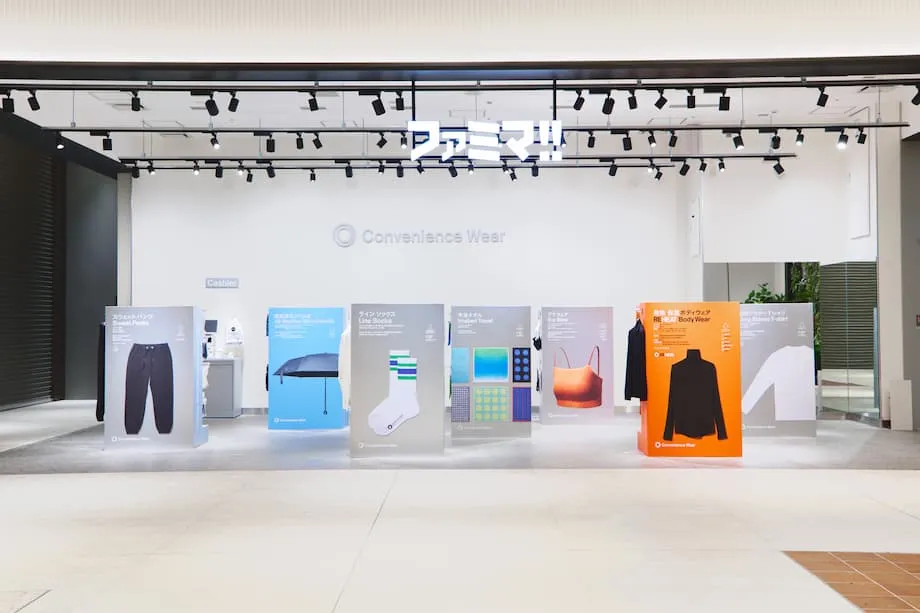
FamilyMart has opened its first store devoted to apparel in Tokyo, bringing nearly all of its roughly 150 Convenience Wear items together in a space designed for browsing. The shop, called Famima, began trading on September 1, 2025, inside the Blue Front Shibaura S Building in Minato Ward.
Contents
- From 28 million pairs of socks to a shop of its own
- What changes when clothing leaves the convenience aisle?
- How a practical sock became a fashion product
- Collaborations took the label beyond everyday shopping
- Why FamilyMart is making more room for daily essentials
- What the new format could tell FamilyMart
- Ochiai and Nigo have different creative roles
- Taiwan became the first overseas market
- A short timeline of the expansion
- What the store means for everyday shopping
- Where to find Famima in Shibaura
- The Essentials
The opening gives a separate retail home to a label whose best known product, crew socks striped in FamilyMart's green, blue and white, has sold more than 28 million pairs. Customers can now examine clothing samples and check their appearance in a mirror instead of choosing only from sealed packages beside food and other convenience store goods.
Famima carries everyday essentials, outer layers and accessories, with advance sales of pieces from the coming fall and winter collection. Its daily opening hours are 7 a.m. to 10 p.m., except on Sundays and public holidays, when it is closed.
The store extends a business that began with a simple proposition: affordable, practical clothing should be as easy to buy as the other necessities in a neighborhood convenience store. Convenience Wear launched nationwide in 2021 under designer Hiromichi Ochiai and has since grown from basic garments into a broader wardrobe.
For FamilyMart, the dedicated shop also arrives during a wider rethink of store space. Labor shortages and rising costs are putting pressure on Japan's convenience retailers, while clothing, detergent and other household necessities offer ways to expand sales beyond food. Famima takes that shift further by giving apparel an entire location rather than a larger section of an existing aisle.
What changes when clothing leaves the convenience aisle?
Regular FamilyMart branches generally sell Convenience Wear in sealed packaging. That helps keep garments clean and makes them easier to stock in stores where shelf space is shared with drinks, meals and many other products. It also means shoppers have fewer opportunities to feel a fabric or judge a garment before buying.
The new Famima location puts samples on display. Visitors can touch materials, compare sizes and use a mirror to see how a piece looks and drapes. Clothing purchased to take home retains the familiar packaging used by the brand.
Clearly marked sizing and tidy displays make the shop closer to a specialist store for everyday basics than a snack counter with a clothing shelf. The fuller assortment also lets customers compare colors and finishes in one place, rather than search through the smaller selection available at an individual convenience branch.
Nearly the whole range is represented, according to FamilyMart. The selection covers clothing worn next to the skin, pieces for layering and accessories for everyday use:
- Crew socks striped in FamilyMart's signature colors.
- Undershirts, underwear and T-shirts.
- Tops with long sleeves, shirts and pants.
- Sweatshirts and lightweight jackets.
- Hand towels, including items made in Imabari.
- Scarves and thermal layers for colder weather.
Advance sales from the fall and winter collection give the opening another draw. Seasonal colors and materials can change while the central approach stays consistent: simple clothing that is useful in daily life and accessible to shoppers of different ages.
How a practical sock became a fashion product
Convenience Wear's first breakout item was a unisex crew sock using the same green, blue and white associated with FamilyMart stores. The familiar colors made an ordinary garment recognizably connected to the retailer, while its practical features included antibacterial and deodorizing properties.
The line won a Good Design Award. Its appeal combined straightforward shapes, accessible prices and attention to how the products would work in a busy convenience store. Ochiai focused on simple silhouettes and universal sizing intended to suit a broad range of customers.
Ochiai also worked with graphic designer Takahiro Yasuda on the packaging. Their approach protected garments on crowded shelves while making the packs easy to store or reuse at home. Packaging was therefore part of the product's usefulness, both before purchase and afterward.
The audience was not limited to people making an emergency purchase. Busy urban shoppers could buy dependable basics at a familiar neighborhood store, whether they were students stopping for coffee or office workers picking up socks on the way to a meeting.
The success of the socks gave FamilyMart room to expand. Undershirts, underwear, T-shirts, tops with long sleeves, pants, sweatshirts, hand towels and jackets followed. The range became broad enough to support a dedicated shop while keeping its focus on function rather than elaborate fashion statements.
Collaborations took the label beyond everyday shopping
Convenience Wear has also reached customers through fashion collaborations and public events. Oversized shirts created with stylist Akio Hasegawa sold out quickly, and the brand appeared at major events including Fuji Rock.
FamilyMart staged a runway style presentation near Harajuku in 2023, turning the idea of convenience store clothing into a fashion event. Such appearances gave the label a setting beyond the ordinary shopping aisle without changing its foundation in wearable basics.
Playful marketing has included novelty giveaways inspired by the striped socks. The same recognizable design that helped sell a practical item could also support promotions and give fans another reason to engage with the brand.
Famima now offers a permanent place to present that range together. Seasonal collections can be displayed as a group, and shoppers can spend more time comparing pieces than they would during a quick visit for lunch or coffee.
The store also gives FamilyMart a setting to refine packaging, signs and product presentation. A space built for browsing can show how customers respond when they can handle samples and examine a fuller selection, rather than make a quick choice from a limited shelf.
Why FamilyMart is making more room for daily essentials
Japan's convenience store operators face shortages of workers and rising business costs. In an aging society, finding enough people to staff locations around the clock has become more difficult. Higher ingredient prices have also increased the cost of staple foods.
Major chains have responded with store remodels and new services. FamilyMart's approach includes a stronger push into everyday necessities that do not spoil, allowing it to use more of its floor space for products beyond freshly prepared meals and snacks.
In late 2024, FamilyMart planned to remove spaces for eating inside about 7,000 stores nationwide. The floor area would instead hold clothing, detergent and other household needs. The Famima apparel shop carries that thinking into a dedicated format.
Clothing changes some of the practical demands of retailing. Socks, T-shirts and towels can remain on shelves without the markdowns that food may need near closing time. Retailers still have to manage sizes and stock, but they can replenish garments without the preparation required for fresh meals.
Protective packaging also matters in this environment. It helps shield fabric from spills and wear while goods are stored alongside the wide mix of products sold by convenience stores.
Japan's retail industry is experimenting with unmanned formats, self checkout systems and stores operating with limited staff. Famima itself is a conventional staffed shop with fixed opening hours. Its role is different: the location could help FamilyMart test layouts, signs and digital displays that might inform later store remodels.
What the new format could tell FamilyMart
Famima gives FamilyMart a way to see how its clothing performs when shoppers visit specifically to browse apparel. In a regular branch, a pair of socks may be added to a food purchase. In a dedicated store, clothing is the main reason for the visit.
A successful location could give the company more choices as patterns of customer traffic change. Those choices could include further dedicated stores in other districts or larger apparel areas in busy existing branches.
The business questions are concrete: whether customers buy more per visit, return for seasonal products and develop stronger loyalty to the label. A full assortment, samples and mirrors could help shoppers make decisions about fit and feel that are harder to make through packaging.
FamilyMart could also adjust selections to local needs, much as it adapts food menus by region. A location serving office workers might reveal different buying patterns from another setting. No further Famima store opening date was given.
The combination of familiar basics and prominent creative collaborators leaves room for small collections and colors tied to particular events. Keeping those experiments connected to practical daily use would preserve the idea on which Convenience Wear was built.
Ochiai and Nigo have different creative roles
Hiromichi Ochiai shaped Convenience Wear as an accessible clothing line. An award winning designer known for his brand Facetasm, he also developed the costumes used in Japan's handover performance at the closing ceremony of the Rio Olympic Games in 2016.
His work for FamilyMart treats everyday garments as a design problem involving price, fabric performance and the realities of selling clothing in a convenience store. Simple shapes and useful packaging are as central to that approach as appearance.
FamilyMart added another prominent fashion figure to its broader creative direction in early 2025, appointing Nigo as the company's creative director. Nigo founded Bape and is artistic director at Kenzo.
Nigo's remit covers visual branding, collaborations and ideas for the next generation of stores. The first collaboration was expected in spring 2026, placing the new apparel store within a wider period of creative development for the retailer.
Kensuke Hosomi, FamilyMart's Representative Director and President, described the partnership with Nigo as an effort to connect the company more closely with customers in Japan and abroad.
Together with Nigo, we will strengthen Japan's unique sense and spirit, realizing our corporate message of 'FamilyMart, Where You Are One of the Family' with the aim of becoming treasured like a family member by customers around the world.
Nigo, speaking about his role as FamilyMart's creative director, described convenience stores as an expression of Japanese daily life and explained what attracted him to the company.
As Japan continues to garner global attention, convenience stores (konbini) best embody Japan's unique lifestyle and culture. FamilyMart respects creativity and continuously challenges itself to pursue innovation.
Ochiai's work on Convenience Wear and Nigo's wider company role bring two forms of creative direction to the business: the design of everyday garments and the broader look, partnerships and store ideas surrounding them.
Taiwan became the first overseas market
Convenience Wear began selling outside Japan in late 2024, when FamilyMart introduced it in Taiwan. Around 25 items reached 720 stores, including socks, underwear, scarves and shirts.
Customers could also order online and collect purchases through the local FamilyMart network. That combined a selected physical assortment with the convenience of ordering for pickup.
The Taiwan launch carried the same basic proposition as the Japanese range: sturdy, affordable everyday pieces with simple designs for a broad range of ages. Different colors offered choice, while thermal innerwear was a focus during the winter months.
Socks in FamilyMart's signature colors remained part of the appeal. Their role overseas connects the clothing directly to a retail brand customers already recognize, just as the original product did in Japan.
The rollout was a first step rather than a copy of the full Tokyo assortment. Taiwan received around 25 items, while the new Famima store brings together nearly all of a Japanese range numbering roughly 150 items. The figures show the difference between introducing a selected collection to another market and presenting almost the whole label at one address.
If the Taiwan business sustains momentum, FamilyMart could consider further regional trials or temporary stores associated with prominent collaborations. The underlying opportunity is the sale of dependable, inexpensive basics, even though convenience retail operates differently from country to country.
A short timeline of the expansion
Convenience Wear's progress from a national launch to a dedicated store took about four years. Fashion events, an overseas introduction and a broader creative appointment came between those milestones.
- 2021: Convenience Wear launched nationwide under the direction of Hiromichi Ochiai.
- 2023: FamilyMart staged a runway style presentation near Harajuku.
- Late 2024: Taiwan became the label's first overseas market, with around 25 items introduced in 720 stores.
- Late 2024: FamilyMart planned to replace eating areas in about 7,000 Japanese stores with shelves for clothing and other daily necessities.
- Early 2025: FamilyMart appointed Nigo as company creative director.
- September 1, 2025: The first Famima apparel store opened in Tokyo's Minato Ward.
- Spring 2026: The first collaboration under Nigo's creative direction was expected.
The sequence shows clothing becoming a larger part of FamilyMart's retail activity: first a nationwide label, then a presence at fashion and music events, an overseas assortment and finally a store of its own.
What the store means for everyday shopping
Japan's convenience stores, commonly called konbini, already bring together many parts of daily life. Customers visit FamilyMart for coffee, lunch and bill payments. Adding socks or a warm base layer to that routine builds on an existing habit.
A decade earlier, most convenience chains carried only a few emergency clothing items. FamilyMart now has a label with devoted customers and a separate shop, showing how far that category has developed.
The new format moves clothing from something picked up during another errand to something worth a visit of its own. It also brings convenience retail into closer competition for spending that might otherwise go to stores specializing in everyday apparel.
For shoppers, the immediate change is straightforward: more of the collection in one place, opportunities to handle samples and a mirror to help judge appearance. Most items remain available through regular FamilyMart branches nationwide, so the dedicated location adds a fuller shopping experience alongside the existing network.
For FamilyMart, repeat visits and customer choices could help guide future assortments and presentation. The store provides a place to bring practical clothing, seasonal launches and creative collaborations together while observing what customers choose when they have time to compare.
Where to find Famima in Shibaura
The Famima Blue Front Shibaura S Building Store is at Tokyo-to, Minato-ku, Shibaura 1-1-1, on the third floor of the Blue Front Shibaura S Building. It is a short walk from Shibaura's business and residential blocks, serving office workers and local residents.
The shop opens from 7 a.m. to 10 p.m. and closes on Sundays and public holidays. Those hours distinguish it from the round the clock operation commonly associated with convenience stores.
Visitors can browse nearly the full Convenience Wear catalog as well as advance items from the fall and winter range. The selection of basics changes with the season, and the striped socks tend to sell quickly.
Sample displays and mirrors are the main practical reasons to make a special visit. Customers who already know the label can compare more colors and products, while new shoppers can examine materials and finishes before buying.
The Essentials
- FamilyMart opened its first apparel store, Famima, in Tokyo's Minato Ward on September 1, 2025.
- The shop carries nearly all of Convenience Wear's roughly 150 items, plus advance fall and winter products.
- Customers can touch samples, compare sizes and use mirrors before buying.
- The signature striped crew socks have sold more than 28 million pairs.
- Hiromichi Ochiai directs Convenience Wear's design. Nigo became FamilyMart's company creative director in early 2025.
- FamilyMart planned to convert eating spaces in about 7,000 stores into shelves for clothing and household necessities.
- Taiwan became Convenience Wear's first overseas market in late 2024, with around 25 items in 720 stores.
- Famima is on the third floor of Blue Front Shibaura S Building, open from 7 a.m. to 10 p.m. and closed on Sundays and public holidays.