Route 158 Reopens After Months of Disruption
Ono City in Fukui Prefecture is welcoming travelers again after a major landslide in March 2025 blocked Route 158, a vital road connecting the city with Gifu Prefecture. Repairs have been completed and the route has reopened, restoring access after months of disruption that sharply reduced visitor numbers and affected businesses across the city.
Contents
- Route 158 Reopens After Months of Disruption
- A Castle That Appears Above the Clouds
- Historic Streets Beyond the Hilltop
- Spring Water Shapes the Local Menu
- Different Seasons Bring Different Experiences
- How the Landslide Affected Everyday Business
- Repair Work and Community Efforts
- Ono's Place in Hokuriku Tourism
- What Visitors Can Expect Now
- Key Points
As of August 25, 2025, the return of this transport connection gives Ono a chance to draw visitors back to Echizen-Ono Castle, its historic streets and the clear spring water that supports local food production. The city is known for a striking morning scene: when mist covers the surrounding plain, its hilltop castle appears to float above the clouds.
The road closure reached beyond sightseeing. Inns, restaurants, souvenir shops and tour operators faced the effects of fewer arrivals, while local officials, business owners and residents dealt with uncertainty about the city's tourism economy. Route 158 connects Ono with Gifu and provides an important connection within the wider Hokuriku region, making its loss a serious setback for a city that depends heavily on visitors.
Government support, repair work and local tourism efforts have helped Ono reopen to travelers. The exact reopening date and figures measuring the fall or subsequent recovery in visitor numbers were not given. The city's renewed accessibility nevertheless marks a concrete change: people can again use the road whose closure had interrupted travel for months.
A Castle That Appears Above the Clouds
Echizen-Ono Castle stands on a hill 250 meters high and is the centerpiece of the city's appeal. Its nickname, the "Castle in the Sky," comes from the appearance of the building above morning fog, with the town and surrounding plain hidden beneath it.
The effect is most commonly seen at dawn from October to April. It occurs about 10 to 20 times each season, making an early visit a chance to catch a relatively rare scene rather than an everyday attraction. Photographers and other travelers are drawn by the sight of the castle seemingly suspended over a blanket of clouds.
The fortress was originally built in the 16th century by a retainer of Oda Nobunaga, the Japanese warlord. A retainer was someone who served a lord. The building visitors see today is a reconstruction from 1968, created with support from descendants of samurai. It is smaller than the original fortress.
The castle also offers a visit centered on history and views. Its museum contains samurai artifacts and displays about local history, while an observation deck looks across Ono and the surrounding mountains. Those attractions give visitors something to explore beyond the brief weather conditions that create its best known image.
Historic Streets Beyond the Hilltop
Ono is sometimes called "Little Kyoto" because of its preserved atmosphere from the Edo period. Its appeal extends from the castle into a townscape of reconstructed samurai residences, a market street with 400 years of history and avenues lined with temples.
Shichiken Street, the city's main shopping avenue, connects that history with daily commerce. Its morning market brings together vendors selling local produce, crafts and specialty foods. Visitors can browse traditional shops and encounter the city's food culture while walking through streets that retain their historical character.
The reconstructed residence of Matazaemon Tamura, a chief samurai retainer, is another place to explore Ono's past. The simple grave of feudal lord Yoshikage Asakura adds a quieter historical stop. Together with the castle museum and temple visits, these sites offer several ways to learn about the people and institutions associated with the area.
Ono's position away from Japan's busiest travel destinations is part of its attraction. Visitors can explore its historic streets without the crowds associated with more famous destinations. The slower pace also makes it possible to combine shopping, food, temples and historical sites within a day, while leaving time to stop at individual businesses.
Spring Water Shapes the Local Menu
Oshozu Spring is one of Ono's defining natural resources. Recognized among Japan's "100 Great Waters," it reflects the city's reputation for clear spring water. That water contributes to the flavor of local dishes and supports two celebrated local products: sake and tofu.
Sake brewing and tofu production connect the city's natural resources with businesses visitors can support directly. Local food is therefore more than an extra attraction alongside the castle. It is part of how Ono's environment enters everyday life and the visitor experience, from meals to tastings.
Shichiken Street offers a more unexpected flavor in soy sauce gelato made with locally brewed soy sauce. The treat is popular enough to sell out quickly. Seasonal varieties, including watermelon and plum, provide other tastes of the region.
For a first visit, food stops can fit naturally into a walk through the town. Browsing the morning market, sampling a local specialty and visiting Oshozu Spring connect the shopping streets with the water and food traditions for which Ono is known. Sake tastings offer another way to explore those connections.
Different Seasons Bring Different Experiences
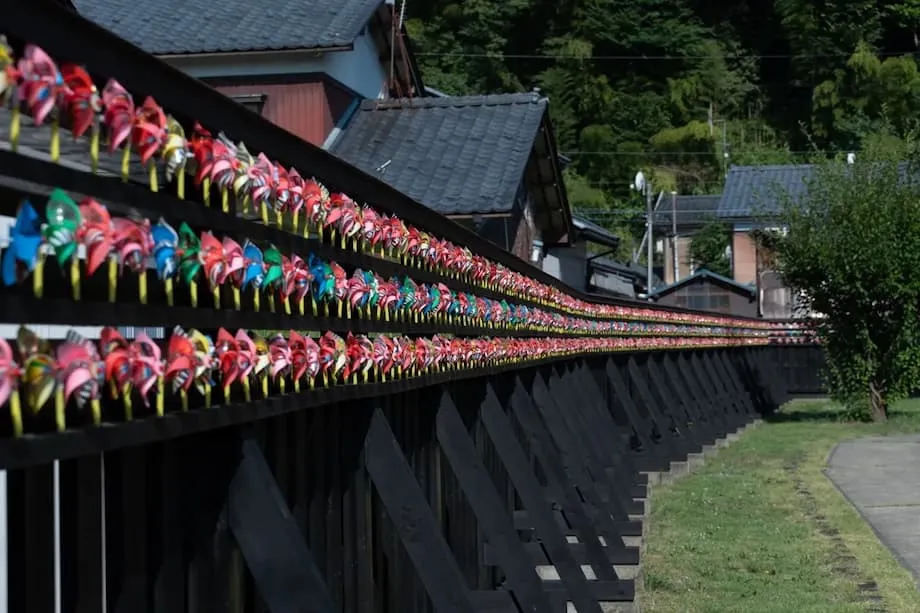
Ono's attractions change through the year. In spring and summer, displays of 2,000 colorful pinwheels decorate its waterways, creating a festive setting. Spring also brings cherry blossoms, while summer gives visitors another season for exploring the streets, water features and local food.
Autumn foliage changes the surrounding landscape, and winter snow transforms views of the town and its historical sites. The period from October to April is especially relevant for travelers hoping to see the castle above the mist, although the dawn phenomenon happens only on a limited number of mornings.
A recently opened attraction focused on hands-on paleontology adds another experience. Paleontology is the study of prehistoric life. Interactive exhibits invite visitors to explore the region's prehistoric past, broadening the range of activities beyond the castle and historic townscape.
The Hongan-Shozu Itoyo Fish Habitat highlights Ono's environmental preservation and biodiversity efforts, though it is not always open to visitors. Biodiversity means the variety of living things in a place. Alongside the city's spring water and seasonal waterways, the habitat adds an environmental dimension to a destination often introduced through its historical landmarks.
How the Landslide Affected Everyday Business
The March landslide made Route 158 impassable for months. For visitors approaching Ono through that connection, the disruption removed a key route into the city. The resulting decline in arrivals spread through businesses whose trade depends on travelers stopping, eating, shopping or staying overnight.
Inns and restaurants faced fewer potential customers, while souvenir shops and tour operators were also affected. The economic effects reached across the community because tourism spending supports several kinds of business during a single visit. A traveler drawn by the castle may also buy a meal, browse the market and book accommodation.
Local officials, business owners and residents faced uncertainty as visitor numbers fell. The closure threatened the city's economic stability and created serious challenges for its tourism industry. Restoring the road became an essential part of making Ono accessible again and helping those businesses reconnect with customers.
The main stages of the setback and reopening were:
- March 2025: A major landslide blocked Route 158, disrupting the connection between Ono and Gifu Prefecture.
- During the months of closure: Visitor numbers fell sharply, affecting inns, restaurants, shops and tour operators.
- By August 25, 2025: Repairs were completed and Route 158 had reopened, allowing Ono to welcome travelers through the restored connection.
Repair Work and Community Efforts
Repair crews cleared debris and restored Route 158 with government support. Local leaders also launched campaigns to reassure prospective travelers about the city's safety and accessibility. The recovery combined physical repairs with efforts to bring attention back to Ono's attractions.
Kanazawa University and other academic institutions played a role in documenting recovery and promoting regional revitalization. Field surveys and collaborative projects helped preserve local dialects, record community experiences and develop new tourism initiatives.
Those projects addressed more than the immediate road disruption. Recording how people speak and what they experienced helps preserve elements of community life, while work on tourism initiatives connects that local knowledge with efforts to attract visitors. Broader regional campaigns also encouraged sustainable travel and support for local businesses.
Ono's experience reflects the idea of "reconstruction tourism," which has gained attention in Japan following disasters such as the 2011 Tohoku earthquake and tsunami. The term describes visits that allow travelers to see recovery efforts, learn about local resilience and contribute to economic revival by spending money in affected communities.
In Ono, as in Tohoku and other parts of Japan, that approach links cultural exchange with practical support. Visitors can learn about a community's recovery while using its inns, restaurants, shops and activities. Preserving local traditions and helping small businesses are part of the same effort to restore a destination's everyday life.
Ono's Place in Hokuriku Tourism
Hokuriku includes Fukui, Ishikawa, Toyama and Niigata prefectures. The region has long received less attention than destinations such as Tokyo and Kyoto, although improved transport connections, including the Shinkansen and rapid trains, are making it more accessible.
National Geographic has described Hokuriku as an "under-visited gem," with authentic Japanese experiences, seasonal cuisine and traditional crafts. Ono contributes to that regional appeal through its castle, historic streets, spring water and local foods.
The city's recovery also fits a wider effort to spread tourism more evenly across Japan. Drawing travelers to places beyond the most crowded destinations can support local economies while reducing pressure on heavily visited areas. For Ono, the concrete benefit is the chance for more people to spend time and money in businesses affected by the road closure.
The city's response combines infrastructure repairs, local pride and new tourism initiatives. Its experience illustrates a broader pattern of Japanese communities rebuilding tourism after setbacks, with the restoration of access working alongside the preservation and promotion of what makes a place distinctive.
What Visitors Can Expect Now
Route 158's reopening restores a key way to reach Ono, while regular buses and trains connect the city with Fukui City and other regional hubs. English signage and welcoming residents help visitors navigate a town that remains outside the largest tourist crowds.
Accommodation ranges from traditional inns to boutique guesthouses. Temple visits, sake tastings and hands-on workshops provide activities beyond sightseeing. The city's relaxed pace allows a full day of exploration, with attractions for travelers interested in history, nature and food.
Early opening hours, a culture without tipping and an emphasis on hospitality shape the visitor experience. Travelers are encouraged to respect the rhythms of daily life, take part in community events and support local businesses. Historical preservation, local foods and environmental initiatives are central to the city's approach to sustainable tourism.
For visitors planning their time in Ono, the main experiences include:
- Climbing to Echizen-Ono Castle for its museum, panoramic views and the chance to see it above the dawn mist.
- Walking along Shichiken Street to browse traditional shops, visit the morning market and sample local foods.
- Visiting Oshozu Spring and exploring the connection between the city's water, sake and tofu.
- Exploring reconstructed samurai residences, temple avenues and other historical sites.
- Taking part in seasonal events, hands-on workshops, paleontology exhibits or sake tastings.
Ono's combination of restored access, historical attractions and local experiences gives travelers an alternative to Japan's more crowded destinations. Its recovery also shows how road repairs, community action and support for small businesses can work together after a tourism setback.
Key Points
- A March 2025 landslide closed Route 158 for months, sharply reducing visitors and affecting Ono's tourism businesses.
- By August 25, 2025, repairs were complete and the road connecting Ono with Gifu Prefecture had reopened.
- Echizen-Ono Castle's appearance above morning mist occurs about 10 to 20 times each season, most commonly at dawn from October to April.
- The city's attractions include Shichiken Street, Oshozu Spring, samurai residences, local foods and seasonal displays of 2,000 pinwheels.
- Government support, community efforts and academic projects contributed to recovery and tourism development.
- Ono's revival supports regional tourism in Hokuriku and encourages travel that benefits local businesses and preserves local culture.