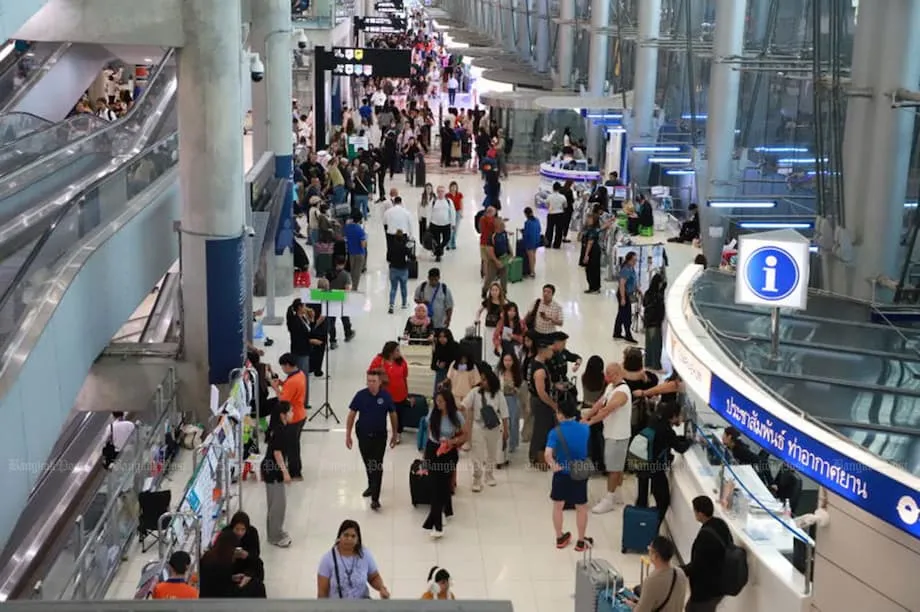
A 700 Million Baht Plan Awaits Cabinet Approval
Thailand is proposing 200,000 free domestic flight tickets for international visitors, with a government budget of 700 million baht and an expected return of more than 8.8 billion baht in tourism revenue. The campaign, called "Buy International, Free Thailand Domestic Flights", is intended to encourage visitors to explore more of the country and bring tourism spending to communities outside its busiest destinations.
Contents
- A 700 Million Baht Plan Awaits Cabinet Approval
- How the Free Flights Would Work
- Who the Campaign Is Intended to Reach
- Why Thailand Wants Visitors to Travel Further
- Which Destinations Are Being Promoted?
- Industry Leaders Question the Timing and Cost
- Regional Marketing and Safety Matter Too
- What Is Needed Before the Campaign Can Begin?
- The Schedule and the Japanese Example
- What Travelers Should Keep in Mind
- What Success Would Mean for Communities
- Key Points
As of August 20, 2025, the proposal is awaiting final cabinet approval. The Ministry of Tourism and Sports has submitted a request for funding from the central budget, and the planned travel period is September to November 2025. The scheme cannot proceed without that approval.
The proposed benefit is a free domestic return journey, or two flights in one direction, for an international tourist booking a trip to Thailand. A checked baggage allowance of 20 kilograms would be included. The offer targets visitors who have not yet booked their flights within Thailand, giving them an incentive to add another destination to their itinerary.
Thailand wants the campaign to do more than increase arrivals. Officials aim to spread visitor spending beyond Bangkok, Phuket and Chiang Mai, support local businesses and ease crowding in popular destinations. Secondary cities, UNESCO listed sites and regions receiving fewer international visitors are central to that effort.
The proposal comes as global tourism continues to recover from the disruptions of recent years, while Thailand faces a decline in international arrivals. For travelers, the incentive could reduce the cost of exploring another province. For hotels, transport providers and other businesses in emerging destinations, the intended benefit is more customers and more spending in their communities.
How the Free Flights Would Work
International tourists booking a flight to Thailand would be eligible for the domestic travel benefit if they have not already booked their internal Thai flights. Each traveler would receive one return domestic journey or two flights in one direction, with the government providing a subsidy of 1,750 baht per flight, or 3,500 baht for a return journey.
Six Thai airlines are listed as participating in the proposed campaign:
- Thai Airways
- Thai AirAsia
- Bangkok Airways
- Nok Air
- Thai Lion Air
- Thai Vietjet
Travelers would claim the offer when booking their international flights directly with airlines or through major online travel services, including Expedia, Booking.com and Skyscanner. The proposed process would provide a voucher or code for the domestic flights after the international booking.
The 20 kilogram checked baggage allowance is part of the planned benefit. Travelers would have to complete their domestic travel within the September to November campaign window. Airlines and booking services would have an important role in distributing the tickets, checking eligibility and explaining the offer to potential visitors.
Who the Campaign Is Intended to Reach
The proposal is aimed at international tourists from a broad range of countries, including the United States, Canada, Australia, Singapore, India, Japan and several European nations. Eligibility is generally tied to Thailand's arrangements for entry without a visa or for a visa obtained on arrival.
Indian tourists, for example, can enter Thailand without a visa for up to 60 days for tourism or business purposes. Visitors from other countries would need to check the latest entry requirements before departure, alongside the campaign's booking conditions.
The offer is intended to be accessible across Thailand, covering all provinces while placing particular attention on secondary destinations. Its focus on travelers who have not yet bought domestic tickets is meant to encourage new travel plans and increase the campaign's effect on visitor spending.
Why Thailand Wants Visitors to Travel Further
Thailand's tourism industry is a vital part of the economy, contributing substantially to gross domestic product, the value of goods and services produced in the country, and supporting millions of jobs. A slowdown in arrivals therefore affects businesses and workers well beyond airports and major hotels.
International arrivals were down 7% compared with the previous year. By mid August, Thailand had received 20.8 million foreign tourists, with China remaining its largest source market at 2.9 million visitors.
The government hopes that paying for domestic flights will encourage more people to choose Thailand and persuade them to visit additional destinations once they arrive. The expected tourism revenue of more than 8.8 billion baht is a forecast for the proposed campaign, whose requested public budget is 700 million baht.
The campaign's goals include increasing tourism revenue, supporting economic recovery, creating opportunities for local businesses and distributing visitor spending more evenly. It also aims to reduce pressure on crowded destinations by encouraging tourists to spend time elsewhere.
That wider distribution is central to the government's approach to sustainable and inclusive tourism. In practical terms, the aim is for more communities to share in tourism income, while the country's best known attractions receive some relief from concentrated visitor numbers.
Which Destinations Are Being Promoted?
Thailand's beaches, temples and urban centers remain major attractions, but the campaign seeks to bring more attention to places outside familiar travel routes. The proposed promotion includes heritage destinations, rural landscapes, river towns, islands and emerging cities.
The destinations and types of attractions highlighted include:
- UNESCO listed cities and cultural heritage sites.
- Chiang Rai and Nan, northern provinces known for their natural surroundings.
- Buri Ram, promoted as a destination for sports tourism.
- Towns and attractions along the Mekong River in Ubon Ratchathani.
- Southern islands and beaches, including Koh Samui and Krabi.
- Khon Kaen and Udon Thani, emerging urban destinations in the northeast.
Officials hope these visits will create closer connections between tourists and local communities, support cultural preservation and open new opportunities for regional development. The campaign's national scope is intended to give travelers more choices while drawing attention to regions that usually receive fewer international visitors.
Industry Leaders Question the Timing and Cost
Tourism industry leaders have generally welcomed the initiative, while suggesting changes that could make it more effective. Their concerns include when the subsidy would be offered, the continuing cost of domestic travel and whether every region would attract enough international interest to benefit.
Punlop Saejew, vice-president of the Chiang Mai Chamber of Commerce, said the campaign would help tourism but could have greater impact during the low season, when visitor numbers typically fall. He also called attention to high domestic airfares, which remain a barrier for many travelers.
Punlop said the government should address both the timing of the campaign and the wider cost of flying within Thailand:
The campaign would be more effective if launched during the low season. The government should also consider allocating funds to help reduce domestic airfares, as high costs remain a barrier for many travelers.
His suggestions address two different needs. A seasonal incentive could bring customers to businesses when demand is weaker, while support to reduce domestic fares could make travel more affordable beyond the visitors receiving the free flight benefit.
Regional Marketing and Safety Matter Too
Rungroj Santadvanit, president of the lower northeastern chapter of the Thai Hotels Association, warned that some regions, particularly the northeast, might benefit less because they attract less international tourist interest. He called for marketing and activities suited to the visitors each destination hopes to reach.
Rungroj pointed to sports events in Buri Ram and attractions along the Mekong in Ubon Ratchathani as examples of how destinations could give travelers a specific reason to visit:
Apart from free flights, authorities should plan marketing strategies and activities tailored to target markets of each location. For example, Buri Ram should promote sports and marathons as a sports tourism hub, while Ubon Ratchathani could highlight attractions along the Mekong River.
Natural attractions in the north and south are also part of the regional appeal identified in the discussion. The industry response calls for the flight incentive to work alongside destination promotion, rather than leaving individual regions to attract visitors through cheaper travel alone.
Punlop and Rungroj both stressed traveler safety and clear communication about which areas are safe to visit, especially amid ongoing border tensions with Cambodia. For prospective tourists, that information would help them choose destinations and plan their journeys.
What Is Needed Before the Campaign Can Begin?
The Ministry of Tourism and Sports must secure cabinet approval for the 700 million baht allocation from the central budget. That decision is the first requirement for putting the proposed September to November campaign into operation.
Airlines and online travel services would then need to coordinate ticket distribution, eligibility checks and promotion. The system would have to make the offer understandable to international customers and connect their bookings with the domestic travel benefit.
Fair distribution of the free flight vouchers is another practical concern. Organizers would need to prevent misuse and manage demand so that the campaign does not overwhelm local transport, accommodation or other services, or create overcrowding in particular destinations.
Secondary destinations also need sufficient transport connections, places to stay and tourism services to accommodate additional visitors. The government is investing in upgrades to roads, rail, ferry systems, airport terminals and visitor centers as part of efforts to improve readiness.
Marketing would need to reach international travelers early enough to affect their booking choices. Multilingual support, clear instructions for claiming the offer and information about safety and travel requirements are important parts of that work.
The Schedule and the Japanese Example
The campaign's proposed timetable is short, with domestic travel intended to take place across three months. The key dates and stages are:
- By mid August 2025: Thailand had recorded 20.8 million international visitors, with arrivals down 7% compared with the previous year.
- August 20, 2025: The free domestic flights proposal was awaiting final cabinet approval and a requested allocation of 700 million baht.
- September to November 2025: The proposed campaign period, during which participating travelers would have to complete their domestic journeys.
Thailand's proposal draws inspiration from a similar free domestic flights initiative in Japan, which was credited with encouraging international tourists to travel beyond major cities and visit secondary destinations. Thai officials hope to use the same approach to spread visitor traffic and spending.
Other countries in the region have also experimented with travel incentives. Thailand's proposal is intended to operate at substantial scale, with 200,000 free domestic flight tickets and a focus on bringing tourism benefits to more parts of the country.
The campaign also fits the government's designation of 2025 as the "Amazing Thailand Grand Tourism and Sports Year". That broader policy signals an effort to revitalize tourism and promote Thailand as a leading global destination.
What Travelers Should Keep in Mind
International visitors considering the offer should plan around its proposed conditions: book a flight to Thailand through the designated channels, have no existing domestic flight booking and complete the internal journey within September to November. The planned benefit is one domestic return journey or two flights in one direction, including 20 kilograms of checked baggage.
The six participating airlines would provide the domestic flights, while airlines and major online travel services would help customers claim them. A voucher or code is the proposed means of accessing the benefit after booking the international flight.
Visitors should also check their visa requirements before departure. Entry rules and campaign eligibility both matter when deciding whether the offer fits a planned trip.
Practical advice for travel within Thailand includes dressing modestly at temples, carrying some cash for local markets and remaining alert to common travel scams. English is widely spoken in tourist areas, while learning a few basic Thai phrases can be appreciated by local residents.
What Success Would Mean for Communities
Local businesses are central to the government's economic goals. More visitors in emerging destinations could support jobs, increase tourism revenue and help communities take part in the sector's recovery. Hotels and other tourism services outside the busiest locations are among those the campaign seeks to reach.
The proposal also aims to support cultural preservation and community engagement by encouraging travelers to experience a wider range of places. Its approach links the cost of transport with the ambition to distribute tourism more evenly across the country.
Thailand hopes the initiative will strengthen its reputation as a diverse and welcoming destination. If it succeeds, the campaign could provide an example for other countries seeking ways to revive tourism and manage where visitors go.
The immediate task remains securing approval and organizing the program. Its intended results depend on attracting additional travel, making the offer easy to use and giving tourists compelling reasons to choose destinations beyond the country's most familiar stops.
Key Points
- Thailand has proposed 200,000 free domestic flight tickets for international tourists.
- As of August 20, 2025, the campaign awaits final cabinet approval for a budget of 700 million baht.
- The proposed travel period is September to November 2025, with expected tourism revenue exceeding 8.8 billion baht.
- Eligible visitors would receive one domestic return journey or two flights in one direction, including 20 kilograms of checked baggage.
- Six airlines are participating: Thai Airways, Thai AirAsia, Bangkok Airways, Nok Air, Thai Lion Air and Thai Vietjet.
- The campaign targets travelers without existing domestic flight bookings and seeks to bring more spending to secondary destinations.
- Industry leaders support the idea while calling for better seasonal timing, lower domestic fares, regional marketing and clear safety information.
- The proposal draws inspiration from Japan and forms part of Thailand's tourism and sports push for 2025.