A Capital Best Explored One Meal at a Time
At Raohe Street Night Market, pork buns filled with black pepper and scallions bake in clay ovens. On Dihua Street, shops sell traditional medicines, textiles and snacks among buildings preserved from the Japanese occupation era. Across Taipei, breakfast counters, temples, tea houses and modern restaurants offer different ways to understand Taiwan's capital.
Contents
- A Capital Best Explored One Meal at a Time
- What Gives Taiwanese Food Its Range?
- Night Markets Bring Food and Community Together
- What to Order Among the Stalls
- Breakfast, Noodles and Other Everyday Meals
- Creative Restaurants, Tea Houses and Late Meals
- Dihua Street, Markets and Riverside Evenings
- Temples, Landmarks and a Changing City
- Mountains, Hot Springs and Trips Beyond the Center
- Getting Around and Managing Daily Details
- Food Tours Connect Dishes With Their Stories
- At a Glance
Food connects many of these experiences. A bowl of beef noodle soup, a plate of braised pork rice or a basket of soup dumplings can introduce visitors to everyday routines as well as the influences that have shaped the city. Night markets bring eating, shopping and social life together, while neighborhood breakfast shops and restaurants show how widely those traditions vary.
Taipei also brings urban attractions close to places for a quieter outing. Taipei 101 and the Chiang Kai-shek Memorial Hall belong on the same itinerary as historic streets, mountain walks, hot springs and tea plantations. Visitors can move between them using the Metro, buses and other public transport.
The appeal is the combination: friendly encounters, affordable street food, ambitious cooking and neighborhoods where religious traditions remain part of daily life. A rewarding visit leaves room for both familiar landmarks and small discoveries, whether that means trying an unfamiliar market snack or sitting down for a traditional tea ceremony.
What Gives Taiwanese Food Its Range?
Taipei's cooking reflects indigenous traditions, migration from China, Japanese colonial influence and later international exchanges. Those influences appear in ingredients, cooking methods and the way meals are served, from portable breakfasts to dishes shared around a table.
Indigenous Austronesian communities contributed ingredients such as millet and distinctive spices. Hakka and Fujianese immigrants brought braising techniques and combinations of sweet and savory flavors. Braising means cooking food slowly in liquid, a method that helps explain the tender meat and rich sauces found in many familiar dishes.
Japanese rule introduced bento boxes, pickled vegetables and seafood dishes. American influence after World War II also helped popularize foods based on wheat, including noodles and buns. Today's chefs continue to combine traditional cooking with modern techniques and ideas from abroad.
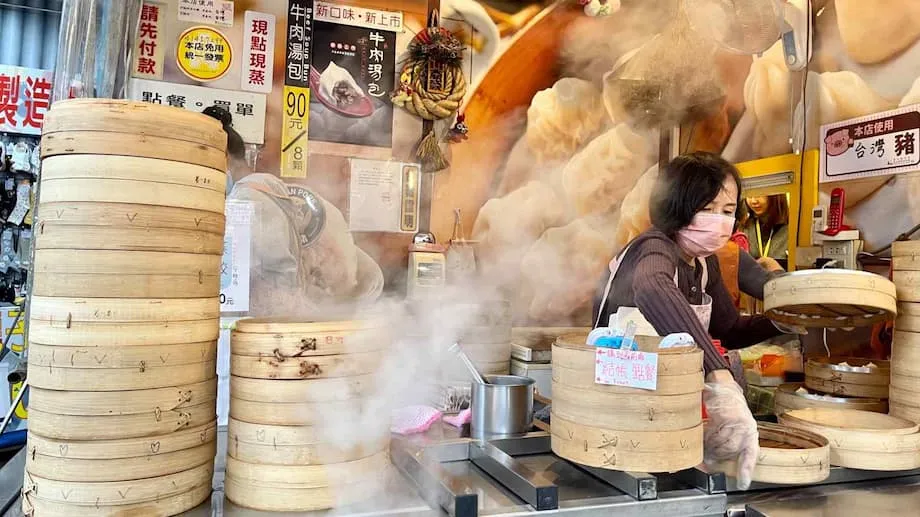
Several dishes offer an accessible starting point. Lu rou fan is braised pork served over rice; gua bao is a bun filled with pork belly; and xiao long bao are dumplings containing soup. Beef noodle soup and stinky tofu are other signatures. Together, they show why eating in Taipei involves much more than choosing between street stalls and formal restaurants.
Night Markets Bring Food and Community Together
Shilin, Raohe Street and Ningxia are among Taipei's best known night markets. Keelung Miaokou Night Market offers another destination beyond the capital. Each has its own specialties and atmosphere, making a second market visit a chance to find different dishes rather than simply repeat the first.
Night markets have been part of Taiwanese life for centuries, with early gatherings linked to temples and festivals. They remain places for affordable food, entertainment and meeting other people. Locals and visitors share the same busy spaces, moving between stalls selling snacks, drinks and other goods.
Crowds, strong aromas and unfamiliar choices can make a first visit feel overwhelming. Taking time to look around helps. Popular stalls often draw long lines, and following those crowds can provide a starting point when the choices seem endless.
Ordering need not require a long conversation. Pointing to a dish is acceptable, and many vendors provide English menus or pictures. Ningxia is particularly associated with traditional street food, while Raohe and Shilin offer opportunities to try familiar market favorites such as oyster omelets.
What to Order Among the Stalls
Market food ranges from small savory bites to substantial buns and fried chicken cutlets. Sharing several dishes makes it easier to sample different textures and flavors, including the chewy, crisp and soft combinations found throughout Taiwanese street cooking.
- Stinky tofu is fermented and deep fried, usually served with pickled cabbage. Its strong smell contrasts with a comparatively mild taste.
- Pepper pork buns combine juicy pork, black pepper and scallions inside a crisp shell baked in a clay oven. Fuzhou Pepper Bun at Raohe Night Market is a local favorite.
- Oyster omelets combine oysters, eggs and sweet potato starch, with a tangy sauce on top.
- Bubble tea mixes tea, milk and chewy tapioca pearls. Chun Shui Tang and popular drink chains offer versions of Taiwan's best known drink.
- Fried chicken comes as small popcorn chicken pieces or giant cutlets. Hot-Star and J&G Fried Chicken are popular names.
- Scallion pancakes are flaky and crisp, sometimes served with egg or cheese.
- Sweet potato balls are a deep fried, chewy option for dessert.
Pork blood cake is another choice for visitors interested in unfamiliar local foods. Betel nut also appears in Taiwan's local consumption culture, although it carries serious health risks and should not be treated as a food recommendation.
Breakfast, Noodles and Other Everyday Meals
Neighborhood breakfast shops reveal a different rhythm from the night markets. Customers come for dan bing, or egg pancake rolls; fan tuan, or sticky rice rolls; hot or cold soy milk; youtiao, or fried dough sticks; and turnip cake.
The variety reflects the same mix of traditions found elsewhere in Taipei's cooking. Some businesses are also revisiting familiar dishes. Soft Power, for example, uses creative fillings and inventive soy milk flavors to give breakfast staples a different direction.
Fuhang Soy Milk and Yonghe Soy Milk King are places to consider for dan bing. For beef noodle soup, the choices include Yongkang Beef Noodles and Niu Dian Beef Noodles. Jin Feng Lu Rou Fan and Wang's Broth offer starting points for braised pork rice.
Soup dumplings lead many visitors to Din Tai Fung, the internationally known chain that began in Taipei, or Hang Zhou Xiao Long Bao. Lan Jia Gua Bao and Yuan Fang Guabao are options for pork belly buns. These meals can fit between sightseeing stops without making every outing a formal restaurant occasion.
Hotpot provides a more leisurely alternative, with Tripod King and Wulao among the named destinations. A pot shared at the table turns dinner into a gathering, much as market visits combine food with time spent among other people.
Creative Restaurants, Tea Houses and Late Meals
Taipei's restaurant scene extends from modest shops to dining rooms recognized by Michelin. Taïrroir and RyuGin Taipei illustrate the city's ambitious cooking, where chefs combine local ingredients with techniques and influences from elsewhere.
Dessert bars and tea houses provide other ways to experience that range. HUGH turns traditional flavors into modern desserts, while Qingtian Tea House offers a quiet setting for a traditional tea ceremony. The contrast is part of the appeal: a visitor can move from a crowded snack stall to a slower, more deliberate experience over tea.
Pineapple cakes and mango shaved ice offer two further stops on a food itinerary. Sunny Hills and Chia Te Bakery are places to find pineapple cakes. Smoothie House and Ice Una are options for mango shaved ice.
After dark, re chao establishments, or stir fry bars, join karaoke lounges and restaurants serving hotpot and barbecue. Taipei's late dining culture accommodates both a comforting meal alone and a lively gathering with friends, with places to eat continuing into the early hours.
Dihua Street, Markets and Riverside Evenings
Dihua Street in Datong District is one of Taipei's oldest thoroughfares. Its preserved architecture from the Japanese occupation era forms the setting for businesses selling traditional medicines, textiles, crafts and local snacks. Shopping here also offers a way to see how older commercial traditions remain part of the city.
Dihua Street rewards a slower walk than a quick trip between major landmarks. The interest lies in the mix of buildings and everyday trade, with food and household purchases sharing space with items visitors may choose to take home.
Nanmen Market offers another view of Taiwanese culinary traditions through handmade dumplings, cured meats and specialty ingredients. It serves a different purpose from a night market: the ingredients and prepared foods show another side of how people shop and eat.
Dadaocheng Wharf Market brings a more contemporary setting to an evening out. Shipping containers have been turned into food stalls, accompanied by live music and river views. Together with nearby historic streets and Ningxia's traditional snacks, it shows how varied a market outing can be.
Temples, Landmarks and a Changing City
Longshan Temple and Xiahai City God Temple are places of worship as well as centers of community life. Visitors can observe traditional rituals, study detailed architecture and see people praying for love or good fortune.
A temple visit adds context to a food itinerary because religious life and public gathering places have long been connected. These buildings remain active spaces for worship, so modest clothing and consideration for people taking part in rituals are appropriate.
Taipei 101 provides a striking modern contrast, while the Chiang Kai-shek Memorial Hall is another major landmark. The city's character emerges from seeing these places alongside older streets and neighborhood markets, rather than treating any single attraction as its defining feature.
Taipei's contemporary identity also includes coffee shops, an active arts scene and an inclusive atmosphere. That progressive reputation sits within Taiwan's wider political and social changes, including the election of a female president and the legalization of marriage for same sex couples.
Shopping for local goods on Dihua Street, drinking craft beer at Jim and Dad's Brewing Company or visiting a rooftop club in Ximending offer different experiences of that modern culture. They sit alongside, rather than replace, the city's older traditions.
Mountains, Hot Springs and Trips Beyond the Center
Yangmingshan National Park offers mountain hikes and a break from busy streets. Beitou District is another option for a slower outing, with hot springs and historic bathhouses that make soaking, rather than sightseeing on foot, the focus.
Maokong combines a scenic journey with tea culture. The Maokong Gondola offers panoramic views and access to tea plantations, where visitors can sample award winning oolong teas and desserts flavored with tea. It provides another setting for understanding a drink encountered throughout the city.
Fuji Harbor offers a look at traditional seafood culture through fresh catches and lively markets run by local women. For travelers interested in food beyond restaurant tables, the harbor adds a view of the places where seafood is bought and sold.
Jiufen and Pingxi are further options for outings beyond central Taipei, offering a taste of older Taiwan. Visitors seeking elevated views without a mountain hike can also consider the Miramar Ferris Wheel.
Beitou and Maokong can be treated as substantial excursions within a Taipei stay. Leaving time for them helps balance meals, markets and urban landmarks with places where the pace and surroundings are different.
Getting Around and Managing Daily Details
Taipei's Metro, commonly called the MRT, and its bus network make travel around the city straightforward. An EasyCard can be used on buses and trains, as well as in some taxis. YouBike provides another option through bicycle rentals.
English is commonly spoken in central Taipei, particularly in tourist areas, while a few basic Mandarin phrases can help with everyday exchanges. At food stalls, pictures and pointing can bridge gaps when a shared language is limited.
Cash remains widely used in markets and small eateries, and tipping is not customary. Those practical details matter when a day includes several small purchases rather than one restaurant bill.
Taipei has a reputation for safety and is a popular choice for people traveling alone, including women. Ordinary care with belongings and surroundings remains sensible. Public restrooms are plentiful and generally clean, making long days of exploring easier to manage.
Frequent rain makes preparation useful even when an itinerary is mostly urban. Drinking water also deserves attention: although Taipei treats its water supply, visitors should use designated drinking water facilities or check local guidance rather than assume every tap is suitable for drinking.
Local etiquette includes using two hands when giving or receiving items and dressing modestly at temples. Eating and drinking are prohibited on the MRT, so finish a market snack or drink before entering the restricted areas of the transport system.
Food Tours Connect Dishes With Their Stories
Guided food walks offer an alternative to choosing every stop independently. Taipei Eats is among the companies offering tours that combine sightseeing with visits to wet markets, street stalls and less obvious places to eat.
Guides can explain the cultural setting of dishes and help visitors navigate unfamiliar choices. Tours may also accommodate dietary preferences, making the conversation about what someone can eat as useful as the introduction to new flavors.
A food tour guide described the purpose of this approach as understanding the people and traditions behind a meal:
A great food tour isn't just about eating—it's about understanding the stories, traditions, and people behind each dish.
Independent exploration can follow the same principle. A breakfast shop, a temple, a traditional market and a tea house each show a different part of Taipei's daily life. Connecting those stops gives a visit more substance than simply working through a checklist of famous dishes.
At a Glance
- Taipei combines food markets, historic neighborhoods, temples, modern landmarks and access to natural attractions.
- Its cooking draws on indigenous, Hakka, Fujianese, Japanese and other international influences.
- Shilin, Raohe Street and Ningxia are major night market destinations; Keelung Miaokou is another option beyond Taipei.
- Signature foods include beef noodle soup, braised pork rice, pork belly buns, soup dumplings and stinky tofu.
- Dihua Street, Nanmen Market and Dadaocheng Wharf offer different views of commerce and food culture.
- Yangmingshan, Beitou and Maokong provide alternatives to a schedule centered on urban sightseeing.
- The MRT, buses, EasyCard and YouBike help visitors move around; cash remains useful for smaller food purchases.
- Food tours can connect market visits and meals with explanations of local traditions.