Two Bells Sound at the Moment the Bomb Exploded
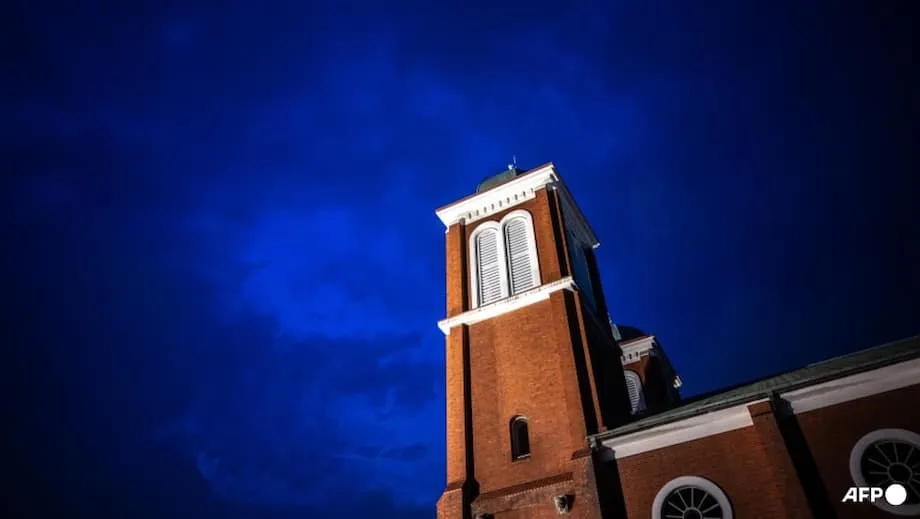
At 11:02 am on August 9, 2025, two bells rang together at Nagasaki's Immaculate Conception Cathedral for the first time since the atomic bombing 80 years earlier. Their sound marked the precise moment when the United States dropped an atomic bomb on the city in 1945, killing approximately 74,000 people by the end of that year.
Contents
- Two Bells Sound at the Moment the Bomb Exploded
- What Happened to Nagasaki in 1945?
- How the Cathedral Recovered Its Second Bell
- A City Remembers With Silence and Water
- International Attendance Carries Diplomatic Weight
- Survivors Describe the Terror After the Blast
- A Catholic Community Rebuilds After Devastation
- Church Leaders Challenge Nuclear Weapons
- Japan's Security Policy Meets the Call for Abolition
- Key Points
The cathedral, also known as Urakami Cathedral, had lost one of its working bells in the destruction. A replacement made possible by a fundraising campaign led by James Nolan, a sociology professor at Williams College in Massachusetts, restored the paired sound. Nolan's grandfather had worked on the Manhattan Project, the secret American program that developed the atomic bomb.
Across Nagasaki, survivors, religious leaders, dignitaries and representatives from nearly 100 countries gathered for an anniversary shaped by remembrance and demands for nuclear disarmament. About 2,600 people attended commemorations at Nagasaki Peace Park and nearby Hypocenter Park, directly beneath the point where the bomb detonated.
The return of the cathedral's twin bells connected a local act of repair with that wider appeal. American Catholics provided much of the funding, turning the restoration into a gesture of reconciliation between people whose countries had once been enemies.
Chief priest Kenichi Yamamura described the work as a response to suffering that required both remembrance and action:
It's not about forgetting the wounds of the past but recognizing them and taking action to repair and rebuild, and in doing so, working together for peace.
What Happened to Nagasaki in 1945?
On August 9, 1945, three days after the atomic bombing of Hiroshima, the United States dropped a second atomic bomb, nicknamed "Fat Man," on Nagasaki. It exploded at 11:02 am, sending a fireball and shockwave through the city and destroying much of it.
Approximately 74,000 people died by the end of 1945. Tens of thousands more suffered injuries and illnesses associated with radiation in the decades that followed. The attack hastened Japan's surrender on August 15, bringing World War II to a close while leaving lasting physical and psychological wounds.
Urakami Cathedral stood just 500 meters from the detonation. At the time, it was the largest Catholic church in East Asia. The explosion destroyed the building and devastated its congregation: Nagasaki's Christian community lost 8,500 of its 12,000 members in an instant.
Those figures represent more than seven out of every ten members of the community. The scale of that loss helps explain why the cathedral's rebuilding, and now the restoration of its paired bells, carry such weight for the city.
Survivors are known as hibakusha. Many have lived with physical illness, psychological trauma and social stigma as well as memories of the attack. Their accounts have become central to the public memory of the bombings and to continuing efforts to abolish nuclear weapons.
How the Cathedral Recovered Its Second Bell
Before the bombing, the cathedral had two bells housed in twin towers. The larger bell was recovered from the rubble and eventually hung again in the south tower. The smaller bell was too badly damaged to return to use and was placed in the cathedral's Atomic Bomb Relics Exhibition Room.
For decades, only one bell rang over the rebuilt cathedral. The damaged bell remained a visible reminder of what had been lost, while the empty place in the north tower left the building without its original paired sound.
A restoration effort began in 2024 after a Japanese Christian expressed the wish to hear both bells together again. Nolan led a fundraising campaign lasting a year through American churches, raising approximately $125,000 for a new bell.
The replacement arrived in Nagasaki in May 2025. Archbishop Peter Michiaki Nakamura blessed it in July, and it was installed in the north tower in time for the anniversary. At 11:02 am on August 9, its sound joined that of the surviving bell. Witnesses described the ringing as both mournful and hopeful.
The sequence stretched from wartime destruction to an international effort eight decades later:
- August 9, 1945: The atomic bombing destroyed Urakami Cathedral and damaged its bells.
- 1959: Reconstruction of the cathedral on its original site was completed.
- 2024: The effort to restore the cathedral's second working bell began.
- May 2025: The new bell arrived in Nagasaki.
- July 2025: Archbishop Peter Michiaki Nakamura blessed the replacement.
- August 9, 2025: Both bells rang together at 11:02 am on the bombing's 80th anniversary.
A City Remembers With Silence and Water
Nagasaki's anniversary ceremony brought together survivors and younger generations in rituals tied closely to the suffering of 1945. A moment of silence was followed by the cathedral bells and the release of doves as symbols of peace.
Participants also presented water in memory of victims who, with skin burned by the blast, begged for something to drink. The act connected a simple human need with the experiences being remembered, giving younger participants a concrete way to understand the ceremony.
Nagasaki Mayor Shiro Suzuki used his Peace Declaration to warn that continuing armed conflicts could lead to nuclear war. He urged an immediate end to confrontations in which each use of force produces another:
If we continue on this trajectory, we will end up thrusting ourselves into a nuclear war. Immediately cease from disputes in which force is met with force.
Prime Minister Shigeru Ishiba also pledged Japan's commitment to a world without nuclear weapons. He stopped short of endorsing the Treaty on the Prohibition of Nuclear Weapons, which Japan has not signed because of its security alliance with the United States.
International Attendance Carries Diplomatic Weight
Representatives from nearly 100 countries participated in the commemoration. Israel was invited after being excluded the previous year because of security concerns. Russia and Belarus were not invited because of Russia's invasion of Ukraine.
The gathering also included a substantial Catholic presence. Four American archbishops joined a Pilgrimage of Peace associated with the Church's Jubilee of Hope, linking the anniversary to religious calls for reconciliation and an end to nuclear arms.
Interfaith services brought different religious communities into the remembrance. A torch procession from the cathedral to Hypocenter Park connected the place where Nagasaki's Catholic community rebuilt its spiritual life with the ground beneath the bomb's detonation.
The cathedral also hosted a prayer vigil lasting 24 hours and perpetual adoration, a continuing period of Catholic prayer. An interfaith memorial service took place at Hypocenter Park. Together, the events placed shared mourning alongside the distinct traditions of the people taking part.
Survivors Describe the Terror After the Blast
Hiroshi Nishioka, 93, was three kilometers from the explosion. Speaking at the ceremony, he recalled how people who initially appeared to have escaped severe injury later developed frightening symptoms and died.
Nishioka described the uncertainty that continued after the war ended:
Even the lucky ones who were not severely injured gradually began to bleed from their gums and lose their hair, and one after another they died. Even though the war was over, the atomic bomb brought invisible terror.
His account explained why the bombing's human cost extended far beyond the immediate blast. Survivors faced injuries they could see, illnesses that emerged later and fear about what might happen next. Many also encountered discrimination while trying to rebuild their lives.
Fewer than 100,000 survivors remain, and their average age is over 86. Their advancing age gives new urgency to efforts to preserve individual testimony, including the experiences of illness, loss and social stigma that followed the attacks.
Organizations supporting survivors are recording and digitizing their stories so younger people can hear them through YouTube and social media. The work seeks to preserve accounts of entire lives, alongside descriptions of the day the bomb fell.
Teruko Yokoyama, an 83-year-old supporter of that effort, described what needed to be kept:
We must keep records of the atomic bombing damages of the survivors and their lifetime story.
Survivors continue to press for nuclear disarmament while entrusting younger generations with their testimony. Their aim is to ensure that Nagasaki remains the last city ever attacked with nuclear weapons.
A Catholic Community Rebuilds After Devastation
Nagasaki's Catholic history reaches back to the introduction of Christianity to Japan in the 16th century. Believers later endured centuries of persecution, with many practicing their faith in secret. By the 20th century, Nagasaki had become the heart of Japanese Catholicism.
The bombing devastated a community that had already survived a long struggle to preserve its faith. Survivors rebuilt Urakami Cathedral on its original site, completing the reconstruction in 1959. The restored building became a symbol of resilience and reconciliation.
The anniversary's American participation added another connection between remembrance and repair. Nolan's family link to the Manhattan Project and the financial support from American Catholics brought people associated with opposite sides of the wartime history into a shared project.
The new bell gave that cooperation a lasting place in the cathedral. The surviving bell, the damaged bell preserved among the atomic bomb relics and the replacement each carry a different part of the same history: destruction, survival and rebuilding.
Church Leaders Challenge Nuclear Weapons
Cardinals Blase Cupich and Robert McElroy joined Japanese bishops in calling for nuclear disarmament during the anniversary observances. Their statements connected the memory of the bombings with questions about the morality of using force.
Cupich described the atomic bombings as "deeply flawed" because they abandoned the just-war principle of noncombatant immunity. In simple terms, that principle holds that people who are not taking part in fighting should be protected from attack.
McElroy repeated Pope Francis's categorical rejection of atomic weapons. The position placed the Church's appeal for peace alongside the survivors' demand that no other city experience the destruction inflicted on Hiroshima and Nagasaki.
Academic and religious institutions in Japan and the United States also collaborated on a symposium examining Catholic ethics and nuclear policy. The Partnership for a World Without Nuclear Weapons coordinated the work.
The symposium, pilgrimages and shared services extended the anniversary beyond memorial rituals. They brought the use of nuclear weapons into discussions about moral responsibility, the protection of civilians and the choices governments make in the name of security.
Japan's Security Policy Meets the Call for Abolition
The Treaty on the Prohibition of Nuclear Weapons entered into force in 2021 and has been ratified by more than 70 countries. Ratification means a country has formally agreed to be bound by a treaty.
None of the world's nuclear powers, including the United States, Russia and China, has signed the treaty. Japan has also stayed outside it, relying on the American nuclear umbrella under its security alliance with the United States.
Nuclear deterrence is the argument that the threat of a nuclear response helps prevent an attack. The nuclear umbrella extends that protection to an ally. Survivors and peace advocates challenge this reliance on weapons capable of causing the destruction they witnessed.
Japan's refusal to sign the treaty has drawn criticism from survivors and activists. Ishiba's anniversary pledge supported the goal of a world without nuclear arms while leaving Japan's treaty position unchanged. No date was given for Japan to join.
Suzuki and other leaders continued to press for global disarmament as conflicts renewed anxiety about nuclear war. For Nagasaki, the issue reaches from national security policy to the lives remembered through water, silence, testimony and the sound of two cathedral bells. The city's appeal is that the suffering of Hiroshima and Nagasaki must never be repeated.
Key Points
- Nagasaki marked 80 years since the atomic bombing on August 9, 2025, with the cathedral's two bells ringing together at 11:02 am.
- The bombing killed approximately 74,000 people by the end of 1945 and destroyed Urakami Cathedral.
- James Nolan led a campaign through American churches that raised approximately $125,000 for the replacement bell.
- About 2,600 people gathered at Peace Park and Hypocenter Park, with representatives from nearly 100 countries participating.
- Fewer than 100,000 survivors remain, with an average age over 86, giving urgency to efforts to record their testimony.
- Mayor Shiro Suzuki called for an end to armed confrontations, while Catholic leaders and survivors urged nuclear disarmament.
- Japan pledged support for a world without nuclear weapons but remained outside the Treaty on the Prohibition of Nuclear Weapons.