Children injured during Christian lessons in Padang
A mob attacked a house used for Christian religious education in Padang, West Sumatra, on July 27, 2025, injuring two children and damaging property. The attack has brought renewed pressure on Indonesian authorities to protect minority worshippers and enforce the constitutional right to religious freedom.
Contents
- Children injured during Christian lessons in Padang
- A demand for protection, repairs and care
- Sukabumi attack adds to concern
- What the recorded violations show
- Constitutional rights meet permit restrictions
- Six faith communities issue a joint appeal
- Government regret faces demands for action
- Why advocates see a wider problem
- Interfaith cooperation offers a practical response
- Key Points
About 30 Christian students used the private home for weekly religious study. According to the Legal Aid Institute (LBH) Padang, a child aged 13 was kicked in the back, while a child aged 11 suffered serious injuries after being struck with a wooden block and was left unable to walk.
The house, in Padang Sarai village in Koto Tangah district, was being used by the Indonesian Faithful Christian Church (GKSI) Anugerah Padang. The congregation had turned to this arrangement because local public schools do not offer Christian religious teaching.
Videos circulating online show men kicking fences, breaking windows and demanding that the children disperse. Some carried wooden planks. Children and parents were thrown into panic, and other children were reported to have cried, hidden and experienced continuing fear after the attack.
Police officers reportedly looked on as the confrontation escalated. The violence has drawn condemnation from human rights groups, religious leaders and civil society organisations, which say discrimination continues to weaken Indonesia's constitutional promise of freedom of worship.
Indonesia is the world's largest nation with a Muslim majority. For the families affected in Padang, the immediate concerns are concrete: injured children, a damaged place of study and fear about whether gathering for religious lessons will be safe.
Padang's mayor described the incident as a "misunderstanding." Christian leaders and rights advocates rejected that description, calling the violence an act of religious intolerance and a violation of constitutional rights.
A demand for protection, repairs and care
Rev. Fu Kwet Khiong addressed the attack in an open letter to President Prabowo Subianto. He described the harm to children as a matter of national responsibility:
When children are injured during worship, it is not just a house of prayer that is under attack – it is the nation's conscience.
Restu Hapsari, chairperson of the Indonesian Catholic Scholars Association, called for a coordinated government response. She pointed to the scale of the damage and the trauma suffered by children, urging restoration of the facility and psychological support for those affected.
Reverend Etika Saragih of the Communion of Churches in Indonesia's Justice and Peace Commission also warned against underestimating the psychological impact. Children attacked while attending Sunday School can carry fear into their future lives, affecting their wellbeing and their sense of belonging in society.
Repairing the house would address the physical damage. Support for children and their families would address a different part of the harm: the anxiety that a familiar place for learning and prayer could again become dangerous.
The fear extends beyond those who were present. Attacks on religious gatherings can unsettle entire congregations and weaken trust in the state's ability to protect citizens. Similar trauma was reported after a Christian youth retreat in Sukabumi was disrupted, forcing participants to flee as the property was vandalised.
Sukabumi attack adds to concern
Just weeks before the Padang violence, a mob of about 200 people disrupted a Christian youth retreat in Sukabumi, West Java. Attackers damaged property and drove out participants while police and soldiers reportedly looked on.
In both Sukabumi and Padang, attackers cited the absence of official permits for worship activities. Religious freedom advocates describe permit objections as a recurring justification used to target minority communities.
The two incidents have sharpened concern about both prevention and accountability. Religious leaders want authorities to stop violence before it spreads, while rights advocates say perpetrators must face legal consequences rather than leaving congregations to negotiate their safety after an attack.
The sequence of events leading to the national appeal was:
- In the weeks before July 27, 2025, about 200 people disrupted a Christian youth retreat in Sukabumi, damaging property and forcing participants out.
- On July 27, a mob attacked the house used by GKSI Anugerah Padang for religious education, injuring two children.
- On August 5, representatives of six religious communities met in Jakarta and issued a joint appeal for protection of freedom of worship.
- By August 9, religious leaders and rights advocates were pressing for investigations, support for victims and action against discriminatory rules.
Those demands connect the immediate response to the attacks with a wider question of equal treatment: whether minority communities can gather peacefully without facing intimidation over the places they use.
What the recorded violations show
The Setara Institute for Democracy and Peace recorded 3,217 incidents involving violations of freedom of religion and belief between 2014 and 2024. They included opposition to church construction, bans on Christian worship and destruction of religious facilities.
The record places the Padang and Sukabumi attacks within a longer pattern of restrictions and intimidation. Some cases concern access to buildings, while others directly affect whether people can gather to practise their religion.
Setara condemned the violence and described it as a criminal matter:
This act is unjustifiable and constitutes a criminal offense that violates both national law and the Constitution.
Human rights groups argue that restrictive regulations, combined with inconsistent law enforcement, create conditions in which vigilante action and mob violence are tolerated or tacitly encouraged. Their concern is that attackers can come to believe there will be little consequence for obstructing worship.
The Open Doors 2025 World Watch List also describes Christian communities in Indonesia as vulnerable to discrimination and harassment, both through official decisions and through actions outside government.
Government responses vary by region. Some local authorities enforce restrictive regulations, while others attempt to promote tolerance. For Christian communities, that variation can mean uncertainty over whether local officials will protect a gathering, obstruct it or seek a negotiated arrangement.
Constitutional rights meet permit restrictions
Indonesia's 1945 Constitution guarantees freedom of religion and worship under Articles 28 and 29. Religious minorities nevertheless face discrimination in public life, education and employment, as well as difficulties obtaining permits for church buildings.
Christian communities also face violence and intimidation by radical groups. Converts from Islam to Christianity can encounter social pressure, while inconsistent government responses leave protection dependent in part on local circumstances.
The 2006 Joint Ministerial Decree on the construction of houses of worship is central to the dispute over access to religious buildings. It requires minority religious groups to obtain signatures from members of other faiths and secure multiple official permissions before building places of worship.
Critics say this gives local majorities an effective veto over minority rights. When a congregation needs its neighbours' approval to obtain a building permit, opposition can block or delay construction indefinitely. A formal process for permission can therefore become a barrier to having a place to pray.
The requirements involve approval from a significant number of local residents of other faiths and multiple government agencies. Rights advocates say these steps can be manipulated by local majorities, leaving congregations without a practical route to an authorised building.
Permadi Arya, a prominent rights activist, argues that worship in homes does not require official permission. He says Christians should receive the same treatment as Muslims who use prayer rooms without permits.
His argument puts the use of a private home at the centre of the Padang dispute. The congregation was using a house for religious education because Christian teaching was unavailable in local public schools, yet the absence of permits was invoked against the gathering.
Legal and bureaucratic obstacles, social pressure and the threat of violence can push minority communities towards worship in secrecy or leave them facing the risk of attack. Together, these pressures discourage people from exercising rights that the Constitution guarantees.
Six faith communities issue a joint appeal
Representatives of Catholic, Protestant, Muslim, Hindu, Buddhist and Confucian communities met in Jakarta on August 5. Their joint appeal condemned rising acts of intolerance and urged the state to uphold constitutional protection for freedom of worship.
Father Aloysius Budi Purnomo, executive secretary of the Bishops' Commission for Interreligious Relations, described the damage that such incidents cause to life across religious communities:
tarnish and damage the foundation of tolerance, harmony, brotherhood, and living together, as well as religious and cultural diversity in Indonesia.
The leaders set out a moral appeal with five demands:
- Recognise freedom of religion and worship as a constitutional right.
- Ensure decisive state action to prevent further incidents.
- Require law enforcement and security forces to act against perpetrators of violence and destruction of places of worship.
- Encourage governments to work with interfaith forums and communities to maintain tolerance.
- Ask religious leaders to guide their congregations towards harmony and away from divisive incitement.
The Catholic Bishops' Conference and leaders of other faiths said places of worship must remain spaces of peace, security and dignity. They called on law enforcement and judicial authorities to prevent and thoroughly investigate violence, refusal, obstruction or destruction affecting places used for prayer.
The appeal brought communities with different religious teachings behind the same public demand: citizens should be able to worship safely, and disputes should be handled through lawful institutions rather than intimidation.
Government regret faces demands for action
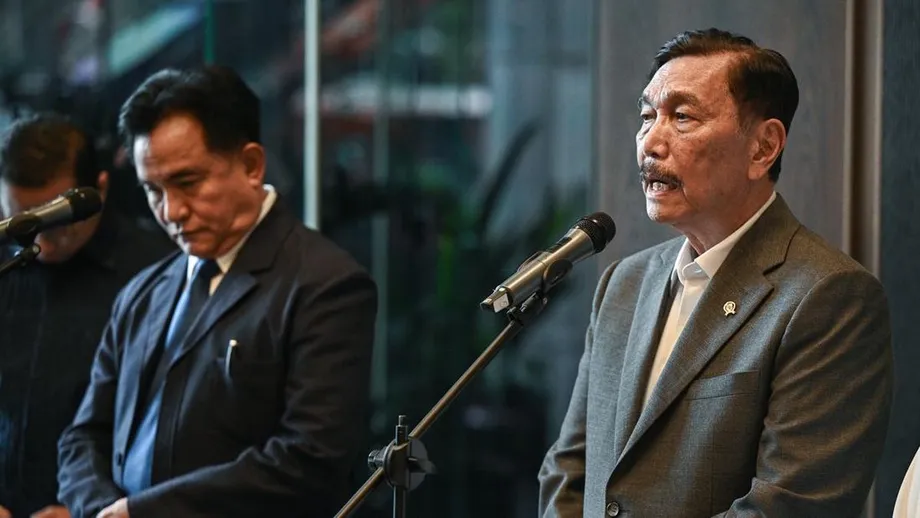
Religious Affairs Minister Nasaruddin Umar expressed regret over the Padang attack and pledged an investigation. He described the incident as a blow to the country's reputation:
stain on Indonesia's image as a tolerant nation
Rights advocates and opinion leaders argue that expressions of regret must be followed by action. Their demands include prosecuting perpetrators, protecting future gatherings and removing rules they regard as discriminatory.
The Jakarta Post's editorial board expressed that demand in an editorial:
Hope and regret are no longer enough. The government must move beyond regret, dismantle discriminatory rules, prosecute perpetrators, and ensure safe worship for all.
President Prabowo Subianto, who took office in 2024, faces pressure to defend constitutional religious freedom unequivocally. Critics warn that silence or inaction from national leaders can strengthen perceptions of state indifference or complicity and encourage intolerant groups.
As of August 9, no timetable was given for the promised investigation or the requested restoration and psychological support. The immediate demands remained protection for worshippers, help for the children and accountability for the violence.
The criticism also concerns how security personnel respond at the scene. Reports that police watched the Padang attack, and that police and soldiers looked on in Sukabumi, have intensified calls for officers to intervene against violence rather than leave minority communities exposed.
Why advocates see a wider problem
Human Rights Watch's 2025 report says authorities have done little to stop attacks on religious minorities. It identifies several laws that place those communities at risk, including the blasphemy law and regulations on religious harmony.
The report also describes a broader decline in civil and political rights over the past decade, including increased interference by the armed forces in civilian affairs and weaker legislative checks. Legislative checks are the powers lawmakers use to question and restrain government action.
Rights advocates connect religious intolerance to several pressures. Indonesian society has become more religiously conservative in recent years, while hardline groups have gained influence and intolerant rhetoric has become more common in mainstream discussion.
Weak enforcement is another concern. Police and local authorities sometimes fail to intervene or hold perpetrators accountable, citing public order or a desire to avoid offending the majority. For a threatened congregation, that approach can leave the demand to preserve calm resting on the people facing intimidation.
Political calculations also affect the response. Politicians may avoid confronting intolerant groups because they fear losing support, especially in regions where religious conservatism is strong.
Discriminatory regulations add another layer. Critics argue that the 2006 decree allows local opposition to become an official barrier, giving administrative force to pressure against minority religious activity. The combination of restrictive rules and uncertain protection leaves communities facing both paperwork and threats.
Interfaith cooperation offers a practical response
The August 5 appeal showed a shared commitment across religious communities to peaceful coexistence. Its demands focused on responsibilities that different groups can carry out: government protection, law enforcement, cooperation between communities and guidance from religious leaders.
The Forum for Religious Harmony (FKUB), an interfaith group, has played a role in mediating disputes and promoting local dialogue. In some cases, local officials have brokered agreements over church construction or worship activities.
Those agreements show that cooperation is possible when officials are willing to act. Such successes remain the exception rather than the rule, and religious freedom advocates say sustained national leadership is needed to address the causes of intolerance.
For Padang's affected families, the measures being requested are specific. Children need care, the facility needs restoration, and the congregation needs security when it gathers. Prosecution and consistent enforcement would address the wider demand that violence carry consequences.
The attacks in Padang and Sukabumi have brought these needs into the same debate as building permits and constitutional rights. Religious leaders are asking the government to make those rights practical, so that access to learning and prayer does not depend on whether a hostile crowd objects.
Key Points
- A mob attacked a house used for Christian religious education in Padang on July 27, 2025, injuring two children aged 13 and 11.
- About 30 students used the house for weekly study because local public schools did not offer Christian religious teaching.
- Weeks earlier, about 200 people disrupted a Christian youth retreat in Sukabumi, damaging property and driving participants out.
- Setara recorded 3,217 incidents involving violations of freedom of religion and belief between 2014 and 2024.
- Critics say the 2006 Joint Ministerial Decree creates barriers to building places of worship by requiring local support and multiple permissions.
- Leaders from six religious communities issued a joint appeal on August 5 for protection, prevention and action against perpetrators.
- Religious Affairs Minister Nasaruddin Umar pledged an investigation, while advocates demanded prosecutions, repairs, psychological care and changes to discriminatory rules.
- Indonesia's Constitution guarantees religious freedom, but minority communities continue to face restrictions, intimidation and inconsistent protection.