HK$20,000 Payment Puts Residency Rules Under Scrutiny
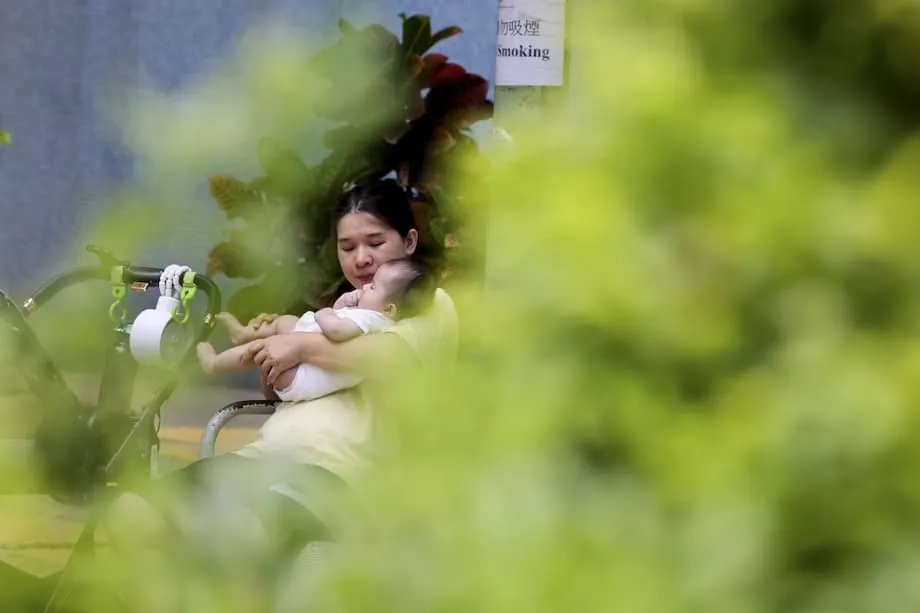
Hong Kong had paid nearly HK$979 million to almost 49,000 applicants under its Newborn Baby Bonus Scheme by June 2025. Now, a debate over who should receive the HK$20,000 payment is bringing together two of the city's biggest population challenges: encouraging births and persuading skilled newcomers to build their lives locally.
Contents
- HK$20,000 Payment Puts Residency Rules Under Scrutiny
- How the Bonus Works and Why It Was Introduced
- Why Newcomers Want to Be Included
- The Case for Spending More, and the Objections
- What the Rise in Births Can Tell Policymakers
- Why Cash Has Limits for Families
- What Support Exists Beyond the Payment
- Singapore Offers a Broader Comparison
- A Review Amid Competing Budget Priorities
- Key Points
As of August 4, 2025, the scheme requires at least one parent to be a permanent resident when applying. Families admitted through talent programmes can therefore miss out when neither parent holds that status, even if they have settled in Hong Kong and have a baby there.
Lawmaker Jesse Shang Hailong, founding president of the Hong Kong Top Talent Services Association, wants eligibility widened. He says more than 50 professionals who gave birth after settling in the city have complained about their exclusion.
The government is reviewing the scheme, with suggestions about including talent scheme families under consideration. Supporters see an opportunity to encourage childbirth and strengthen newcomers' attachment to Hong Kong. Opponents question the cost, the evidence that the payment changes decisions about having children, and whether recipient families will remain in the city.
The argument reaches beyond a single cash transfer. Hong Kong faces a shrinking workforce, an ageing population and persistent concerns about the cost of raising children. A payment of HK$20,000, about US$2,550, provides immediate help, but families also have to consider housing, childcare, schooling and the demands of work over many years.
How the Bonus Works and Why It Was Introduced
Chief Executive John Lee Ka-chiu announced the Newborn Baby Bonus Scheme in his 2023 policy address. Launched in October that year, it provides a single payment for each eligible baby born in Hong Kong during a period of three years.
The main dates and figures show the demographic pressure behind the policy:
- 2021: Hong Kong recorded 37,000 births.
- 2022: Births fell to 32,500, while fertility reached a record low of 0.9 children per woman.
- 2023: Births recovered modestly to 33,200.
- October 25, 2023: The eligibility period for the newborn bonus began.
- 2024: Births rose to 36,700.
- June 2025: Nearly 49,000 applicants had received payments totalling close to HK$979 million.
- October 24, 2026: The scheme's scheduled eligibility period ends.
Parents must have a baby born in the city within that period, and at least one parent must be a permanent resident at the time of application. The government hopes the programme will produce a meaningful rise in births over its three years.
The fertility figure describes the average number of children a woman would have under the birth patterns measured at the time. Hong Kong's figure of 0.9 in 2022 was far below the replacement level of 2.1, the benchmark used to describe the level at which a population replaces itself across generations.
Annual births recovered between 2022 and 2024, but the 36,700 recorded in 2024 remained 300 below the 37,000 recorded in 2021. Fewer births can eventually mean fewer people entering the workforce, increasing pressure on economic growth, public services and the financing of social welfare.
Why Newcomers Want to Be Included
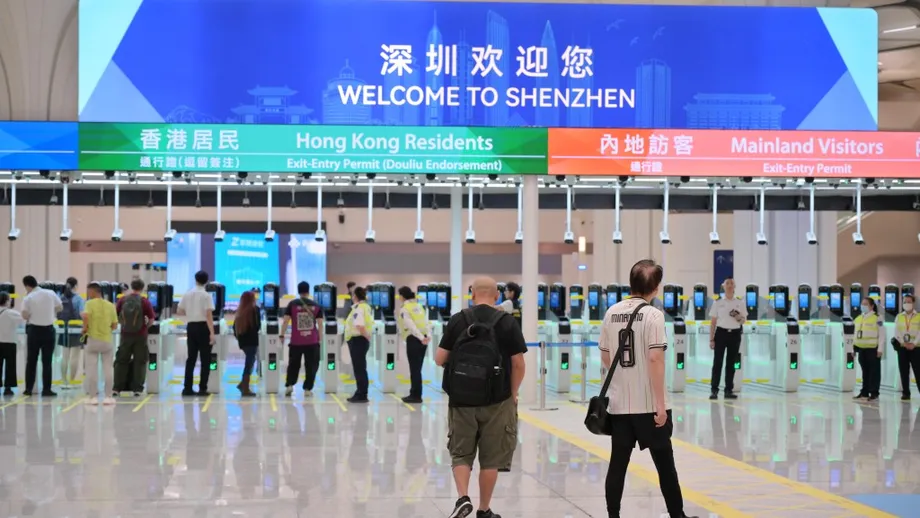
Hong Kong has been recruiting skilled professionals through programmes including the Top Talent Pass Scheme and the Quality Migrant Admission Scheme. Immigration Department statistics show that more than 91,000 people arrived through talent schemes in 2023, with similar numbers in 2024 and tens of thousands more in the first half of 2025.
Many arrivals are of childbearing age, and some want to start or expand their families in Hong Kong. Their admission through a talent programme, however, does not by itself satisfy the bonus requirement for a parent with permanent residency.
Shang, who has been pressing for the rules to change, links access to the payment with both fairness and recruitment:
Excluding talent from the scheme is unfair and widening eligibility would encourage them to give birth locally and help the city's bid to attract top-notch professionals.
His association has served around 70,000 people from talent schemes since it was established in 2023. Most are mainland Chinese professionals. Their median age is 35, and about 70 per cent already have children.
Shang says interest in having a baby locally extends to both existing parents and people without children:
About 20 per cent of talent scheme families have considered giving birth in Hong Kong, including those who already have children and those who don't. This is already a significant number.
For supporters of wider eligibility, the payment would carry a message alongside its financial value: professionals contributing to Hong Kong's economy would receive support as parents, helping them feel more included in the community.
The Case for Spending More, and the Objections
Supporters argue that extending the bonus could serve several purposes at once. It could encourage births among newcomers already considering children, make Hong Kong more appealing to skilled migrants, and help persuade families to stay in a city competing internationally for professionals.
The fairness argument rests on the contribution these families already make through their work and daily lives. Giving them access to the same childbirth incentive as families meeting the permanent residency rule could strengthen their sense of belonging.
Lawmaker Doreen Kong Yuk-foon questions whether the government should expand spending while the city faces a budget deficit. She also wants a clearer account of what the existing payment has achieved:
On the one hand, the government has made cuts in various aspects, while on the other, it can be so generous to give HK$20,000 to everyone without telling us how good the outcome of the scheme is.
Critics also worry about whether children born to talent scheme families will settle in Hong Kong for the long term. Their concern is that public spending may bring fewer lasting benefits to the local population and economy if families later leave.
Professor Terence Chong Tai-leung, an economist at the Chinese University of Hong Kong, supports extending the bonus as part of a wider effort to encourage childbearing. He acknowledges that HK$20,000 is not a large amount, but argues that population decline carries economic costs of its own:
Many governments around the world have deficits, but many of them still spend a lot of money on policies to encourage childbearing as a shrinking population will lead to a downward trend in the economy and the housing market.
What the Rise in Births Can Tell Policymakers
Professor Paul Yip Siu-fai, chair professor in population health at the University of Hong Kong, questions whether the bonus is enough to persuade families to have children. He points to the auspicious Year of the Dragon as a possible influence on the increase in births during 2024.
The policy question is whether a payment encourages people to have more children, or mainly changes when they have a child they already planned. That difference matters when the aim is a lasting increase in births rather than a temporary rise in one year.
Eric Fong Wai-ching, chair professor in sociology at the University of Hong Kong, wants research into the scheme's effectiveness before eligibility changes. He points to experience in North America and Europe, where attracting immigrants has helped raise births because newcomers often intend to have children.
Comparable research is lacking in Asian settings, including Hong Kong, according to Fong. His call for evidence connects the two parts of the debate: whether the bonus affects family decisions, and whether extending it to newcomers would help the city meet its population goals.
The government's review therefore involves more than counting applications and payments. Policymakers also have to consider decisions about childbirth, the timing of births and families' plans to stay in Hong Kong.
Why Cash Has Limits for Families
Hong Kong's public reaction to the baby bonus has been lukewarm, with many people saying that HK$20,000 falls short of the real cost of raising a child. High living costs, expensive childcare and demanding work cultures remain major reasons for delaying or deciding against parenthood.
A fertility policy analysis describes how cash incentives often have only a marginal effect on fertility. Across economies facing similar pressures, payments may influence the timing of a birth more readily than the total number of children a family chooses to have.
Japan and South Korea have also used generous cash bonuses and tax breaks in response to low fertility. The results have been mixed, reflecting the continuing pressures families face beyond the immediate expense of a birth.
Hong Kong's debate therefore includes two different measures of success. A payment may offer useful financial relief to parents, while the larger population goal requires more people to decide that they can afford and manage raising children over time.
Lawmakers and academics broadly agree that financial incentives alone are insufficient to reverse the city's demographic decline. Affordable childcare, more substantial subsidies and longer parental leave are among the changes they suggest could make a greater difference to everyday family life.
What Support Exists Beyond the Payment
Hong Kong has introduced other measures intended to make parenthood easier. Eligible residents can claim up to HK$17,000 in tax deductions for assisted reproductive services, reducing the tax burden associated with fertility treatment.
Families can access subsidised childcare services and expanded care after school. The city also provides 12 years of free schooling, with further support for kindergartens and families in need.
Housing measures give families with newborns priority for public rental housing and subsidised flats. For parents deciding whether they have enough space or a stable home for a child, housing access is part of the same calculation as cash support.
Hong Kong provides 14 weeks of maternity leave and five days of paternity leave. The Labour Department also encourages employers to adopt policies that support family life, including flexible hours and remote work.
Many Hongkongers nevertheless continue to cite insufficient childcare and high living costs as barriers to having more children. A place in affordable childcare can affect whether a parent is able to return to work, while working hours shape how families divide care responsibilities. Those practical concerns help explain why the bonus is being discussed as one part of a larger package.
Singapore Offers a Broader Comparison
Singapore's Baby Bonus Scheme provides up to S$10,000, about HK$58,200, for the third child and subsequent children, alongside extended parental leave and subsidised childcare. Its approach also includes priority housing and substantial childcare subsidies.
The parental leave comparison in the debate puts Singapore at 16 weeks of maternity leave and two weeks of paternity leave, against Hong Kong's 14 weeks and five days respectively. These measures address the time parents need to care for children, as well as the money they need.
Singapore's fertility rate remains low despite its wider package. Its experience nevertheless provides a comparison for supporting families in another densely populated and expensive city, where housing, care and employment all affect decisions about children.
A comparative study published in Frontiers in Public Health also examines how societies can manage population ageing. It finds that improving education among people of working age and maintaining the health of older people can reduce the burden associated with an ageing population.
The study recommends improving talent admission schemes and strengthening support for families. Its findings place the baby bonus debate within a wider task: helping parents while also preparing the workforce and public services for an older population.
A Review Amid Competing Budget Priorities
Social media discussion reflects both support for wider eligibility and scepticism about the value of cash incentives. Some professionals feel unfairly excluded, while other residents question whether the payment changes decisions about having children. Lawmakers are similarly divided between broader inclusion and caution over public spending.
Financial Secretary Paul Chan Mo-po has recently said Hong Kong is on track to return to an operating account surplus in the 2025-26 financial year, helped in part by strong stock market performance. That improved outlook could give the government more room for social programmes, while leaving competing demands on public money.
The Office of the Deputy Chief Secretary for Administration is reviewing the Newborn Baby Bonus Scheme. Secretary for Labour and Welfare Chris Sun Yuk-han has confirmed that community suggestions, including possible eligibility for talent scheme families, are being considered.
A decision is expected in the coming months, although no specific announcement date has been given. The review will help shape the next phase of population policy before the scheme's current eligibility period ends on October 24, 2026.
For families excluded by the residency requirement, the immediate issue is access to HK$20,000 when a child is born. For the government, the wider task is deciding how that payment fits with attracting skilled workers, retaining their families and addressing the practical reasons people hesitate to have children.
Key Points
- Hong Kong offers HK$20,000 for each eligible baby born locally from October 25, 2023, to October 24, 2026.
- At least one parent must be a permanent resident when applying, leaving some talent scheme families outside the programme.
- Nearly 49,000 applicants had received close to HK$979 million by June 2025.
- Supporters of wider eligibility cite fairness, recruitment and family settlement; critics question costs, effectiveness and whether recipients will stay.
- Births rose from 32,500 in 2022 to 36,700 in 2024, while academics call for research into the bonus and other influences on childbirth.
- Childcare, housing, parental leave and working arrangements remain central to the debate over supporting parents.
- The government is reviewing the scheme and considering talent scheme families, with a decision expected in the coming months.