A National Identity Built in Everyday Life
Singapore approaches its 60th year of independence with more than 3 million citizens sharing an island of just over 735 square kilometers. As of August 4, 2025, the SG60 celebrations offer an occasion to consider what connects them beyond familiar dishes, the skyline, commemorative collections and grand events.
Contents
- A National Identity Built in Everyday Life
- From School Activities to the Wait for a Flat
- How Multiculturalism Shapes Shared Spaces
- Festivals Connect Cultural Roots With a Shared Heritage
- The Airport, the Causeway and a Packet of Tissues
- Singlish and the Languages of Belonging
- Becoming Singaporean While Holding on to Home
- Family Policy Shapes Who Feels Included
- Music and the Search for a Singapore Sound
- Trust Across Communities Remains Central
- Key Points
Some answers lie in experiences repeated across generations: choosing school activities, sitting the Primary School Leaving Exam, waiting for a public housing application result or answering relatives' questions about marriage and children. Others are found in smaller habits, such as reserving a hawker center seat with a packet of tissues or spending a weekend afternoon at Changi Airport without catching a flight.
Singaporean identity also involves more difficult questions. How do newcomers become part of a society while keeping their cultural roots? How do racial categories accommodate people whose backgrounds cross those boundaries? What happens when policies built around a particular family structure meet people whose lives follow another course?
Schools, housing policies, religious safeguards and cultural institutions all help shape the answers. So do conversations between neighbors, the languages people switch between and the traditions families carry into shared public spaces.
Food remains a familiar expression of belonging, but the national story reaches further. It includes the pressures people recognize in one another, the differences they learn to live with and the everyday signals through which someone feels accepted. At 60, Singapore's identity is being expressed through both organized celebrations and ordinary encounters, where a shared phrase or familiar experience can create an immediate connection.
From School Activities to the Wait for a Flat
For many Singaporeans, shared experiences begin in primary school. An introduction to co-curricular activities, or CCA, at around age nine brings choices between sports, uniformed groups and the performing arts. These activities teach responsibility, teamwork and the consequences of decisions outside ordinary classroom lessons.
The Primary School Leaving Exam, known as the PSLE, becomes another major milestone. It introduces many children to the pressure of academic achievement and the need to recover when results or expectations are difficult to manage. The experience can become a point of recognition long after students have left school.
Books contribute a different kind of collective memory. Reading Mr Midnight or True Singapore Ghost Stories during assembly belongs to the informal side of school life, where popular stories and shared interests become part of how a generation remembers growing up.
Adulthood brings its own periods of anticipation. Waiting for the results of a Build-To-Order, or BTO, flat application connects housing plans with decisions about marriage and home ownership. For many couples, the application becomes part of the transition toward building a household.
Festive gatherings add another familiar experience: relatives asking when someone will marry or have children. Such questions can be affectionate, intrusive or exasperating. Alongside school memories and housing anxieties, they create recognizable reference points across otherwise different lives.
How Multiculturalism Shapes Shared Spaces
Chinese, Malay, Indian and other ethnic communities contribute languages, beliefs and traditions to Singapore's public life. Multiculturalism is expressed through daily contact as well as official arrangements intended to support harmony.
The Chinese, Malay, Indian, Others framework, commonly called CMIO, organizes racial categories used in public life. Its influence extends from housing quotas to educational materials. These arrangements seek to maintain a place for different communities within the national project and encourage shared participation.
The Maintenance of Religious Harmony Act and the Inter-Religious Organisation, or IRO, form part of the effort to guard against religious division and encourage understanding and cooperation across faiths. HDB housing estates and community centers provide everyday settings where people from different backgrounds encounter one another.
Academic research also identifies difficulties within the way race is recognized and discussed. People may use skin color, language, clothing or names to decide which community someone belongs to. Those shortcuts can reinforce stereotypes or produce awkward encounters, particularly for people of mixed or less easily categorized backgrounds.
Singapore's multicultural model therefore operates at two levels: formal categories structure parts of public life, while individuals bring identities that may be more complicated. The shared spaces of housing estates and community centers are where those categories meet the varied realities of people's lives.
Festivals Connect Cultural Roots With a Shared Heritage
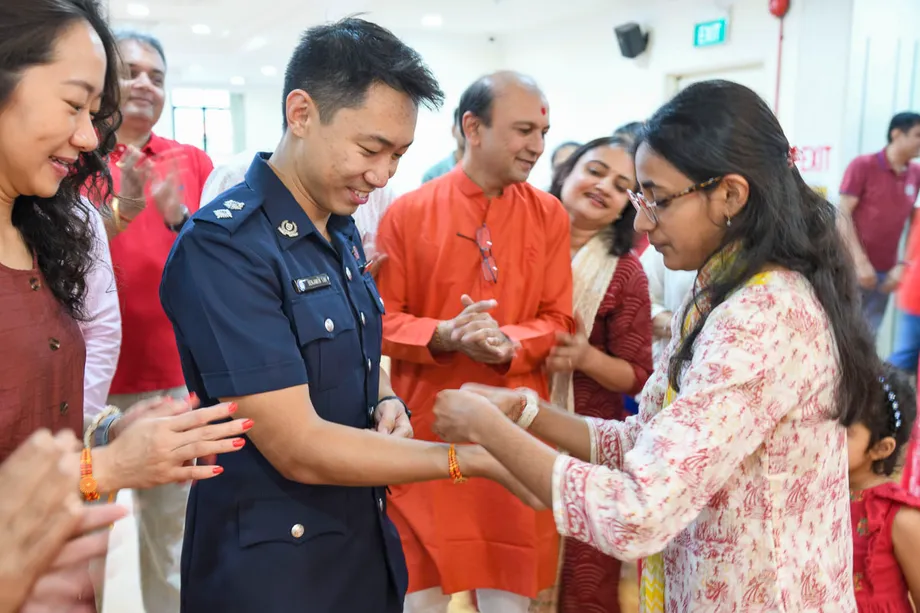
Hari Raya, Deepavali, Lunar New Year and Christmas give Singapore's calendar a rhythm drawn from different communities. Reunions, traditional clothing and exchanged greetings keep particular traditions visible, while invitations to friends and neighbors allow those celebrations to build relationships across backgrounds.
The Indian Cultural Fiesta and Singapore HeritageFest bring further attention to cultural practices, including Peranakan beadwork, Chinese opera and Malay music. These are examples of intangible cultural heritage: traditions, skills and forms of expression that people practice and pass on.
At the 2025 Indian Cultural Fiesta, Deputy Prime Minister Heng Swee Keat described becoming Singaporean as a process that allows people to retain their roots while creating something together:
Being Singaporean, and becoming Singaporean, does not mean divesting our cultural roots altogether. It means coming together, building on our commonalities, enriching our shared collective heritage, and building something new and special.
Heng's account connects cultural preservation with national belonging. Families can continue their traditions while taking part in a wider heritage shaped by contact with others. Festivals make that relationship tangible through the people who gather, the clothes they wear and the greetings they exchange.
The Airport, the Causeway and a Packet of Tissues
Changi Airport occupies an unusual place in local leisure. For many Singaporeans, it is somewhere to dine, shop, watch movies or relax, even when no journey is planned. Its amenities and air conditioning make a transport hub a familiar weekend destination.
Clothing supplies another recognizable detail. The Uniqlo Airism oversized T-shirt has become popular enough among Singaporean men to attract the nickname "Singapore uniform." Its lightweight, breathable fabric suits the island's humid climate, turning a practical wardrobe choice into a shared cultural reference.
Johor Bahru, often shortened to JB, draws Singaporeans looking for affordable meals, shopping and massages. Complaints about Causeway traffic coexist with the continuing appeal of a weekend trip. The combination reflects both a search for value and a willingness to navigate inconvenience to find it.
At hawker centers, a tissue packet or umbrella can serve a purpose beyond its ordinary use. Leaving one on a table signals that the seat has been reserved, a practice known as "chope." During a crowded lunch period, a small object becomes a message that other diners recognize.
These habits mix practicality with local humor. Airport visits make use of a comfortable public destination; familiar clothing responds to the weather; trips to JB reflect the attraction of a good deal. Chope culture turns an everyday problem, finding somewhere to sit, into a recognizable social custom.
Singlish and the Languages of Belonging
Singlish offers one of the most immediate signals of Singaporean identity. This distinctive form of English, described as a creole, includes words from Malay, Hokkien, Tamil and other languages. Its vocabulary reflects the contact between communities that shapes daily life.
Code-switching, or changing between languages and ways of speaking, helps people move between different social settings. A speaker's choice of words can communicate familiarity as well as information, making language part of how people recognize a shared background.
An unnamed Reddit user expressed that sense of connection in a comment about Singlish:
Singlish unites us all and is distinctively Singaporean.
The appeal lies partly in recognition. A familiar expression can carry a sense of belonging in much the same way as a shared school memory or an understood gesture at a hawker center. Language also exposes the more personal tensions of integration, particularly when learning to sound local accompanies a weakening connection with a family language.
Becoming Singaporean While Holding on to Home
Yanant Aung, a Burmese immigrant, describes integration as a personal negotiation between the society around her and the traditions maintained within her family. Her experience brings the broad discussion of national identity into everyday decisions about language and behavior.
Aung describes the competing demands in these words:
tug-of-war between integrating into Singaporean society and honouring the traditions that my parents fiercely preserved.
Local habits gradually became second nature, including "chope-ing" tables and switching between English, Mandarin and Burmese. At the same time, she grappled with the loss of her mother tongue and a feeling of belonging imperfectly in two places.
Aung captures that feeling through her description of being:
too Burmese to be Singaporean, but too Singaporean to be Burmese.
Newcomers from China can encounter a different version of the same problem. A shared use of Mandarin may ease communication, while differences in mentality and social expectations continue to affect relationships. Some find Singapore's business culture surprisingly "chill" compared with the pressure they associate with life back home.
An unnamed observer described the distance between an aspiration to integrate and the practical experience of living together:
Integration is the slogan, while having differences is the everyday reality.
These experiences place adaptation and preservation alongside one another. Becoming familiar with local habits can strengthen belonging, while changes in language or relationships can also bring a sense of loss. Acceptance develops through those everyday adjustments.
Family Policy Shapes Who Feels Included
Singapore's government influences social norms through policies as well as cultural initiatives. Housing and welfare access are often connected to marital status and parenthood, giving family structure practical consequences for how people organize their lives.
The policy preference described in this debate is for a heterosexual nuclear family, generally understood as parents and their children living as a household. Its roots are associated with "Asian values" and Confucian ideals, with an emphasis on family responsibility and stability.
Critics argue that these arrangements can marginalize people whose households fall outside that model, including single parents and LGBTQIA+ individuals. They also argue that state policies push citizens toward particular roles and reinforce inequalities connected to gender and class.
Younger Singaporeans are among those advocating a broader understanding of belonging that relies less on ethnic categories and allows more room for different lives. Their aspirations sit alongside established expectations about family, culture and social responsibility.
The practical issue is how someone experiences citizenship when their family circumstances differ from the preferred model. Housing, welfare and expectations about marriage are part of daily security, making debates about identity relevant to concrete choices about home and family.
Music and the Search for a Singapore Sound
Music and the arts provide another way to express a shared identity. School assemblies and National Day parades bring together instruments and melodies associated with different ethnic groups, presenting multiculturalism through performances that audiences can hear and recognize.
Cultural commentators have cautioned that these combinations can become formulaic. When traditions appear mainly as recognizable symbols, the range of experiences within each community may receive less attention.
An unnamed writer in The Straits Times expressed that concern while arguing for a wider understanding of national music:
The Singapore Sound is not a formula. It must encourage diverse artistic expressions that reflect the lived realities of Singaporeans across generations and cultures.
Singapore HeritageFest and organizations such as the Singapore Chinese Cultural Centre work to preserve and renew cultural traditions. Their place in the national story connects the protection of inherited practices with the continuing creation of new expressions.
Artists face a related task: representing common belonging while allowing differences between generations and communities to remain audible. A shared musical identity can include familiar cultural elements while leaving space for the varied experiences of people making and hearing the music.
Trust Across Communities Remains Central
Immigration, global influences and changing aspirations among younger people continue to shape the discussion of a "Singaporean Singapore." Tensions between citizens and newcomers, debates about race and privilege, and calls for open dialogue all form part of that process.
Senior Minister Lee Hsien Loong has urged the Chinese community to support national interests and inclusive policies while respecting and celebrating its own traditions. The broader principle applies across communities: cultural attachment and responsibility toward the wider country are expected to develop together.
Official speeches and community initiatives place trust, empathy and collective effort at the center of social cohesion. In everyday terms, that means relationships strong enough to accommodate differences in background, language, religion and expectations.
Singapore's 60th anniversary brings those relationships into focus. School milestones, housing plans, Singlish, festivals and familiar habits give people common reference points. The experiences of immigrants, different family forms and changing artistic expression show how the meaning of belonging continues to develop.
The national identity described through these experiences combines unity with diversity, tradition with innovation, and personal stories with collective memory. It is sustained through institutions and celebrations, but also through the ordinary ways people make room for one another.
Key Points
- Singapore marks 60 years of independence in 2025, with more than 3 million citizens on just over 735 square kilometers.
- School activities, the PSLE, BTO applications and family expectations create shared experiences across generations.
- The CMIO framework, religious safeguards and shared public spaces help organize multicultural life, while racial categories can present difficulties for mixed backgrounds.
- Changi Airport visits, Uniqlo Airism shirts, trips to Johor Bahru, chope culture and Singlish are familiar everyday markers of belonging.
- Immigrants describe adaptation alongside efforts to retain family traditions and languages.
- Family policies, cultural festivals and artistic expression remain central to discussions about a more inclusive Singaporean identity.