Malaysia puts regional electricity connections at the centre of its 2025 agenda
Malaysia is pressing ahead with the ASEAN Power Grid, backing a proposed electricity connection from Vietnam to Malaysia and Singapore while seeking wider cooperation with Laos, Cambodia and Thailand. The regional effort brings together national governments and major energy companies around a practical goal: allowing electricity to move more easily between Southeast Asian countries.
Contents
- Malaysia puts regional electricity connections at the centre of its 2025 agenda
- How the ASEAN Power Grid would work
- A proposed route from Vietnam through Malaysia to Singapore
- Vietnam's resources meet Singapore's import ambitions
- Expanding the existing mainland electricity corridor
- A supply disruption shows the value of regional support
- An October agreement would strengthen the regional framework
- Grid capacity and investment remain practical constraints
- The milestones shaping Malaysia's regional push
- Key Points
The ASEAN Centre for Energy (ACE) has identified 18 priority connections across borders. The region is working towards a fully integrated grid managed through digital systems by 2035, while an enhanced memorandum of understanding on the ASEAN Power Grid is scheduled for signing at the ASEAN Ministers on Energy Meeting in October.
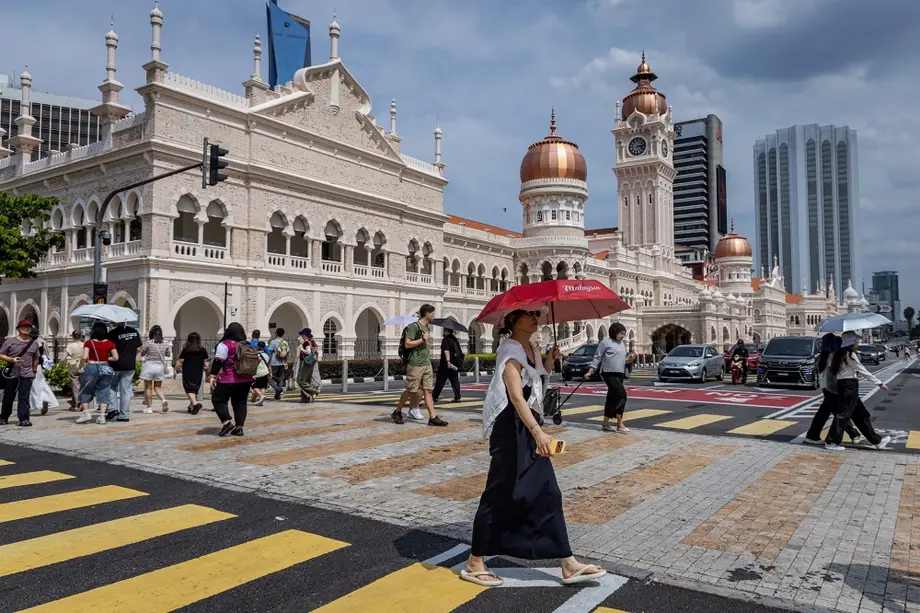
Malaysia has placed energy integration at the centre of its preparations and agenda for the 2025 ASEAN Chairmanship. Its energy leadership theme, "Powering ASEAN: Bridging Boundaries, Building Prosperity", connects electricity cooperation with a broader focus on inclusivity, sustainability, and trade and investment within ASEAN.
Deputy Prime Minister Fadillah Yusof, who also serves as Malaysia's Minister of Energy Transition and Water Transformation, described the ASEAN Power Grid's intended role in the regional electricity market:
the backbone of a truly integrated ASEAN energy market.
Fadillah's vision rests on using the region's shared geography and complementary resources to build a greener, more inclusive and secure energy system. Malaysia's support combines political coordination, infrastructure planning and partnerships between companies that would develop and operate the connections.
For households, industries and electricity suppliers, the central promise is access to a wider pool of power. Countries could draw on their neighbours' resources, respond together to supply disruptions and make greater use of renewable energy as demand grows.
How the ASEAN Power Grid would work
The ASEAN Power Grid, or APG, is a plan to connect the electricity systems of all ten ASEAN member states: Brunei, Cambodia, Indonesia, Laos, Malaysia, Myanmar, the Philippines, Singapore, Thailand and Vietnam. Its purpose is to let electricity flow across national borders so countries can share resources and balance supply with demand.
Southeast Asia faces rising electricity needs alongside pressure to reduce carbon emissions. Solar and wind power can help meet those needs, but their output varies. Connecting national grids would give participating countries more options for matching available generation with the electricity required by homes and businesses.
The initiative has four main aims:
- Improve electricity reliability and resilience during emergencies or supply disruptions.
- Allow renewable electricity to move from countries with abundant resources to centres of high demand.
- Reduce carbon emissions by enabling greater use of clean energy.
- Support economic growth and job creation through infrastructure development.
Malaysia's National Energy Transition Roadmap includes the APG as a key pillar. Thailand, Indonesia and other member states have also made commitments to regional electricity integration, giving the initiative a place in national energy planning as well as ASEAN cooperation.
A proposed route from Vietnam through Malaysia to Singapore
Tenaga Nasional Berhad (TNB) and Petroliam Nasional Berhad (PETRONAS) of Malaysia, PetroVietnam Technical Services Corporation (PTSC) of Vietnam, and Sembcorp Utilities of Singapore have signed a Joint Development Agreement to explore renewable electricity exports from Vietnam to Malaysia and Singapore.
The proposed project would harness Vietnam's offshore wind resources and transmit electricity through a new subsea cable. The connection would be integrated into Malaysia's national grid, with electricity moving onward to Singapore. The partnership is intended as a model for renewable energy cooperation that could be expanded across national borders elsewhere in Southeast Asia.
Members of the MY Energy Consortium, representing Malaysia, described the partnership in a joint announcement:
This tripartite partnership is a step forward in advancing transnational green infrastructure, tapping into Vietnam's renewable energy potential, and delivering stable, low-carbon electricity to communities and businesses. It marks a significant milestone in our collective journey towards achieving net zero emissions.
The agreement puts companies from three countries into a shared development effort. It remains an exploration of the proposed export connection, and no construction or operating date was given.
Vietnam's resources meet Singapore's import ambitions
Vietnam has made offshore wind a national priority and aims to become a regional renewable energy hub. Its role in the proposed connection centres on generating electricity from those resources for delivery to Malaysia and Singapore.
Prime Minister Datuk Seri Anwar Ibrahim has repeatedly supported the APG, including through cooperation with Vietnam. After a recent meeting with Vietnamese Prime Minister Pham Minh Chinh, Anwar highlighted Malaysia's backing for renewable energy investments in southern Vietnam, including seabed cable projects intended to strengthen electricity networks operating in both directions.
Singapore's target gives these regional connections a substantial destination market. The country aims to import around 6 gigawatts of electricity with low carbon emissions by 2035, representing about one third of its projected energy demand.
The proposed Vietnam connection brings together the resources of an electricity producer, Malaysia's grid and Singapore's import ambitions. Regional connections are therefore central to Singapore's plans to reduce emissions, while offering Vietnam a route to customers beyond its own borders.
Expanding the existing mainland electricity corridor
Malaysia is also working with Laos, Cambodia, Thailand and Singapore to accelerate a second phase of regional power integration. Anwar has announced plans to fast track this phase, linking Laos, Cambodia and Thailand with Peninsular Malaysia and Singapore.
The expansion builds on the Laos-Thailand-Malaysia-Singapore Power Integration Project. That project has already enabled Singapore to import hydropower from Laos through existing electricity connections, providing a working example of power moving through several national systems.
Malaysia's wider approach seeks to connect areas with renewable resources to major urban and industrial centres. The mainland corridor and the proposed cable from Vietnam form different parts of that effort, involving both existing infrastructure and new construction.
Malaysia and Laos have also agreed to improve trade and logistics connections, including new port and rail links supporting the movement of goods and energy across borders. Their cooperation forms part of a broader regional push involving infrastructure, digital technology and talent development.
These partnerships extend Malaysia's APG agenda beyond any single electricity route. They bring energy cooperation into the same discussions as transport, investment and the skills needed to support more closely connected economies.
A supply disruption shows the value of regional support
A recent gas pipeline incident in Malaysia disrupted supplies to local industries, providing a practical example of the value of cooperation with neighbouring countries. Assistance from Thailand, enabled by existing infrastructure across the border, helped reduce the impact.
Fadillah cited the incident as an example of how regional energy cooperation can strengthen resilience during an emergency. Access to neighbouring systems gives a country another source of support when domestic supplies are interrupted.
Fadillah also pointed to the wind resources of Vietnam, Indonesia and Laos. When wind availability falls, he explained, other member states can step in to help. The APG's purpose is to make that mutual support part of a reliable and affordable regional electricity supply.
The emergency response and the renewable energy plans address two connected needs. Countries want help during sudden disruptions, while also seeking a dependable way to use electricity sources whose output changes with conditions.
An October agreement would strengthen the regional framework
ASEAN energy officials have agreed on an enhanced memorandum of understanding for the APG, with signing planned at the ASEAN Ministers on Energy Meeting in October. The agreement is intended to strengthen the framework for electricity cooperation as projects become more interconnected.
The planned agreement will focus on:
- Strengthening regional energy security and integration of electricity markets.
- Accelerating the transition to clean energy.
- Establishing frameworks for subsea power cable projects.
- Encouraging private investment and technical cooperation.
National rules and infrastructure need to support the same electricity trade. A cable may physically connect two systems, while project licensing, commercial arrangements and regulations determine how the connection can be developed and used.
Outdated transmission infrastructure, gaps in regulation and slow project licensing remain obstacles. Transmission infrastructure is the network that carries electricity between generating sites and the places that need it. Limited capacity can restrict how much electricity a new renewable project is able to deliver.
The October agreement forms part of Malaysia's effort to align policy with construction and investment. The APG requires cooperation over the rules governing electricity as well as the infrastructure carrying it.
Grid capacity and investment remain practical constraints
Fatima Al Suwaidi, head of business development for Asia Pacific at Masdar Clean Energy, identified grid capacity as a concern despite Southeast Asia's strong renewable energy potential:
limited grid capacity could affect project viability.
Al Suwaidi called for clear policies, reliable offtake agreements and strong local partnerships. An offtake agreement sets out arrangements for a buyer to purchase a project's output, giving the developer greater certainty about where its electricity will go.
Project timelines in Southeast Asia are often much longer than in other regions because of slow licensing, outdated regulations and limited digital systems. Those delays affect efforts to bring renewable generation and the networks carrying its electricity into service.
Attracting private investment in transmission infrastructure is another challenge. Innovative financing tools, including renewable energy certificates, have been identified as ways to encourage development related to the grid.
Regional consultations organised by ACE and supported by the United Nations are helping countries build agreement, share technical expertise and coordinate policy. Their work addresses the technical and regulatory difficulties of electricity trade involving several countries.
The potential gains are substantial: clean electricity could move from sources with lower costs to places with high demand, supporting climate targets and reducing dependence on fossil fuels. Infrastructure development could also create economic opportunities, while closer connections could make the region more resilient to supply shocks and natural disasters.
The milestones shaping Malaysia's regional push
Malaysia's leadership agenda, the planned October agreement and the region's 2035 ambitions give the APG effort several reference points. They connect immediate political coordination with longer plans for electricity imports and integrated grid operations.
- 2025: Malaysia's ASEAN Chairmanship agenda places energy cooperation alongside inclusivity, sustainability, and trade and investment within the region.
- October 2025: The enhanced APG memorandum of understanding is scheduled for signing at the ASEAN Ministers on Energy Meeting.
- 2035: ASEAN is working towards a fully integrated grid managed through digital systems. Singapore also aims to import around 6 gigawatts of electricity with low carbon emissions by that year.
ACE's 18 priority connections provide a regional focus for infrastructure development. Malaysia's work with Vietnam and Singapore, together with its cooperation with Laos, Cambodia and Thailand, shows how individual partnerships fit within that broader programme.
Governments and companies now face the linked tasks of expanding transmission capacity, improving licensing and regulation, and securing investment. Progress on those tasks will determine how readily electricity can reach the communities, industrial areas and businesses that need it.
Key Points
- Malaysia is promoting the ASEAN Power Grid as a central part of its 2025 regional leadership agenda.
- The APG aims to connect all ten ASEAN electricity systems, supporting renewable energy trade and assistance during supply disruptions.
- TNB, PETRONAS, PTSC and Sembcorp Utilities have agreed to explore renewable electricity exports from Vietnam through Malaysia to Singapore.
- Existing connections already allow Singapore to import hydropower from Laos through Thailand and Malaysia.
- ACE has identified 18 priority connections, while an enhanced APG agreement is scheduled for signing in October.
- Singapore targets around 6 gigawatts of electricity imports with low carbon emissions by 2035, about one third of its projected energy demand.
- Grid capacity, licensing, regulation and private investment remain central challenges for the region's electricity integration plans.