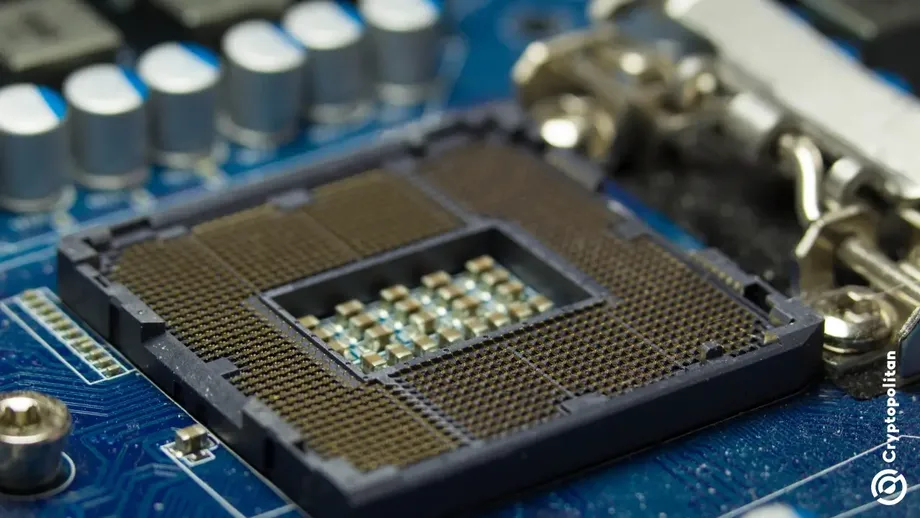
Washington Targets Two Key Southeast Asian Technology Hubs
The United States is preparing restrictions on exports of advanced artificial intelligence chips to Malaysia and Thailand, targeting routes through which Washington fears restricted technology could reach China. As of July 5, 2025, the Commerce Department proposal remains a draft and could change before it is finalized.
Contents
- Washington Targets Two Key Southeast Asian Technology Hubs
- Why These Chips Matter to the US and China
- Why Malaysia and Thailand Are Under Scrutiny
- Access Can Involve Servers as Well as Shipments
- Malaysia Faces Pressure to Track Final Destinations
- From Country Quotas to Targeted Controls
- Temporary Exceptions Aim to Keep Production Moving
- Nvidia and Regional Businesses Weigh the Costs
- Supply Chains Face Opportunity and Disruption
- Key Points
Malaysia exported nearly $37 billion in semiconductors in 2024, with more than a third going to China and Hong Kong. Thailand exported more than $800 million in integrated circuits to China in 2023. Both countries also host growing investments in data centers, making them important locations for manufacturing electronics and using the computing power behind AI.
The Trump administration wants to tighten oversight of those connections while moving to rescind the broader AI Diffusion Rule introduced at the end of the Biden administration. Its proposed approach focuses on particular countries considered possible routes for diversion, rather than applying the previous system of country groups and export quotas.
Washington's concern is that restrictions on direct sales of Nvidia's most advanced processors to China leave other routes open. Chips can pass through another country before reaching their final destination. Chinese companies can also use servers in Southeast Asia to train AI systems without moving the chips themselves to China.
For Malaysia and Thailand, the proposal reaches into a growing part of their economies. Investments by semiconductor companies and cloud operators promise jobs and new infrastructure, but access to advanced American chips may increasingly depend on checks covering buyers, operators and the eventual use of equipment.
Why These Chips Matter to the US and China
Nvidia's H100 and A100 graphics processing units, or GPUs, provide the computing power needed to train and run large AI models. Training means processing large amounts of information so a model can learn patterns. Running a model means using what it has learned to produce results, such as generating text or interpreting language.
These processors support advances in machine learning, natural language processing and other AI applications. Their importance has placed them at the center of competition between the United States and China over technological leadership.
The United States has tightened restrictions on advanced semiconductors and related technology since 2022. Washington's stated aims are to protect its lead in AI and prevent American technology from being used for military or surveillance purposes in China.
Those measures include direct restrictions on sales of advanced AI chips to China and controls involving a growing list of countries considered possible diversion routes. Semiconductor supply chains cross many borders, however, making the final destination and use of equipment difficult to track.
The dates behind the current proposal show how export controls and Southeast Asia's trade position have developed:
- 2022: The United States began a series of escalating controls on advanced semiconductors and related technology destined for China.
- 2023: Thailand exported more than $800 million in integrated circuits to China.
- 2024: Malaysia's semiconductor exports reached nearly $37 billion, with more than a third going to China and Hong Kong.
- At the end of the Biden administration: The United States introduced the AI Diffusion Rule, dividing countries into three groups with different access to advanced chips.
- July 5, 2025: The Trump administration was preparing targeted restrictions involving Malaysia and Thailand while moving to rescind the earlier rule.
Why Malaysia and Thailand Are Under Scrutiny
Malaysia is the world's fourth largest semiconductor exporter. Its factories and associated businesses perform important manufacturing steps, including assembly, testing and packaging. Packaging connects and protects a chip so it can function as part of an electronic device.
Malaysia's exports to China and Hong Kong account for more than one dollar in every three dollars of its semiconductor exports. That share helps explain the scale of its commercial ties with those markets and why Washington is paying close attention to shipments moving through the country.
Thailand has a smaller semiconductor export sector, but it also participates in manufacturing, assembly, testing and packaging. Its exports of integrated circuits to China show that it is already part of the regional electronics network affected by the proposed controls.
Global technology companies have expanded in Southeast Asia as they diversify production away from reliance on China, a strategy commonly called China Plus One. It means retaining operations in China while developing another production base elsewhere.
Major American companies, including Nvidia, Oracle, Intel and GlobalFoundries, have increased operations in Malaysia and Thailand. Skilled workers, established infrastructure and favorable trade policies have helped attract that investment.
Oracle, Alphabet, Microsoft and Amazon Web Services are also investing billions of dollars in data centers across the two countries. These facilities house servers that store information and provide computing services. Their growth creates legitimate demand for advanced AI processors while increasing the number of shipments and facilities that export authorities must monitor.
Access Can Involve Servers as Well as Shipments
Chinese companies have sought access to restricted American technology through both physical transfers and computing services. One reported method involves engineers carrying hard drives containing AI training data to Malaysia, then renting servers equipped with Nvidia chips.
The engineers train their models in Malaysian data centers and take the results back to China. The reported AI training data transfers illustrate how access to computing power can bypass restrictions on direct chip exports while leaving the hardware outside China.
Remote access presents a related enforcement problem. A Chinese business could seek computing services from a data center in Southeast Asia, using processors located there rather than acquiring the chips for installation in China.
Singapore prosecutors have also charged individuals with defrauding customers about the ultimate destination of AI servers originally shipped to Malaysia. Those servers may have contained advanced Nvidia chips. Nvidia is not implicated in wrongdoing in that case.
The case highlights the practical task facing authorities: tracking where valuable servers go after an initial shipment and checking whether the stated destination matches their eventual use. A buyer's paperwork, the location of the equipment and the identity of the business using it all matter to that process.
Malaysia Faces Pressure to Track Final Destinations
Malaysian officials have pledged to tighten oversight of semiconductor shipments under pressure from the United States. Trade Minister Zafrul Aziz confirmed that Washington had asked Malaysia to ensure that servers containing Nvidia chips reach their designated data centers and are not redirected elsewhere.
That request puts attention on the final destination of equipment, rather than stopping checks when a shipment enters Malaysia. A server intended for a particular data center would need to arrive there and remain consistent with its declared purpose.
Malaysia's Ministry of Investment, Trade and Industry has called for clear and consistent policies to support the technology sector. Thailand is awaiting further details of the proposed restrictions. Both governments want to preserve their countries' appeal to foreign investors while demonstrating compliance with American export controls.
Local businesses in Thailand are already strengthening checks. Siam AI Cloud and Ingram Micro are reviewing customer orders in advance and verifying end users to prevent chips from being exported onward to China.
Cloud providers and data center operators face uncertainty over how the rules would affect services used by Chinese companies, particularly when customers access computing power remotely. The proposal's final terms, publication date, licensing arrangements and treatment of remote access have not been settled; no firm implementation date has been given.
From Country Quotas to Targeted Controls
The Biden administration's AI Diffusion Rule divided countries into three tiers based on their relationships with the United States. Trusted allies, including the United Kingdom and South Korea, faced few restrictions. China and Russia were effectively barred from access.
Most countries, including Malaysia and Thailand, fell into a middle group subject to quotas on advanced AI chip exports and strict licensing requirements. A quota limits how much can be shipped, while a license requires government permission for a transaction.
American allies and technology companies, including Nvidia, criticized that system. They argued that it created unnecessary administrative work, restrained innovation and risked alienating friendly countries.
The Trump administration's proposed replacement focuses on preventing diversion through particular intermediaries, starting with Malaysia and Thailand. The list of countries subject to controls could be adjusted as circumstances change.
Commerce Secretary Howard Lutnick described the administration's intended approach to lawmakers, tying allied access to approval of both the data center operator and the cloud operator connected to it:
The US will allow our allies to buy AI chips, provided they're run by an approved American data center operator, and the cloud that touches that data center is an approved American operator.
Lutnick's description places American operators at the center of the proposed access arrangements. The administration is seeking to combine security controls with support for American innovation and continued ties with allies.
Temporary Exceptions Aim to Keep Production Moving
The draft includes a transition period for businesses with substantial operations in Malaysia and Thailand. For a few months after publication, companies headquartered in the United States and a selected group of allied countries would be allowed to continue shipping AI chips to both destinations without seeking a license.
Exemptions are also intended to prevent supply chain disruption. Semiconductor companies rely on facilities in Southeast Asia for essential manufacturing stages, including packaging, so restrictions on movements through the region could affect production as well as sales to data centers.
Those provisions recognize the different reasons a chip may cross a border. Some shipments support manufacturing, while others supply computing facilities. Companies would need to understand which arrangements qualify for an exemption or require approval under the final rule.
The proposed controls are not a complete replacement for the previous system. Washington still faces the task of monitoring American chips used in overseas data centers, including in the Middle East, where security concerns are high.
Officials have not ruled out adding countries if evidence of diversion emerges. The United States is expected to increase scrutiny of transactions showing warning signs and require businesses to investigate buyers and uses, as well as report suspicious activity.
Southeast Asian governments may need to strengthen their export control laws and compliance procedures to avoid being blacklisted or losing access to American technology. For companies, checking customers and documenting shipments could become a larger part of doing business.
Nvidia and Regional Businesses Weigh the Costs
Nvidia, the dominant producer of AI chips, declined to comment directly on the proposed restrictions. Its chief executive, Jensen Huang, has previously disputed the claim that diversion is widespread.
Huang said there was:
no evidence
His statement concerned widespread AI chip diversion. He also warned that excessive restrictions could encourage China to develop alternatives and weaken American market leadership.
That concern sits alongside Washington's security objective. Limiting access can make it harder for Chinese companies to obtain American processors, while also giving them a stronger reason to invest in domestic substitutes.
Regional governments and businesses must balance investment plans with compliance obligations. Data centers need processors to deliver computing services, and semiconductor manufacturers need predictable routes for equipment and components.
Additional approvals and checks could increase costs or complicate schedules. Clear rules would help investors understand which customers they can serve and which shipments can proceed, particularly during the proposed transition period.
Supply Chains Face Opportunity and Disruption
Southeast Asia's expanding semiconductor sector offers opportunities for investment, jobs and technological development as businesses diversify beyond China. The same growth places the region closer to the center of American export enforcement.
Tighter controls could disrupt supply chains, increase compliance costs and complicate research and development carried out across borders. A business operating in several countries may have to coordinate manufacturing needs, customer access and government approvals at the same time.
Companies involved in testing, packaging and logistics in Malaysia and Thailand, including Unisem, Jotana and MySETEC, are positioned to benefit from the region's growth as a redistribution hub. Their prospects also depend on changing regulations, geopolitical volatility and the risk that capacity grows faster than demand.
Investors and industry planners therefore have to consider logistics, infrastructure and compliance expertise alongside factory capacity or data center expansion. The ability to move products reliably and check where they are going is becoming more closely tied to commercial planning.
China is investing heavily in domestic chip alternatives while seeking other ways to obtain advanced computing power. Restricted access to American processors creates immediate difficulties for Chinese firms and a stronger incentive to build a more independent semiconductor industry.
The United States faces a balancing act: protecting its technological lead while supporting allies and avoiding damage to American companies' international position. Malaysia and Thailand are seeking economic growth while meeting security and trade obligations.
The proposal is part of the wider separation of American and Chinese technology supply chains. For Southeast Asia, the concrete change is greater scrutiny of who buys chips, where servers are installed and who can use their computing power. Businesses able to manage those checks alongside investment and production will be better placed to respond as the rules develop.
Key Points
- As of July 5, 2025, the United States was preparing restrictions on advanced AI chip exports to Malaysia and Thailand. The draft could still change.
- The proposal targets possible diversion to China while the Trump administration moves to rescind the Biden administration's AI Diffusion Rule.
- Malaysia exported nearly $37 billion in semiconductors in 2024. More than a third went to China and Hong Kong.
- Thailand exported more than $800 million in integrated circuits to China in 2023.
- Chinese companies have sought access through overseas servers, including training models in Malaysia and taking the results back to China.
- The draft includes temporary permission for certain American and allied companies to continue shipments without licenses, alongside exemptions intended to protect manufacturing supply chains.
- Malaysia has pledged stronger shipment oversight, while Thai businesses are increasing checks on customer orders and end users.
- Final implementation details remain unsettled, including how the controls would affect remote computing access.
- The changes connect Southeast Asia's investment prospects more closely to export compliance and the wider US-China technology rivalry.