Three Days of Color Begin Outside Hiratsuka Station
Hiratsuka in Kanagawa Prefecture begins its Shonan Hiratsuka Tanabata Festival on July 4, 2025, bringing giant decorations, parades and illuminated shopping streets to the city through July 6. Nearly one million visitors are expected at one of Japan's largest and most celebrated Tanabata events, with the main celebrations centered on the north exit of JR Hiratsuka Station.
Contents
- Three Days of Color Begin Outside Hiratsuka Station
- The Reunion Behind the Star Festival
- A Festival Built Around Recovery
- Giant Decorations Meet Contemporary Heroes
- Parades, Performances and More Than 400 Stalls
- Residents Help Shape What Visitors See
- Summer Heat Changes Participation
- Getting There and Planning a Visit
- How Hiratsuka Fits Into Japan's Tanabata Celebrations
- Key Points
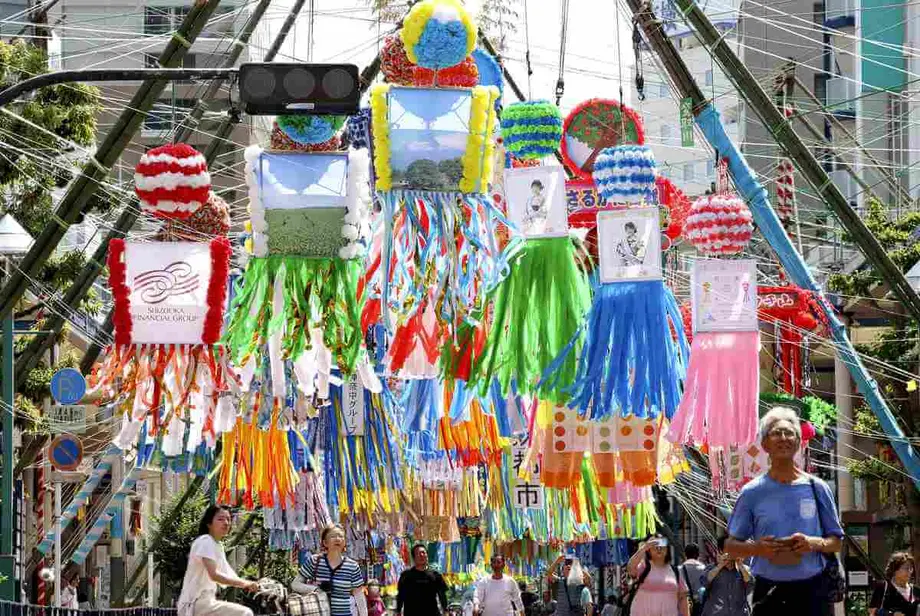
More than 100 giant streamers, some longer than 10 meters, form the heart of the display. Across the city, as many as 3,000 large bamboo ornaments and around 500 elaborate decorations fill streets and shopping areas, particularly Shonan Star Mall and the surrounding arcades. After sunset, lighting gives the decorations a different appearance and draws crowds into the evening.
The festival combines an old story about two lovers separated by the Milky Way with designs drawn from contemporary life. Among the figures featured in 2025 is Onosato, the sumo wrestler who reached the rank of yokozuna at record speed. Traditional motifs, popular culture and current events all have a place among the streamers.
For local residents, the three days are also a community gathering built through the work of businesses, volunteers, schools and daycare centers. Food, games, music and performances bring families, friends and couples into the streets. Entry is free, and the station location makes the event accessible to visitors traveling from Tokyo. Large crowds and summer heat, however, are practical concerns for anyone planning a visit, particularly during the popular evening illuminations.
The Reunion Behind the Star Festival
Tanabata, often called the Star Festival, has its origins in Chinese folklore. Its central story follows Orihime, the weaving princess, and Hikoboshi, the cowherd. The two lovers are separated by the Milky Way and allowed to meet only once a year, on the seventh day of the seventh lunar month.
The legend has inspired centuries of celebrations across Japan. Different places have developed their own customs and styles, while keeping the themes of reunion, hope and wishes. Hiratsuka's festival takes place in early July, with the 2025 celebrations running from July 4 to 6.
Visitors can take part by writing wishes on colorful strips of paper called tanzaku and hanging them on bamboo branches. The custom turns a personal hope into part of a shared public display, with wishes joining the decorations around the city.
Light cotton kimono known as yukata are another familiar part of the occasion, and visitors are encouraged to wear them. The clothing, paper wishes, music and food make Tanabata something people participate in, alongside the decorations they come to see.
A Festival Built Around Recovery
Hiratsuka's celebration began in 1951, when local merchants sought to revive the city's economy and community spirit after World War II. They drew inspiration from the Sendai Tanabata Festival, and the Hiratsuka event grew into a symbol of recovery and renewal.
The festival is now recognized as one of the three great Tanabata festivals in the Kanto region, alongside those in Iruma and Mobara. It is also considered one of Japan's largest, rivaling Sendai in scale and spectacle. Its history connects the decorations on today's shopping streets with the merchants who first used the celebration to bring people back together.
Hiratsuka has kept that historical purpose while changing what appears in the displays. Traditional designs sit alongside themes from sport, entertainment and public life, giving residents something new to look for each year.
- 1951: Local merchants established Hiratsuka's Tanabata festival to support recovery after World War II, taking inspiration from Sendai.
- July 4, 2025: This year's festival begins around the north exit of JR Hiratsuka Station.
- July 4 to 6, 2025: Decorations, parades, performances, food and games make up the three days of celebrations.
Giant Decorations Meet Contemporary Heroes
Shonan Star Mall and the nearby shopping arcades are central places to see the decorations. The more than 100 giant streamers include examples exceeding 10 meters in length, giving visitors a sense of their scale as they move through the streets.
The citywide figures describe several parts of the spectacle: as many as 3,000 large bamboo ornaments and around 500 elaborate decorations, alongside the giant streamers at the festival's heart. Together, they spread the celebration beyond a single display area and through the shopping district.
Onosato's appearance among the 2025 designs shows how the festival incorporates recent achievements into an established tradition. His rapid rise to yokozuna provides a sporting subject alongside the older cultural figures and motifs that residents also expect to see.
Illumination changes the experience after dark. Decorations that visitors inspect in daylight become part of a lighted streetscape, making the evening a major attraction. Those hours are also especially crowded, so the choice between a daytime visit and an evening visit affects both the view and the number of people sharing the streets.
Parades, Performances and More Than 400 Stalls
Parades, contests and live performances extend the program beyond the decorations. The Shonan Hiratsuka Orihime, a symbolic figure representing the weaving princess in the Tanabata story, makes appearances throughout the event, connecting the public celebrations with the legend behind them.
More than 400 food and game stalls line the streets. Food choices include takoyaki and yakisoba, along with local Shonan gourmet specialties. Music, vendors' calls and the activity around the stalls add to the festival atmosphere.
Families can combine viewing the decorations with games and food, while friends and couples can gather for performances or the evening lights. The range of activities helps explain why Tanabata functions as both a cultural celebration and a social occasion for the city.
Local businesses also remain part of the event's identity. The festival began with merchants seeking to revive Hiratsuka, and its present setting among shopping streets, food stalls and nearby businesses continues that connection between community life and commerce.
Residents Help Shape What Visitors See
Volunteer groups, schools and daycare centers create many of the decorations. Children and adults contribute their ideas and work, making local participation part of the event's appearance as well as its organization. The process gives different generations a role in keeping the festival active from year to year.
Senri Miura, a local bar owner and festival website manager, described how residents look forward to the changing designs, the food and the evening atmosphere:
Many people here look forward to seeing the decoration of the festival each year, with their hero from sports or drama, traditional motifs like Samurai and Kabuki, and current events or political relations such as Hayabusa's return. Local people look forward to the festival's food and drink. I especially like the night time illuminations, which are so romantic and beautiful.
Miura's description brings together several parts of Hiratsuka's celebration: familiar cultural images, subjects drawn from current life and the pleasure of gathering to eat and drink. The annual changes give returning visitors new decorations to anticipate, while the shared traditions give the event continuity.
Wish writing offers visitors a direct way to join that community activity. Hanging tanzaku on bamboo adds individual hopes to the collective display, whether someone comes with family, friends or a partner.
Summer Heat Changes Participation
Japan's increasingly hot and humid summers, attributed to climate change, have created difficulties for festival organizers and visitors. Some events have changed their dates or introduced new safety measures. Festivals tied to particular seasons and cultural dates, including Tanabata, have less room to move.
Hiratsuka has seen attendance fall from highs of 1.5 million before the pandemic to around 1.1 million in recent years. Those figures represent a decline of about 400,000, or roughly 27 percent. Some children and older residents have opted out of daytime parades because of the heat.
Nearly one million visitors are expected for the 2025 edition. That is a forecast for this year's event, while the 1.1 million figure describes attendance in recent years. The city has introduced misting fans and other cooling measures to help people remain comfortable and safe.
An official from the Hiratsuka Municipal Government's commerce and tourism division explained the city's position on moving the celebration:
As it is a seasonal festival, we are not considering changing the schedule.
The July dates therefore remain part of the event, while cooling measures address conditions within the festival itself. For children and older residents who have already reduced their involvement in daytime parades, the heat affects how they can participate in a longstanding local tradition.
Getting There and Planning a Visit
JR Hiratsuka Station is just over an hour from Tokyo by train on the JR Tokaido Line. The main festival area is outside the station's north exit, making the celebration convenient for a day trip as well as for travelers staying in the area.
Admission is free. Visitors should expect large crowds, especially in the evening when the illuminated decorations are a major draw. Hiratsuka also has accommodation options for people who want to stay overnight and spend more time at the festival.
The official festival website is the place to check current schedules, parade information and any changes caused by weather or other circumstances. With activities spread across three days, checking those updates can help visitors plan around the parts of the program they most want to attend.
The practical appeal is straightforward: rail access from Tokyo, a main venue close to the station, and a mix of decorations, performances, food and games. Visitors can also take part in wish writing or wear yukata, making the trip a chance to join the customs as well as view the displays.
How Hiratsuka Fits Into Japan's Tanabata Celebrations
Sendai's Tanabata Festival in Miyagi Prefecture is perhaps Japan's best known celebration of the tradition. Held each August, it features thousands of bamboo decorations and attracts millions of visitors. It also provided the inspiration for Hiratsuka's festival when local merchants established it in 1951.
Tokyo's Asagaya Tanabata Festival is known for figures of popular characters made from papier-mache. The Ichinomiya Tanabata Star Festival in Aichi incorporates distinctive textile traditions. Each place gives the shared celebration its own appearance and local connections.
Hiratsuka's identity rests on its large decorations, contemporary themes, community participation and illuminated shopping streets. Alongside Sendai, Asagaya and Ichinomiya, it shares the central customs of colorful displays, wish writing and gathering with other people.
For the July 4 to 6 celebration, those traditions meet the practical realities of a large summer event: crowds arriving by train, volunteers and businesses contributing to the program, and cooling measures responding to the heat. The result is a festival rooted in a story of reunion and in Hiratsuka's own history of rebuilding community life.
Key Points
- The 2025 Shonan Hiratsuka Tanabata Festival runs from July 4 to 6 in Hiratsuka, Kanagawa Prefecture.
- The main venue is outside JR Hiratsuka Station's north exit, just over an hour from Tokyo on the JR Tokaido Line.
- Displays include more than 100 giant streamers, some longer than 10 meters, with as many as 3,000 large bamboo ornaments and around 500 elaborate decorations across the city.
- Nearly one million visitors are expected. Entry is free, and evening illuminations draw especially large crowds.
- Parades, contests, live performances and more than 400 food and game stalls accompany the decorations.
- Local volunteers, schools, daycare centers and businesses contribute to a tradition that began in 1951.
- Misting fans and other cooling measures address summer heat, while the city says it is not considering changing the seasonal schedule.