At The Arcade, Physical Currency Still Has Customers
Nearly 250 licensed money changers continue to operate in Singapore, offering more than 150 currencies even as digital payments take a larger share of everyday spending. At The Arcade, a modest mall with three stories beside Raffles Place, hundreds of people queue daily at around 30 currency exchange stalls.
Contents
- At The Arcade, Physical Currency Still Has Customers
- Why Raffles Place Remains an Exchange Centre
- How Quickly Is Cash Use Falling?
- Travel Keeps Foreign Banknotes in Demand
- Small Differences in Rates Matter
- Security Depends on Surveillance and Nearby Traders
- Identity Checks and Money Laundering Controls
- Traditional Counters Add Digital Services
- Access Around the Clock and Choices Before a Trip
- A Smaller Cash Market Still Supports a Trade
- Key Points
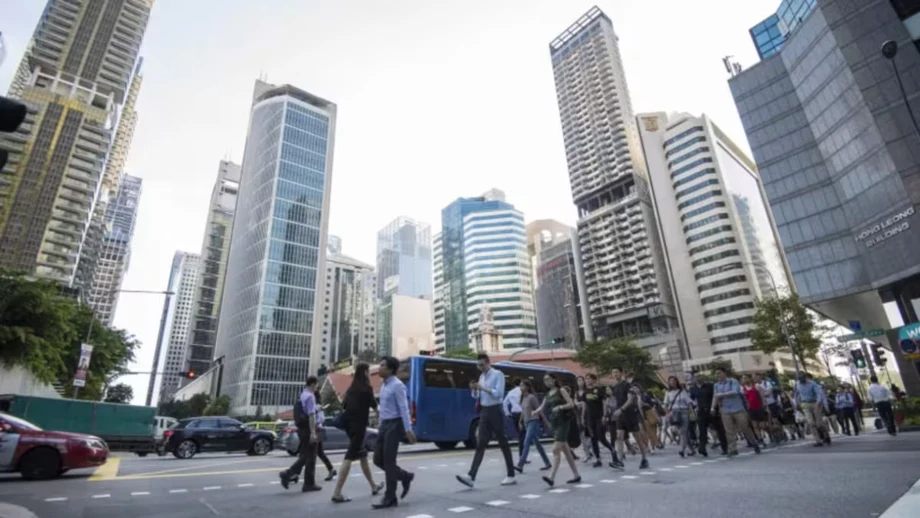
The setting captures two sides of Singapore's economy. Global banks in the surrounding financial district handle transactions worth billions of dollars almost instantly. Below their offices, customers compare rates and exchange banknotes for journeys, business and daily needs.
As of June 23, 2025, the businesses face a clear challenge. Worldpay's 2024 Global Payments Report projects that cash will fall from 15% of Singapore's payment value at physical points of sale in 2023 to 7% in 2027. Yet travel, shipping and customers who prefer physical money continue to bring business to exchange counters.
Abdul Haleem, 65, whose family has run City Money Changers since 1980, remains confident about the trade's future. He puts his view simply:
Cash will remain forever.
His confidence sits alongside a tougher business reality: activity is about half its level before the pandemic, competition is intense, and a movement in exchange rates can quickly reduce earnings. Singapore's money changers are surviving through a mix of competitive prices, established customer relationships and services that connect physical cash with digital convenience.
Why Raffles Place Remains an Exchange Centre
Singapore houses regional headquarters of JPMorgan Chase, Bank of China and UBS, and manages more than US$4 trillion in assets. Its role as a financial centre helps explain the concentration of money services around Raffles Place, but shipping has also sustained demand for decades.
Hundreds of vessels anchor in Singapore's harbour each day, making it one of the world's busiest maritime ports. Sailors coming ashore may carry money from their previous ports and need a different currency for their next destination. The Arcade's location has long made it a convenient place to exchange those notes.
Office workers provide another stream of customers. Many visit the stalls because their rates can be better than those offered by banks. With numerous counters close together, customers can compare prices before choosing where to exchange their money.
Mohamed Rafik, a partner at Arcade Money Changers, points to the arrival of new licensees as a sign that the trade remains viable. He also argues that digital wallets have operating costs that could eventually lead to higher rates, helping physical currency exchanges remain competitive over time.
His argument concerns the future price of competing services. For customers making a purchase today, the practical choice still depends on the rate available, any fees and whether they need banknotes or a balance on a card or phone.
How Quickly Is Cash Use Falling?
Worldpay's 2024 Global Payments Report puts cash at 15% of Singapore's transaction value at physical points of sale in 2023, equivalent to S$23 billion. It forecasts a fall to 7%, or S$11.4 billion, by 2027. Point of sale means the place where a customer pays for a purchase, such as a shop counter.
Digital wallets, including Apple Pay, GrabPay and DBS PayLah!, are projected to move in the opposite direction. Their share is expected to rise from 22%, worth S$33.6 billion in 2023, to 44%, worth S$75 billion in 2027, overtaking credit cards as the preferred payment method.
The projected change is substantial: the wallet share would double, while cash would account for less than half its 2023 share. These figures measure the value of purchases, meaning the amount spent, rather than simply the number of times people pay.
Singapore also has the lowest cash share of transaction value among the Southeast Asian countries compared in the figures. Cash accounts for 38% in Indonesia, 32% in Malaysia and 46% in Thailand, against Singapore's 15%.
Across the Asia-Pacific region, cash fell from 19% of spending value in stores in 2022 to 16% in 2023, and is expected to drop below 10% by 2027. Globally, cash transactions decreased by 8% in 2023, with cash projected to represent 11% of consumer spending by 2027.
A December 2023 survey captures the mixed attitudes behind Singapore's shift. It found that 44% of Singaporeans believed cash would become irrelevant within a decade, while 34% still preferred cash for purchases. Digital convenience is attracting users, while a substantial minority continues to value money they can hold and count.
Travel Keeps Foreign Banknotes in Demand
Singapore's proximity to destinations such as Phuket, Ha Long Bay and Bali supports a continuing market for foreign cash. Travellers may need banknotes for street food, small restaurants or tips in places where digital payments are less common.
School holidays and other busy travel periods bring increased demand for foreign currency. For money changers, a rise in overseas trips can create business even while Singapore residents use less cash at home.
Customer requests also reflect changing travel preferences. US dollars and Malaysian ringgit were once the most sought currencies, while recent years have brought stronger demand for Japanese yen, Korean won and Taiwanese dollars.
The interest in yen mirrors record tourist numbers in Japan, where a weaker currency and cultural attractions have drawn visitors. A weaker yen allows travellers exchanging Singapore dollars to obtain more Japanese currency, making the exchange rate part of their holiday budget.
Some travellers choose cash to avoid higher exchange rates and foreign transaction fees charged on credit cards. Others value the reassurance of carrying physical money for purchases where they expect to need it.
Teacher Christina Ng also sees cash as a way to help her children understand spending. Explaining why she wants them to handle money themselves, she says:
I want them to learn how to use the cash and do the transaction, so they need to see the physical money. We don't want them to just tap, tap, tap without actually knowing what they're spending on.
Small Differences in Rates Matter
City Money Changers offered one US dollar for S$1.2900 on an afternoon cited in the account of its business, compared with S$1.2972 at DBS, Singapore's largest bank. For someone buying US$1,000 at those rates, the difference would be S$7.20.
The comparison shows why customers take time to check nearby counters. A small difference on each dollar becomes more noticeable when a traveller buys a larger amount of foreign currency. Those quoted prices were an example from that afternoon; exchange rates move, changing the amount a customer receives.
Digital services are part of the same competition. Platforms such as YouTrip sometimes offer better rates than money changers, while physical counters offer customers the immediate ability to leave with banknotes.
Money changers themselves earn very small amounts on each dollar exchanged, sometimes fractions of a penny. Their margin is the difference between what it costs them to obtain a currency and what customers pay for it. Large volumes are therefore essential to making the business profitable.
Some changers can handle S$500,000, equivalent to US$389,000, in a single day. That turnover describes the money exchanged through the business. The amount retained from those transactions is much smaller because the business earns only its narrow margin.
Currency movements add another pressure. A change in the value of banknotes held by a trader can erode profits overnight, leaving even experienced operators exposed while they compete for customers on price.
Security Depends on Surveillance and Nearby Traders
Large amounts of physical money make security a daily concern. Singapore has around 90,000 security cameras across the city, while extensive surveillance and close attention among neighbouring stallholders help protect money changing businesses.
Violent crime is rare, and the traders also watch for suspicious activity around one another's counters. Their community provides a first line of defence alongside surveillance.
The combination matters for a trade that brings customers, staff and substantial cash holdings together in relatively small premises. A counter may handle a high daily turnover while relying on the vigilance of people working only a short distance away.
Security also has a financial side. Money changers must check qualifying transactions and maintain records so that the movement of cash can be examined when required by the authorities.
Identity Checks and Money Laundering Controls
The Monetary Authority of Singapore requires customer due diligence for cash transactions exceeding S$5,000, or S$20,000 when funded from a bank account. These checks include verifying a customer's identity and keeping detailed transaction records.
Customer due diligence means checking who a customer is and recording relevant information about the transaction. For someone exchanging money, this can mean providing identification before the business completes the exchange.
The industry is considered to carry a "moderate level" of money laundering risk because it handles so much cash. Money laundering is the process of making money from crime appear to come from a legitimate source. Identity checks and records help authorities follow transactions through the financial system.
The 1MDB scandal in 2016 brought greater scrutiny and tighter compliance requirements. Money changers must meet those obligations while maintaining the speed and competitive rates that draw customers to their counters.
The trade's development and the payment forecasts span several decades:
- 1980: Abdul Haleem's family began running City Money Changers.
- 2016: The 1MDB case contributed to greater scrutiny and tighter compliance requirements.
- December 2023: A survey found that 44% of Singaporeans expected cash to become irrelevant within a decade, while 34% preferred using it for purchases.
- 2024: Worldpay's Global Payments Report set out Singapore's 2023 payment figures and projections for 2027.
- 2027: Cash is projected to account for 7% of Singapore's payment value at physical points of sale, compared with 44% for digital wallets.
Traditional Counters Add Digital Services
Money changers are adapting by expanding beyond a straightforward exchange of banknotes. Services include international remittance, bill payment and currency delivery to customers' homes. Remittance means sending money to someone in another country.
Some businesses let customers order foreign currency online for home delivery. Others provide access to ATMs operating 24 hours a day, allowing customers to withdraw foreign currency at rates updated in real time.
These services combine online ordering or automated access with the physical cash that a customer wants to receive. They also give money changers ways to serve people who cannot visit a counter during normal shopping or working hours.
The Money Changers Association of Singapore argues that maintaining access to cash protects consumer choice. Older people, migrant workers and small business owners are among those who may lack access to bank accounts or mobile wallets and continue to depend on physical money.
The association describes money changers as part of a payment system in which cash and digital services operate together:
Cash isn't disappearing—it's evolving alongside digital solutions. Money changers continue to play a crucial role in supporting cash-based transactions, financial inclusion, and consumer choice.
For these customers, financial inclusion means being able to make and receive payments even without the banking access or technology needed for a digital wallet. Continued access to physical currency preserves a practical option as more transactions move to phones and cards.
Access Around the Clock and Choices Before a Trip
Mustafa Centre, Changi Airport and The Arcade at Raffles Place are among the locations identified for access to money changing services around the clock. Automated kiosks and online platforms expand the options for customers seeking currency outside usual hours or hoping to avoid queues.
Travellers choosing between those services still need to compare the amount they will receive. The practical advice is to check rates using apps, avoid airport exchanges for large sums, bring identification and use licensed money changers.
Multi-currency cards and digital wallets provide alternatives for customers who prefer to pay without cash. They can offer competitive exchange rates and lower fees, while banknotes remain necessary for certain purchases and destinations.
A traveller may therefore use more than one method during the same journey: a card or wallet where it is accepted and cash for smaller businesses, tips or other payments requiring notes. The demand reaching Singapore's exchange counters reflects those different needs.
A Smaller Cash Market Still Supports a Trade
Singapore's forecast decline in domestic cash spending puts pressure on money changers, while their business also depends on travel, shipping and access to foreign banknotes. The same customer who pays digitally at home may still visit a counter before going abroad.
Abdul Haleem's optimism comes despite activity being about half the level before the pandemic. Traders face fierce competition and exchange rate movements that can reduce their earnings quickly, even when customers continue to queue.
Thamim A.K., a trader with 40 years of experience, describes a business that continues to compete with digital services:
The bank notes business is still there. It's growing, in fact. It's fighting with digital.
Worldpay's figures are projections for 2027. The eventual pace of change will determine how much domestic spending continues to use cash, while the needs of travellers and customers without digital access will keep shaping demand for currency exchange.
Money changers are responding with online orders, delivery and automated access rather than relying solely on traditional counters. Cash and digital payments already serve different preferences and circumstances, giving physical currency a continuing place in one of the world's most technologically advanced economies.
Key Points
- Singapore has nearly 250 licensed money changers offering more than 150 currencies, including around 30 stalls at The Arcade.
- Cash represented 15% of payment value at physical points of sale in 2023 and is projected to fall to 7% by 2027.
- Digital wallets are forecast to rise from 22% to 44% of that spending over the same period.
- Travellers, sailors, office workers and people who depend on physical money continue to use currency exchange counters.
- Money changers compete on narrow margins while meeting identity checks, record keeping and security requirements.
- Online ordering, currency delivery, remittance and automated services are helping businesses adapt, although activity is about half its level before the pandemic.