Ash Cloud Disrupts Bali Routes as Flores Villages Evacuate
More than 14,000 passengers faced flight cancellations and delays after Mount Lewotobi Laki-Laki on Indonesia's Flores island erupted on Tuesday afternoon, sending ash up to 11 kilometers into the sky. By Wednesday, June 18, 2025, the disruption had reached international routes serving Bali, while communities closer to the volcano were dealing with falling ash and evacuations.
Contents
- Ash Cloud Disrupts Bali Routes as Flores Villages Evacuate
- What Happened at the Volcano?
- Which Flights Were Affected?
- Why Bali's Airport Stayed Open
- Three Airports Closed in East Nusa Tenggara
- How Ash Can Damage an Aircraft
- Families Leave Villages Near Lewotobi
- Rain Could Bring Another Danger
- Tourists and Businesses Face Disrupted Plans
- A Familiar Threat in Indonesia
- Key Points
Bali's I Gusti Ngurah Rai International Airport recorded at least 32 canceled flights on Wednesday, with another reported count exceeding 37. Indonesia's transportation ministry put the number of passengers affected by cancellations and delays at more than 14,000. Three airports in East Nusa Tenggara province were temporarily closed.
Bali's airport remained operational. Airlines made decisions according to the routes their aircraft would fly and the position of the ash cloud, meaning some services could continue while others were canceled. Travelers on routes connecting the island with Australia, India, Singapore, Malaysia, China and New Zealand were among those affected.
Near the volcano, authorities raised the alert to its highest level, expanded the exclusion zone to 8 kilometers and evacuated residents from several villages. There were no immediate reports of injuries, deaths or significant property damage from this eruption.
The disruption extended well beyond Flores. Ash drifting across air routes left thousands of passengers stranded and complicated journeys to Bali and nearby destinations, including Komodo National Park. For residents around Lewotobi Laki-Laki, the immediate concerns were ash falling on their communities, continued volcanic activity and the possibility of dangerous mudflows if heavy rain followed.
What Happened at the Volcano?
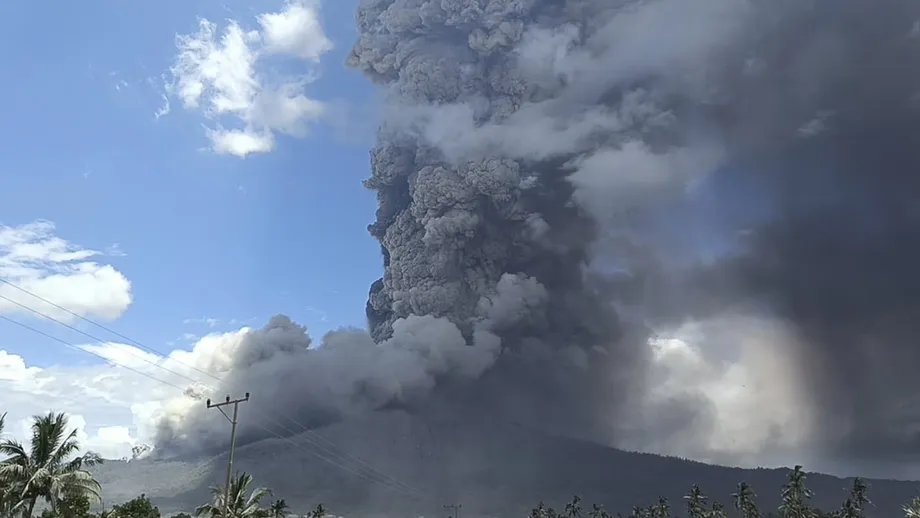
Mount Lewotobi Laki-Laki erupted at approximately 5:35 p.m. local time on Tuesday. The volcano, which stands 1,584 meters, or 5,197 feet, high, released a large cloud shaped like a mushroom that was visible from as far as 150 kilometers, or 93 miles, away.
The ash plume reached up to 11 kilometers, about 6.8 miles, into the sky. Several further bursts followed the initial eruption. On Wednesday morning, Indonesia's volcanology agency recorded ash columns reaching up to 5,000 meters, or 16,400 feet.
Muhammad Wafid, head of Indonesia's geology agency, described the height and appearance of an eruption column in an official statement:
The height of the eruption column was observed at approximately 10,000 metres above the summit. The ash column was observed to be grey with thick intensity.
Seismic monitoring continued to detect tremors and eruptions on Wednesday. Authorities were therefore managing an active situation, with further bursts and changes in the movement of ash still possible.
The main developments unfolded as follows:
- Tuesday afternoon: Lewotobi Laki-Laki erupted at about 5:35 p.m. local time, producing a towering ash cloud.
- Late Tuesday: At least one village was evacuated, according to the National Disaster Mitigation Agency, as authorities expanded protective measures.
- Wednesday morning: Further eruptions produced ash columns reaching up to 5,000 meters.
- Wednesday, June 18: Flight cancellations affected Bali's domestic and international connections, while three airports in East Nusa Tenggara were temporarily closed.
Which Flights Were Affected?
Jetstar, Virgin Australia, Air India, Air New Zealand, Singapore Airlines, TigerAir and China's Juneyao Airlines were among the carriers affected. The disruption reached several of Bali's major international connections, as well as domestic services linking Indonesian islands.
AirAsia flights to Labuan Bajo on Flores were among the domestic cancellations. Those interruptions complicated travel for passengers continuing beyond Bali, including tourists heading toward Komodo National Park.
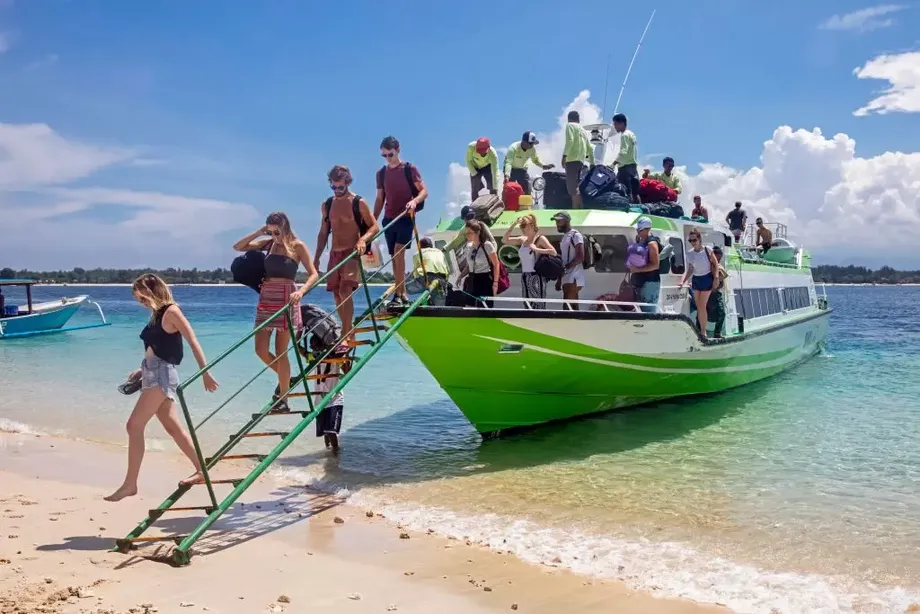
Thousands of passengers faced canceled journeys or lengthy delays. Some holidaymakers had to extend their stays, while others sought alternative routes home. The effect on each passenger depended on the airline, destination and whether a workable replacement journey was available.
Jetstar expressed optimism that the ash cloud could clear by late Wednesday, allowing delayed services to resume. That expectation remained dependent on conditions, because wind and further volcanic activity could change where the ash traveled.
No confirmed time for the full restoration of affected services had been given by the June 18 update. Airlines were continuing to assess conditions, and passengers needed to allow for further changes to their plans.
Why Bali's Airport Stayed Open
I Gusti Ngurah Rai International Airport continued operating even as airlines canceled dozens of flights. Airport officials explained that cancellations depended on the particular route and carrier.
An aircraft's journey involves more than conditions at the runway. A flight can depart from an operating airport but still face an unsafe route if volcanic ash lies along the path it must take. The ash cloud's position therefore mattered to each airline's decision.
Jetstar said passenger safety would determine when its flights could operate into and out of Denpasar, Bali's main air gateway. The airline stated:
Safety is always our first priority and we will only operate into and out of Denpasar when it is safe to fly.
Air New Zealand, Virgin Australia and Indonesia's transportation ministry also put safety at the center of their responses. Jetstar said affected customers would be offered rebooking or refunds.
For travelers, the practical consequence was that an open airport could still mean a canceled flight. Checking the status of the individual service remained necessary, especially when a journey included connections that might also be disrupted.
Three Airports Closed in East Nusa Tenggara
Authorities temporarily closed Fransiskus Xaverius Seda Airport in Maumere, Soa Airport in Bajawa and Haji Hasan Aroeboesman Airport in Ende. All three are in East Nusa Tenggara province, where Flores is located.
The closures were introduced to protect passengers. They added to the difficulty of reaching or leaving Flores and nearby islands at a time when some connections through Bali were also unavailable.
Indonesia's transportation ministry urged airlines and airport operators to provide options for people whose journeys could not continue. Those options included rescheduling, rerouting or full refunds.
Rescheduling means moving a passenger to another departure, while rerouting means arranging a different journey to the destination. The choices available to individual travelers depended on the affected services and the arrangements made by their airlines.
How Ash Can Damage an Aircraft
Volcanic ash contains fine particles thrown into the atmosphere during an eruption. Once high above the ground, those particles can drift hundreds or even thousands of kilometers, carrying the aviation hazard far beyond the volcano itself.
Jet engines are particularly vulnerable. Ash entering an engine can melt in the intense heat, then coat or clog critical components. That damage can threaten the engine's ability to work properly.
Ash can also scour the outside of an aircraft, much like sandblasting, and damage cockpit windows. Navigation and communication systems can be affected as well, creating several risks during the same flight.
Airlines and aviation authorities therefore take a cautious approach when ash is detected along flight paths. Canceling or rerouting a service keeps aircraft away from a hazard that may be far from the airport where passengers are waiting.
Decisions about restarting flights rely on monitoring ash movement, weather conditions and assessments from volcanology and aviation agencies. The continued eruptions on Wednesday made those assessments an ongoing task.
Families Leave Villages Near Lewotobi
Boru, Hewa, Watobuku and Nurabelen were among the villages whose residents were evacuated to safer locations. Ash, gravel and sand fell across affected communities, covering streets with thick deposits.
Abdul Muhari, a spokesman for Indonesia's disaster mitigation agency, said at least 450 families from affected villages had settled in temporary housing. Some residents moved into shelters equipped with basic amenities.
The National Disaster Mitigation Agency reported that at least one village had been evacuated late Tuesday. Ashfall was also observed in several communities outside the designated danger zone, extending the disruption beyond the area where access was restricted.
Authorities distributed face masks to help protect residents from inhaling ash. People remaining in affected areas also faced the disruption of leaving their homes, moving into temporary accommodation and waiting for conditions to become safer.
No immediate injuries or fatalities were reported. Local officials credited the speed of evacuations and residents' familiarity with volcanic hazards with helping to limit harm.
Rain Could Bring Another Danger
Indonesia's geology agency warned communities near rivers originating from Lewotobi Laki-Laki about possible lahar floods if heavy rain occurred. A lahar is a dangerous flow of water, volcanic debris and mud.
Rain can carry loose volcanic material into waterways, creating a threat to settlements near those channels. The warning concerned communities along rivers as well as people living near the crater.
Authorities expanded the exclusion zone to 8 kilometers, about 5 miles. Wafid also urged residents and tourists to avoid activities within at least 7 kilometers of the crater, use face masks against ash and remain alert to the risk of lahars.
The highest alert level and the exclusion zone remained in place as monitoring continued. Residents were advised to watch for further eruptions and secondary hazards, including mudflows triggered by heavy rain.
Tourists and Businesses Face Disrupted Plans
Bali attracts millions of visitors each year, and its economy depends heavily on tourism. Flight cancellations therefore affected travelers and the businesses arranging their holidays, transport and accommodation.
Remdy Doule, a sales worker at a travel agency based in Bali, estimated that more than 1,000 tourists were directly affected by the cancellations, particularly people traveling to Bali and Komodo National Park. That estimate concerned tourists, while the transportation ministry's figure of more than 14,000 covered passengers affected by cancellations and delays.
Airlines and hotels worked to accommodate stranded passengers. Assistance included rebooking and, where possible, additional nights of accommodation for people unable to leave as planned.
Many travelers faced a choice between waiting for flights to restart and looking for another route. The temporary closure of airports on Flores made some journeys more difficult, while unpredictable ash movement meant replacement plans could also change.
Most airlines and tourism operators expressed confidence that conditions would return to normal once the ash cloud cleared. No estimate of the financial cost to Bali's tourism businesses was given.
For passengers, the immediate steps were to check flight status regularly, follow local updates and stay prepared for sudden changes. Airlines and tourism operators already had procedures for volcanic disruption, although the conditions still required flexibility from travelers and businesses.
A Familiar Threat in Indonesia
Lewotobi Laki-Laki is one of Indonesia's most active volcanoes and forms part of a twin volcano system on Flores. Its nearby counterpart, Lewotobi Perempuan, is known as the female volcano.
Indonesia has more than 120 active volcanoes. The archipelago lies on the Pacific Ring of Fire, a broad zone where several tectonic plates meet. Movement along those boundaries brings frequent earthquakes and volcanic eruptions.
Lewotobi Laki-Laki's recent history includes significant eruptions in March, May and November of the previous year. The November 2024 eruption killed nine people, injured dozens and forced thousands to evacuate. It also caused widespread flight cancellations.
Communities near Indonesia's active volcanoes are familiar with evacuation drills and monitoring alerts. The latest evacuations again required residents to respond quickly, while agencies tracked activity that could change with little warning.
As of June 18, authorities continued monitoring Lewotobi Laki-Laki, maintaining the exclusion zone and warning about further eruptions and lahars. For Bali travelers, the main uncertainty remained when ash conditions would allow all affected flights to resume.
Key Points
- Lewotobi Laki-Laki erupted on Tuesday afternoon, sending ash up to 11 kilometers into the sky.
- At least 32 Bali flights were canceled on Wednesday, with another reported count exceeding 37.
- Indonesia's transportation ministry said more than 14,000 passengers were affected by cancellations and delays.
- Bali's airport remained operational, while three airports in East Nusa Tenggara temporarily closed.
- Authorities raised the volcanic alert to its highest level and expanded the exclusion zone to 8 kilometers.
- At least 450 families settled in temporary housing, and no immediate casualties or significant property damage were reported.
- Airlines offered or were urged to provide rebooking, alternative routes or refunds, while authorities continued monitoring ash and warning about possible lahars.