When a finished assignment is no longer enough
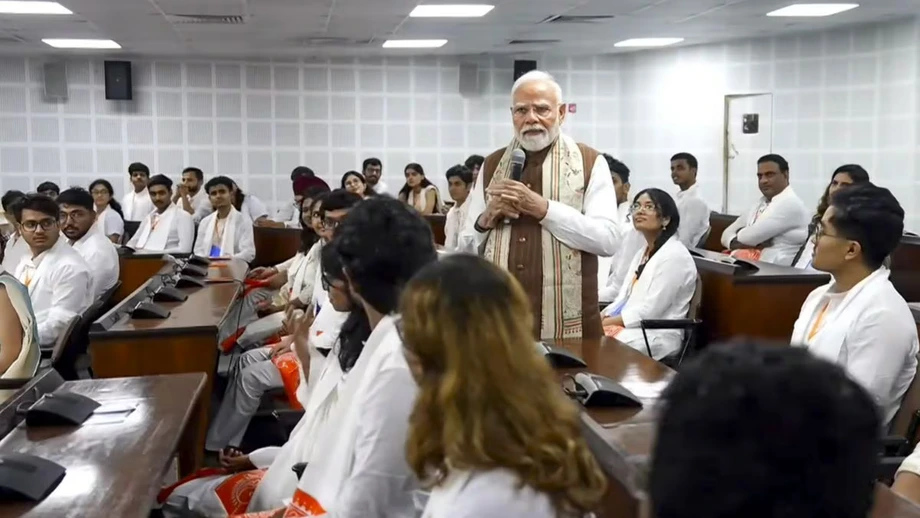
At AMC Engineering College, Professor Pallavi K.V. now asks students oral questions about the assignments they submit. The purpose is straightforward: to find out whether they have read and understood the work carrying their names. Across Indian campuses, handwritten examinations, classroom questioning and assignments rooted in personal experience are becoming part of the response to growing use of generative artificial intelligence.
Contents
- When a finished assignment is no longer enough
- Why students reach for AI
- Teachers worry about thinking, not just cheating
- Rules vary, and detection brings disputes
- Oral quizzes and handwriting return
- Creative tasks bring students into the work
- Some teachers are putting AI to work
- Learning to question AI answers
- Universities abroad face similar pressures
- The costs extend beyond the assignment
- Key Points
As of June 17, 2025, colleges and universities in Bengaluru, Bhopal and elsewhere are grappling with tools such as ChatGPT, Gemini and Copilot. These systems can produce text, summaries, presentations and computer code in response to instructions. Students are using them for research and assignments, but also for essays, emails and basic communication.
Teachers describe students feeding course materials into AI instead of taking notes or reading assigned texts. A tool that can quickly explain a difficult passage can also produce an entire submission, leaving the teacher with a polished answer and little insight into how much the student actually knows.
The response is far from uniform. Some instructors fail students for prohibited AI use, while others permit help with grammar or research. Some are bringing assessments back into supervised classrooms. Others are using AI themselves to prepare questions, plan lessons and give feedback.
For students, the attraction includes speed, help with difficult reading and greater confidence in English. For teachers, the concern reaches beyond copied work: they worry that students are skipping the practice through which they learn to reason, write and form their own views.
Why students reach for AI
Tejas P.V., a computer engineering graduate, describes AI as a practical research assistant when faced with lengthy material, including technical documents running to 120 pages. He uses it to find references and identify passages that deserve closer attention.
Tejas explains the appeal in terms of time and effort:
AI saves time. It helps us research by locating references. For lengthy, boring documents, AI helps to identify the crucial pages for us to focus on,
Keerthana S., an environmental science student, acknowledges that approaching deadlines increase the temptation to use ChatGPT. The results can feel impersonal or more technical than she would like, yet the prospect of finishing an assignment quickly remains attractive.
An engineering student who uses AI for programming assignments connects that choice to expectations about employment. The student argues that workplaces will value efficient completion of routine tasks:
Even after I get a job, my bosses are not going to expect me to waste time on manually doing these basic things,
English professor Greeshma Mohan sees another motivation, especially among students who did not study in English as their main language of instruction. Some doubt the quality of their writing and ideas, and prefer the more elaborate language an AI system supplies.
Mohan describes the insecurity behind that choice:
Students use AI because of insecurities that their own writing and ideas are not good enough, and because AI sounds fancier,
The educational cost, she warns, is the loss of learning through trial and error. Writing an imperfect answer, receiving corrections and trying again are part of developing a skill. When a system supplies the finished wording immediately, students can miss that process.
Teachers worry about thinking, not just cheating
Dr. Adil Hossain, who teaches history and sociology at Azim Premji University, says the spread of AI has added a difficult task to teaching: separating a student's contribution from machine generated material. Work that takes a student less time to submit can take an instructor more time to assess.
Hossain describes how that burden affects his experience in the classroom:
It's a shortcut for students. But for teachers, it's more laborious to separate the AI content from the students' content. The joy of teaching is gone,
Assistant Professor Ananya Mukherjee, a biology instructor, has encountered the problem even when choosing controversial subjects intended to encourage debate. Students turn to AI for talking points instead of developing their own positions.
Mukherjee links that habit to the central purpose of scientific education:
Independent thinking, which is the whole point of science, is getting lost,
Assistant Professor Prem Sagar, who teaches computer applications, draws a similar concern from programming. AI can help debug code, meaning it can help find and correct errors. Heavy dependence on it, however, can weaken the logical reasoning students need to understand why a program works or fails.
Across these subjects, teachers face a common assessment problem. An essay, a set of debate points or a working program may look complete, while the student's ability to explain the reasoning behind it remains uncertain. Oral questioning and supervised work give teachers another way to examine that understanding.
Rules vary, and detection brings disputes
Most institutions require professors to report suspected submissions generated by AI, but enforcement varies between institutions and faculties. Some teachers fail students caught using it. Others ban electronic devices during examinations, require handwritten essays or permit limited assistance with grammar and research.
Some students must rewrite their work several times until instructors consider it free of AI content. Such differences mean that an approach accepted in one classroom can attract a penalty in another.
Turnitin and DrillBit, a detection tool developed in India, include features intended to flag text generated by AI. These systems can produce false positives, meaning that work written by a person may be marked as machine generated. Their limitations have made disciplinary decisions contentious.
Law student Kaustubh Shakkarwar sued O.P. Jindal Global University after being failed over alleged AI use. He challenged the accuracy of Turnitin's detection, and the university eventually reversed its decision. The dispute brought attention to the consequences of relying on detection software when a student's academic result is at stake.
Professors also draw on their familiarity with how individual students write. They look for sudden changes in style, formulaic phrases such as "that being said," frequent em dashes and essays that present an unusually balanced range of opinions. These observations form part of the checking process alongside software.
Students, meanwhile, can use tools such as BypassGPT, WriteHuman and QuillBot to make AI text sound more like their own writing. The best services are often prohibitively expensive for many Indian students, adding cost to an increasingly complicated cycle of generation, rewriting and detection.
Oral quizzes and handwriting return
Pallavi's questioning at AMC Engineering College shifts attention from the submitted document to the person who submitted it. Students must explain what they have handed in, giving the instructor an opportunity to check both reading and comprehension.
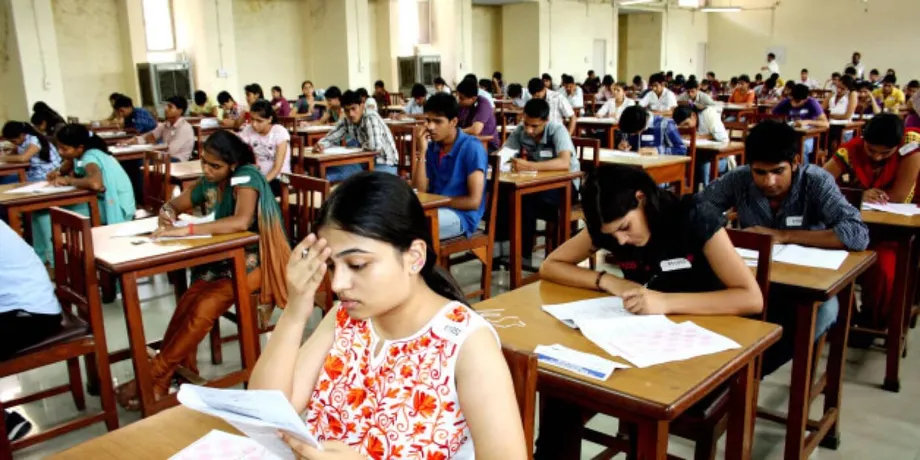
Handwritten examinations serve a related purpose. In a live, supervised setting, students have far less opportunity to consult AI tools. Teachers can assess what students can recall, explain and work through during the examination itself.
The return to handwriting has frustrated some students accustomed to typing. For instructors concerned about authorship, however, supervised writing offers a more direct view of a student's work than a document completed elsewhere.
Other assignments ask students to provide material connected to an activity they have carried out. Anthropology lecturers may require audio recordings of field interviews, while law professors use simulation exercises based on landmark cases. These tasks bring the assessment closer to a student's participation and decision making.
Oral quizzes, recordings and simulations also change what counts as evidence of learning. A finished piece of writing becomes one part of an assessment that can include a conversation, an interview record or a response to a practical situation.
Creative tasks bring students into the work
Dr. Swathi Shivanand at the Manipal Academy of Higher Education devised an assignment asking students to imagine a dialogue between two historical figures. The exercise calls for creativity and personal engagement rather than a conventional summary of course material.
Creative writing classes have used the college environment itself as the setting for assignments, with characters based on real students. Drawing on people and places familiar to the class has helped discourage AI use.
These approaches share a practical aim with field interviews and legal simulations: they ask students to do more than produce fluent text. Students must connect their answers to a particular setting, activity or imagined exchange.
Teachers are also trying to preserve the reasons for giving assignments in the first place. A debate should involve students considering competing ideas. A programming exercise should develop reasoning. A writing task should give students practice in choosing and expressing their own thoughts.
Some teachers are putting AI to work
Assistant Professor Arpitha Jain at St Joseph's University uses ChatGPT to generate multiple choice questions from printed readings. Her approach turns AI into a way of asking students to engage more closely with material they still need to understand.
Students initially resisted the method. Some later adopted it to study other subjects more effectively, using questions generated from readings as part of their preparation.
Prem Sagar is training fellow faculty members to use AI for lesson planning, presentations and detailed feedback. He also uses data analysis to identify patterns in student performance so that teaching can respond to where students are struggling.
These practices reflect a shift among some educators from prohibition toward responsible use. The same type of tool that can complete an assignment can also help a teacher prepare a lesson or help a student check their understanding.
The difference lies in the role assigned to it. In Jain's example, AI supplies questions that direct students back to the reading. In Sagar's work, it supports preparation and feedback while instructors continue to make teaching decisions.
Learning to question AI answers
Pallavi also teaches students to examine AI outputs critically. A response can sound confident and polished while containing misinformation or reflecting bias. Students need to consider the substance of an answer, rather than accepting it because its language sounds convincing.
She uses examples such as AI systems that screen resumes and can perpetuate gender and racial biases. The lesson connects classroom use to decisions beyond university, where automated tools can affect how people are assessed.
Privacy is another concern. Pallavi warns students about uploading personal information to viral AI applications. Using an application for a quick result can involve handing over information that deserves more careful consideration.
For students who rely on AI because they lack confidence in English, this critical approach also matters. More elaborate wording can make an answer appear stronger, even when the student needs to examine its accuracy, reasoning and relevance.
Universities abroad face similar pressures
Universities in the United States are also redesigning courses following the arrival of ChatGPT and similar tools. Professors are moving away from some essays completed at home and examinations that allow access to books, turning instead to classroom writing, oral examinations and group projects.
Some instructors are creating assignments based on personal reflection or analysis of current events. The aim is to require a student's own engagement with the subject rather than an answer that can be generated with little participation.
Universities are updating academic integrity policies to address generative AI directly. Tools such as GPTZero are being adopted for detection, while discussions of ethical AI use are becoming part of orientation for new students and required courses.
Other courses bring AI responses into the assignment itself. Students may be asked to evaluate an answer generated by AI or compare it with professional work. Such exercises are intended to build critical thinking and digital literacy, including the ability to judge information produced by automated systems.
The shared challenge is to maintain fair assessment while preparing students for a world in which AI tools are increasingly common. Institutions are pursuing that goal through different combinations of restrictions, redesigned assignments and instruction in responsible use.
The costs extend beyond the assignment
AI can make information more accessible and assist students with varied needs. It can also reduce opportunities to practise independent thought, creativity and authentic communication when students depend on it to do the central work of learning.
Energy use adds another concern. Interactions with systems such as ChatGPT can consume up to ten times more electricity than a standard web search. The convenience of producing an answer therefore comes with a resource cost as well as an educational choice.
Teachers must also manage the practical workload created by checking authorship, reviewing detection results and assessing rewritten submissions. At the same time, institutions need fair standards for students whose courses allow different degrees of assistance.
Bias, privacy and accountability become more pressing as AI systems grow more sophisticated and autonomous. Educators, policymakers and technologists face the task of developing guidance that allows useful applications while protecting learning and treating students fairly.
Indian classrooms already show several ways that effort is taking shape: Pallavi asks students to explain their submissions, Shivanand uses an imagined historical dialogue, Jain turns readings into questions, and Sagar trains teachers to use AI in their own work. Together, these practices place understanding, rather than the appearance of a finished answer, at the centre of assessment.
Key Points
- Indian colleges are responding to growing AI use in assignments, essays, presentations and communication.
- Students cite time savings, approaching deadlines, workplace expectations and insecurity about writing as reasons for using AI.
- Teachers are adopting oral quizzes, handwritten examinations, field interview recordings, simulations and creative tasks to check understanding.
- Turnitin and DrillBit offer AI detection, but false positives can complicate disciplinary decisions.
- O.P. Jindal Global University reversed its decision after law student Kaustubh Shakkarwar challenged being failed over alleged AI use.
- Some educators use AI for study questions, lesson planning, presentations, feedback and analysis of student performance.
- Universities in the United States are also changing assessments and updating academic integrity policies.
- Independent thinking, misinformation, bias, privacy, energy consumption and fair assessment remain central concerns.