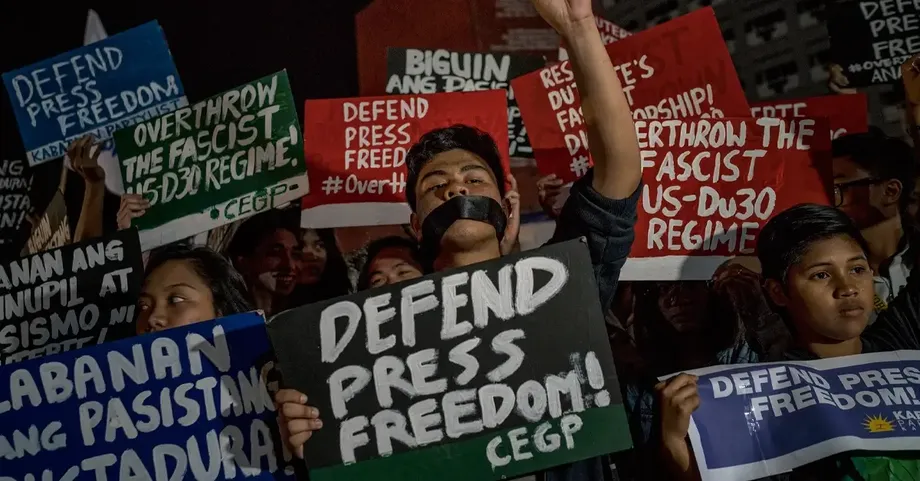
Violence and Financial Pressure Squeeze South Asian Journalism
At least 250 violations of media rights, 69 journalists jailed or detained, and 20 deaths in the line of duty mark the scale of South Asia's press freedom crisis in 2024–2025. The Asia Press Freedom Report 2024–2025, supported by the International Federation of Journalists (IFJ) and other global organizations, describes a region where physical attacks, restrictive laws and financial insecurity are making independent reporting increasingly difficult.
Contents
- Violence and Financial Pressure Squeeze South Asian Journalism
- Attacks Make Reporting More Dangerous
- Laws Put Pressure on Public Scrutiny
- Pakistan's Safety Crisis Meets a Labor Protection Gap
- Newsroom Finances Weaken Independence
- Bhutan Shows the Gap Between Access Policies and Practice
- Where the Eight Countries Rank
- Digital Platforms Open Space and Create Risks
- Women Remain Underrepresented in Leadership
- Reform Proposals Seek to Rebuild Protections
- Public Accountability Is at Stake
- Key Points
Bangladesh's journalists faced a particularly heavy toll during protests. Nearly 300 journalists and media workers were injured, many of them shot, according to the Bangladesh Federal Union of Journalists (BFUJ). Afghanistan recorded at least 172 violations against journalists and media outlets. Across the region, the reported deaths represented a dramatic increase from previous years.
The IFJ said at least 19 journalists remained behind bars at the time of publication. Many others faced legal harassment or arbitrary detention. Threats and intimidation, often involving law enforcement officers or political actors, added to the pressure on reporters trying to cover public affairs.
As of June 13, 2025, the crisis extended beyond the safety of individual journalists. News organizations were losing revenue, workers were losing jobs, and access to government information was becoming more difficult. These pressures affect what the public can learn about decisions taken in its name.
South Asia's journalists also faced an uneven digital transition. Blogs, podcasts and YouTube channels opened space for alternative voices, while misinformation, political manipulation and insecure employment created fresh problems. Reform proposals in several countries offered possible routes toward stronger protections, but their success depended on sustained political commitment and transparent implementation.
Attacks Make Reporting More Dangerous
The 69 journalists jailed or detained during 2024–2025 and the 19 still behind bars at publication describe different parts of the crisis: detention during the reporting period and continuing imprisonment. Alongside those cases, the report describes a wider climate of threats, harassment and violence that can shape journalists' daily decisions.
Bangladesh's protest injuries show how dangerous covering events in public can become. The BFUJ's figure of nearly 300 injured journalists and media workers, many shot, places the human cost at the center of the country's press freedom problems.
Afghanistan's at least 172 recorded violations involved both journalists and media outlets. Pressure on an outlet can affect an entire newsroom, while an attack or detention can remove an individual reporter from the work of gathering and publishing information.
Journalists facing these conditions may censor themselves, avoiding sensitive subjects because they fear violence, prosecution or detention. Readers then receive less scrutiny of people and institutions with power, even when a publication continues to operate.
Laws Put Pressure on Public Scrutiny
India's Digital Personal Data Protection (DPDP) Act, 2023, was introduced to protect privacy, but it has raised concerns about access to public information. Amendments to the Right to Information Act allow authorities to block content deemed "personal information," potentially limiting efforts to hold government accountable.
The practical concern is access: journalists seeking information about public decisions may encounter a broader reason for withholding it. Privacy protections and the public's ability to examine government conduct both shape what information reaches readers.
Sri Lanka's Online Safety Act has raised alarms because of its vague language and potential to restrict free expression. In the Maldives, the Attorney General's Office has challenged compliance with information requests, adding bureaucratic obstacles for journalists seeking official records.
Bangladesh's move from the Information and Communication Technology (ICT) Act of 2006 to the Cyber Security Act 2023 has brought little improvement in transparency or protection for journalists. Across the region, defamation laws, sedition charges and legislation addressing terrorism have been used to silence critical voices, encouraging self-censorship and discouraging investigative reporting.
Pakistan's Safety Crisis Meets a Labor Protection Gap
Pakistan experienced a surge in violence against journalists, with 2024 described as its most dangerous year for the profession in two decades. Physical danger was accompanied by weak employment protections across a large digital workforce.
The Institute for Research, Advocacy, and Development (IRADA) found that more than 250,000 digital media workers in Pakistan lacked legal safeguards for fair wages or safe working conditions. The figure connects the country's press freedom concerns to the conditions under which journalism and other digital media work are produced.
A reporter's ability to keep working depends on more than permission to publish. Pay and workplace safety matter, too. Workers without reliable protections face both the risks attached to their reporting and uncertainty about whether their employment can support them.
Newsroom Finances Weaken Independence
Shrinking advertising revenue, government interference and the rise of digital platforms have contributed to job losses and forced media closures across South Asia. Many journalists work without pay or under insecure conditions, leaving independent reporting with a fragile financial base.
Government advertising is a particular source of pressure. As media organizations become more dependent on public advertising spending, decisions about where that money goes can be used to influence editorial content. Financial dependence can therefore affect which stories newsrooms feel able to pursue.
The IFJ highlights the extreme insecurity facing freelancers and gig workers, whose work is often arranged by assignment rather than through stable employment. They face uncertain earnings alongside challenges associated with artificial intelligence (AI) and the move to digital publishing.
India's new labor codes encourage contract work, further weakening job security and professional standards. Across the region, these employment pressures sit beside legal restrictions and physical threats: a newsroom needs enough financial stability to keep reporters working, as well as the freedom to publish their findings.
Independent media sustainability is consequently part of the press freedom debate. When outlets close or staff leave because they cannot earn a living, the public loses reporting capacity even without a formal ban on publication.
Bhutan Shows the Gap Between Access Policies and Practice
Bhutan has issued guidelines intended to promote transparency, yet journalists report that official spokespersons are frequently unresponsive. The country illustrates a practical problem found across the region: an information policy can offer access on paper while reporters still struggle to obtain answers.
Bhutan also has an unusual practice of monthly media briefings by the prime minister and Cabinet ministers, an approach described as rare even globally. Those briefings provide a regular point of contact between government leaders and the press.
Despite that access, Bhutan's press freedom ranking fell from 33rd in 2021 to 152nd in 2025, a decline of 119 places and one of the steepest worldwide. Regular briefings coexist with continuing complaints about officials who do not respond to journalists.
Across South Asia, government officials are often unresponsive or insufficiently equipped to provide adequate information. Legal frameworks are also increasingly used to restrict access rather than support transparency. For citizens, the consequence is less reliable information with which to assess public decisions and take part in democratic life.
Where the Eight Countries Rank
Nepal held the highest position among the eight South Asian countries listed in the report's 2025 press freedom rankings, at 90th. Afghanistan was lowest, at 175th. The positions reflect a broader environment involving violence, legal restrictions, economic pressure and impunity, meaning a lack of accountability for abuses.
- Nepal: 90th.
- Maldives: 104th.
- Sri Lanka: 139th.
- Bangladesh: 149th.
- India: 151st.
- Bhutan: 152nd, down from 33rd in 2021.
- Pakistan: 158th.
- Afghanistan: 175th.
Bhutan's sharp fall provides the clearest comparison over time in these figures. The regional picture also shows that the challenges reach countries with different media systems and political circumstances. Physical safety, access to information and the ability to finance independent work all contribute to the conditions in which journalists operate.
Digital Platforms Open Space and Create Risks
Blogs, podcasts and YouTube channels have expanded across South Asia, creating alternatives to stagnating legacy media and giving a wider range of voices room to publish. These platforms can provide space for reporting and discussion when established news organizations face financial or political constraints.
Digital growth also brings concerns about editorial oversight and professional standards. Misinformation and hate speech can spread through the same channels that allow independent voices to reach audiences. Publishing more material does not automatically resolve the challenge of providing reliable information.
Encrypted messaging applications, including Telegram and Signal, have become vital tools for journalists seeking to communicate and publish without fear of surveillance or censorship. The report also identifies risks from AI tools and political actors manipulating information, with consequences for the integrity of journalism and public trust.
Women Remain Underrepresented in Leadership
Women hold few decision-making positions in South Asian media, according to the report, while women reporters continue to face widespread discrimination. The gender gap affects who has authority inside news organizations as well as who gets opportunities to report.
Limited representation in leadership narrows the perspectives involved in deciding what receives attention. The report connects this lack of diversity to the quality of journalism and the range of experiences represented in public discussion.
Workplace inequality adds another layer to the pressures already facing journalists. Safety, fair employment and access to editorial responsibility are connected parts of the conditions under which reporters can build and sustain their careers.
Reform Proposals Seek to Rebuild Protections
Bangladesh's interim government has drafted a Media Reform Policy 2025 intended to improve access to information and rebuild state institutions. India has a proposed Media Transparency Bill 2024 aimed at addressing media monopolies and regulating the distribution of government advertisements.
Bhutan is reviewing a proposal for a fair and transparent advertising policy and exploring support for independent and digital journalism. These proposals address the financial relationship between media organizations and the state, an area where funding decisions can affect editorial independence.
Nepal has consolidated its state broadcasters into the National Public Service Broadcasting Agency, a move welcomed as a step toward more accountable public media. Sri Lanka's new administration has pledged to address past crimes against journalists and repeal laws that weaken free expression.
The laws, rankings and proposals span several years:
- 2006: Bangladesh's ICT Act established an earlier legal framework later replaced by the Cyber Security Act 2023.
- 2021: Bhutan ranked 33rd for press freedom.
- 2023: India's DPDP Act and Bangladesh's Cyber Security Act became central to concerns about information access and journalist protections.
- 2024: Pakistan recorded its most dangerous year for journalists in two decades, while India's proposed Media Transparency Bill carried the same year.
- 2025: Bangladesh's interim government drafted its Media Reform Policy, and Bhutan's press freedom ranking stood at 152nd.
These initiatives remained at different stages as of June 13, 2025. Their ability to improve conditions depended on sustained political will, stronger legal protection and genuine transparency.
Public Accountability Is at Stake
The IFJ connects the region's violence, censorship and insecure media finances to the public's ability to hold power accountable. Independent journalism helps expose corruption, communicate public aspirations and give citizens information needed to make decisions.
The International Federation of Journalists, a global organization supporting journalists, described the situation in these terms:
Democracy cannot survive without press freedom, and as independent journalism continues to be threatened across South Asia by authoritarian policies, government censorship, and the subversion of justice, journalists persevere in an environment fixed against them. South Asian media continues to operate in conditions where the truth is obscured, and fight for their fundamental right of freedom of expression. It has never been more paramount to ensure the sustainability of free press and secure comprehensive protections for journalists.
For South Asian audiences, the combined pressures mean fewer opportunities to examine official conduct and hear diverse perspectives. Protecting journalists, improving access to records and supporting financially sustainable newsrooms address different parts of the same public need: dependable information about matters that affect people's lives.
Key Points
- South Asia recorded at least 250 media rights violations, 69 journalists jailed or detained, and 20 deaths in the line of duty during 2024–2025.
- The IFJ said at least 19 journalists remained imprisoned at publication.
- Nearly 300 journalists and media workers were injured in Bangladesh, according to the BFUJ; Afghanistan recorded at least 172 violations.
- Restrictive laws, difficult access to official information and insecure employment are weakening independent reporting.
- More than 250,000 digital media workers in Pakistan lack legal safeguards for fair wages or safe working conditions, according to IRADA.
- Bhutan fell from 33rd in the 2021 press freedom rankings to 152nd in 2025.
- Digital publishing offers space for alternative voices, while misinformation, discrimination and financial pressure remain concerns.
- Reform initiatives in Bangladesh, India, Bhutan, Nepal and Sri Lanka seek changes to information access, media funding, public broadcasting and journalist protections.