Unlocking the Power of a Common Vegetable
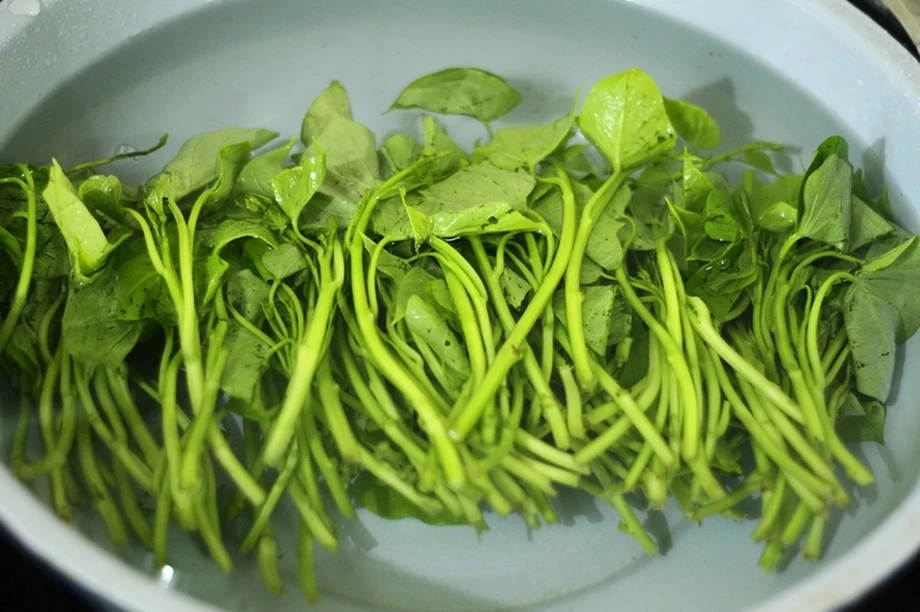
Sweet potato leaves are a staple in many households across Asia, prized for their affordability and nutritional density. These green leaves contain significant amounts of polyphenols, vitamin A, vitamin C, folic acid, calcium, and anthocyanins. Health experts frequently label them as superfoods due to their ability to support blood sugar control, reduce inflammation, protect the liver, and prevent cancer. Despite their reputation, the way these leaves are cooked dramatically changes their health value. A recent focus on processing techniques has revealed that a simple change in the kitchen can multiply the cancer-fighting potential of this common vegetable.
Contents
Dr. Chien Cheng-hung, Director of the Center for Prevention and Treatment of Liver Diseases at Chang Gung Memorial Hospital in Keelung, Taiwan, has spent years studying the impact of cooking methods on sweet potato leaves. His interest was sparked when he observed patients with late-stage liver cancer, who were not suitable for aggressive treatments, experiencing improvements after increasing their intake of these leaves. This clinical observation led him to review scientific literature to determine which cooking methods best preserve and enhance bioactive compounds.
Experts often receive questions from patients about whether boiling or stir-frying is superior. Rather than relying on intuition, Dr. Chien examined data from studies conducted in Taiwan and mainland China. The research provides specific guidance on how heat, water, and oil interact with the plant's cellular structure to release beneficial compounds.
Comparing Boiling and Stir-Frying
A study conducted in Taiwan involving 16 healthy adults directly compared two popular local cooking methods: boiling and stir-frying. In the boiling trial, 200 grams of sweet potato leaves were blanched in 2 liters of boiling water on high heat for one to two minutes. The leaves were then removed and mixed with two grams of soy sauce and two grams of minced garlic. In the stir-frying trial, five grams of vegetable oil were heated to 220 degrees Celsius. Minced garlic was fragrant, followed by the quick addition of the 200 grams of leaves for two minutes of rapid tossing. Finally, ten grams of soy sauce were added.
The results highlighted clear differences in nutrient retention. Boiling caused the leaves to lose 22.7 percent of their polyphenol content. Stir-frying was more efficient, with only a 17 percent loss. Furthermore, the body absorbed polyphenols from the stir-fried leaves at a rate of 36 percent, compared to 31 percent for the boiled leaves. The retention rate of nutrients was also higher in stir-fried leaves at 20 percent versus 13 percent in boiled leaves.
These figures confirm that stir-frying preserves more polyphenols than boiling, making it a strong option for home cooking. However, other research suggests that steaming may offer an even greater advantage.
The Superiority of Steaming
Research from mainland China compared five cooking methods: boiling, steaming, microwave cooking, baking, and deep-frying. The findings indicated that steaming was the most beneficial method for sweet potato leaves. After steaming, the total polyphenol content in the leaves increased by 9.4 percent. In contrast, boiling reduced polyphenols by 30 percent, microwave cooking by 25 percent, and deep-frying by 15 percent.
The antioxidant activity also varied significantly by method. Boiling and microwave cooking reduced antioxidant levels by 64 percent and 32 percent, respectively. Steaming increased antioxidant activity by 81 percent, baking by 30 percent, and deep-frying by 86 percent. This data positions steaming as a highly effective technique for boosting the health benefits of sweet potato leaves.
A study by the Taiwan Agricultural Research Institute further explored the effects of steaming. Researchers steamed sliced sweet potato leaves in boiling water for three minutes. Before cooking, the total polyphenol content in the leaves was 2.1 times higher than in the stems. After steaming, both the leaves and stems showed significant increases in total polyphenols and antioxidant activity. Compared to raw leaves, the total polyphenol content increased 4.5 times after steaming, while antioxidant activity increased 2.5 times.
Dr. Chien explains that the heat breaks down the plant cell walls, converting bound polyphenols into free polyphenols that are easier for the body to absorb. While boiling can also activate antioxidant activity, much of the polyphenol dissolves into the water and is lost when the water is discarded. Steaming minimizes this loss by keeping the compounds within the leaves.
Expert Insights on Plant Science
Dr. Mu Tai-Hua, Chief Scientist of the Fruit and Vegetable Processing and Quality Control Innovation Team at the Chinese Academy of Agricultural Sciences (CAAS), specializes in sweet potato processing. His research focuses on how domestic cooking methods affect polyphenols and antioxidant activity in sweet potato leaves.
Dr. Mu Tai-Hua emphasizes that the inactivation of oxidative enzymes during heat treatment prevents the oxidation of polyphenols, while the breakdown of complex protein complexes allows for more efficient extraction of these beneficial compounds.
A 2018 study published in the journal Nutrients by researchers from Wayamba University and Dalhousia University evaluated the effects of boiling, steaming, and frying on six edible leaf species. The study found that frying generally reduced major bioactives. However, steamed and boiled leaves of certain species, such as Centella asiatica, showed greater levels of polyphenols and antioxidant capacity compared to fresh leaves. The impact of cooking depends heavily on the specific leaf species and the cooking method used.
Another comprehensive review published in Nutrients in 2022 highlighted that sweet potato tubers are rich in complex carbohydrates, carotenoids, and phenolic compounds. The study noted that purple sweet potatoes contain high levels of anthocyanins, which contribute to their antioxidant properties. The review emphasized that processing technologies, including steaming, can help minimize the loss of these bioactive compounds.
The Science of Heat and Extraction
The key to maximizing the health benefits of sweet potato lies in understanding how heat affects the plant's cellular structure. Cooking softens cell walls, which facilitates the extraction of bioactives like polyphenols and carotenoids. Thermal processing can also inactivate polyphenol oxidases, enzymes that would otherwise break down polyphenols through oxidation.
During steaming, the food is exposed to steam but does not submerge in water. This method prevents the leaching of water-soluble nutrients, such as polyphenols and vitamins, which often occur during boiling. The heat still penetrates the plant tissue, breaking down cell walls and releasing bound nutrients into a form that the human digestive system can absorb more easily.
Dr. Chien recommends a specific home cooking technique to capture these benefits. He advises using the principle of little water, quick steaming, and adding oil at the end. The method involves adding a small amount of water to a pot and bringing it to a boil. The sweet potato leaves are then added and covered to steam for 30 to 60 seconds. Once the leaves are just cooked, the heat is turned off, a small amount of oil is added, and the leaves are tossed quickly before serving.
This technique limits the exposure of the leaves to water and shortens the cooking time, reducing the risk of losing water-soluble compounds. Adding oil at the end helps to trap the remaining nutrients and aids in the absorption of fat-soluble vitamins like vitamin A.
Additional Health Benefits and Precautions
Beyond polyphenols and antioxidants, sweet potato leaves offer a range of other health benefits. They are high in dietary fiber, which helps regulate digestion and prevents constipation. The mucilaginous protein in the leaves forms a protective layer over the stomach lining, reducing irritation and aiding digestion for those prone to bloating.
The leaves are also rich in vitamins A and C, as well as beta-carotene, which boost the immune system and help protect against infections. High chlorophyll content aids in detoxification and the removal of heavy metals. Additionally, the leaves are rich in potassium and low in sodium, supporting heart health and blood pressure regulation. Minerals like calcium, magnesium, and vitamin K contribute to bone health.
While sweet potato leaves are highly beneficial, they should be consumed in moderation. People with low blood sugar should be cautious, as the leaves can cause blood sugar to drop rapidly, especially when eaten on an empty stomach. The laxative effect is beneficial for constipation but can cause diarrhea if consumed in excess. The leaves also contain oxalic acid, which may increase the risk of kidney stones if eaten in large quantities over a long period.
Experts recommend pairing sweet potato leaves with protein-rich foods such as meat, fish, eggs, or liver to balance the nutrition. A study from Tennessee State University, published in BMC Complementary Medicine and Therapy, found that extracts from purple sweet potato leaves inhibited breast cancer cells by more than 96 percent in laboratory settings. However, experts note that this result comes from concentrated extracts and does not mean that eating the leaves directly provides the same level of cancer treatment.
Recommended Cooking Order
Based on the synthesis of research from Taiwan and mainland China, Dr. Chien has established an optimal order for cooking sweet potato leaves to maximize nutrient retention. The hierarchy is as follows: steaming is the most effective, followed by stir-frying, then boiling, and finally deep-frying. Steaming preserves the most polyphenols and boosts antioxidant activity without leaching nutrients into water. Stir-frying is a close second, offering high absorption rates. Boiling is effective but results in some nutrient loss to the cooking water. Deep-frying, while increasing antioxidant activity, adds oil and can degrade some heat-sensitive compounds.
For those who enjoy hot pot, Dr. Chien suggests blanching the leaves for the shortest time possible to prevent nutrients from dissolving into the broth. Alternatively, drinking sweet potato leaf tea is another simple way to gain the benefits without the risk of overcooking.
The research provides clear, actionable advice for home cooks. By simply adjusting water levels, cooking time, and the addition of oil, individuals can significantly enhance the health benefits of a common, affordable vegetable. The findings from medical institutions and agricultural research centers converge on the message that steaming is the gold standard for preparing sweet potato leaves.
Key Points
- Steaming sweet potato leaves increases total polyphenol content by 9.4 percent and antioxidant activity by 81 percent.
- Compared to steaming, boiling causes a 30 percent reduction in polyphenols and a 64 percent drop in antioxidant activity.
- Dr. Chien Cheng-hung recommends steaming for 30 to 60 seconds with minimal water and adding oil at the end.
- A study in Taiwan showed stir-frying retains more polyphenols (17 percent loss) than boiling (22.7 percent loss).
- Steaming can increase total polyphenol content by up to 4.5 times compared to raw leaves.
- Concentrated extracts from purple sweet potato leaves inhibited breast cancer cells by over 96 percent in lab tests.
- The optimal cooking order is steaming, stir-frying, boiling, and then deep-frying.
- People with low blood sugar should consume sweet potato leaves in moderation to avoid rapid drops in glucose levels.