Three Plots at Hung Shui Kiu, and One University That Wants Them All
The University of Hong Kong wants all three campus plots on offer at the Hung Shui Kiu University Town, and its president has put the case plainly. Zhang Xiang argues that dividing the sites among several institutions, an approach he described as 'average-ism', would leave each campus too small to reach the scale a university of international standing needs. His preference is one large site where HKU could build an international campus and bring partner universities and companies onto the same ground.
Contents
- Three Plots at Hung Shui Kiu, and One University That Wants Them All
- What One Town, Five Elements Means in Practice
- The Case for a Single Campus
- The Timetable the Government Has Set
- Who Pays for the Campuses
- The Loop, a HK$3 Billion Gift and San Tin's Flagship
- More Research Places and More Money for AI
- What Has Not Been Decided
- Key Points
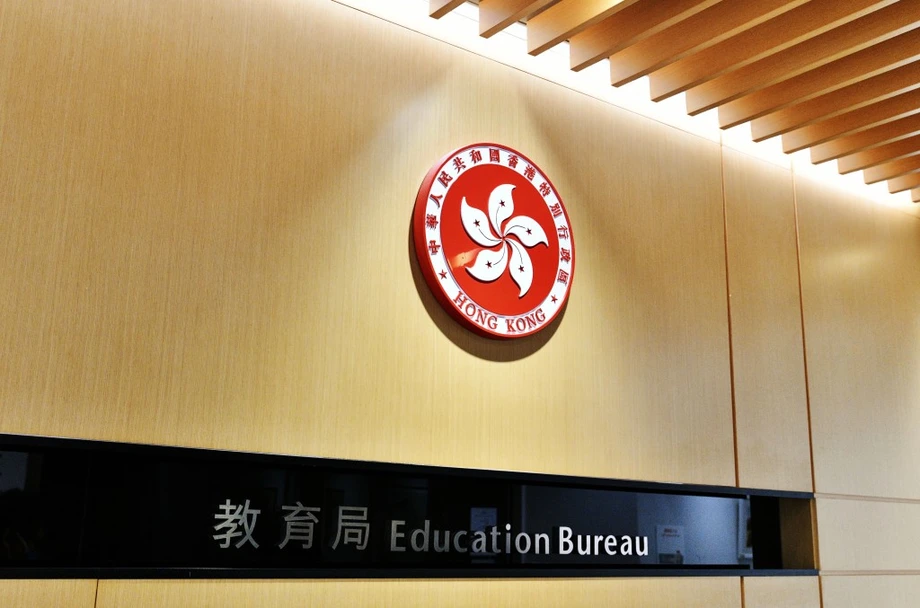
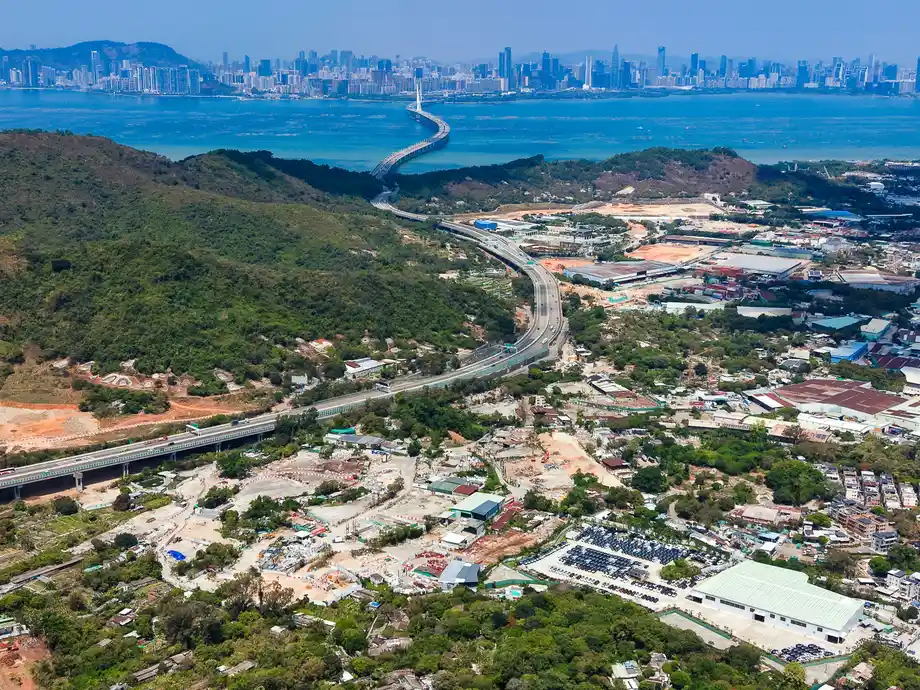
The plots make up the campus area of the Hung Shui Kiu University Town, one of three university towns rising in the Northern Metropolis. Planners have tied the campus to the industry zones beside it: the Hung Shui Kiu Industry Park, the Lau Fau Shan Digital Technology Hub, Yuen Long InnoPark and the Hong Kong Microelectronics R&D Institute. The Education Bureau describes the district as a 'Centre for Applied Post-secondary Education in Smart Manufacturing and Global Talent Cultivation'.
Institutions have until 31 December 2026 to apply. Submissions go to the Secretariat of the Designated Vetting Group at 7/F, East Wing, Central Government Offices, 2 Tim Mei Avenue, Tamar, or by email to [email protected], and enquiries can be made on 2115 2306. The Education Bureau's application page carries the guidance notes and the submission details for institutions weighing a bid.
What One Town, Five Elements Means in Practice
Each of the three towns is planned around five elements the government lists as education, technology, industry, talent and urban development, a formula it calls 'One Town, Five Elements'. A campus is not meant to sit behind a fence. Laboratories, factories, hostels, shops and transport are supposed to grow around it so that research and production share the same district.
The three towns are San Tin, inside the San Tin Technopole and the Ngau Tam Mei new development area; Hung Shui Kiu, inside the Hung Shui Kiu and Ha Tsuen new development area; and Ta Kwu Ling, in the Ta Kwu Ling new development area, once known as the New Territories North new town. Their campus areas add up to about 300 hectares. With the industry, conservation, sports and community land attached to them, the planned area passes 1,000 hectares, which officials say is larger than in earlier plans and can be adjusted later, with campus land added if demand justifies it.
Each town has its own job. San Tin is aimed at medicine, life and health technology, artificial intelligence, robotics and microelectronics, and stretches across the Loop Hong Kong Park, the San Tin Technopole and the Ngau Tam Mei site where the Hong Kong University of Science and Technology plans a medical school and a teaching hospital. Ta Kwu Ling adds arts and blue-green elements and holds land back for later, with the Hong Kong Academy for Performing Arts expected to open a second campus there. Hung Shui Kiu takes applied tertiary education for smart manufacturing and the training of international talent.
The Case for a Single Campus
Zhang has welcomed the decision to make university towns the spine of the Northern Metropolis, along with the five-element idea behind it. The benefit he points to is a cluster effect: shared laboratories, staff appointed across departments, and research projects that pull in leading institutions from the mainland and overseas as well as companies able to turn results into products.
Others are already moving. Yip Yuk-yu, president of the Hong Kong University of Science and Technology, said her university has been presenting the university town vision to top universities abroad and has drawn broadly positive responses, with many expressing interest in taking part in construction, joint research or setting up international campuses. HKUST will bid for the Hung Shui Kiu site, drawing on its strengths in life and health technology, artificial intelligence and microelectronics, and will link its work to the Loop Shenzhen Hong Kong Innovation and Technology Co-operation Zone and the San Tin Technopole.
Geography strengthens the argument at Hung Shui Kiu. The campus sits in a district already assigned to advanced manufacturing and microelectronics, and the government intends to build the Hung Shui Kiu Industry Park, a digital technology hub at Lau Fau Shan and an advanced construction industry park in Yuen Long South. A large campus next to those sites would give one institution room to house several faculties and research centres at once, which is harder to arrange when a plot is cut into pieces.
The Timetable the Government Has Set
The plan published on 16 September puts the Hung Shui Kiu campus first, ahead of the other two towns, and sets out dates that institutions can plan around.
- 2026: allocation of campus land at Hung Shui Kiu begins, and applications to the Education Bureau close on 31 December 2026.
- 2027 to 2028: the first institutions are expected to move in.
- 2027/28: an extra HK$20 million a year for knowledge sharing starts, and the number of Hong Kong PhD Fellowship places begins to rise each year.
- 2029/30: fellowship places reach 550 a year, and HK$40 million a year from the Science and Technology Innovation Fund starts flowing for the wider use of artificial intelligence in higher education.
- 2030: the Tuen Ma Line's Hung Shui Kiu station is due to open, and Ta Kwu Ling begins releasing land.
- 2030/31: government-funded research postgraduate places reach 9,600.
Who Pays for the Campuses
Money is the second question. The government says it will coordinate support from itself, from institutions and from society through means such as waiving land premium and offering loans, while universities can draw on reserves or issue bonds to raise funds and bring in private capital. Land will be allocated after taking account of each institution's circumstances and the disciplines it proposes to build. Hostel construction is to be sped up through a mix of models to add beds.
The plan also sketches a route from classroom to factory floor modelled on practices on the mainland. Industry sets the problem, students carry out the research, the results go back to the companies, and graduates are hired by the firms that posed the questions. Student hostels and flats for talent are meant to sit beside the campuses so that teaching, research, living and working form one system.
Oversight has been raised a level. The University Town Planning and Construction Group, led by the Chief Secretary, becomes the University Town Construction and Development Committee, with expert members from outside government added to steer the long term strategy.
The Loop, a HK$3 Billion Gift and San Tin's Flagship
San Tin's first building is due by the end of 2026 and will be named Loop Campus One, a base meant to draw research teams from local and overseas universities along with the InnoHK research platform and other projects. The building will be let to universities, which can strengthen a bid by teaming up with partner institutions and companies.
The Hong Kong Jockey Club Charities Trust has set aside HK$3 billion for a second building in the Loop area, a teaching and research block for life and health sciences with more than 30,000 square metres of floor area. The club said further details would be announced in due course. Together the two buildings are presented as the opening of the wider university town programme.
More Research Places and More Money for AI
The plan adds capacity as well as concrete. Places on research postgraduate courses funded by the University Grants Committee will rise by about 30 per cent, from 7,200 now to 9,600 by the 2030/31 academic year. Hong Kong PhD Fellowship places will climb from 400 a year to 550 by 2029/30. An extra HK$20 million a year from 2027/28 will support knowledge sharing and the transfer of research results, and HK$40 million a year from 2029/30 will push artificial intelligence and emerging technology into teaching across the sector.
For Hung Shui Kiu, the practical effect is a deeper pool of doctoral students and research staff to fill the laboratories that the winning institutions are being asked to build, and money to help them work with the factories and technology firms next door.
What Has Not Been Decided
No institution has been awarded a plot, and the government has not said how many plots any single university may hold. That leaves Zhang's proposal for all three unrewarded for now, and the cost of an HKU campus at Hung Shui Kiu has not been published. The Education Bureau has also not said how many applications it expects, or when the Designated Vetting Group will announce results.
The dates also sit at different points on the calendar. The bureau's application window runs to 31 December 2026, while the plan says campus land allocation began this year and the first institutions will move in during 2027 and 2028. How quickly a bidder can be chosen, and how soon building can start on a site that is still being formed, remains open.
Key Points
- Hong Kong has opened three campus plots at the Hung Shui Kiu University Town, with applications due by 31 December 2026.
- The University of Hong Kong wants all three, with President Zhang Xiang saying an 'average-ism' split would leave each campus too small.
- The campus area is linked to the Hung Shui Kiu Industry Park, the Lau Fau Shan Digital Technology Hub, Yuen Long InnoPark and the Hong Kong Microelectronics R&D Institute.
- The three university towns cover about 300 hectares of campus land and more than 1,000 hectares in total planning area.
- The first institutions are expected at Hung Shui Kiu in 2027 and 2028, with the Tuen Ma Line station due in 2030.
- Support includes waivers of land premium, loans, reserves and bonds, plus faster hostel construction.
- Research postgraduate places rise from 7,200 to 9,600 by 2030/31, and PhD fellowships from 400 to 550 a year by 2029/30.
- The Jockey Club has set aside HK$3 billion for a life and health sciences building at the Loop with over 30,000 square metres of floor area.
- HKUST will bid for Hung Shui Kiu and has pitched the vision to overseas universities interested in joint research and international campuses.