Taiwan Voters End Its Nuclear-Free Policy
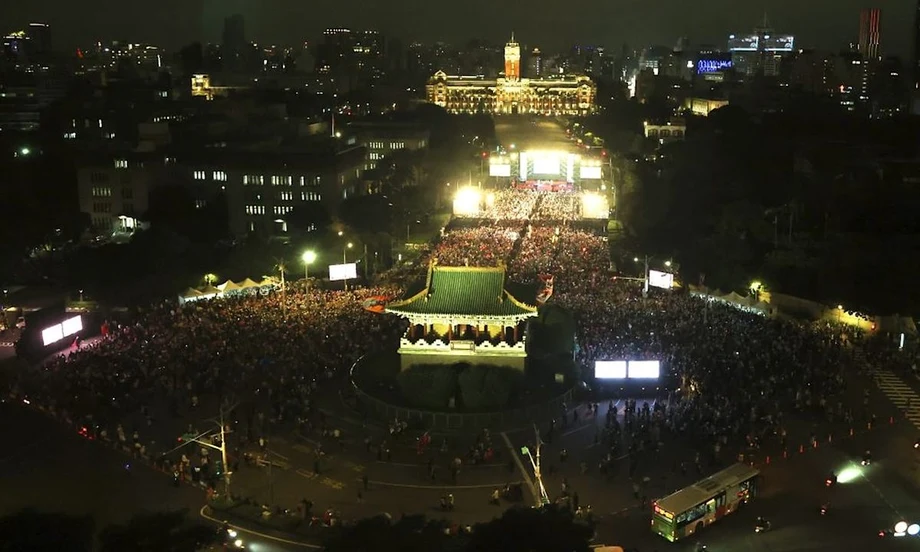
Taiwan voters have ended the island's 'nuclear-free homeland' policy, a rule that aimed to phase out nuclear power. The vote was Referendum Case No. 22 on the national ballot, held on Saturday, November 28, alongside local elections. The Central Election Commission counted 7.43 million yes votes and 4.55 million no votes. The measure needed 5,000,959 yes votes to pass, and it cleared that threshold with room to spare.
Contents
Yes votes made up 61.9 percent of ballots cast, while 38.0 percent opposed the measure. The 7.43 million yes votes equal about 37 percent of Taiwan's 20 million eligible voters, well above the 25 percent threshold. The result follows the shutdown of Taiwan's last operating reactor in May 2025, about 18 months before the vote. Nuclear power was guided by government policy rather than banned by law, so the referendum removes the policy itself. The vote gives the government, led by the Democratic Progressive Party (DPP), a political mandate to address nuclear power, but no plant is built or restarted by the vote alone.
Why Taiwan's Power Supply Is Under Pressure
Taiwan imports more than 90 percent of its energy. Nearly half of its electricity came from liquefied natural gas, or LNG, which is natural gas cooled into liquid so it can be shipped by sea. LNG produced 48 percent of Taiwan's power in 2025. About one third of the island's LNG imports come from Qatar, and Iranian strikes in March took about 17 percent of Qatar's LNG capacity offline.
Demand is climbing as artificial intelligence and chip factories expand. Chipmakers such as TSMC need steady power, and the Nationalist Party framed the referendum as a link to the economy and the AI industry. Nuclear plants provide stable electricity with low carbon emissions, which is why governments around the world are leaning more into atomic energy for data centers and other heavy power users.
Aniket Autade, a senior analyst from Rystad Energy, an energy research firm, said that even after counting refurbishment costs, running the nuclear plants would be cheaper than the alternatives. He also linked a restart to gas prices.
A nuclear restart would meaningfully reduce Taiwan's import dependency on LNG, particularly valuable during periods of high global prices.
Can Taiwan's Reactors Restart Soon?
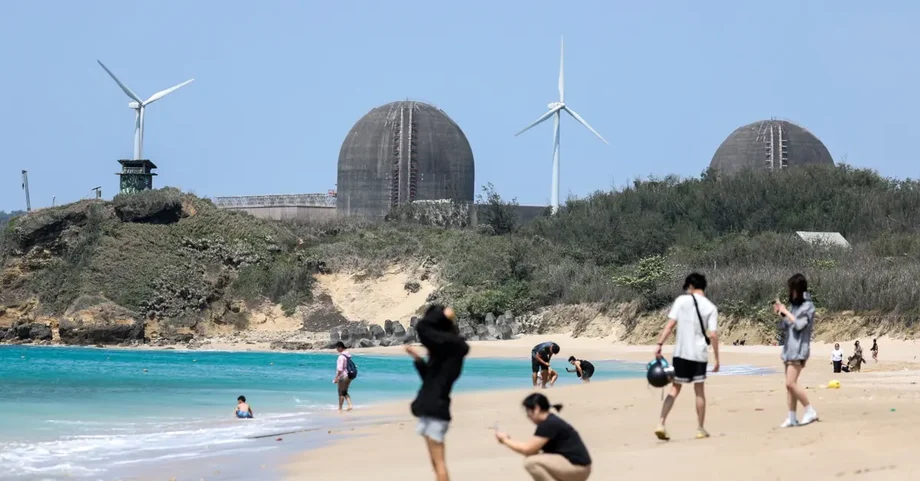
No reactor can restart immediately. Taiwan Power Co. is assessing the possible restart of the Maanshan and Kuosheng plants, and both must still clear safety and regulatory requirements. The Maanshan reactor, which is being refurbished, could generate again in 2028 at the earliest after safety reviews. Other figures put the refurbishment at about two years, which points to the same timeframe. No date was given for a restart decision on either plant. Until then, Taiwan will keep buying LNG.
The cabinet, known as the Executive Yuan, said it would respect the vote but would consider nuclear power only under three conditions. Its spokesperson, Michelle Lee, gave the position in a statement on Saturday night.
Nuclear safety must be assured, a solution for nuclear waste must be in place, and there must be social consensus.
The cabinet also said it would keep expanding renewable energy such as wind, solar, geothermal, hydrogen, biomass and ocean energy.
Who Pushed the Vote and Why?
The Nationalist Party, called the Kuomintang or KMT, initiated the referendum and passed it with help from its coalition partner, the Taiwan People's Party. The KMT has historically supported nuclear power. Its party head, Cheng Li-wun, cited the results on Saturday night and said Taiwan must act fast.
restart nuclear energy as quickly as possible
President Lai Ching-te had said he would not rule out nuclear energy in Taiwan's energy choices. That stance differs from his predecessor Tsai Ing-wen and from the DPP, which has long opposed the nuclear industry.
Did Voters Talk About Nuclear Power?
Wei-hao Huang, a political science professor at National Sun Yat-sen University, said he barely saw the issue during the campaign. He said the vote results suggested it was driven by KMT voters.
I really didn't see people talk about this, except for when the Legislature initially raised this.
The KMT wanted to use this issue to mobilize their voters to raise the local election's voter turnout.
The question appeared on the same ballot as the local races, so voters decided it alongside candidates for local offices.
Four Nuclear Votes Since 2018
This is Taiwan's fourth vote on nuclear power since 2018, and the earlier results shaped the path to this one.
- 2018: Voters backed scrapping a legal requirement to end nuclear generation by 2025.
- 2021: A vote on reviving the island's fourth nuclear power plant failed.
- 2025: A vote on extending the Maanshan facility failed.
- May 2025: Taiwan's final operating reactor shut down.
- November 28, 2026: Voters backed ending the nuclear-free policy.
- 2028: The earliest year given for a Maanshan restart, after safety reviews.
What the Vote Means Beyond Taiwan
Taiwan rivals South Korea in semiconductors, and both countries import more than 90 percent of their energy. South Korea's government broke ground in Donghae, Gangwon State, on an AI data center with a capacity of 2.4 gigawatts that will cost up to 120 trillion won. South Korea's President Lee Jae-myung warned about the race for AI leadership.
a silent war among nations is under way to lead the AI order, stressing that falling even a single step behind could leave us a permanent follower
Japan's Tokyo Electric Power plans to invest about 85 trillion won over nine years in transmission networks and reactor construction. That works out to about 9.4 trillion won a year. The company will also help AI data centers with site selection and permits. In South Korea, a survey showed eight in ten citizens agree new reactors are needed, while the government has pledged to phase out coal by 2040.
Key Points
- Voters backed ending the 'nuclear-free homeland' policy, with 7.43 million yes and 4.55 million no votes.
- Yes votes made up 61.9 percent of ballots cast and cleared the 5,000,959 threshold.
- LNG supplied 48 percent of Taiwan's power in 2025, and about one third of the LNG comes from Qatar.
- Maanshan could restart in 2028 at the earliest, and no restart decision date has been set.
- The cabinet will consider nuclear power only if safety, a waste solution and social consensus are in place.