A Jamshedpur Boy Who Broke the Family Pattern
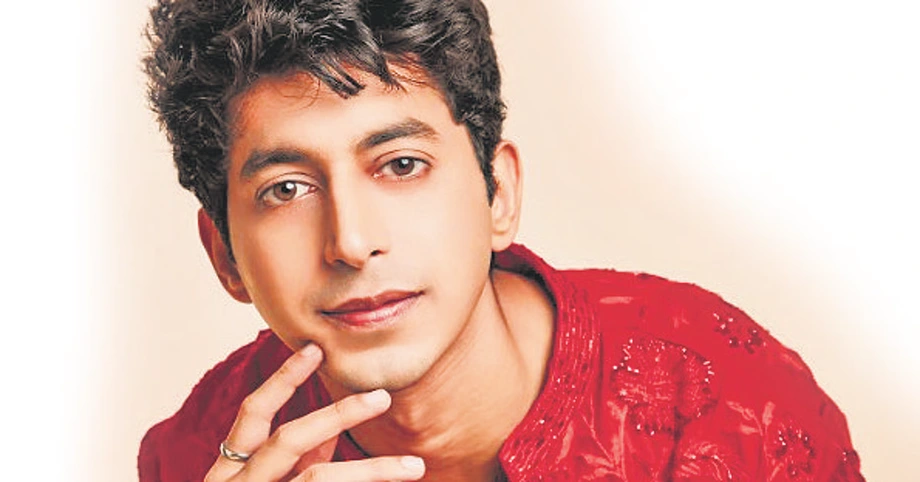
Mihir Ahuja, 28, grew up in Jamshedpur in a house where, by his own description, everybody had done an MBA and nobody had ever performed on a stage. On 29 November 2026, on the third day of Sahitya AajTak 2026 at the Major Dhyan Chand Stadium in New Delhi, he sat beside the actor Dalai and explained how a boy from that household ended up in front of a camera rather than behind a desk.
Contents
- A Jamshedpur Boy Who Broke the Family Pattern
- Everyone in My House Has Done an MBA
- From Dance Classes to a School Dance Group
- What Amitabh Bachchan and Anupam Kher Taught Him
- The Three Months Off School That Started Dalai's Career
- A Name That Means Ocean
- Social Media Went From Optional to Essential
- Nine Years in Mumbai and a Bigger House for His Parents
- The AI Offer He Said No To
- Pankaj Tripathi Closes the Festival With a New Band
- Shams Tahir Khan and the Interview That Went to Court
- Why Writers Keep Returning to the Past
- Key Points
The session covered the parts of an acting career that rarely reach a trailer: the dance classes a mother insisted on, a beatboxing phase at 15, the small roles that came before the big ones and the odd reason Dalai first agreed to face a film camera. Dalai played Madhuri Dixit's daughter in the film Aaja Nachle.
Ahuja and Dalai both belong to the generation the industry now calls Gen Z, and both reached films by routes that had little to do with film families. Their answers described a business where talent still opens doors, and where a phone screen and a follower count increasingly decide how wide those doors stay open.
The two actors spoke on a stage that hosted poets, novelists and reporters across three days, and their conversation kept returning to the practical question every newcomer faces: how work arrives, and who decides.
Everyone in My House Has Done an MBA
Asked when he first realised he wanted to act, Ahuja pointed to a family with no connection to films at all. His parents expected him to follow the same academic road as everyone else at home.
Everyone in my house has done an MBA. My parents also thought I would do the same. But I was interested in the performing arts from the very beginning, because nobody in my family has performed anything on a stage, not even remotely.
That absence became the reason rather than the obstacle. With no cousin, uncle or aunt to copy, Ahuja built a stage career out of hobbies that his family treated as after school activities.
From Dance Classes to a School Dance Group
Ahuja credited his mother for the first push. She signed him up for classes of every kind as a child, and dance came first.
It started with dance, and the credit goes to my mother. She made me join every kind of class as a child. At that time it was more of a hobby than a career. Then I liked dance so much that I started a dance group at school. I was also beatboxing at 15 or 16. But then I felt I did not want to make a name only as a dancer or only as a singer. I want to be an actor, and an actor should have every kind of talent.
Another habit at home pointed the same way. Ahuja said he used to mimic everyone in the family, and the laughter that followed gave him the push toward acting. The boy who had never seen a relative on stage found his first audience at the dining table.
Beatboxing, for anyone who has not met the term, is the art of making drum sounds and rhythms with the mouth, lips and throat. For a teenager with no instrument, it was a free way to perform.
What Amitabh Bachchan and Anupam Kher Taught Him
Ahuja has shot an advertisement with the cricketer Virat Kohli and has worked alongside Amitabh Bachchan and Anupam Kher. From those sets he took away one observation about what keeps a performer in demand for decades.
The one thing I have seen in common among all the big stars is that they treat every day as their first day. It feels as if they were born today. On a shooting set they treat each day as the first day. They learn from the beginning. Anupam sir learns on set like a child. I learned from him that learning should never stop. Even after more than 500 films, Anupam sir wants to grow. Aamir Khan sir still attends acting workshops.
The lesson, as he described it, is that experience has not made the veterans quicker to finish and slower to learn. Anupam Kher has crossed 500 films and still wants to grow, Ahuja said, and Aamir Khan still turns up for acting workshops.
The Three Months Off School That Started Dalai's Career
Dalai was asked how her mother came to encourage acting in a household where parents usually push studies. Her answer had little to do with ambition.
At that time I did not know what acting and all of this was, but I said yes anyway. When I found out I would not have to go to school for three months, I said I was definitely going to the set, and that is how my acting journey began.
The offer of a long break from the classroom became the offer she could not refuse, and the set became a place she stayed. Her recollection drew one of the lighter moments of the session, a reminder that many film careers begin with a child saying yes to something she does not yet understand.
A Name That Means Ocean
The actor also explained where her first name comes from. Dalai means ocean, and her mother liked the meaning enough to make it permanent.
The name and the story behind it were part of a conversation about how much of a career is planned and how much arrives by accident. In her telling, almost none of it was planned. A school break opened the door, and the work kept it open.
Social Media Went From Optional to Essential
Ahuja began working in 2017 and created his Instagram account in 2018. At the time, he said, he did not feel the platform was doing anything for him.
When I started in 2017, Instagram was not that popular. Social media became more popular after Covid. I made my Instagram account in 2018. But I never felt the need for Instagram, because my acting and my skills got me work. But in today's times everything is on social media. So now it has become necessary.
He described the same shift in another way: he began his career thinking that his only job was to act, with no grasp of the business side of films. The pandemic, in his reading, blurred the line between social media and the film industry, and a social presence became part of the job description rather than an extra.
Nine Years in Mumbai and a Bigger House for His Parents
Mumbai has been Ahuja's home for nine years. His latest role, Ansh in the film Dilwali Diwali, follows an NRI who returns home for the festival and is resentful that his parents have rejected the comfortable life he designed for them. What Ansh considers convenience is an inconvenience for parents attached to a way of living that shaped them.
For an actor who left Jamshedpur for Mumbai, the part landed close to home.
This character felt personal to me. I have been staying away from home for nine years. I have got my own house here, and my only aim now is to bring my parents to a bigger house. But as children, we never really ask them whether they want that change. This character helped open my mindset.
His year also included the role of Flight Lieutenant Balakrishna in Operation Safed Sagar. His breakout came earlier, as the talkative, food loving Jughead in Zoya Akhtar's The Archies, a film that served as a launchpad for Suhana Khan and Agastya Nanda and in which Ahuja stood out. Before those parts came voice work, endorsement shoots and small roles in films such as Super 30.
Uncertainty has travelled with the rise. Ahuja said the hustle never stops for people in creative fields, and that nobody has security in any line of work now. The worry, he added, arrives when a project ends, the invisible thought about what comes next. He is clear about one limit: he does not want to work only for money.
The AI Offer He Said No To
The newest pressure on a working actor, in his account, is the digital replica. A digital replica is a model of a performer's face and body, built on a computer, that a studio can put in front of a camera without the actor on set. Ahuja said he has turned down several lucrative offers rather than give up his rights as a performer.
Recently, I was asked to share a 360-degree image of myself, with no requirement for me to be physically present on set, as they would shoot with my AI-driven model. My question was: what about my creativity?
On the question of imitation, he named two figures whose example he keeps. Having spent time with Shah Rukh Khan and Virat Kohli, Ahuja said both taught him the value of hard work, and something more specific about ambition.
These two men don't want to be someone else.
Pankaj Tripathi Closes the Festival With a New Band
The closing session belonged to Pankaj Tripathi and his wife Mrudula Tripathi, who presented the first performance of their band Tatsat and brought the three day festival to an end with music, a love story and jokes at his own expense.
Mrudula described where the idea began. About five years ago the couple travelled to Kolkata and visited the Dakshineshwar Kali temple, where she read a line beneath a statue of Ramakrishna Paramhansa: as many faiths, so many paths. She said the world lacks love, and that there should be love, which is the thought the band grew from. Pankaj gave the project his full support.
Household disputes, by their telling, run to the price of pillows and bedsheets rather than anything serious. Pankaj said he does not want every task done his way, so his wife works as she pleases, and he smiled that he is a democratic man. Mrudula said the management of the home is where her husband fails, and that when he is home he makes everyone's life difficult until the shoot schedule looks like a relief.
The love story they shared began on a train to Kolkata. A book they were both reading on the Danapur and Howrah Express made them laugh, and late at night an older passenger asked Pankaj why he was still awake while Mrudula slept on the upper berth. Pankaj replied that the whole world was looking upward and his fortune would rise from there. The passenger blessed the pair and, in Pankaj's telling, matched them before their parents did.
Politics does not feature in his plans. Pankaj said he follows elections but has no interest in entering politics, and that success may come once in a life, but the work has to be meaningful. He closed by reciting lines from Kedar Nath Singh and Atal Bihari Vajpayee's well known poem Oonchai, leaving the hall both moved and lifted.
Shams Tahir Khan and the Interview That Went to Court
A different kind of stage memory came from Shams Tahir Khan, a senior executive editor at Aaj Tak who had joined the channel shortly before the Parliament attack of 13 December 2001. He had come from print reporting in Delhi, where his contacts in the police had grown useful.
Five accused, including Afzal Guru, were arrested after the attack and held at the Special Cell office in Lodi Colony. Khan described how the central government decided that interviews should be conducted on one or two channels so that the Pakistan connection would be established and the role of Jaish would come out. The home minister at the time was LK Advani, and Khan kept in touch with the Delhi Police Commissioner, the Special Cell's DCP Ashok Chand and ACP Rajveer Singh. Word finally came that an interview with Afzal Guru was possible. The day was Eid, and it was Khan's day off.
He went without a prepared list of questions, as he always did. Most of what he asked concerned the conspiracy and who was behind it. One question stood apart.
The things you people do defame Muslims across the whole country. Does the entire community not have to pay the price because of a few people?
Afzal Guru, according to Khan, admitted the point. During the conversation he also named professor SAR Gilani of Delhi University and said Gilani knew nothing about the conspiracy and had no role in it.
- 13 December 2001: the Parliament attack takes place; five accused, including Afzal Guru, are held at the Special Cell office in Lodi Colony.
- Days later, on Eid: the interview is recorded after a week of waiting for police clearance.
- Broadcast: ACP Rajveer Singh asks for a particular line to be cut, and Khan removes it.
- About six months later: the full uncut version goes on air by mistake during anniversary programming.
- In court: a judge has a television brought into the courtroom and the recording is played before the accused and the reporter.
- Later: the decision on Gilani's release refers to the interview.
When the uncut interview aired, ACP Rajveer Singh called to complain that the line he had asked to be removed was back on television. Khan told him it had been a mistake and that he had not known. The consequences went further than either expected. Gilani's lawyers and human rights activists seized on the statement, arguing that if Afzal Guru himself said Gilani knew nothing about the conspiracy, the charges against the professor were open to question.
The judge questioned Khan about the interview and the facts it contained. Looking back, Khan said the decision to cut a line at police request was a mistake.
Looking back, I feel I should not have removed any line from that interview at the police's request. At the time I thought the police were my source and removing one line was no big deal. Later I understood how much legal weight that one line could carry.
Why Writers Keep Returning to the Past
The festival's quieter counterpoint came from three writers on the final day. Laxmi Puri, a former diplomat and author, Namita Gokhale and Navtej Sarna, also a former diplomat and a writer, took part in a session titled Why Does the Past Fascinate Writers, and How. The three discussed the hold of history on literary work, the inheritance of the colonial period and the pull of mythological tales.
The pairing sat well with the film conversations of the previous days. Actors spoke about learning from veterans who behave like beginners, and the writers described why stories from long ago keep drawing new tellers.
Key Points
- Mihir Ahuja and Dalai spoke on the third day of Sahitya AajTak 2026 at the Major Dhyan Chand Stadium in New Delhi on 29 November 2026.
- Ahuja, 28 and from Jamshedpur, said his whole family had done an MBA and none had ever performed on a stage.
- He credited his mother for his start in dance, and said mimicry at home pushed him toward acting.
- His lessons from senior stars: Anupam Kher keeps learning after more than 500 films, and Aamir Khan still attends acting workshops.
- Dalai, who played Madhuri Dixit's daughter in Aaja Nachle, said she accepted the role because it meant three months away from school.
- Dalai said her name means ocean, a meaning her mother liked.
- Ahuja said he has turned down lucrative offers to allow AI models of himself to be filmed without him, asking what would happen to his creativity.
- Pankaj Tripathi and his wife Mrudula Tripathi launched their band Tatsat on the closing day, an idea that began at the Dakshineshwar Kali temple in Kolkata.
- Shams Tahir Khan recalled interviewing Afzal Guru after the 13 December 2001 Parliament attack, and said the uncut version later reached a courtroom in the case against professor SAR Gilani.