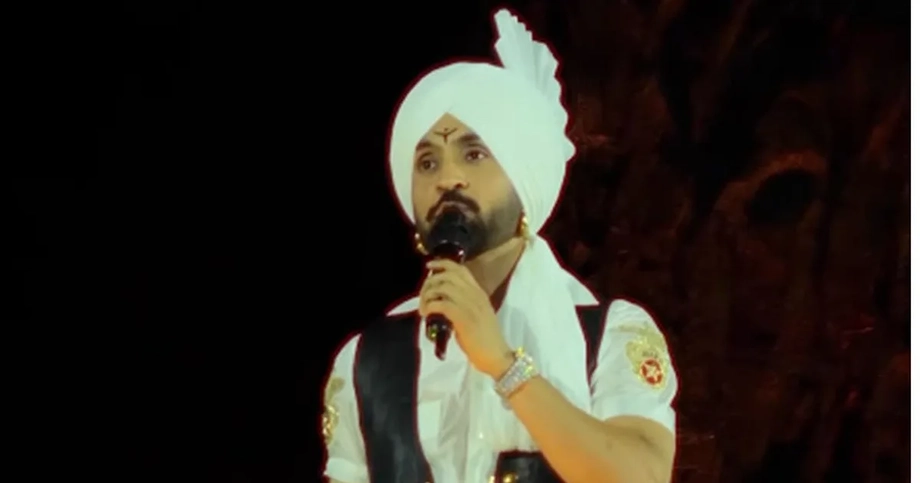
A racecourse surrounded by police, and a crowd that still came
More than 500 Mumbai Police personnel guarded Diljit Dosanjh's concert at Mahalaxmi Racecourse in South Mumbai on Friday, November 27, 2026, after an email threatened bombs, grenade attacks and improvised explosive devices at the show and other city locations. Bomb disposal teams searched the grounds, checks were expanded from three entrance gates to five, and cars were banned from streets within 500 to 700 metres of the venue.
Contents
- A racecourse surrounded by police, and a crowd that still came
- Dosanjh tells fans their courage gave him strength
- Five gates, bomb squads and an extensive list of banned items
- The emails that placed the tour on alert
- A political demand to stop concerts at two Mumbai venues
- Drug screening results in two arrests
- Inside the performance: Morni, Malhotra and a final bow
- Bengaluru investigation continues as the tour moves on
- Key Points
The 42-year-old singer and actor went ahead with the Mumbai stop of his RuPay AURA India Tour 2026 despite five bomb threats connected to his concerts having been reported by then. The latest Mumbai warning arrived on November 26, the 18th anniversary of the 26/11 terror attacks, and also named the mayor's office and metro stations.
Gates opened at 4 pm, and the racecourse was packed by about 7.30 pm. Dosanjh began performing at 8 pm without any opening acts and continued until 10 pm, with a short intermission. Some fans complained about long waits, including people who said they had been outside for four hours as security personnel examined everyone entering.
For those inside, the evening became both a concert and an answer to the intimidation. Thousands sang, performed the energetic Punjabi bhangra dance and waved illuminated wristbands. Dosanjh thanked them for refusing to stay away, praised the police and ended the show with Main Hoon Punjab as fireworks lit the venue. No attack was reported at the concert.
Dosanjh tells fans their courage gave him strength
Dosanjh addressed the threats directly between songs. He compared the situation with his previous Mumbai performance in 2024, when he had faced pressure over his choice of songs. Introducing his remarks to the audience, the singer explained why those earlier difficulties now felt small:
When I did my last show in 2024, I felt troubled when they said, don't do this or that song. In hindsight, those were smaller problems. In 2026, getting my show organised is a tension in itself. There is a bomb threat. But if you people aren't scared, can I get scared? Thank you so much, guys. Even if I take my heart out and present it in front of you, it won't be enough.
He said the people issuing threats wanted to frighten audiences, keep them away and ultimately force the cancellation of his shows. He told the crowd that he did not know who had sent the Mumbai threat. His response was to continue performing and to reject fear, telling fans that their presence had given him courage.
Dosanjh then turned to the poetry of Rahat Indori, something he had also done at recent concerts in Indore and Ahmedabad. He used a couplet contrasting explosives in cities with the peaceful image of fruit in villages, before answering the threats with a promise of love:
Cities are steeped in the season of gunpowder; let's go to the villages, where guavas are reigning. That's how it is. Even if you throw bombs, I have nothing but love to give.
The image connected with another theme of his address. Dosanjh said that he came from a village and sang about village life, adding that even listeners who could not understand his Punjabi lyrics would recognise what he called the fragrance of the soil.
Security checks were still leaving ticket holders outside when he spoke. The singer paused to acknowledge the police officers trying to move the crowd safely through the entrances:
I know that as many people are here inside, there are that many people stranded outside. The police personnel are helpless too; they are checking everyone before allowing them in. My heartfelt thanks to the Mumbai police.
Five gates, bomb squads and an extensive list of banned items
The police deployment included around 200 constables, 150 women constables and 75 officers, according to the breakdown announced before the show. Personnel in plain clothes were stationed near Dosanjh, while private security workers assisted the police. Dog squads and an Anti-Narcotics Cell team were also present.
Bomb Detection and Disposal Squad teams swept the racecourse. These squads are trained to search for explosives and safely deal with suspicious devices. Organisers were instructed not to disclose Dosanjh's hotel or arrival time. Parking was prohibited at the event, and the surrounding zone where cars were banned was intended to keep vehicles away from the densest crowds.
The checks at the entrances were exceptionally detailed. Backpacks were refused, pockets were emptied and one officer questioned a fan about a tampon before allowing the person through. Another attendee carrying a water bottle was told to leave it outside.
BookMyShow's audience instructions banned flags, banners, posters and handmade signs, along with bags larger than A4 size. The prohibited list also covered knives, blades, sharp jewellery, deodorants, makeup products, pens, lighters, laser pointers, fireworks, umbrellas, folding chairs, outside food and drinks, alcohol, tobacco and hazardous substances. Water balloons, eggs and empty bottles were barred as well.
Professional cameras, GoPros, tripods, selfie sticks, laptops, tablets, drones and recording equipment could not be taken inside. Power banks were permitted, while medicines required a valid prescription. The platform advised concertgoers to pack lightly and check for further additions to the restrictions.
Security numbers varied considerably between tour venues. At Dosanjh's Ahmedabad concert in Narendra Modi Stadium, nearly 2,000 police personnel and 1,500 private security guards were deployed. Mumbai's announced figure of more than 500 police officers therefore represented only part of a larger operation that also included private guards, bomb teams and specialist units.
The emails that placed the tour on alert
The November 26 Mumbai email was sent to Mayor Ritu Tawde and Municipal Commissioner Ashwini Bhide. It used the name Hannah Meler and referred to Khalistan, a movement seeking a separate Sikh homeland, and the 1984 anti-Sikh riots. Descriptions of the threatening messages also named the Khalistan National Army and Babbar Khalsa (Parmar-Canada).
The warning listed the mayor's office at the Brihanmumbai Municipal Corporation headquarters, Dosanjh's concert, metro stations and Jalsa, the Mumbai bungalow of actor Amitabh Bachchan. Sion and Acharya metro stations were among the locations mentioned. The message threatened explosions, grenade attacks and the planting of IEDs, meaning improvised explosive devices or homemade bombs.
An earlier email had arrived at the municipal office on October 23. That message warned of a possible suicide attack at the November 27 concert and also mentioned Bachchan's home. Mumbai Police conducted checks and found nothing suspicious. Another threat email received by the Bombay High Court also named the concert, although no date for that message was given.
The sequence of warnings extended beyond Mumbai:
- October 23: An email warned of a possible suicide attack at the Mumbai concert and threatened other locations.
- November 9: An email sent to the official inbox of the Hubballi-Dharwad municipal commissioner warned of an IED explosion connected with Dosanjh's coming Bengaluru show.
- November 15: Before his Indore concert, threats were sent to the mayor's office, private schools and the Gwalior Bench of the Madhya Pradesh High Court.
- November 26: The latest Mumbai email arrived on the 26/11 anniversary, prompting the expanded racecourse security operation.
- November 27: The Mumbai concert went ahead for two hours under five gate checks and a large police deployment.
- November 29: The next performance remained scheduled for Bengaluru while police investigated a separate threat there.
A political demand to stop concerts at two Mumbai venues
The security alert was accompanied by a local political challenge. Hours before the performance, the Maharashtra Navnirman Sena, or MNS, demanded the cancellation of Dosanjh's show and asked Mumbai Police for an immediate and permanent ban on major concerts and entertainment events at Mahalaxmi Racecourse and the NSCI Dome.
In a letter, MNS leader Dinesh Dnyaneshwar Punde alleged that drugs were openly sold and consumed at such events, putting young people at risk. He cited an event on November 22 at which the Anti-Narcotics Cell had booked 12 or 13 people for drug consumption. The letter also referred to the death of a young man at a concert venue the previous year.
Traffic congestion and disruption for local residents formed another part of the party's objection. Punde warned that MNS workers and residents would block roads if permissions for such events continued. Thousands of people nevertheless attended the Mumbai show.
Drug screening results in two arrests
Anti-narcotics screening at the concert covered 40 people. Two attendees, including a Kenyan national, tested positive for drug consumption and were arrested under the Narcotic Drugs and Psychotropic Substances (NDPS) Act, India's principal legislation dealing with narcotics offences.
Police had also deployed a newly launched Anti-Narcotics Cell forensic van outside the racecourse. The mobile unit carried five rapid detection machines and surveillance cameras. Its equipment included TruNarc, which uses Raman laser technology to identify narcotics without opening their packaging, and Gemini, which can identify narcotics, hazardous chemicals and explosives.
A third device, the Dräger DrugTest 5000, detects drug consumption through an oral swab. The van's presence meant that the operation outside the venue covered explosives, crowd management and possible drug use at the same time.
Inside the performance: Morni, Malhotra and a final bow
Dosanjh made his entrance on a trolley suspended above the stage as screens displayed the Aura tour branding and the audience's LED wristbands illuminated the grounds. He descended in a baby pink traditional Punjabi outfit with silver bullet holders across his chest, greeted the crowd with Aamchi Mumbai, meaning Our Mumbai, and opened with Morni from his 2026 EP, The Call of Panjab.
The set moved through 5 Taara, Patiala Peg, Naina, Lover, Clash, Hass Hass, Vibe, Pokito, Kinni Kinni, Saanson Ki Maala, Bhool Bhulaiyaa and Do You Know. Fans also heard Ikk Kudi, performed as bubbles surrounded the stage. For the latter part of the show, Dosanjh changed into loose leather trousers and a large pearl necklace.
Actor Sanya Malhotra was among those called onto the stage. She danced with Dosanjh to Water, and he thanked her for helping popularise the song through her social media reels. He also shared an Instagram video of the pair dancing to Charmer, a collaboration from his album Aura. The song's lyrics and composition are by Raj Ranjodh, with music production by AV Sara and choreography by Yash Kadam.
Karisma Kapoor and Rasha Thadani were among the other film personalities seen enjoying the concert. BookMyShow Live and Live Nation produced and promoted the show jointly.
Near the end, Dosanjh lay down and bowed to the stage. He then delivered another declaration that he would not be driven away:
Kitna bhi zor laga le, Dosanjh yahan ka hai, yahin rahega.
The words meant that no matter how hard anyone tried, Dosanjh belonged there and would remain there. Main Hoon Punjab closed the evening, with the audience joining in one last time.
Bengaluru investigation continues as the tour moves on
Dosanjh's next concert was scheduled for Sunday, November 29, at NICE Grounds in Madavara, Bengaluru, near the Bengaluru International Exhibition Centre on Tumakuru Road. Police said there was no change to the schedule and no cancellation had been announced, although the authenticity of the threat against that show had not been established.
The warning had arrived on November 9 in the official inbox of the Hubballi-Dharwad Municipal Corporation commissioner. The North-West Division control room learned about it at about 3 pm. The email threatened an IED explosion at NICE Grounds and the nearby Madavara Metro Station.
It advised people not to bring children to the event, not to touch unattended iPhones and not to travel by metro. The message ended with Khalistan Zindabad, while Babbar Khalsa (Parmar-Canada) was also named in accounts of its contents.
North CEN Crime police registered a case against unidentified persons following a complaint by Madanayakanahalli Police Sub-Inspector Shivaraj M.J. The case cites Section 66 of the Information Technology Act and Sections 351(4) and 353(1)(b) of the Bharatiya Nyaya Sanhita, provisions covering computer related offences, criminal intimidation and statements capable of causing public mischief. Investigators were attempting to trace the email account's IP address to establish where it originated.
Bengaluru Traffic Police warned of slow traffic on Tumakuru Road in both directions between 4 pm and midnight on concert day. The advisory covered junctions and passages including Peenya Flyover, 8th Mile, Dasarahalli, Jalahalli Cross, Goraguntepalya, the BIEC Underpass and Chikkabidarakallu Underpass. Additional personnel were expected around the venue, access roads and metro station.
Dosanjh asked Bengaluru ticket holders to arrive on time because everyone would face double checking. After that show, his listed tour dates were Lucknow on December 5, Chandigarh on December 12, Kolkata on December 19 and a closing performance in Abu Dhabi on December 31.
Key Points
- Diljit Dosanjh performed at Mumbai's Mahalaxmi Racecourse on November 27, 2026, despite repeated bomb threats.
- More than 500 police personnel, bomb disposal teams, dog squads and private guards protected the event.
- Checks were conducted at five gates instead of three, and cars were banned within 500 to 700 metres of the racecourse.
- Dosanjh thanked fans and Mumbai Police, recited Rahat Indori's poetry and said he would answer bombs with love.
- The November 26 threat email also named the mayor's office, metro stations and Amitabh Bachchan's Jalsa bungalow.
- Two attendees, including a Kenyan national, were arrested for drug consumption after screening covered 40 people.
- The MNS sought a permanent ban on major concerts at the racecourse and NSCI Dome over drugs, congestion and local disruption.
- Bengaluru police continued investigating a November 9 email before Dosanjh's scheduled November 29 show at NICE Grounds.