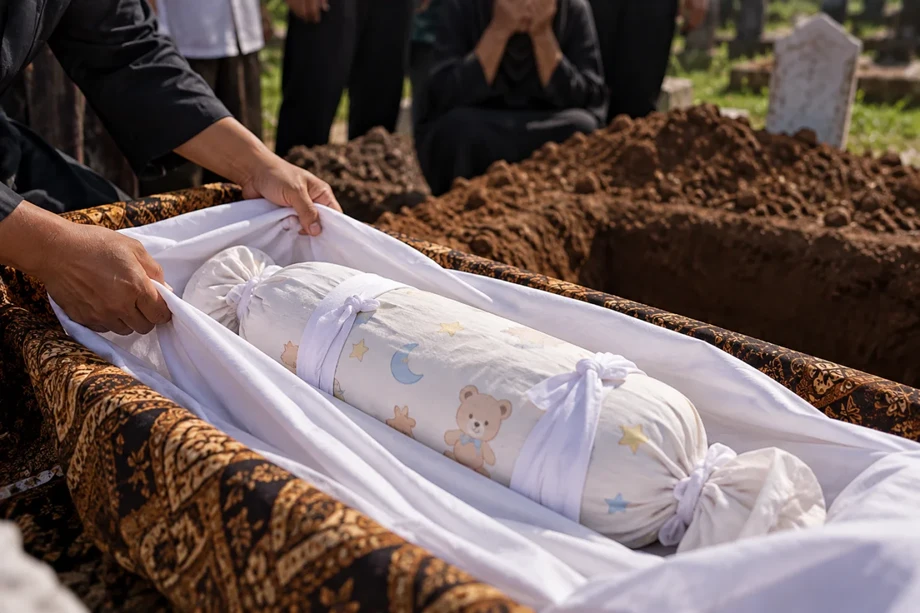
Silva Nur Intania Putri was 17 and in her final year at SMA Negeri 7, a state senior high school in Kota Malang, East Java. At about 7.30pm on Wednesday 25 November 2026, two other women picked her up from her home in Kecamatan Blimbing. She died that night.
Contents
- A Timeline That Began Six Days Before the Death
- Two Laws That Decide How a Child Is Tried
- Doli: Age Limit, Parents and Six Months of Supervision
- The Phone Call That Set a Start Date
- Puan Maharani: Safety Is a Shared Responsibility
- Abidin Fikri: Schools Need Counsellors, Not Only Punishments
- Atalia Praratya: The Injuries That Leave No Marks
- JPPI Warns That Longer Sentences Alone Will Not Stop Bullying
- KPAI: A Request First Made Five Years Ago
- What Is Still Open
- Key Points
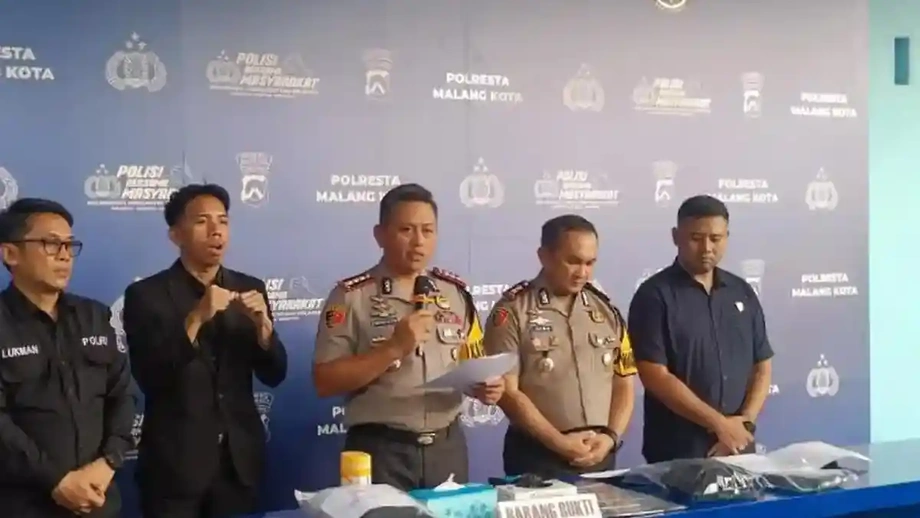
Within three days her death had pulled two of Indonesia's central child laws onto the national agenda. Ahmad Doli Kurnia Tandjung, deputy chair of the House of Representatives legislation body, known as Baleg, said parliament will revise the 2002 Child Protection Law and the 2012 Juvenile Criminal Justice System Law, and that work would begin on Monday 30 November after a direct phone call from Deputy Speaker Sufmi Dasco Ahmad. Police in Malang have named four high school girls as suspects in the case.
Indonesian procedure calls a minor suspected of an offence an anak berhadapan dengan hukum, a child in conflict with the law, or ABH. The label decides which court hears the case, which officials handle it and which sentences can be applied. Police have not said what charges the four girls will face, and no court date has been announced.
There lies the difficulty parliament now has to solve. The suspects are children too, and under the law their age limits what a court may do to them, even when the alleged offence ends in a death.
A Timeline That Began Six Days Before the Death
Parliament had declared its own campaign against violence toward children less than a week before Silva was picked up. Delegates launched the Gerakan Indonesia Melawan Kekerasan terhadap Anak, a national movement against violence toward children, on 20 November 2026.
- 20 November 2026: the House of Representatives declares its national movement against violence toward children.
- 25 November 2026, about 7.30pm: Silva leaves her home in Kecamatan Blimbing, Kota Malang, with two other women. She dies that night.
- 27 November 2026: KoPPI, a women's group that had run campaigns against bullying at SMA Negeri 7, calls for the juvenile justice law to be revised.
- 28 November 2026: Doli visits the family home in Malang. House Chairperson Puan Maharani and Deputy Chair Dasco issue statements. Four girls are suspects.
- 29 November 2026: Commission VIII deputy chair Abidin Fikri, commission member Atalia Praratya, the Indonesian Child Protection Commission (KPAI) and the Indonesian Education Monitoring Network (JPPI) set out what they want from the revision.
- 30 November 2026: parliament is due to begin work on both bills.
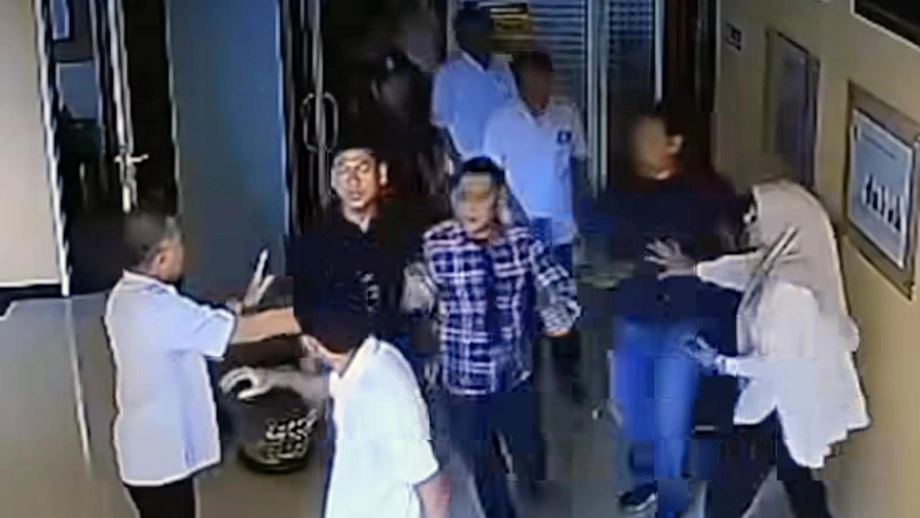
The Malang city police, Polresta Malang, have questioned eight witnesses, including the person who filed the initial report, and KPAI says the four girls who are now suspects have been secured by investigators.
Two Laws That Decide How a Child Is Tried
Law No. 23 of 2002 on Child Protection is the umbrella statute for children's rights in Indonesia. Article 76 forbids physical, psychological and sexual violence against a child, and Article 80 sets the penalties for breaking it. KPAI points to those two provisions as the rules that already cover bullying. JPPI argues the text does not define bullying firmly enough, particularly psychological harm and harassment carried out online, and wants the revision to write that definition in and attach a duty to prevent it.
Law No. 11 of 2012 on the Juvenile Criminal Justice System, known as SPPA, governs what happens when a child is the suspect. It keeps children out of the adult courts and puts weight on diversion, an attempt to settle a case outside prosecution, and on restorative justice, an approach that aims to repair the harm done to the victim rather than simply punish the offender. The law also draws a line at age 12. A child under 12 cannot be held criminally responsible and is handled outside the juvenile court process. For older children a court can order rehabilitation, after which the child's parents are supervised by the Balai Pemasyarakatan (Bapas), the state probation service, for six months.
Doli put the practical problem in one sentence.
What makes it difficult for us now is when there is bullying or even a death, while the perpetrator is a child and the victim is also a child.
As he framed it, the same statute hands the suspect a right to protection and guidance, and hands the victim's family a claim to justice, and both have to be honoured in the same case.
Doli: Age Limit, Parents and Six Months of Supervision
Speaking in Malang on 28 November after visiting the family home, Doli listed the parts of the juvenile justice law he wants examined. The first is the age threshold at which a child can be held responsible. The second is whether parents should carry legal responsibility when a child commits serious violence. The third is whether the current rehabilitation route works at all.
Whether the age limit needs to be raised or lowered, or the approach should be through parental responsibility. There is a lot we need to examine.
He was more concrete about rehabilitation. Under the present arrangement, he said, a child who commits violence is handed to a rehabilitation programme and the parents are watched by Bapas for six months.
We will examine later whether that is effective or not.
Doli did not name a single article he wants changed, saying the details will come out of talks with the ministries and agencies involved. He was firm that the revision should not be read as leniency, and that no offender may be spared because of family background.
No one may escape. Whoever does it is equal before the law and there is no compromise, they must be dealt with firmly, without discrimination.
The Phone Call That Set a Start Date
Parliament's machinery moved over the weekend. Doli said Dasco telephoned him directly on Saturday and that the leadership wanted the revision under way the following Monday. He also said both bills already sit on the short list of the 2027 National Legislation Programme, known as Prolegnas, the list that decides which bills a session can realistically handle.
We have put it on the Prolegnas shortlist for 2027, hopefully by the end of this year or the start of next year discussions can begin as soon as possible. Then we will have a new Child Protection Law and a new Juvenile Criminal Justice System Law.
Commission VIII, which handles child protection, gives the same timetable. Its deputy chair Abidin said both revisions are in the 2027 priority legislation list. The minister for women's empowerment and child protection, Arifah Fauzi, confirmed the government has been preparing the ground with parliament.
That is right, we will do it and earlier, when we marked World Children's Day, Pak Dasco had already planned it because it does need to be adjusted to current conditions.
Puan Maharani: Safety Is a Shared Responsibility
The House leadership's statement on 28 November came from Chairperson Puan Maharani, who said repeated cases of violent bullying show how much work child protection in Indonesia still needs. She offered condolences to Silva's family and asked the government and police to support them.
The safety of children is a shared responsibility. The ongoing cases of violent bullying among students highlight the urgent need for greater attention to child protection issues in Indonesia.
Her proposals are mostly preventive. She wants the government to widen education on parenting for teachers, parents and everyone involved in raising children, to guarantee every child a safe place at home, at school, in social settings and online, and to strengthen character education so children do not turn to violence.
A child's growth and development greatly depend on the parenting they receive, so it is essential for the government to reinforce educational outreach on child rearing to teachers, parents and all involved parties.
Dasco, who is also daily chair of the Gerindra Party, condemned the case in blunter terms and asked police to investigate thoroughly.
I condemn all forms of bullying and violence against children. There is no justification for actions that hurt and belittle them.
Abidin Fikri: Schools Need Counsellors, Not Only Punishments
Abidin, a PDI Perjuangan politician, framed the death as an institutional failure rather than a single crime.
The death of a child because of bullying is a collective failure of all of us. Schools, families, society and the state must look inward. We in Commission VIII are pushing for the revision of the Child Protection Law to genuinely strengthen prevention, not only punishment.
Two changes top his list. Schools would be required to set up and run counselling services, known in Indonesian schools as bimbingan konseling, that respond quickly to conflict between students. Regional governments would have their duties spelled out in law for monitoring and assisting victims. He wants tighter rules on sexual, physical and psychological violence, including violence committed in digital spaces, where harassment between teenagers has become a common form of cruelty.
Abidin said Commission VIII respects the Malang police decision to name four children as suspects, but argued that protecting them must not erase justice for the victim.
A perpetrator who is still a minor must still answer for what they did through a mechanism that is fair. Restorative justice must take the victim's side.
He called on the education ministry, the ministry for women's empowerment and child protection, KPAI, regional governments, schools and parents to work together, and warned that families are watching for results.
We do not want any more parents to lose a child because of bullying. This revision of the law must be a real answer, not just talk.
Atalia Praratya: The Injuries That Leave No Marks
Commission VIII member Atalia Praratya said the revision must close the gap that lets violence in schools go unaddressed, and she dwelt on bullying that leaves no visible injury: repeated humiliation, social exclusion, digital harassment and verbal intimidation.
We have to realise that physically and psychologically, bullying kills. Because of that, the burden of prevention and the courage to speak up must not be piled only on the shoulders of a victim who is already down, it has to be the shared responsibility of the whole school ecosystem, parents and society.
She pointed to South Korea, where schools keep administrative records of a student's bullying history that can affect university admission, as one model to study, alongside preventive tools and educational sanctions suited to Indonesia. She also wants students trained to act as what she called active defenders.
Most importantly, we have to move children so they are not just spectators, but dare to become protectors and reporters, from not joining in the laughter, not recording or spreading it, accompanying the victim, storing evidence safely, to reporting to a trusted adult without increasing the risk to the victim.
Her reading of the case is that the warning signs were visible to classmates and to adults long before the night of 25 November, and that the law has to make reporting safe rather than heroic.
JPPI Warns That Longer Sentences Alone Will Not Stop Bullying
JPPI welcomed a revision but warned against building it around heavier punishment. Its national coordinator Ubaid Matraji argued on 29 November that the child who bullies is also a child shaped by institutions that failed.
A revision can be one option, but it is not the main medicine and should not be treated as the only way. If this revision only contains heavier punishment for child perpetrators, I think that is the wrong direction.
A child perpetrator is also a child. He is born of an environment that failed to educate him, and the restorative justice principle in the SPPA must be preserved. Imprisoning a child longer does not automatically stop bullying.
Its list of demands goes further than parliament's. JPPI wants legal duties and sanctions for schools and for officials proved to have been negligent or to have covered up a bullying case, so that responsibility does not rest only on the children involved. It wants the state, not just the family, to fund rehabilitation, restitution and counselling for victims. It wants more capacity for Bapas, social workers, psychologists and the social welfare centres, known as LPKS, that handle children under 12, so a child sent back to their parents is not simply released without a programme. It also asks that both bills be harmonised with the new Criminal Code and the revision of the National Education System Law, known as Sisdiknas, which is being debated at the same time, so the rules do not contradict each other.
KPAI: A Request First Made Five Years Ago
KPAI commissioner Diyah Puspitarini said the agency asked for both laws to be revised five years ago and has already prepared the academic paper, the formal study that precedes a bill, that a revision needs.
KPAI submitted a request to revise the SPPA and the Child Protection Law five years ago. Of course we very much appreciate and welcome this.
She said the reason is a gap in coverage, areas of child protection that the current text does not reach. On the Malang case she ruled out any tolerance for bullying while defending the legal process.
KPAI asked from the start that the legal process keep running. There is no tolerance for bullying. It is already in line with Article 80 read with Article 76 of the Child Protection Law. The SPPA also already regulates the process and the penalties.
Ya'qud Ananda Gudban, chair of KoPPI, the women's group that had run campaigns against bullying at SMA Negeri 7, said on 27 November that the school had heard the warnings before.
As someone who once ran campaigns against bullying at SMAN 7 Malang, of course I am very disappointed. Mitigation efforts had been made by various parties, including the relevant agencies, but events like this still happen.
She argued that being a minor should not soften the handling of a case that ends in death, and that prevention has to reach parents as well as students.
The main prevention comes from the family. The information given to children should also be given to parents. So every line, from family, to neighbourhood, to school, has the same understanding and the same practice.
What Is Still Open
Neither Doli nor Abidin has named the articles they will change, and no draft text has been published. The age of 12 and the six months of Bapas supervision are being examined, not yet altered, and the direction of any change to the threshold has not been decided. The House has set Monday 30 November as the start of work, with discussion targeted for late 2026 or early 2027.
In Malang, police continue to question witnesses and have not announced what the four girls will be charged with. What changes for Silva's family, and for the families of the four suspects, depends on the wording the House eventually writes and on how quickly it can agree on it.
Key Points
- Silva Nur Intania Putri, 17, a final year student at SMA Negeri 7 Kota Malang, died on the night of Wednesday 25 November 2026 after leaving her home in Kecamatan Blimbing at about 7.30pm.
- Polresta Malang has named four high school girls as children in conflict with the law and has questioned eight witnesses, including the person who reported the case.
- The House will revise Law No. 23 of 2002 on Child Protection and Law No. 11 of 2012 on the Juvenile Criminal Justice System, with work due to start on Monday 30 November.
- Both bills are on the Prolegnas short list for 2027, with discussion targeted for late 2026 or early 2027.
- Baleg deputy chair Ahmad Doli Kurnia Tandjung wants the age of criminal responsibility, parental liability and the six months of Bapas supervision reviewed.
- Commission VIII deputy chair Abidin Fikri wants mandatory school counselling services, clearer duties for regional governments and new rules on psychological and online bullying.
- KPAI says it requested the revision five years ago and has already prepared the academic paper; JPPI warns that longer sentences alone will not stop bullying and calls for school accountability.
- No articles have been named for amendment and no charges have been announced for the four suspects.