Government Approves Blueprint for Elevated Automated Transport
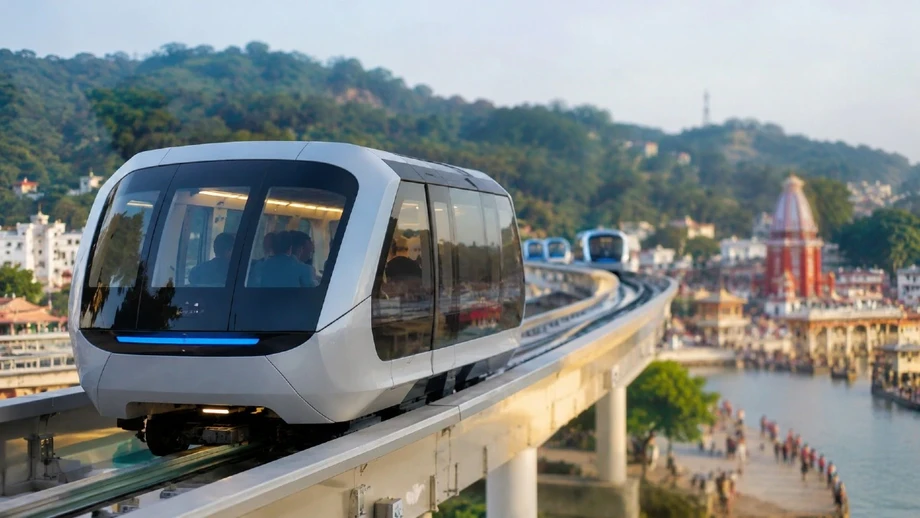
Haridwar, the spiritual capital of Uttarakhand, is preparing for a significant shift in its urban mobility. On November 27, the state cabinet chaired by Chief Minister Pushkar Singh Dhami granted official approval to the Haridwar Darshan Pod Taxi project. This initiative introduces a Personal Rapid Transit system designed to move pilgrims and tourists efficiently between religious sites without the common headaches of traffic jams. The project envisions a network of driverless, battery-operated vehicles running on elevated steel tracks built above the existing roads.
Contents
The approval marks a critical step for the Uttarakhand government as it seeks to modernize the city's infrastructure. The state capital, known for its daily Ganga aarti and as a gateway to the Char Dham Yatra, currently struggles with congestion during peak pilgrimage seasons. The new system aims to provide a reliable, time-bound travel option for the millions of visitors who flock to Haridwar throughout the year.
According to the proposal submitted by the Housing Department, the total cost of the project is estimated at approximately Rs 3028 crore. The system will utilize automated pods capable of carrying four to six passengers each. These vehicles will travel at speeds between 40 and 60 kilometers per hour along dedicated corridors that span over 21 kilometers. The project covers a total land area of roughly 69.5 hectares, combining both government and private parcels to establish the necessary tracks and stations.
Three Key Corridors Connecting Holy Sites
The project is structured around three distinct corridors that connect major religious and commercial hubs within the city. The first and longest corridor extends from Sitapur to the Bharat Mata Mandir. Spanning approximately 15.58 kilometers, this route includes the proposal for fifteen stations to facilitate frequent stops for commuters.
The second corridor links the City Hospital to the Daksh Mandir. This segment covers about 3.10 kilometers and will feature four stations. It is designed to serve both medical travelers and pilgrims visiting the sacred site. The third corridor runs from Ganeshpuram to DAV School, covering 2.40 kilometers with two additional stations. Together, these routes create a grid-based transport network that reduces reliance on private vehicles.
The government has identified specific plots for the construction of a PRT depot in Sitapur. This depot will occupy approximately two hectares of land which will be used temporarily for five years. This area will support construction materials, machinery, and other project-related activities essential for the initial phase of development.
People are starting to realise the usefulness of the project, as we have conducted presentations before seers, Ganga Sabha office bearers, Vyapar Mandal leaders, people's representatives, and representatives from various political parties.
Gopal Sharma, the Public Relations Officer of the Uttarakhand Metro Rail Corporation, highlighted the ongoing engagement with community leaders. His remarks indicate that the corporation is actively addressing concerns through direct dialogue rather than imposing the design from above. The corporation maintains that the project is highly beneficial for the holy city given its heavy traffic load.
Stakeholder Concerns Over Business and Traffic Flow
Despite the cabinet approval, the project faces strong opposition from local stakeholders. The Vyapar Mandal and the Ganga Sabha, a body of priests, have voiced serious concerns regarding the implementation plan. A recent delegation led by Suresh Gulati, the president of the district Vyapar Mandal, met with former urban development minister Madan Kaushik to urge the government to reconsider the alignment.
The primary objection from traders focuses on the impact of the elevated tracks on businesses located on either side of the road. Gulati suggested that the track should be built along the Ganga river where there is ample free space, rather than through the narrow and congested main roads of the city. He expressed regret that the government did not consult locals sufficiently before finalizing the details.
Concerns about traffic flow are also prominent. Critics argue that placing the pod taxi path in the center of existing roads could worsen congestion during peak hours. However, the Uttarakhand Metro Rail Corporation refutes this claim. Gopal Sharma noted that the minimum width of the road from the railway station to Har-ki-Pauri is 29 feet. The pillars supporting the track will be constructed in the center of the road at intervals of 10 to 20 meters.
The pillars are designed to be compact, measuring between 600 to 800 millimeters in diameter and 5.5 to 6 meters in height. The corporation asserts that these dimensions are unlikely to adversely affect traffic situation significantly compared to the benefits of an automated transit system.
Environmental Impact and Land Acquisition
The project requires careful management of natural resources, particularly regarding the felling of hundreds of trees along the proposed track. Local residents and environmental groups have raised alarms about the potential loss of green cover. In response, the Uttarakhand Metro Rail Corporation has assured collaboration with the forest department to undertake large-scale tree planting initiatives.This compensation strategy aims to mitigate the environmental impact of the construction phase. The government believes that the reduction in air and noise pollution from switching to battery-operated vehicles will offset the immediate effects of tree removal. The use of electric pods is expected to lower the city's dependence on traditional fuel-based vehicles.
The alignment of the project has already undergone revisions following early feedback from locals. The modified plan seeks to balance the engineering requirements of the elevated track with the urban fabric of Haridwar. The government continues to assess the final route to ensure minimal disruption to existing utilities and road networks.
Tender Process and Political Dynamics
A significant hurdle in the project's timeline has been the lack of interest from private companies during the tender process. A Request for Proposal was floated approximately two months ago, yet it failed to attract any responses. An official from the Uttarakhand Metro Rail Corporation stated that nobody is willing to participate in the bidding process at present.
Traders and residents have expressed displeasure with the delays. While authorities blame the lack of company interest, locals remain unconvinced by the administrative pace. The situation is further complicated by what officials describe as political interference. Certain local political leaders privately support the project but have instructed their associates to publicly oppose it, creating confusion among stakeholders.
Despite these challenges, the cabinet approval provides a formal mandate to move forward. The Uttarakhand government is now expected to restart engagement with potential bidders, possibly revising terms to make the project more attractive. The delay in appointing a consultant for the Har-ki-Pauri corridor, which is expected within the next 10 to 15 days, adds to the sense of uncertainty surrounding the two major transport initiatives.
Operational Details and Future Outlook
The proposed system will operate on a 4.5-meter-wide elevated path. The design ensures that vehicles run independently, allowing for flexible scheduling and reduced wait times for passengers. The 21 stations spread across the city will serve as critical nodes for boarding and alighting.
The project promises to transform the travel experience for pilgrims. Instead of navigating crowded buses and auto-rickshaws, visitors will be able to access a predictable and comfortable transit network. This improvement is expected to boost tourism further by making it easier for international and domestic travelers to access key temples and ghats.
As the Uttarakhand government moves to implement the approved blueprint, the focus will shift to detailed engineering designs and the final selection of contractors. The success of the project will depend on effective communication with local communities and the timely resolution of the tender issues.
The Haridwar Darshan Pod Taxi project represents a bold step toward modernizing a historic city. If executed successfully, it will not only solve immediate traffic problems but also set a precedent for other spiritual tourism hubs in India. The coming months will be critical in determining whether the elevated tracks become a permanent and beloved feature of the city.
Key Points
The Uttarakhand cabinet approved the Haridwar Darshan Pod Taxi project on November 27, with an estimated cost of Rs 3028 crore.
The system features driverless, battery-operated pods running on elevated tracks across three corridors totaling over 21 kilometers.
Opposition from the Vyapar Mandal and Ganga Sabha centers on concerns about business impact and traffic congestion on narrow roads.
The Uttarakhand Metro Rail Corporation plans to compensate for tree felling through large-scale planting initiatives.
Tenders for the project have faced delays due to a lack of private sector interest and political confusion.