A Lead of 243 With Two Days to Play
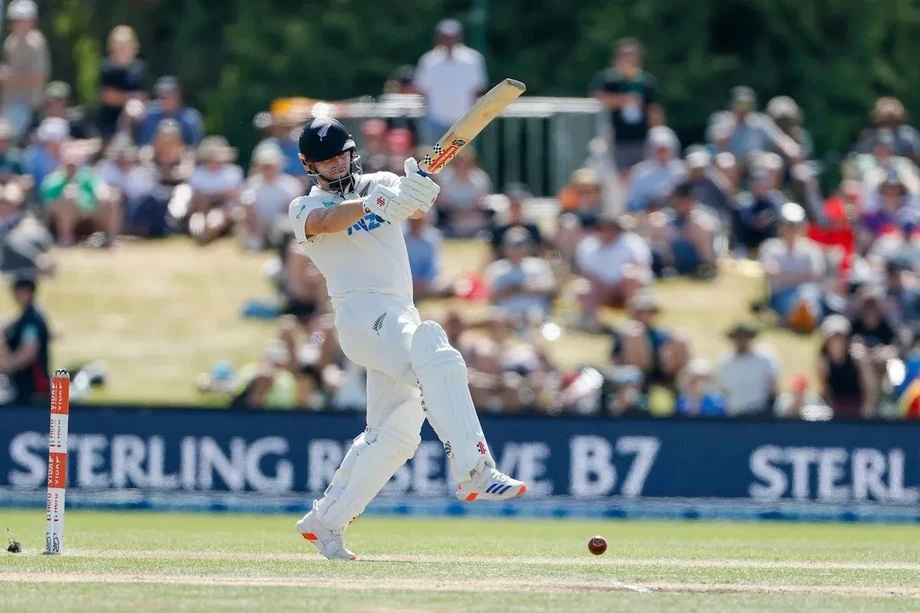
Rachin Ravindra clipped the second-last ball of the day through the leg side for four and New Zealand closed the third day of the second Test on 133 for 3, 243 runs ahead of India with two days left at Hagley Oval in Christchurch. Ravindra was 46 not out and Daryl Mitchell 5 from 38 balls, the pair having added 40 unbroken runs by stumps on Nov 29, 2026.
Contents
- A Lead of 243 With Two Days to Play
- Jurel Turns 116 for 6 Into 246
- The Art of Batting With the Tail
- Bumrah Ends the Longest Wait of His Career
- A Catch for the Highlights and a Slip Cordon Left Thin
- Akash Deep's Concussion Leaves India a Bowler Short
- Cracks, Rain and a Declaration New Zealand Have Not Made
- India's Catching Problem, in Numbers
- Hagley Oval History and What a Result Would Change
- Key Points
New Zealand had begun the day 240 ahead with India six wickets down. India's last four wickets added 130, then the home batters spent two sessions building again, so a long, warm day of toil produced only three runs of extra advantage. India were bowled out for 246 in reply to New Zealand's 356, a first innings deficit of 110 that Dhruv Jurel's 88 from 170 balls stopped from growing into something much worse.
Rain is forecast for Tuesday, the fifth day. New Zealand have not set a target and no declaration plan has been shared with the players, which leaves the hosts weighing how much batting time they can afford against the chance of losing hours to the weather.
Jurel Turns 116 for 6 Into 246
India resumed on the third morning at 116 for 6, still 240 behind, and lost Anshul Kamboj to the 11th ball of the day, caught off Matt Henry without scoring. From there the innings belonged to Jurel. He reached his fifty from exactly 100 deliveries, with India at 206 for 8 at lunch after adding 90 runs in 25 overs during the morning, and he had already carried the tourists past the follow-on mark of 201.
The wicketkeeper walked into a rescue job on the second evening when he was dropped on seven and beaten repeatedly outside off stump. He came back on Sunday with 14 boundaries in his 88, farming the strike so that the bowlers at the other end could survive. He put on 46 for the eighth wicket with Akash Deep, who made 29 from 40 balls, then 64 for the ninth with the debutant Gurnoor Brar, who faced only 46 of the 126 balls the pair used while Jurel scored 49 of the 64 runs. The stand forced New Zealand to take the second new ball, and Kyle Jamieson swung it back through Brar's defence to bowl him for 10.
Jamieson finished with 4 for 69 when he found Jurel's outside edge with a teasing delivery that Tom Blundell took behind the stumps. Jurel fell 12 short of a hundred, ending a knock that followed his 78 in India's 720 for 9 declared in the drawn first Test at Wellington. It was his fourth score of 50 or more in his last five Test innings.
The Art of Batting With the Tail
Jurel, 25, has now shepherded India's lower order twice in a year, having made 115 not out in Colombo in August. He described a method built on memory and nerve rather than targets, and said he asked each partner to recall how it felt to bowl at a tailender who refused to leave.
Whenever a tailender was walking out to bat, I asked them, 'When you bowl at the tailenders, and they are batting, how do you feel?' Keep that in mind and bat as long as you possibly can. They all went, 'Yeah! Yeah! Yeah!'
His instructions were deliberately small, he said, because a target measured in sessions can overwhelm a number ten or eleven. "With the tail, I just follow one thing. Whenever any tailender comes in, I try to give him some confidence that he can bat. Just bat for as long as you can. I don't give him a target that we have to play a session or something. Just watch the ball and play," he said.
Jurel also rebuilt his own game overnight. After a scratchy session on the second evening he went back to video of his batting, checking whether his hands were playing close to his body and where New Zealand's bowlers were trying to dismiss him: bottom hand off the bat so edges dropped short of the slip cordon, short quick strides, and drives played under his nose rather than reaching for the ball.
Bumrah Ends the Longest Wait of His Career
Jasprit Bumrah had gone through 26 overs without a wicket in New Zealand's first innings, and his first scalp of the match took 292 balls, the longest drought of his Test career. It came in his 19th over of the day, when New Zealand captain Tom Latham chopped a straightish delivery into his own stumps and departed for 8, the third time Bumrah had dismissed him in the series.
The second wicket followed quickly, Henry Nicholls drawn into a leading edge that Bumrah took himself, caught and bowled, for 22. New Zealand had scored 41 runs between the two dismissals, and the older ball was starting to hold up off the surface, which is what gave India's bowlers hope of a collapse that never fully arrived.
Washington Sundar did the rest of the damage with a spell of ten overs that cost 14 runs, bowling straight at a tight leg side field and daring Daryl Mitchell to hit across the line. Mitchell refused, and his 5 took 38 balls. Sundar's reward came when Devon Conway drove at a floated ball and Yashasvi Jaiswal, diving to his left at backward point, held a catch with one hand to leave New Zealand at 93 for 3.
A Catch for the Highlights and a Slip Cordon Left Thin
Conway's 51 was the innings that held New Zealand's second effort together, and he had reached his 22nd Test fifty with a little over an hour of the day left. He lasted eight more balls. The opener had also been dropped on 33, when KL Rahul leapt at slip at a chance off Bumrah and could not hold it, one of several edges that India's close fielders failed to reach.
Ravindra arrived with a poor recent run since returning from a dislocated shoulder in September and with a record at Hagley Oval that averages more than 50. India kept only a slip and a gully for him, and he twice found the gap between wicketkeeper and slip, one edge flying past Rishabh Pant and another running away to the third man boundary in an over that cost three fours. By the close he had 46 from 84 balls, having hit the penultimate ball of the day to the rope.
Shubman Gill's caution with fields and with the scoring rate was a choice made in difficult circumstances. India needed wickets to fall in a heap, and the surface offered only faint signs of crumbling, so the captain squeezed runs and waited rather than crowding the bat. Jamieson later said his side had beaten the outside edge more than 30 times across India's innings without finding it.
Akash Deep's Concussion Leaves India a Bowler Short
India's most effective seamer of the match, Akash Deep, took 5 for 99 in New Zealand's first innings and then had to be withdrawn. In one over from Jamieson he was hit twice on the helmet, the first ball deflecting off his glove into the grille, and although he passed an on-field concussion test and batted on for 29, he was later ruled out and replaced by Prasidh Krishna for the rest of the match.
The loss narrowed Gill's options. Prasidh is quicker but leaks a boundary ball, and he did so in his first spell on Sunday before improving after tea. Jamieson, who delivered the bouncers, said he had checked on Akash Deep while he was at the crease and would do so again, calling it an unfortunate part of the game that can happen from time to time, and praising the courage of a partnership that cut into New Zealand's lead.
Cracks, Rain and a Declaration New Zealand Have Not Made
Jamieson said the pitch still had enough in it for disciplined bowling, with the new ball offering the most help in the first 20 overs, and argued that the cracks opening in the surface could decide the fourth innings.
The cracks are a big part of what could happen here. You could already see a little bit of it this morning. As the sun gets on them and hardens them up, that's when you can get variable bounce and a bit of sideways movement. Hopefully that keeps us interested when we get another chance with the ball and creates some uncertainty for the batters.
On the forecast rain and the timing of any declaration, he said the decisions belong to captain Tom Latham and head coach Rob Walter. "If there is a plan, I'm not aware of it. That's probably a discussion Tom and Rob will have tonight or tomorrow morning," Jamieson said, adding that forcing the game too early can backfire and that New Zealand would have a clearer picture in the morning. He was blunter about the weather itself: "You've just got to sort of play the game that's in front of you. And then if Mother Nature wants to have a say in the game, then so be it."
Jamieson also said his body was holding up in a second consecutive Test after a light workload in Wellington, where he bowled only 31 overs because he was used once with the ball. He has not had a scan on his lower back.
India's Catching Problem, in Numbers
India put down four catches in New Zealand's first innings, three of them off Matt Henry at number ten, and the slips let further chances go on Sunday. Former India wicketkeeper Dinesh Karthik said the pattern is costing the team more than individual matches: since the start of 2025 India rank eighth in catching efficiency among major sides, holding 74 per cent of chances.
If India want to have dreams of chasing the World Test Championship title, it can't just be batting and bowling. There needs to be a shift in the way they field as well. You need hunters, you need people with attitude, who are willing to put their body on the line, even in the 100th or 120th over.
Karthik named KL Rahul, Devdutt Padikkal and Gurnoor Brar among those who had dropped important catches in Christchurch, and said repeated mistakes need to be examined for a pattern. He also dismissed the idea that facilities are the constraint, pointing to the improvement in Indian fielding since the country's infrastructure was expanded.
Hagley Oval History and What a Result Would Change
The ground itself leans towards a finish. Hagley Oval has produced a result in 13 of the 15 Tests staged there, New Zealand winning nine of them, and no side has chased more than 285 to win. The West Indies made 457 for 6 there a year ago to save a draw while pursuing 531, and Australia overhauled 281 two years ago, which is why India's bowlers are not treating the target as impossible. India's only previous Test at the ground, in 2020, ended in a seven-wicket defeat inside three days.
The series is level after the drawn opener at Wellington, so the winner in Christchurch takes the trophy. New Zealand sit third in the World Test Championship table behind South Africa and Australia, with India fourth, and India need a win to keep a place in the final in reach. No Asian side has won a Test in New Zealand since Bangladesh at Mount Maunganui in January 2022. New Zealand go straight from this series into a series of four Tests in Australia.
Former India opener Aakash Chopra said after the second day, when India closed on 116 for 6, that the hosts already had the game by the throat. "New Zealand is fairly ahead in this game. In fact, they are in the driver's seat," he said, warning that "one poor session and this Test match will be over there and then for India."
The match so far, by date:
- Day one: New Zealand bat through, with Tom Latham making 59 and Tom Blundell 89 as the hosts reach 246 for 5.
- Day two: New Zealand are bowled out for 356, Blundell's innings having added 109 for the last five wickets, and Akash Deep takes 5 for 99. India slump to 116 for 6, with no top six batter passing 25.
- Day three: Jurel makes 88 and India reach 246, a deficit of 110. Bumrah and Sundar reduce New Zealand to 93 for 3, and the hosts close on 133 for 3, ahead by 243.
- Day five: rain is forecast, with a declaration and the weather likely to decide how much time remains for a result.
Jurel said India are not looking further than the next session. "We are not thinking too much. We are just taking it ball by ball, session by session. Whatever we need to do, we are doing. Hopefully, we'll end up in a good position," he said.
Key Points
- New Zealand closed day three on 133 for 3, leading India by 243 runs at Hagley Oval in Christchurch.
- Rachin Ravindra is 46 not out and Daryl Mitchell 5, with an unbroken stand of 40.
- Dhruv Jurel made 88 from 170 balls with 14 boundaries as India recovered from 116 for 6 to 246, a first innings deficit of 110.
- Jasprit Bumrah dismissed Tom Latham for 8 and Henry Nicholls for 22, his first wickets of the match after 292 balls without one.
- Yashasvi Jaiswal took a diving catch at backward point to remove Devon Conway for 51.
- Akash Deep, who took 5 for 99, was ruled out with concussion after two blows to the helmet from Kyle Jamieson and replaced by Prasidh Krishna.
- Kyle Jamieson took 4 for 69 and said cracks in the pitch could shape the fourth innings.
- Rain is forecast for day five, and New Zealand have not settled on a declaration.
- India are fourth in the World Test Championship table and need a win to stay in the race for the final.
- Hagley Oval has produced a result in 13 of 15 Tests, and no side has chased more than 285 there.