Five Goals, One Point and a First Lesson at World Level
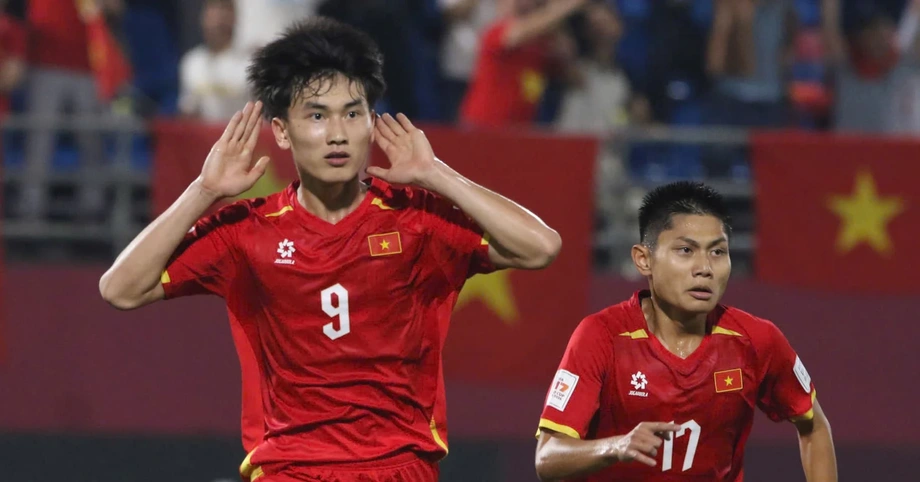
Vietnam's first FIFA U17 World Cup ended at the Aspire Zone in Al Rayyan on the night of November 26, beaten 2-0 by Mali, third in Group G with one point from three matches, five goals scored and eight conceded. The squad that travelled to Qatar numbered 21 players, and every one of them now returns to a club or a training centre with its own plans for them.
Contents
- Five Goals, One Point and a First Lesson at World Level
- A Place in Qatar Secured With a Comeback in Jeddah
- Three Matches, Three Different Problems
- The Night Mali Ended It
- Roland: This Generation Deserves More Investment
- The Physical Gap That Will Not Close in a Training Camp
- The Empty Years Between 17 and 21
- A Continental Stage Vietnam Has Just Lost
- What the 2017 Generation Shows, in Both Directions
- V.League Minutes Come Before a National Team Shirt
- Loans, Lower Divisions and a 2034 Target
- Key Points
What the group produced in eight days was concrete. Vietnam scored the first goals by a Vietnamese team at a World Cup played in the standard 11-a-side format, three of the five from set pieces, and took a point with a diving header deep into stoppage time. The men's U20 side went scoreless in three group games at the 2017 U20 World Cup, and the women's national team did the same at the 2023 Women's World Cup.
Vietnam was one of nine Asian representatives in Qatar and the only team from Southeast Asia, in a tournament expanded to 48 teams. Among the third-placed sides, Vietnam finished 11th of 12 with a goal difference of minus three. Japan took the last place in the round of 32 with three points and a plus five difference after beating Honduras 7-0, and Uruguay topped that table with six points. Four points, the level reached by China, Mozambique, Ecuador, the Dominican Republic and Tajikistan, was the safety line.
Reaction across the region was warm. A Singaporean supporter wrote that the young players should hold their heads high and that this was only the beginning for a promising generation. A Thai fan argued that losing only 2-0 to Mali was not a bad result at all against a physically stronger team.
A Place in Qatar Secured With a Comeback in Jeddah
The route to the tournament ran through Saudi Arabia. Vietnam needed a win in its final Group C match of the AFC U17 Asian Cup 2026 in Jeddah, and fell behind after 17 seconds when Sultan Nasir Al Mheiri beat goalkeeper Ly Xuan Hoa from the left. Chu Ngoc Nguyen Luc equalised in the 41st minute with a free kick from just under 17 metres, Minh Thuy finished a cut-back from Dai Nhan in the 48th, and centre-back Manh Cuong headed the winner from a left corner in the 71st. Adam Mahrous had levelled at 2-2 for the UAE in the 57th.
The 3-2 win carried Vietnam into the quarter-finals of the Asian championship and, for the first time in the country's history, into the World Cup, as the federation's own account of the UAE win records. The team had arrived in Jeddah as champions of the ASEAN U17 Championship 2026. Coach Cristiano Roland had also spent the months before Qatar trimming and testing a squad, starting from the 29 players named in October, with training camps in South Korea and the United Arab Emirates arranged to sharpen the side against stronger opposition.
Three Matches, Three Different Problems
The group stage packed three opponents from three continents into seven days, and each match exposed a different weakness.
- November 20: Belgium 3-2 Vietnam at Aspire Zone Pitch 9. Le Sy Bach, born in 2009 and developed at the PVF centre, flicked a Nguyen Minh Thuy corner in with his heel after four minutes. Tinus Moorthamer equalised in the 39th, Kiyan Achahbar made it 2-1 in the 42nd, and Anthony Philips punished a turnover in the 60th. Nguyen Luc curled a corner straight in at the 84th minute.
- November 23: Vietnam 3-3 New Zealand at Pitch 8. Vietnam came from behind three times before Truong Nguyen Duy Khang headed in two minutes into stoppage time, after eight added minutes.
- November 26: Mali 2-0 Vietnam. Sanaba Keita scored in the 56th minute and Djigui Koita in the 82nd.
- November 28: The squad landed back in Hanoi and returned to its clubs for national youth competitions in 2027.
The Belgium match alone produced two goals and a slice of tournament history. Nguyen Luc became only the third player to score directly from a corner in the competition's record, after Jonathan Espericueta for Mexico in 2011 and Jonathan Kalimina for Zambia in 2025. Vietnam conceded six goals across its first two matches, and the numbers told a blunt story: an attack good enough to score five times in two games, behind a defence shipping goals at flank and from the air.
The Night Mali Ended It
Mali arrived in Al Rayyan already qualified with six points and made several changes, while Vietnam needed a win to keep any realistic hope. Roland's players held out through a goalless first half, with Ly Xuan Hoa making a series of saves, including a flying stop to push away a long drive from Lassana Diawara. Dai Nhan had the best chance before the interval, breaking through after a defensive error but failing to round the goalkeeper.
Keita broke the resistance in the 56th minute, timing a run on a through ball from Makan Sacko to finish first time at the near post, and Koita turned in a low cross from the left in the 82nd after a counterattack. Mali struck the woodwork later in the match. Diawara had spent much of the evening shadowing Nguyen Luc and Dai Nhan, and the Vietnamese attack never found the space it had against New Zealand. In the other Group G fixture Belgium beat New Zealand 6-0 to finish second, while Mali advanced with a perfect nine points.
Dai Nhan described the occasion in plain words. "For us, this game felt like a final," he said. Captain Nguyen Huynh Dang Khoa called Mali the opponent that caused the most difficulty, and Nguyen Luc pointed to the physical difference.
U-17 Mali is the strongest opponent in this group. They are very strong and fast. Through this tournament, I learned that I need to train harder and play more to build a strong physical foundation.
Nguyen Luc, who scored twice and set up another goal in the group stage, also turned to the supporters after the final whistle. "On behalf of the entire team, I want to thank all the spectators who came to the stadium to cheer for the Vietnam U-17 team. It was truly amazing," he said. His one regret was simple: the group stage ended early, and he promised to train harder for the tournaments that follow.
Roland: This Generation Deserves More Investment
After the defeat Roland broke down as he thanked his players, then used the moment to deliver a message about money, attention and time rather than tactics.
I am very proud and you deserve appreciation. It is very important for us to look back on the historic journey you have been on; it is a journey that has provided many valuable lessons.
He added that the squad had earned more than praise. "This generation of players deserves more investment and attention, because you are the future of Vietnamese football," he said, before turning to the emotions of the dressing room.
When we work with belief, passion, and a love for football, it is natural to feel emotional or sad when the desired results are not achieved. However, in football, the most important thing is to give your best effort, and to constantly strive to surpass yourself in every training session and match to perform better. From this unsatisfactory result, we must turn that emotion into motivation to achieve our dreams in the future.
The Brazilian had spent the tournament warning against early celebration. He said he tells his players that tomorrow must be better than today, that they must be humble because the road is long, and that a World Cup is a starting point rather than a destination. Before the Mali match he had framed qualification itself as extraordinary for a team drawn against European runners-up, an African powerhouse and an Oceania side with twelve previous appearances at this level.
The Physical Gap That Will Not Close in a Training Camp
Vietnam's average height at the tournament was about 1.75 metres, among the shortest squads in Qatar, and the consequences showed in the air. Two of the three goals conceded against New Zealand came from deliveries into the box, with goalkeeper Xuan Hoa beaten on crosses. The problem began before those crosses arrived: Vietnam allowed space on the right flank for an unchallenged ball in, and central defenders misread its flight. Restricting the delivery and holding a compact shape would have reduced the danger of the duel itself.
Ngo Quang Tung, deputy director of Viettel Sports Company, put the gap in a wider frame. The technical base of recent Vietnamese youth teams, he said, has come close to world level, while the physical side has not.
The problem lies in the physical limitations of Vietnamese players in particular and Southeast Asia in general. We still have a gap compared to teams like Belgium or Mali, where players stand out for endurance, flexibility and physical strength.
Roland carried the point into the facilities. At the national sports training centre in Hanoi he once pointed at the pitch and said the conditions could not reach international standard. "At Qatar, we played on pitches Vietnam does not have," he said afterwards. Reaching the level of Belgium or Mali, in other words, involves surfaces, nutrition, strength programmes and coaching education long before it involves a game plan.
The Empty Years Between 17 and 21
The harder question sits in the calendar. Vietnamese football has a long record of losing players in the five years after they leave schoolboy and youth age groups, and Ngo Quang Tung named it directly as the challenge the U17 group now faces: how to keep developing between 17 and 21, when a talented teenager either finds regular senior football or drifts.
Volume is the clearest measure. Vietnam's youth league system gives players roughly 12 to 15 matches a year, while football nations in Asia and Europe give young players 25 to 30 at club level, with 30 to 40 a year the target recommended for development. The gap in competitive minutes, not in talent, is where the two paths divide.
Doan Minh Xuong, who has spent two decades in youth training, argued the Copa experience has to be converted into a plan. "When we have seen a promising generation, Vietnamese football needs to act," he said, listing the questions the parties have to answer: how many international training camps the group will get, how many matches it will play each year, and what the pathway to a V.League first team looks like over the coming seasons. Ngo Quang Tung made a similar case for better qualified specialists, better facilities and a stronger competitive environment, adding that with those in place the current U16 and U17 players could reach another level within three to five years.
A Continental Stage Vietnam Has Just Lost
One route out of that gap has already closed for this group. Vietnam's U20 team did not qualify for the 2027 AFC U20 Championship, so the U17 generation will not have a continental tournament next year to test itself against Asian opposition. The U19 side also missed the 2027 Asian finals, a detail commentator Quang Huy raised as the practical cost of the World Cup run ending.
That leaves domestic youth leagues and whatever friendlies the federation and clubs can organise between them. Quang Huy argued that Vietnam must keep the professional habits the team showed in Qatar and pair them with a development plan for each player as he moves up an age level, because the natural ladder has a rung missing.
What the 2017 Generation Shows, in Both Directions
Vietnam has one clear precedent. The U20 side that played the 2017 World Cup in South Korea finished with one point from a 0-0 draw with New Zealand. Nguyen Quang Hai, Doan Van Hau and Tran Dinh Trong went on to become senior internationals, and that cohort supplied the core of a team that won silver at the 2018 AFC U23 Championship, two SEA Games golds and three ASEAN Cup titles in 2018, 2025 and 2026, and reached the third round of qualifying for the 2022 World Cup. Quang Hai captained the national team and later played in Europe.
The same squad also shows what can go wrong. Nguyen Trong Dai, once captain of the U19 side and one of the most gifted players of his age group, was playing amateur football at 29 after problems with form and discipline. Goalkeeper Nguyen Ba Minh Hieu, a reserve in 2017, spent years without a first-team place, left professional football and drove a taxi before returning recently as goalkeeping coach of the Vietnam U19 team. Nine years on, both the 2017 and 2026 teams have one World Cup point, and the comparison ends there, as Quang Huy noted: the U17 event now has 48 teams, which makes entry easier and the test no less real.
V.League Minutes Come Before a National Team Shirt
Only one member of the 21-man squad has played in the V.League. Chu Ngoc Nguyen Luc came on against Song Lam Nghe An in round 2 under coach Harry Kewell, a first step that says more about the size of the climb than about arrival. In the professional game the same players compete with experienced senior professionals and with foreign signings who are stronger physically, inside a league that measures coaches on results.
Former international Nguyen Tuan Phong, whose own career was cut short by repeated injuries, warned against rushing any of them upward or inflating expectations too early.
Some say Nguyen Luc should be tried in the national team, but I feel it is a bit early, really rushed. He is 17, let him play in the V.League first, the national team is still far away. I think he should show his ability in the U19, U21 national leagues first, then find a place in the V.League and be called up to U23 Vietnam.
Phong also cautioned against focusing only on the 21 players who went to Qatar, noting that other talented players missed the tournament for different reasons and that unknown names will emerge in the future. He rated the current group highly for their thinking and the way they create moments in matches, while pointing out that form, injuries and playing time decide careers.
Loans, Lower Divisions and a 2034 Target
Quang Huy proposed a mechanism Vietnam currently lacks: sending young players on loan to clubs in lower divisions so they can play every week instead of waiting on a V.League bench.
We need to create a mechanism similar to foreign football, where players can be loaned to different clubs, including in lower divisions, to play regularly. If not, their talent will be wasted.
He added that Vietnam needs as many clubs in the lower tiers as possible, since relying on V.League and First Division sides alone leaves many of these players without games.
The federation has already put a date on the ambition. VFF president Tran Quoc Tuan, speaking three months before the tournament, told the squad that the 2030 World Cup cycle would be built around the U23 team and that by 2034 the U17 group would be the foundation. "I want to see them reach the Vietnam national team shirt," he said. Whether that happens depends on the years in between: the loan moves, the youth league calendar, the missing continental fixtures and the pitches Roland pointed at in Hanoi.
Key Points
- Vietnam finished third in Group G at the FIFA U17 World Cup 2026 in Qatar with one point, five goals scored and eight conceded, a goal difference of minus three.
- Cristiano Roland's side lost 3-2 to Belgium, drew 3-3 with New Zealand and lost 0-2 to Mali, whose goals came from Sanaba Keita in the 56th minute and Djigui Koita in the 82nd.
- The team placed 11th of 12 third-placed sides; Japan took the last knockout place with three points and a plus five difference.
- Vietnam scored the country's first goals at an 11-a-side World Cup, three of the five from set pieces, and Nguyen Luc became the third player to score directly from a corner at the tournament.
- Roland said the generation deserves more investment and attention and called it the future of Vietnamese football.
- Vietnam's youth league gives players about 12 to 15 matches a year, against 25 to 40 in leading football nations.
- The U20 team missed the 2027 AFC U20 Championship, leaving the U17 squad without a continental tournament next year.
- Only Nguyen Luc has played in the V.League, and former international Nguyen Tuan Phong said a national team call-up at 17 would be too early.
- The VFF wants the group to form the base of the national team by the 2034 World Cup.