A Two Word Answer That Moves the Project Along
Vanridee Pongsittisak took a question about the American version of her studio's biggest film and answered it in two words. "Scriptwriting already," the co-founder and head producer of Thai studio GDH said during a panel at JAFF Market 2026 in Yogyakarta, Indonesia, where the industry arm of the Jogja-Netpac Asian Film Festival ran from Nov. 28 to 30.
Contents
- A Two Word Answer That Moves the Project Along
- The Condition GDH Set Before Signing
- From Bangkok to $55 Million at the Box Office
- A Grandson, a Grandmother and a Race for Inheritance
- Miramax Beat Rival Studios to the Rights
- What the Studio and the Original Team Said
- A Script Written During a Pandemic
- Two Filmmakers on Whether Local Stories Travel
- Timeline and What Comes Next
- Key Points
The session, titled "From Bold Stories to Global Audiences: How Films Become Cultural Phenomena", was moderated by Naman Ramachandran, Variety's Asia editor. Beside Vanridee sat Indonesian director Joko Anwar, whose horror film Ghost in the Cell has sold to 150 territories since premiering at the Berlin Film Festival in 2026.
Her remark places the project, an English adaptation of How to Make Millions Before Grandma Dies, at the stage where pages exist but nothing has been cast, shot or scheduled. It comes about 18 months after Miramax secured the rights on May 14, 2025, and more than two years after the Thai original opened in cinemas in April 2024.
GDH has not given a date for a finished script, a director, a cast or a release. What the studio has made plain is the kind of film it will refuse to be part of.
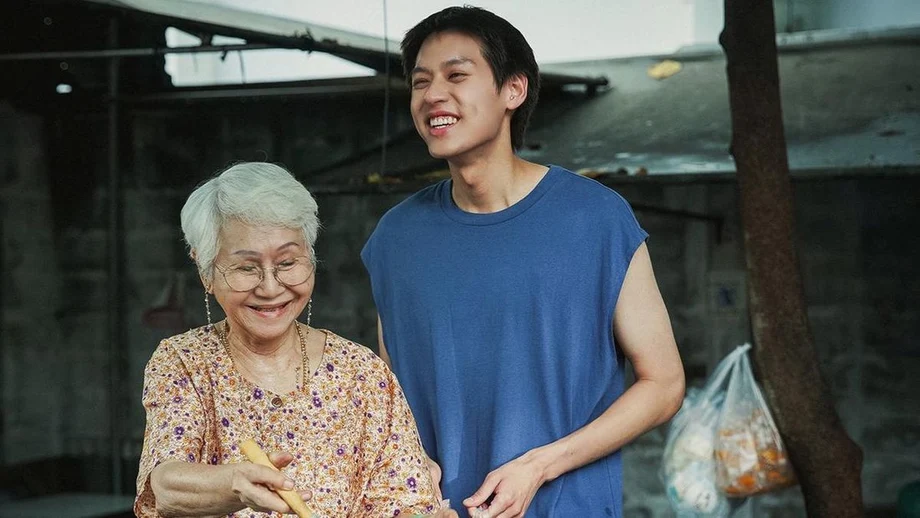
The original, directed by Pat Boonnitipat, follows a young man who drops out of school to look after his dying grandmother in the hope of inheriting her house. It became the highest grossing Thai film ever released and the first from Thailand to reach the shortlist for the Academy Awards international feature category.
The Condition GDH Set Before Signing
GDH screened suitors before agreeing to the remake, and one requirement was blunt. The studio would turn down an offer that kept the characters Asian. In its view the 2024 film already carries the Asian setting and its rituals, and a second version should show the same story inside another culture.
"We believe the original version already represents Asian elements and we want to see it in a different cultural interpretation," Vanridee said.
She described the hunt for a partner as a search for taste rather than for money.
"We are looking for a match of taste with producers and studios that truly look after our intellectual property," she said.
When the Miramax deal was announced, Vanridee framed the move in the same terms, saying she was excited to see the film come to life once more "this time in an American household". The condition explains what that means in practice: the grandmother, the cousin and the inheritance hunt would be transplanted into a family in the United States, rather than played by Asian American characters in an Asian setting.
From Bangkok to $55 Million at the Box Office
How to Make Millions Before Grandma Dies, known in Thailand as Lahn Mah, earned more than $55 million worldwide, with $17 million of that from China alone. Roughly three dollars in every ten came from Chinese cinemas.
Critics in the United States were warm. The film holds a 98 percent Tomatometer score and a 95 percent Popcornmeter rating on Rotten Tomatoes, and it took the audience award at the New York Asian Film Festival after its North American premiere there. Well Go USA gave it a theatrical release across North America.
The Oscar shortlist mattered most to the industry. Thailand had never placed a film in the international feature race before, and that recognition turned a regional hit into a property studios abroad wanted to own.
A Grandson, a Grandmother and a Race for Inheritance
The plot turns on money and guilt in equal measure. M, played by Billkin Putthipong Assaratanakul, quits school to build a career as a gamecaster, a job that means livestreaming video games for an online audience that pays through donations and sponsorships. Viewers do not arrive, and neither does the income.
Then he watches his cousin Mui, played by Tontawan Tantivejakul, receive an inheritance after she nursed their grandfather through his final months. M copies the strategy. He moves in with his grandmother, Amah, played by Taew Usa Semkhum, who has just been told her cancer is terminal, and sets out to become the person she loves most, on the calculation that the favourite heir inherits the most.
What begins as a scheme bends into something else as the two share a house, meals and a countdown. That turn, from a cynical plan to a portrait of care, is what carried the film past language borders and what Miramax is now paying to reproduce.
Miramax Beat Rival Studios to the Rights
The deal that made the remake possible was negotiated for GDH by Nelson Mok of Singapore's Mokster Films, and several studios competed for it before Miramax won. Inside Miramax, Yvette Zhuang, senior vice president of international production and distribution, pushed the project forward and will stay on as a producer even after she steps down from her executive role later that month.
The studio put the title in front of buyers at Cannes alongside its other films: The Beekeeper 2 with Jason Statham, Roofman with Channing Tatum and Kirsten Dunst, and Scandalous, the directorial debut of Colman Domingo.
What the Studio and the Original Team Said
Jonathan Glickman, chief executive of Miramax, described the film as a family story that works on several levels at once, and said the company expects the remake to draw audiences of grandparents, parents and children together.
How to Make Millions Before Grandma Dies is a rare gem that manages to be hilarious, surprisingly poignant, and moving all at once. Like the original, we hope our adaptation brings generations of families to the cinema together.
Pat Boonnitipat, who directed the original, said the film's reach beyond Thailand caught him by surprise and left him hopeful about what audiences share.
Its success worldwide surprises me, yet it warms my heart to know that people across the world share this value, or some kind of core, that connects us beyond the identities of countries or cultures.
Vanridee put the case for a second version more simply, pointing to the way every family runs on similar fuel but writes its own story.
The heart of a family is universal, but each home holds an entirely different story. That's why I'm excited to see How to Make Millions Before Grandma Dies come to life once again, this time in an American household.
A Script Written During a Pandemic
The first version of the story was drafted while COVID-19 was shutting cinemas and closing borders. Vanridee said the isolation shaped the writing, because nobody on the team could guess what the world would look like afterwards, so they wrote for themselves.
It was a very personal process because we didn't know what the world would look like after COVID. So we didn't really think about anyone else. We just focused on writing what was right in front of us.
That habit has shaped her taste as a producer since. Vanridee said she is drawn to stories about human relationships, "ordinary humans in various situations", whatever the genre. She pointed to GDH's Bad Genius, a thriller about exam cheating that is at heart the story of a young woman fighting the system to get what she wants.
Two Filmmakers on Whether Local Stories Travel
Joko Anwar, whose Ghost in the Cell won the audience award for best feature at the 37th San Sebastián Horror and Fantasy Film Festival and best picture in the horror features competition at Fantastic Fest 2026, told the Yogyakarta audience that he never splits his work between foreign and domestic viewers.
His method is genre. Horror and fantasy, he said, let him "give physical forms to many things that cannot be put into a physical form", and the audience follows a plot from one point to the next while processing something harder underneath.
It becomes easier to understand because they think they're following characters from story point A, B, and until the end, but actually they are thinking, they're processing something that's more difficult than that.
Anwar argued that recognition comes from feeling rather than from shared custom.
It's very important where the relatability of the story of a character is universal. You can take a story setting anywhere, it can be the real world, it can be fantasy, but we can relate to what happens and what the characters experience. So it's not about cultural familiarity, but about emotional accessibility.
Timeline and What Comes Next
Four dates mark the path from a Bangkok script to a Hollywood rewrite.
- April 2024: How to Make Millions Before Grandma Dies opens in Thailand and becomes the highest grossing Thai film ever released.
- May 14, 2025: Miramax announces it has acquired the remake rights, with the deal brokered by Nelson Mok of Mokster Films.
- Nov. 28 to 30, 2026: at JAFF Market in Yogyakarta, Vanridee confirms the American script is being written under GDH's condition on cultural setting.
- Nov. 28 to Dec. 5, 2026: the 21st Jogja-Netpac Asian Film Festival runs alongside the market at the Jogja Expo Center.
No casting, no director, no filming schedule and no release date have been announced for the American film. Yvette Zhuang remains attached as producer. The next public signal will be a completed script, and GDH has not said when that is due.
Key Points
- GDH co-founder Vanridee Pongsittisak said the Hollywood remake of How to Make Millions Before Grandma Dies is at the scriptwriting stage.
- The studio will reject offers that keep the characters Asian, arguing the 2024 original already represents Asian elements.
- The Thai original earned more than $55 million worldwide, including $17 million in China, and was the first Thai film shortlisted for the Oscars international feature category.
- Miramax acquired the remake rights on May 14, 2025, in a deal brokered by Nelson Mok of Mokster Films.
- Yvette Zhuang championed the project at Miramax and will produce it after leaving her executive post.
- The story follows M, a school dropout who cares for his dying grandmother Amah in pursuit of her inheritance, played by Billkin Putthipong Assaratanakul and Taew Usa Semkhum.
- The screenplay was first written during the COVID-19 pandemic, without an international audience in mind.
- No director, cast or release date has been announced for the American version.