A market visit that ended without the main attraction
Actor Lee Yo-won went shopping at Namdaemun Market and came home without meeting the one person the queues form for. On the 484th episode of KBS 2TV's "Mr. House Husband Season 2," broadcast on November 28, she told the studio that she had recently walked the market in central Seoul with her mother and had failed to find the trader known across South Korea as the Namdaemun Scarf Uncle.
Contents
- A market visit that ended without the main attraction
- What the studio heard about the trip
- Who is the Scarf Uncle
- The sales pitch is a warning not to buy
- An online shop that sold out within hours
- Number tickets, police and a district watching the crowds
- The crowds spill into other shops
- Why people wait an hour for a 1,700 won scarf
- The other story in the episode: a daughter who could not reach her mother
- The host's chair and a solo stage
- Key Points
Park Seo-jin, one of the show's hosts, asked whether she had run into the famous figure. Lee Yo-won, who took the host's chair last year, answered with a small complaint. "I didn't get to meet him. I went there, but I couldn't meet him," she said.
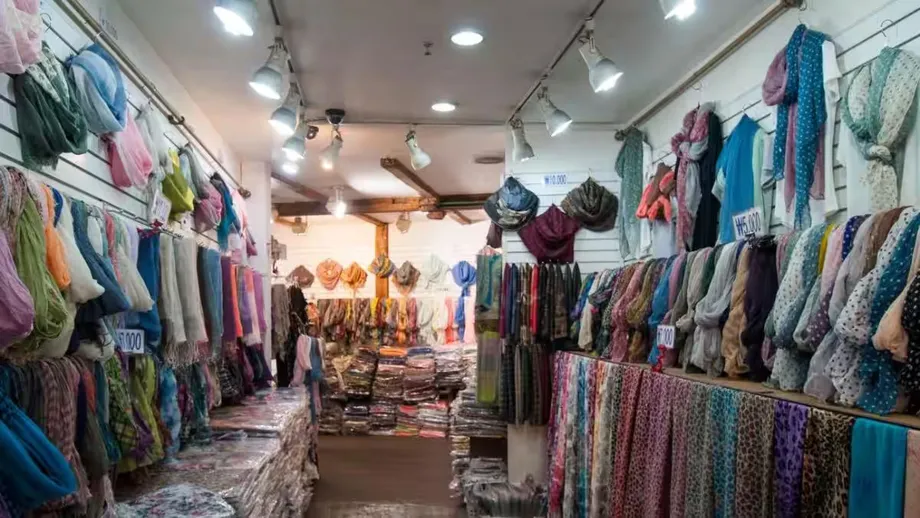
The seller she missed runs Hanyangsa, a general goods shop in the market, and has sold scarves there for about ten years. His name has not been made public. He charges 10,000 won (roughly $7) for six scarves and spends much of his working day telling customers not to buy them.
Demand has outgrown the stall. On the morning of November 24, visitors collected numbered tickets at a waiting point around 100 metres from the shop and were let in ten at a time when a radio signal came through. About 80 people stood in line in the cold, some in padded hats and gloves, including parents holding babies. A 75 year old woman from Pyeongtaek skipped breakfast and took a 9 a.m. bus to buy about 50 scarves for her senior centre and her friends. Lee Yo-won was not the only visitor to leave the market without the prize.
What the studio heard about the trip
Eun Ga-eun spent the episode trying to mend a rift with her mother before her birthday, and her story gave Lee Yo-won the opening. The singer travelled to her hometown of Gimhae in South Gyeongsang Province after her mother stopped answering calls, and the two women later walked through a traditional market that carried memories from 20 years earlier.
Watching that footage, Lee Yo-won remembered her own childhood trips, when her mother took her for donuts and tteokbokki. "When I was little, I used to go to the market with my mom and buy lots of food to eat, but now we live in different places, so I can't go," she said. Then she admitted where she had been spending her free time.
So recently I went to Namdaemun Market with my mom.
She described herself as a "hot spot addict," which set the studio laughing. Eun Ji-won pressed her on the reason for the outing. "Did you go because of nostalgia or because it's trendy?" he asked. Lee Yo-won lowered her head and looked embarrassed, and the show let the silence do the work.
The confession places a 28 year acting career next to a market stall that became a national talking point in a matter of weeks. Namdaemun Market, a dense grid of alleys in Jung-gu, spent decades serving wholesale buyers and shoppers over 60, and it now draws teenagers, young couples and foreign tourists who arrive with phone cameras out.
Who is the Scarf Uncle
Hanyangsa sits inside the market, and the man behind its scarf counter is an employee who has worked there around a decade. He speaks in a warm Chungcheong accent and prices everything the same way: 10,000 won for six pieces. The seller picks the designs at random, so customers cannot choose the scarves that end up in their bag. That works out to a little under 1,700 won a piece.
Fame arrived in October, when a video filmed by a customer spread on social media. Clips of his patter have since collected millions of views on Instagram and YouTube, and the nicknames multiplied. Shoppers call him Scarf Uncle, Scarf Man and Scarfrio, a blend of scarf and Leonardo DiCaprio that plays on his resemblance to the Hollywood actor. Korean fans also call him Namdaemun Im Young-woong, borrowing the name of a beloved trot singer for a man who has become a market attraction in his own right.
Regulars say the personality came first and the cameras came later. Choi Mo-ran, 54, who travels to the market for wholesale goods, said the appeal is simple.
There are plenty of places selling scarves, but it's hard to come across someone as charming as him. That's why people like him.
The sales pitch is a warning not to buy
Nothing about the counter follows the usual retail script. Instead of praising the stock, the seller tells shoppers that the goods are worthless, that the scarves will sit unworn in a drawer, and that they should keep their money in their pockets.
Didn't you come here knowing that we sell nothing but crappy stuff?
Didn't you all come here to buy scarves for your doghouses?
Other lines that circulate in the videos include "Don't spend your money," "Even if you buy it, you'll never wear it once you get home" and "Don't risk your life over buying a scarf." He also jokes that regulars are the last thing he wants, scolding customers who come back for returning yet again, while asking them whether they waited long in the cold.
On November 20 he added thick winter neck warmers to the table after shutting the shop for two days. A typical bundle on that first day held two thin scarves and four warmers, and the price did not move: six items for 10,000 won, still under 1,700 won a piece. When customers kept asking whether the warmers cost more, he told one woman who had asked twice that she would pay 10,000 won a piece, then confirmed that everyone gets six for 10,000 won. A customer who had queued long enough to buy hotteok was told the scarves were cheaper, since a hotteok costs 2,000 won.
He has said in a livestream that he tried to sell in volume on thin margins instead of taking a large margin on each item, and that customers bought from him after trading jokes and finding him endearing, then returned because the quality held up.
An online shop that sold out within hours
Requests from people who could not travel pushed the merchant online. He opened a Naver Smart Store, and on November 12 the traffic overwhelmed it: 132,000 visitors had arrived by 1.15 p.m., the total reached 200,000, access was briefly disrupted and every item sold out. More than 796 posts had appeared in the store's question and answer section by that afternoon, many of them messages of support written in imitation of his speech.
Sharing a screenshot of the overloaded page on social media, he wrote, "What on earth is going on?" He announced a livestream to explain the sellout and then asked customers to cancel their orders because he had received too many.
The online rush did nothing to thin the physical queue. Visitors kept arriving at the shop after hours of travel, some to find the door already shut.
Number tickets, police and a district watching the crowds
Viral attention brought a safety problem to alleys built for wholesale carts. Police were called to the shop on November 4, and the merchant closed it the next day for a safety inspection. He later paid for private security guards out of his own pocket and stopped announcing his opening hours in public. More than 30 police officers were deployed at one point after tens of thousands of people gathered in the area.
The arrangements on November 24 were a small operation of their own. A white banner reading Namdaemun Scarf Uncle waiting area hung at the holding point, and ten people managed the line and the shopfront: four staff from the Jung-gu district office, two from the market corporation and four private guards working for the merchant, up from three before the separate waiting area was created. Officers kept asking pedestrians to keep moving as shoppers stopped to take photographs.
Seoul's Jung-gu district is weighing whether to add Namdaemun Market to the list of locations monitored under its crowd management system for densely populated areas from next year. The key dates behind the crowds run in a short sequence:
- October: a video posted by a customer spreads on social media and the shop becomes a tourist stop.
- November 4: police are called to the shop, and it closes the following day for a safety inspection.
- November 12: the new online store draws about 200,000 visitors and sells out.
- November 20: thick neck warmers go on sale at the same six for 10,000 won.
- November 24: a numbered ticket system, a waiting area and ten safety staff are in place.
- November 28: the episode of "Mr. House Husband Season 2" airs with Lee Yo-won's account of her visit.
The crowds spill into other shops
Sales data suggests the scarf rush landed on a market already recovering. According to Shinhan Card, card spending at tourism related businesses around the market's Jayu Shopping Center area rose 7.5% between January and September compared with the same period a year earlier, and spending by foreign cards jumped 65.6%.
Traders describe a change that began before the scarves. Kim Cheong, 84, who sells bath goods, said the market used to serve people over 60, and that students in their twenties and thirties and foreign tourists started arriving about five months ago. A woman in her fifties who has sold accessories for 12 years said foreigners and young couples hunting jade rings have poured in over the past two months, forcing her to neglect wholesale work to serve walk-in customers. A snack vendor said sales rose two to three times once the queues formed, and others said scarf buyers wander off to look at bowls and jewellery.
Not every neighbour is pleased. Moon, a shoe seller who has worked in the market for more than 30 years, said the passage beside his shop now clogs, and that the wider footfall has not made up for it.
Business is bad. The passage next to me gets blocked and it's really hard on me.
Another scarf seller, Bae Jong-min, took a brighter view and said the extra visitors were good for the market as a whole.
Why people wait an hour for a 1,700 won scarf
The scarves are cheap, but shoppers describe the trip as an outing rather than a purchase. A woman in her sixties who travelled from Bucheon framed it as a package deal.
We're not just here to buy scarves. For 10,000 won, we get a scarf and the Scarf Leo show. It's a two-for-one deal.
Lee Ji-hyun queued more than an hour to reach the front and held up her haul. "I finally got some," she said. "The way he talks is so lovely. A man like that deserves to do well, so I came to cheer him on, and I ended up buying." She had not set foot in Namdaemun Market for 30 years before hearing about the seller and now plans to come once a month.
Cho Yoon-sook travelled about 90 minutes from Incheon and had already been turned away once for arriving too late. "Maybe I'll come back tomorrow," she said. "I've made up my mind to come all this way, so I have to see him at least once." The scarves themselves barely mattered to her. "There's something endearing about the way he talks," she said.
The waiting has created a side market. Listings on the secondhand app Danggeun offer four scarves for 13,000 won and three for 12,000 won, putting the price of a single piece at two to 2.4 times the shop rate. The merchant knows about the resellers and says the only tool he has is a limit on how many bundles each customer can buy.
Kwak Keum-joo, professor emeritus of psychology at Seoul National University, traces the pull to the reversal itself. She argues that a pitch telling people not to buy is the opposite of the usual encouragement to spend more, that listeners hear honesty in the refusal, and that the effect builds trust in traditional markets more broadly. In an age that consumes only what looks and sounds pleasant, she says, a gruff voice with real warmth inside it stands out.
The other story in the episode: a daughter who could not reach her mother
The market trip that prompted Lee Yo-won's confession began with a silence. Eun Ga-eun told her husband, Park Hyun-ho, that her mother's birthday was approaching and that calls and messages were going unanswered. "She won't take my calls. She doesn't read my texts or answer the phone. It's been like this since we went to see the fall foliage," she said, adding that a phone argument had revived old grievances. "She told me to cut ties with her."
Park Hyun-ho urged her to try again, and the line only rang. "She really isn't answering," he said. A call to her younger brother, who lives with their mother, brought worse news: their mother had left the house the day before and he did not know where she had gone. Eun Ga-eun eventually left her daughter with her husband and set out for Gimhae, planning to dye her mother's white hair herself for the birthday.
The studio panel responded with their own family worries. Park Seo-jin said his father's health is poor because of diabetes and cerebrovascular disease, and that a missed call makes him fear a collapse at home. Wendy of Red Velvet, a guest on the episode, said her parents live in Canada, so a failure to reach them leaves her unable to act and stuck with anxious thoughts. Watching Eun Ga-eun and her mother clash, she saw her own household. "It's just like me and my mom. It was a kind of mirror therapy," she said.
Eun Ji-won offered a solution he called the bad son's method, arguing that both women were being too careful with each other's feelings and that children should simply accept whatever their parents put in front of them. Lee Yo-won, who had spent the segment watching the pair, said old wounds resurface easily in families where a great deal has piled up.
The host's chair and a solo stage
Lee Yo-won's presence at that table is new. Her agency, Management Soo, announced in October 2025 that she had joined "Mr. House Husband Season 2" as a host, her first fixed role in a variety programme after 28 years of acting. She debuted in 1998 through the film "The Scent of a Man" and built a career across "Take Care of My Cat," "Queen Seondeok," "The Greatest Quack" and "The Empire of Gold." She returned to cinemas this year in "The Possessed" after an eight year break from the screen, and recent turns on SBS's "Take Off Your Shoes and Dolsingpoeman," "My Little Old Boy" and the YouTube show "No Back Down Tak Jae-hoon" showed a looser, more candid side. The revamped programme airs on Saturdays, with the November 28 episode going out at 10.35 p.m.
The same broadcast carried news from Park Seo-jin, who had been chosen to perform solo at the ABU Song Festival, following past Korean performers including TVXQ!, CNBLUE, Ailee, TWICE, ITZY, Mamamoo+ and Kwon Eun-bi. He teased his sibling for driving him around and told them to treat the trip as an honour. Eun Ji-won congratulated him and then remembered his own turn on a northern stage. "You're going by yourself? You're truly a national team representative," he said, before recalling that he once performed in Pyongyang. Wendy said her group followed in 2018 with "Red Flavor" and "Bad Boy," and that they rehearsed harder than for any other choreography.
No date has been given for another market outing by Lee Yo-won, and the merchant's plans for his next livestream have not been announced. The scarf counter keeps its own schedule, which he no longer publishes, and Jung-gu's decision on adding the market to its crowd monitoring list is expected next year.
Key Points
- Lee Yo-won told the November 28 episode of KBS 2TV's "Mr. House Husband Season 2" that she visited Namdaemun Market with her mother and did not meet the Namdaemun Scarf Uncle.
- Park Seo-jin asked whether she had met him, and she said: "I went there, but I couldn't meet him."
- The seller, an employee of the shop Hanyangsa, has sold scarves in the market for about ten years and sells six for 10,000 won, with designs chosen at random.
- He became famous in October through a customer's social media video and is nicknamed Scarf Uncle, Scarfrio and Namdaemun Im Young-woong.
- On November 20 he added winter neck warmers at the same price, with bundles of two thin scarves and four warmers for 10,000 won.
- His Naver Smart Store drew about 200,000 visitors on November 12 and sold out, with 132,000 people arriving by 1.15 p.m.
- Police were called on November 4, the shop closed the next day, and more than 30 officers were deployed when tens of thousands gathered.
- On November 24, a numbered ticket system and ten safety staff managed queues of about 80 people in a waiting area 100 metres from the shop.
- Shinhan Card figures show tourism related card sales near the market up 7.5% from January to September, and foreign card sales up 65.6%.
- Secondhand listings resell four scarves for 13,000 won, more than double the shop price per piece.
- The episode also followed Eun Ga-eun's attempt to see her mother in Gimhae after being told to cut ties.