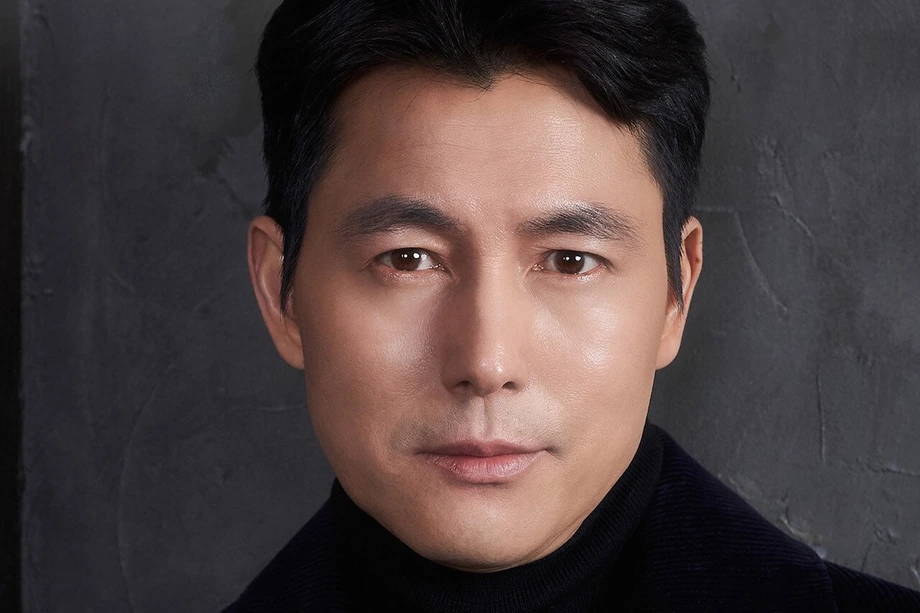
Jung Woo Sung Walks Away From the Agency He Built
Jung Woo Sung has left Artist Company, the agency he and Lee Jung Jae founded in 2016, ending a public partnership that lasted about 10 years. Artist Company confirmed on November 27 that his exclusive contract had expired and that he did not sign a new one. The actor is now working without an agency, with a manager who has worked with him for more than 10 years.
Contents
- Jung Woo Sung Walks Away From the Agency He Built
- What the Company Confirmed and What It Did Not Say
- The Director Exit Came First
- The Share Sale Put Jung Below a Key Line
- A Short Timeline of the Split
- Why the Cheongdam Couple Mattered
- The Dispute Around Lee Jung Jae's Contract
- What the Disclosures Show About Company Money
- Jung's Final Settlement Figures Show a Sharp Fall
- The Advertising Unit Added Another Money Question
- What Changes Now for Jung, Lee and the Company
- Key Points
The split changes the day to day structure of Jung's career. Instead of using Artist Company's management, he is being supported on film sets by the same manager who followed him out of the company. The manager was described as a manager at section chief level. A person familiar with the company said the two founders had stopped working under the same agency before the news became public.
A source at Artist Company said after the report appeared that the contract ending was real and that the manager had gone with him.
It is true that Jung Woo Sung's exclusive contract has expired and he did not renew it. His manager has also left the company.
Jung is currently filming Salsaengbu, also known in English as The Kill List, which began shooting on November 5. Kim Hong Sun directs the film. Jung plays Han Myeong Hoe, the most powerful figure in Joseon, in a story about a ruler who gains power through bloodshed and the people who seek revenge after losing everything.
What the Company Confirmed and What It Did Not Say
An Artist Company representative gave a brief confirmation on November 27. The representative said the agency's contract with Jung had run out.
The exclusive contract with Jung Woo-sung has expired.
An exclusive contract in entertainment is the agreement that makes an agency an actor's main representative. It usually covers work offers, schedules, negotiations and the share of income paid to the actor. When it expires, the actor can renew, sign with another agency or work independently. Artist Company did not give the exact date when Jung's contract ended. People familiar with the company said it lapsed at the start of this year.
The agency's wording left open why the parting was made public months later. No reason was given for Jung's decision not to renew.
The Director Exit Came First
Jung's departure from the management contract followed an earlier exit from the company's board. According to the Financial Supervisory Service electronic disclosure system, he resigned as an inside director on October 2, about six months before his term was due to end on March 28, 2027.
An inside director is a board member who also works inside the company, taking part in management decisions rather than only overseeing them. Jung and Lee were both appointed to those posts in March 2024. Jung's early resignation was the first clear sign that the business relationship was changing.
The disclosure system showed that his shares were reported again after the resignation because his special relationship with the largest shareholder had ended. Jung still kept a stake in Artist Company, so his exit from management did not immediately end his investment in the firm.
The Share Sale Put Jung Below a Key Line
Jung sold 155,000 Artist Company shares on the open market for about 521.69 million won. Disclosure based accounts place the trades in the November 17 to 23 period, with some filings describing November 17 to 19 and others describing November 19 to 23.
The sale reduced his holding from 1,714,108 shares to 1,559,108 shares. His stake fell from 10.99% to 9.9998%, just below the 10% line that labels a holder as a major shareholder in South Korean public company disclosures.
The 10% line matters because public companies must disclose dealings with major shareholders in a separate category. Such dealings can reveal conflicts of interest, where a person with influence over a company might receive favourable terms. Jung's small remaining stake means he still has an investment relationship with Artist Company but no longer sits in the major shareholder category.
A Short Timeline of the Split
The sequence runs from the founding of the company to the public confirmation in November.
- 2016: Jung Woo Sung and Lee Jung Jae found Artist Company, saying they want to build a rational and systematic entertainment company.
- March 2024: Both actors become inside directors.
- Early 2026: Jung's exclusive contract expires. Artist Company later confirms the expiry but withholds the exact date.
- October 2: Jung resigns as an inside director with about six months left in his term.
- November 5: Filming starts on Salsaengbu, with Jung playing Han Myeong Hoe.
- November 17 to 23: Jung sells 155,000 shares, dropping below the 10% major shareholder threshold.
- November 27: Artist Company confirms that the management contract ended and that Jung will work independently.
The timeline shows a gradual withdrawal. The contract had already ended by the time the director resignation and share sale became public, but the company only confirmed the full break on November 27.
Why the Cheongdam Couple Mattered
Jung and Lee were known as the Cheongdam Couple, a nickname built around Cheongdam-dong, the Seoul district linked with entertainment companies. Fans used it because the two actors were close friends as well as business partners. They founded Artist Company with a stated aim of building a rational and systematic company, starting with actor management.
The firm later moved into film and drama production and beauty services. Its roster includes Lim Ji Yeon, Yeom Jung Ah, Kim Hye Yoon, Park Hae Jin, Kim Joon Han, Pyo Ji Hoon, Jo Yi Hyun, Kim Jong Su and Bae Seong Woo. Lee is identified as the largest shareholder.
The two roles made them more than colleagues. They were public faces of the company, board members and investors. Jung's exit removes one of the names most closely tied to Artist Company's identity.
The Dispute Around Lee Jung Jae's Contract
Artist Company had already been facing questions about how it handled contracts with its founders. The allegations included favourable settlement terms for Lee, double rent payments, a contract with cosmetics firm Vena Beauty, royalties connected to cosmetics and payments linked to property owned by the actors.
The central allegation concerned how profits were shared. It said Lee received nine parts of revenue for every one part kept by the company until a cap, after which he would keep all revenue beyond that point. The cap was stated as 4 billion won in the account answered by the agency and as 40 billion won in Chinese language coverage. Another allegation said the production company's office was moved into empty space owned by Lee, leading to two rent payments.
Artist Company said in a statement on November 18 that the actor who served as inside director alongside Lee received no separate executive salary and was covered by the same settlement contract terms. That actor was Jung. The agency also argued that a top actor with global recognition could have separate terms because of wider effects on credibility, recruitment and commerce.
The agency said the double rent issue came from legal disputes after the previous management team did not resign during the acquisition of Raemongraein. It said it would no longer argue details through the media and had hired a law firm to examine possible legal steps. Civil and criminal action would follow where false facts or defamation were found.
What the Disclosures Show About Company Money
Public filings show why the contract allegations drew attention. Financial accounts put the company's 2025 loss at 4 billion won, and the loss through the third quarter of 2026 was about 2.39 billion won. Its share price had fallen about 85% over two years, and small shareholders held about 45% of its stock.
A related party transaction is a deal between a company and someone connected to its control, such as a major shareholder or an owned business. Companies disclose these deals because they can affect ordinary shareholders. Artist Company changed its third quarter filing so that transactions with Lee's personal business, Verdant Hills, Jung's personal business, March, and the building they jointly owned were listed as business transactions with major shareholders.
For January through September 2026, transactions with Verdant Hills were 2.89916 billion won, transactions with March were 1.13593 billion won and building lease transactions were 711 million won. Together, the 4.74609 billion won equaled 24.2% of Artist Company's consolidated revenue of 19.61826 billion won in that period.
The 2025 figures were higher. Verdant Hills received 20.1394 billion won, March received 2.01011 billion won and the jointly owned building received 948 million won. The total of 23.09751 billion won equaled 46.5% of consolidated revenue of 49.65014 billion won.
The case has a comparison in South Korea's listed entertainment industry. SM Entertainment once paid fees to former producer Lee Soo Man's Like Production and disclosed them as major shareholder transactions. Pressure from activist investors preceded the early end of that producing contract at the end of 2022.
The Financial Supervisory Service said it would examine whether the earlier classification was intentional and what effect it had on investors. No date was given for that review's conclusion. Artist Company has corrected the third quarter report, but earlier reports from the first quarter of 2025 onward were still described as using the old classification.
Jung's Final Settlement Figures Show a Sharp Fall
Disclosure figures also show how much Artist Company recognised for Jung's personal business in the final period before the split. A settlement fee in this context is the actor's share that the company records as a project progresses. The January to September 2026 amount for March was 1.13593 billion won.
Of that total, 845.33 million won was recorded in January through March. The April through June share was in the 140 million won range, and the July through September share was 146.09 million won. The final three month figure was down 85.3% from 995.72 million won in the same period a year earlier.
For July through September, Verdant Hills received 653.97 million won, about 4.5 times Jung's March settlement in that period. Amounts due to be collected from March also fell, from 199.38 million won at the end of June to 53.28 million won at the end of September, a decline of about 146 million won.
Those figures show recognised settlement income in particular periods and give a narrow view of the business relationship before the break.
The Advertising Unit Added Another Money Question
The company's advertising business also drew attention in the same period. The sale of that unit left 5 billion won unpaid. The unit had generated 9.8 billion won in revenue in the prior year, about 21% of Artist Company's total revenue of 46.6 billion won.
Of a second installment of 2 billion won due on the 25th, only 1.3 billion won was received. The remaining 700 million won was deferred to the 2nd of the next month at the buyer's request.
What Changes Now for Jung, Lee and the Company
Jung's immediate future is practical. He is acting in Salsaengbu without an agency, supported by his long time manager. The cast also includes Jung Sung Il, Baek Yoon Sik, Park Ji Hwan and Choi Gwi Hwa.
Artist Company keeps its actors, production business and beauty interests, with Lee as largest shareholder. The agency has said it will use legal procedures against reporting it considers distorted. The Financial Supervisory Service review of the disclosure classification is separate from that company statement and remains open.
For Jung, independence means he no longer has Artist Company handling his exclusive work relationship. For Lee and Artist Company, the departure removes one of the founders from daily management while leaving a small investment stake and unresolved questions about past disclosures.
Key Points
- Artist Company confirmed on November 27 that Jung Woo Sung's exclusive contract expired and was not renewed.
- Jung resigned as an inside director on October 2, about six months before his term was due to end.
- He sold 155,000 shares and now holds 9.9998%, below the 10% major shareholder threshold.
- His manager of more than 10 years also left Artist Company and is working with him on film sets.
- Company filings show 4.74609 billion won in transactions with founder linked businesses and a jointly owned building from January through September 2026.
- Jung is continuing work independently while filming Salsaengbu.