A Rare Return to the Aleutian Islands Tank
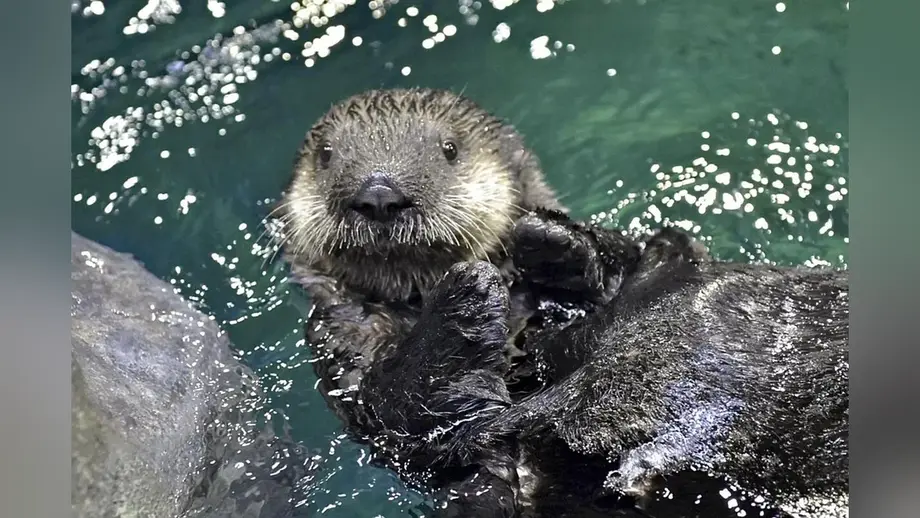
Osaka's Kaiyukan aquarium will open a sea otter exhibit on Dec. 7, 2026, ending a wait of nine years at the aquarium and an effort that took four years to complete. Four otters rescued as pups along Alaska's coast will go on display in the Aleutian Islands tank, the section built to show a volcanic island chain stretching about 2,000 km from Alaska toward Russia's Kamchatka Peninsula. Alaska is about 6,000 km from Osaka, so the move is a long journey for animals that began life in the northern Pacific.
Contents
- A Rare Return to the Aleutian Islands Tank
- Meet the Four Pups From Alaska
- Why an Osaka Aquarium Kept Looking for Sea Otters
- How the Transfer Took Four Years
- Why Japan Had Only One Otter
- What American Standards Changed in Osaka
- What Visitors Will Notice
- Why Rescued Otters Need Aquariums
- A Small Rebound With a Wide Reach
- Key Points
Kaiyukan's official press release, dated 2026年11月25日, states: 「2026年12月7日(月)より、「アリューシャン列島」水槽にて、ラッコ4頭(予定)を展示いたします。」 It lists the otters as ウーナ, ニピ, チャリィ and イマック, and adds the viewing rule, 「※ラッコをご観覧いただけるのは閉館時刻の40分前までです。」
The newcomers are two males and two females. Kaiyukan uses the names Uuna, Nipi, Chali and Imak, drawn from Alaska Native languages. They were estimated to be only two weeks to four months old when rescuers found them in 2025, too young to feed themselves. The aquarium now puts each at about 20 kg and around one year old, which shows how much they grew during rehabilitation.
Their arrival changes the national picture. After Kira, a female sea otter aged 18 at Toba Aquarium in Mie Prefecture, died on Nov. 5, 2026, Mei, a female aged 22, became the only sea otter on public display in Japan. With Kaiyukan's four, the country's captive population will rise to five. Visits will begin at 10:30 on opening day, and the aquarium said visitors can see the otters until 40 minutes before closing time.
Meet the Four Pups From Alaska
Alaska SeaLife Center, a nonprofit marine animal rescue and research facility, found the four on Alaska beaches between May and October 2025. The U.S. Fish and Wildlife Service gave permission for the rescues. All four were separated from their mothers and weak when found. Sea otter mothers care for their pups for a long time, teaching them how to find food, so pups found alone at that age usually cannot live in the wild.
- Uuna, female, rescued on May 6, 2025, at about two months old. The name means one who is in the open sea.
- Nipi, male, rescued on June 23, 2025, at about two weeks old. The name means sound.
- Chali, female, rescued on Oct. 20, 2025, at about one month old. The name means again or more.
- Imak, male, rescued on Oct. 30, 2025, at about four months old. The name means sea.
The U.S. Fish and Wildlife Service judged all four unable to return to the wild. Alaska SeaLife Center then prepared them for transfer to aquariums certified under U.S. care standards. Kaiyukan said the males were neutered before the move. The names were devised by Alaska SeaLife Center from Alaska Native languages and settled in discussion with Kaiyukan.
Alaska SeaLife Center confirmed the transfer in its own statement, saying it was pleased to announce that the four otters rescued in the summer and autumn of 2025 had a permanent home at Osaka's Kaiyukan. The center named Uuna, Nipi, Chali and Imak and said that, carrying their Alaska experience with them, they would take on a role in Japan in telling people around the world about, and raising awareness of, the importance of marine conservation. It said it was an honour to build a cooperative relationship with Kaiyukan's dedicated team and that, from the moment Kaiyukan was chosen as the otters' new home, its staff showed exceptional enthusiasm for learning every element of otter care. ASLC said those staff made repeated trips to Alaska and worked with the center's care and veterinary teams to deepen their knowledge of rehabilitation and long-term care. The center said the otters were moving to a state-of-the-art environment supported by a specialist care team, and that animals judged unable to return to the wild are placed, under decisions by the relevant authorities, where they can receive the highest standard of care for life. ASLC said it was confident the four would grow healthily in their new environment and looked forward to what they would contribute in Japan to marine ecosystem conservation, including for sea otters, and to visitors' interest.
Why an Osaka Aquarium Kept Looking for Sea Otters
Kaiyukan first kept sea otters when it opened on July 20, 1990. Over 27 years, until Oct. 10, 2017, it cared for 13 of them, including four born at the aquarium. Its last, a female named Patta, died in October 2017 at 21.
The reason goes beyond public interest in a charming animal. Sea otters are central to the ecology Kaiyukan wants visitors to understand. In the Aleutian Islands, they eat sea urchins and other shellfish. When otters are absent, urchins can multiply and chew through kelp forests. Kelp forests give shelter to many marine animals, so the otter's feeding habit helps keep the whole living community in balance. Scientists call this a keystone species, meaning an animal with an influence much larger than its numbers.
The aquarium's wider theme is the Pacific Ring of Fire and Ring of Life, which looks at the lands and creatures around the Pacific Ocean. The Aleutian tank recreates a chain of volcanic islands about 2,000 km long. Kaiyukan has long used otters to show how one animal connects the coast, the kelp and the creatures living among it.
How the Transfer Took Four Years
Kaiyukan began talks with Alaska SeaLife Center in 2022. The work involved repairs to pools and care areas, staff training, quarantine planning, American certification and an export permit. Quarantine means keeping new animals apart until keepers know they are healthy and settled. The steps matter because moving sea otters across borders is tightly controlled.
- 1990 to 2017: Kaiyukan keeps 13 sea otters, including four born there.
- 2022: Kaiyukan starts talks with Alaska SeaLife Center.
- November 2023: work begins to renovate facilities for sea otters.
- March 2025: Kaiyukan becomes the first facility in Japan certified as meeting U.S. Department of Agriculture care standards.
- May to October 2025: Alaska SeaLife Center rescues and treats the four pups under U.S. Fish and Wildlife Service permission.
- February 2026: the import of the four otters is decided.
- April 21, 2026: the otters arrive at Kansai International Airport by charter plane and go into a holding tank away from public view.
- Nov. 25, 2026: Kaiyukan announces the exhibit.
- Dec. 7, 2026: public viewing begins at 10:30.
The same release gives the regulator's own wording for the standard and permit: 「米国農務省(USDA)が飼育可能と認定した米国やヨーロッパなどの水族館」, 「日本で初めてUSDAの飼育基準を満たした施設に認定されました」 and, for the export permit, 「USFWSの輸出許可」. It gives the permit terms as 「USFWSにより野生復帰不可と判断されたラッコを、水族館や動物園が飼育するためには、USFWSの許可書が必要であり、そこには繁殖が明確に禁止されています(※)。そのため、ASLCはUSFWSの許可を得て、搬出する前にオス個体の去勢処置を行っています。 ※AZA(米国動物園水族館協会)「SEA OTTER CARE MANUAL」より」
Kaiyukan said its staff studied the latest health care methods and gained export permission from U.S. authorities. The four have been cared for away from visitors while keepers prepared them for display.
Why Japan Had Only One Otter
Japan's sea otter population in aquariums peaked at 122 animals across 28 facilities in 1994. It then fell steadily. Breeding was difficult, imports stopped and older animals died. Imports from the United States ended in 1998, and imports from Russia ended in 2003. U.S. rules banned the capture of sea otters for export amid concern about overhunting, pollution and other pressures.
International rules tightened as the species declined. The Convention on International Trade in Endangered Species, usually called CITES, restricts trade in threatened animals and plants. The International Union for Conservation of Nature listed the sea otter as endangered in 2000. Japan's Ministry of the Environment and Hokkaido also designate it as endangered. The world's wild sea otter population was estimated at 150,000 to 300,000 in the early 18th century, but overhunting for fur drove it down. Conservation work later helped some populations recover.
Toba Aquarium's Kira was born in 2008 at Adventure World in Shirahama, Wakayama Prefecture, and moved to Toba in March 2021 to live with Mei. Kira's death on Nov. 5 left Mei alone. Public viewing of Mei resumed about a week later, and around 250 people lined up before the gates opened.
Yume Abiru, a university student aged 19 from Kawasaki near Tokyo, was among the visitors. She said she had loved Kira and hoped Mei would stay healthy despite her age.
I loved Kira-chan so much. I hope May-chan stays healthy although she is already quite old.
Mei's age matters because the average lifespan of sea otters in captivity is around 20 years. The arrival in Osaka gives visitors another chance to see the species while Mei remains elderly.
What American Standards Changed in Osaka
Import screening in the United States can require sterilization to prevent breeding, enclosures that meet minimum size rules and educational programs. Those conditions shaped Kaiyukan's work. The aquarium renovated its facilities from November 2023, built the required care capacity and became the first Japanese facility certified under the American standards in March 2025.
The Aleutian Islands exhibit sits on the seventh floor. Its viewing windows are two glass panels, about 5 metres wide and 2 metres high. The four otters have been kept away from public view since arrival, where keepers could monitor feeding, health and behaviour before the exhibit opened.
Kaiyukan said viewing time may be limited if crowds become too large. Visitors should also plan around the cutoff 40 minutes before closing. The aquarium did not give a daily schedule showing when each otter would be visible.
What Visitors Will Notice
Sea otters are the smallest marine mammals. Adult males grow to about 120 to 140 cm and 25 to 40 kg. Adult females grow to about 100 to 130 cm and 20 to 30 kg. They spend almost all their lives in the sea. Instead of a thick layer of body fat, they keep warm with extremely dense fur that traps air next to the skin.
The four newcomers are still young. Adult sea otters can eat 20 to 25 percent of their body weight in a day, feeding on crabs, shellfish, fish and sea urchins. They are among the few mammals known to use tools, often placing a stone on their belly and smashing shellfish against it.
Hiroyuki Doi, the director of Kaiyukan, spoke at a news conference in Osaka and urged visitors to enjoy telling the four apart and watching their lively movements.
This day has finally come, and we are delighted... These otters are very young.
Doi's words point to the practical challenge for keepers. Young otters need careful feeding and constant observation, but their activity also makes them engaging to watch. The aquarium expects visitors to see swimming underwater as well as playful behaviour near the glass.
Why Rescued Otters Need Aquariums
Yoko Mitani, a professor of marine mammalogy at Kyoto University, said sea otter pups rescued when very young often cannot survive if returned to the wild. If no facility takes them in, they may be euthanized, meaning humanely put down, she said. Regions such as Alaska therefore look for aquariums willing to accept animals that cannot be released, and institutions in Europe and the Middle East have taken rescued otters in the past.
Mitani said Japan needed to renovate facilities and improve approaches to animal conservation and welfare to meet American requirements for new imports. Kaiyukan's certification shows one Japanese aquarium has done that work. The transfer gives four rescued animals a home and gives Japanese visitors a closer view of a species they could otherwise see mainly in images or at Toba Aquarium.
Kaiyukan said it was pleased to contribute to international sea otter protection through the exhibit. The conservation value is practical. A rescue centre with animals that cannot return to the wild needs certified destinations, and an aquarium that meets the standards can provide care over many years while teaching the public why kelp forests and coastal ecosystems matter.
A Small Rebound With a Wide Reach
Japan will move from one displayed sea otter to five. That is far below the 122 kept nationally in 1994, but it changes what families, school groups and aquarium visitors can see in 2026. Instead of one elderly female carrying the spotlight, two aquariums will now share the task of explaining how sea otters live and why their habitats need protection.
Kaiyukan's history gave it a base for the return. The aquarium kept 13 sea otters over 27 years, learned to breed four of them and maintained facilities for the species even after Patta's death in 2017. The new exhibit brings that experience back into public view at a time when the national population is small.
The four pups also carry names that teach visitors where they came from. Uuna, Nipi, Chali and Imak were named through a process led by Alaska SeaLife Center and agreed with Kaiyukan. Their meanings, the open sea, sound, again or more, and sea, point back to language, place and the ocean they still depend on.
Key Points
- Kaiyukan will display four rescued Alaskan sea otters from Dec. 7, 2026, its first sea otter exhibit since 2017.
- The otters are Uuna, Nipi, Chali and Imak, two females and two males found in Alaska in 2025 at about two weeks to four months old.
- Japan's captive sea otter population will rise from one to five after Kira's death left Mei as the only otter on public display in November 2026.
- Kaiyukan's path began in 2022 and included renovations, staff training, USDA certification in March 2025 and an April 2026 charter flight.
- Sea otters help control sea urchins and protect kelp forests, making them important to the Aleutian Islands ecosystem.
- Viewing may be limited by crowds, and visitors can see the otters only until 40 minutes before closing.