A farewell completed within 24 hours
A growing number of bereaved families in Singapore are completing a funeral within 24 hours, from collecting the body to cremation, at a cost described as just over S$1,000. A traditional wake and funeral can cost more than S$10,000, according to funeral directors who described their caseloads on 25 November 2026. Several said funerals finished in one day now account for close to 10 per cent of their business.
Contents
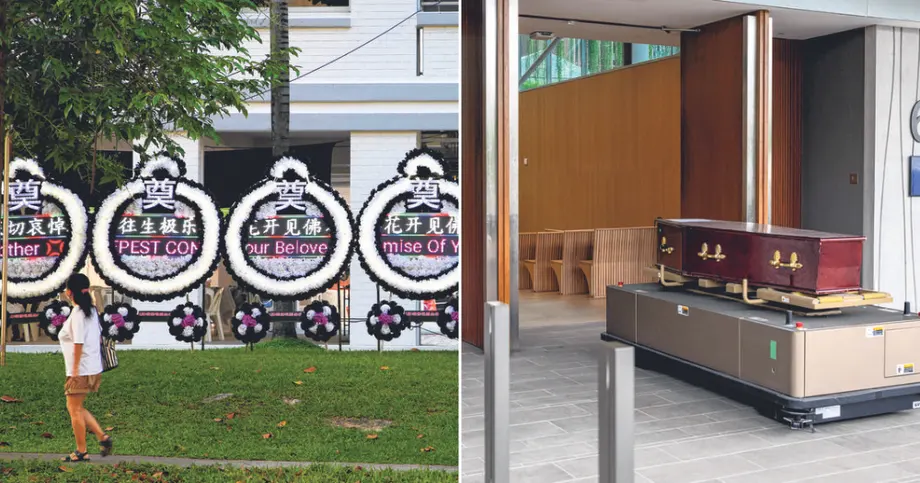
The shorter arrangement removes the wake, the period when relatives and friends traditionally gather over several days to pay their respects. Instead, the deceased is prepared and taken directly to the crematorium. The farewell ceremony in the service hall lasts no more than 20 minutes, and relatives must fit their plans around an available cremation slot.
Cost is part of the attraction, but the directors described several other reasons. Some deceased people were single, had no children or had only a small circle of relatives and friends. Others had explicitly asked for a quiet departure without burdening their families. There were also households that had already spent heavily on medical treatment or devoted considerable time to caring for the person who died.
Wakes lasting three to five days remain more common. The development therefore adds a shorter choice for families rather than replacing the established way of holding a funeral.
What happens when there is no wake?
The schedule begins when the funeral director is notified. The body is collected, cosmetic preparation is completed and the deceased is dressed in funeral attire. The body is then transported straight to the crematorium, without setting up a wake where visitors can gather over several days.
The cremation timetable controls much of what follows. Because the arrangements are rushed, relatives may have to arrive during an available gap in the crematorium schedule rather than choose a time that suits everyone. A farewell ceremony lasting up to 20 minutes takes place in the service or ceremony hall before cremation.
For a small family whose members are already in Singapore, that can mean fewer practical arrangements and less time spent hosting a vigil. For a family with relatives overseas, the same timetable can be restrictive. There is little flexibility to delay proceedings while someone travels home.
The entire sequence, from collection of the body to cremation, is designed to take no more than 24 hours. The 20 minute limit refers to the farewell ceremony inside the hall, not to the full period spent preparing the deceased or completing the other arrangements.
What four years of figures reveal
Ang Ziqian, vice-president of the Association of Funeral Directors Singapore and executive director of Ang Chin Moh Funeral Directors, said he had observed an upward trend since the COVID-19 pandemic. Funerals completed in one day made up nearly 10 per cent of his company's total volume in 2026.
Jenny Tay, managing director of Direct Funeral Services, gave a longer record. Her company has handled more than 300 such cases annually since 2023, with the following totals:
- 2023: 399 cases.
- 2024: 419 cases, the highest annual total in the figures supplied.
- 2025: 385 cases.
- January to October 2026: 361 cases.
The numbers show sustained demand with some variation between years. The total fell by 34 cases in 2025 after reaching 419 in 2024. By the end of October 2026, the company was just 24 cases below its total for all of 2025, although the figure for the full year was not yet available.
Quek Soo Chek, a casket business owner whose name appears as Guo Xuze in Chinese, described a sharper change at his own business over the past two years. It previously handled fewer than one such funeral a month. It now handles four or five each month, representing about 10 per cent of its cases.
No nationwide total was given. The roughly 10 per cent figures describe the experience of the individual businesses, while the Direct Funeral Services numbers show how frequently one company has provided the service.
How much does the price gap matter?
Quek gave the broadest cost comparison. He said a traditional wake and funeral could cost upwards of S$10,000, while a funeral completed in one day cost a little more than S$1,000. The difference can run into several thousand dollars, depending on what a family selects.
He said some families saw no need for an elaborate ceremony after a death and explained the price difference in his own words.
The price difference is quite substantial. Some families may feel there is no need to hold an overly elaborate ceremony after the deceased has passed on.
Tay said some small families with limited means chose the shorter arrangement because of cost. The lower bill can matter when relatives are already managing medical expenses or have limited capacity to pay for several days of funeral proceedings.
Quek rejected the idea that spending less automatically makes a family unfilial. Filial piety refers to the respect and care expected towards parents and elders. He pointed out that relatives may already have demonstrated that care during an illness, either by paying for treatment or by looking after the deceased over a long period.
Some may already have spent large sums on medical treatment or devoted considerable time and effort to caring for the deceased.
The directors did not provide an itemised breakdown of either price. Their figures therefore explain the broad difference in scale, while a family making an actual booking would still need to compare precisely what each quotation covers.
Why the wishes of the deceased are shaping decisions
Ang said some families considered a simple funeral sufficient when the deceased had been single, had no children or had few close relatives and friends. In those circumstances, there may be a small circle of people who need to attend, and relatives may see little purpose in arranging a large gathering.
Other decisions begin before death. Ang, speaking both as an industry association leader and a funeral company executive, said some patients had thought about the burden that funeral preparations could place on their relatives.
We have encountered patients who did not want to trouble their families with funeral preparations after they pass away.
Choosing the shorter format can therefore be a way of carrying out an expressed wish rather than simply reducing expenditure. It gives relatives a means to arrange a dignified cremation and farewell without organising several days of ceremonies and visits.
Concern about the strain of a lengthy wake has also influenced the discussion. Keeping a coffin in place for an extended period can put pressure on the mental and physical energy of bereaved relatives. Family members may also need additional compassionate leave, meaning time away from work after a death in the family. A shorter schedule can reduce the number of days required for the funeral itself, although relatives still have to accommodate the crematorium's available slot.
Quek connected these choices to wider changes in attitude. He said sea burials and garden ash scattering had also become more popular in recent years. These alternatives involve placing or scattering cremated remains at sea or in a garden setting, giving families another way to decide how elaborate they want the final arrangements to be.
Are traditional wakes disappearing?
Tay said wakes lasting three to five days were still generally more common. Wakes lasting seven days were relatively rare and were mostly held when families needed to wait for relatives to fly back from overseas to pay their respects.
That distinction shows why no single timetable suits every household. A shorter funeral may work for a small circle that can attend at short notice. A longer wake provides more opportunities for visitors and can give travellers time to reach Singapore. The directors said the reasons differed from case to case rather than following one pattern.
The shorter service also changes what relatives experience on the day. Instead of receiving people over several days, they gather around a fixed cremation appointment and have a farewell ceremony of no more than 20 minutes. The practical saving in time and money comes with much less flexibility.
A meaningful choice consequently depends on more than the lowest available bill. The wishes expressed before death, the size of the family, its financial position, the location of relatives and the need for time together all affect whether the arrangement fits.
Why a shorter ceremony still needs room for grief
Ang cautioned against judging a funeral only by how efficiently it can be completed. He said its length was not the most important consideration because a funeral serves the living as well as the deceased. Relatives and friends may need enough time to accept the loss and say a proper goodbye.
He urged families to look beyond the speed of the arrangements.
In today's society, everything is about efficiency, but families shouldn't just focus on the length of the funeral. They should leave enough time to properly remember the deceased.
The distinction is straightforward: a cremation can be completed according to a venue's schedule, but grief does not follow that schedule. A family may finish the practical proceedings within 24 hours and still need considerably longer to remember the person, speak about the loss and adjust to daily life.
For relatives considering the option, the discussion therefore includes both logistics and emotional needs. The available cremation slot determines when they must attend, while the family's circumstances determine whether a ceremony lasting up to 20 minutes leaves enough opportunity for the people closest to the deceased to say goodbye.
The funeral directors' experiences point to a lasting demand for simpler arrangements, alongside continuing demand for wakes. Their central message is that dignity does not depend on a large bill or a long ceremony, and that relatives still need to make deliberate space for remembrance.
Key Points
- Several Singapore funeral directors said funerals completed within 24 hours now account for close to 10 per cent of their cases.
- The body is collected, prepared and dressed before being taken directly to the crematorium, without a wake.
- Relatives must use an available cremation slot, and the farewell ceremony lasts no more than 20 minutes.
- Direct Funeral Services handled 399 cases in 2023, 419 in 2024, 385 in 2025 and 361 from January to October 2026.
- A shorter funeral was quoted at just over S$1,000, compared with more than S$10,000 for a traditional wake and funeral.
- Reasons include cost, small family circles, earlier medical or caregiving burdens and the deceased person's wish for a quiet departure.
- Wakes lasting three to five days remain more common, while longer proceedings can help relatives travelling from overseas.
- Ang Ziqian urged families to leave enough time to remember the deceased and grieve, rather than concentrating solely on efficiency.