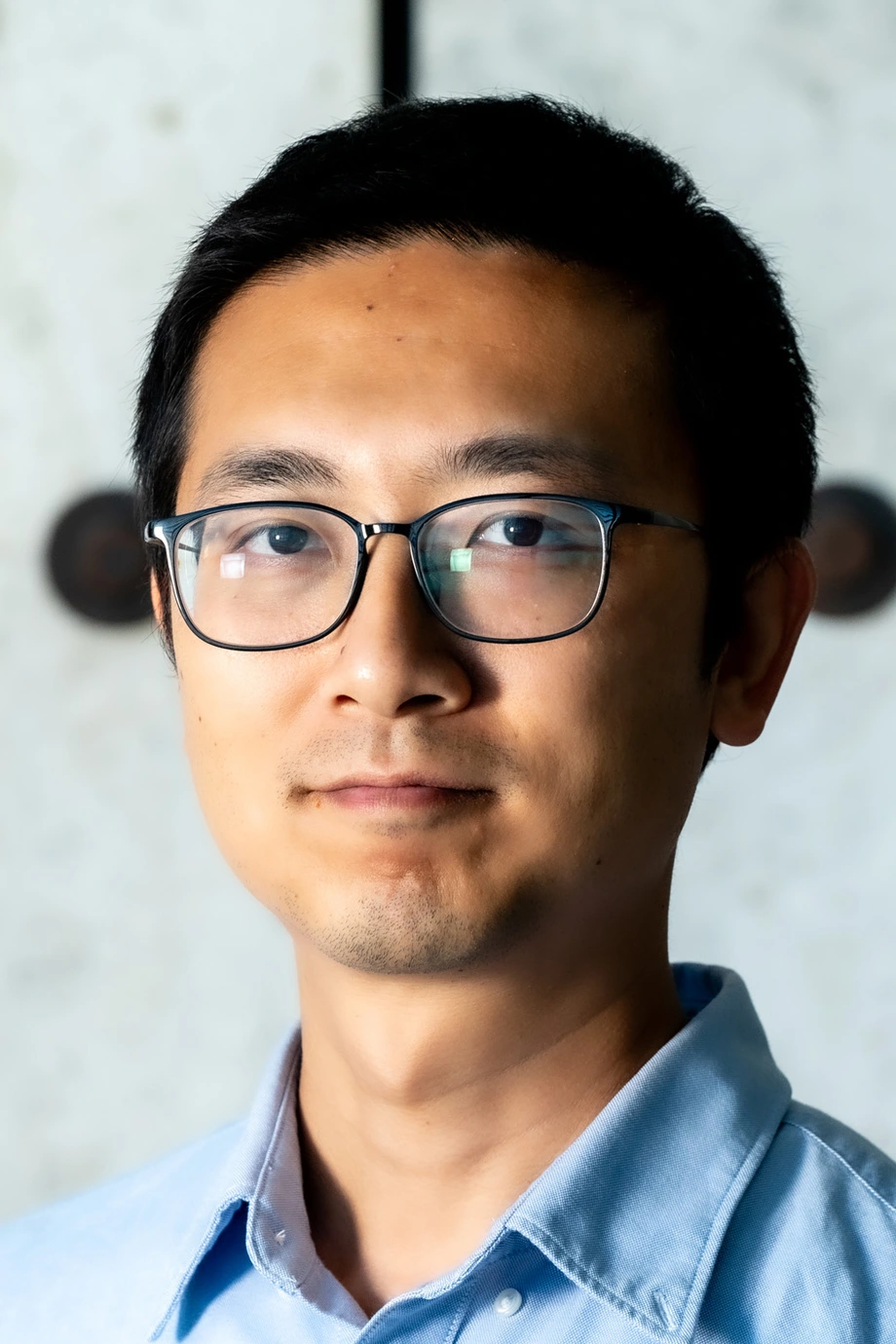
A Video Turns a Private Budget Into a Public Debate
At 40, Shi Song is facing a question that has followed him since 2004: what happened to the student who scored 658 points and became Hubei's top liberal arts examinee? In a video posted from Wuhan, Shi said his Peking University degree and a master's from the Chinese University of Hong Kong have not delivered the easy life many people assumed. He said his current income is about 8,000 yuan a month, though versions of the same disclosure put it at 7,000 yuan or 7,000 to 8,000 yuan. After a mortgage payment of more than 4,000 yuan and daily costs, he said only a little over 300 yuan remains at the end of many months.
Contents
- A Video Turns a Private Budget Into a Public Debate
- What Is Verified, and What Comes From Shi Himself
- From Shashi Middle School to Two Campuses
- The Work Path Was Never a Straight Line
- Why Wuhan Became the Choice
- The Monthly Arithmetic Behind the Headlines
- Four Matchmaking Attempts and a Decision to Withdraw
- Can Teaching Videos and Livestreaming Change the Outcome?
- What Readers Argued About Online
- Other Graduates Who Changed Course
- What the Case Means for Ordinary Decisions
- Key Points
His video also said four matchmaking attempts ended without a relationship. One ended before the woman could decide, he said, because he learned she ran her own firm, owned a home and car and earned several times more than he did. The contrast turned an ordinary personal story into a national argument about education, income, class, personal worth and the pressure to turn an exam result into a lifelong promise.
A Wuhan Evening News report dated 26 June 2004 listed Shi, then a student at Shashi Middle School, as Hubei's highest scoring liberal arts candidate with 658 points. His school history also names him among distinguished alumni. The parts about salary, mortgage, dates and his income are his own statements; no payslips, bank records or independent documents were provided.
What Is Verified, and What Comes From Shi Himself
The verified outline is narrow but clear. In June 2004, exam coverage recorded a liberal arts top scorer from Shashi Middle School named Shi Song with 658 points. He entered Peking University's sociology department that year, according to his own account and school materials. Later he studied for a master's degree at the Chinese University of Hong Kong.
Everything that made the video spread came from Shi's own telling. He said he had spent about 100,000 yuan on the Peking University undergraduate years, including living costs, and about 300,000 yuan on the Hong Kong master's degree, a total near 400,000 yuan. He said he had worked in public welfare, human resources and property, and that he had faced layoffs, a corporate job that lasted only three months and a long period of tight finances. Those details are important to him, but they remain personal statements rather than audited figures.
From Shashi Middle School to Two Campuses
Shi's early record helps explain why the label stayed attached. At Shashi Middle School, he won a national English competition prize and was named an outstanding student in Hubei. His study habits were simple: no late night drilling, sleep before 11:30 pm, current affairs papers and close attention to textbooks rather than piles of exercise books. Those habits suited exam success, but they did not guarantee a job market that rewards one kind of skill.
He entered Peking University's sociology department in 2004. Sociology examines how societies, institutions and relationships work; it can train observation and reasoning, but it does not lead to a single obvious career path. Shi later paid about 300,000 yuan for a master's degree at the Chinese University of Hong Kong. At the time, he said, he expected the two degrees to open a bright future.
That expectation is central to the debate. Many readers grew up with the same promise: top scores lead to famous universities, famous universities lead to high pay, and high pay leads to family stability. Shi's account describes what can happen when those steps do not arrive in order.
The Work Path Was Never a Straight Line
Shi has given several versions of his early career. He describes going to rural areas in 2012 for public welfare work with a monthly subsidy of just over 1,000 yuan. The same period has also been described as a first job after Peking University paying about 2,000 yuan a month for more than a year. Both figures are small, and both fit the image of a graduate beginning far below the salary attached to his exam label.
He later spent five years in human resources in Beijing. According to his account, his monthly pay rose from about 10,000 yuan to 18,000 yuan, and he says total earnings during those five years exceeded 1.5 million yuan. He also said the Peking University graduates he knew from Guanghua School of Management often earned more than 1 million yuan a year. No documents were supplied for those totals, and the components behind the 1.5 million yuan figure were not set out.
- 2004: Shi scores 658 points in Hubei and enters Peking University's sociology department.
- 2012: He describes rural public welfare work, with a subsidy of just over 1,000 yuan a month.
- Later years: He works in human resources in Beijing for five years, with pay rising to 18,000 yuan a month, by his account.
- After that: He takes a property sector job at Vanke with an annual salary near 300,000 yuan and leaves after three months.
- Back in Wuhan: He joins an education company, starts with a 2,000 yuan base salary and remains there for six years.
The Vanke job matters because it showed he was not simply outside jobs with high pay. He said the annual package was close to 300,000 yuan, but the pace and company culture did not suit him. Whether the reason was pressure, fit or expectation, the result was a stay of only three months and another return to a path with less pressure.
Why Wuhan Became the Choice
Shi said two things pushed him away from Beijing. One was price: a home beyond the Sixth Ring Road cost about 4 million yuan, a figure he said he could not afford. The other was grief. During the pandemic period, three family elders died in succession, and he said he wanted to live nearer his parents.
That decision changed his daily life. In Wuhan, he joined an education company as a lecturer and stayed for six years. His base salary once fell to 2,000 yuan a month, with extra money only when he gave outside lectures. He later reached about 8,000 yuan a month, while colleagues at the same company earned annual salaries in the millions, by his account.
His parents struggled to understand how a former provincial top scorer could earn less than people delivering food or parcels. The return to Wuhan was not a retreat from work. It was a trade: lower housing ambitions, more family time and a slower pay ladder.
The Monthly Arithmetic Behind the Headlines
The figures that moved readers were simple. Shi said mortgage payments take more than 4,000 yuan each month. Food, transport and other daily costs leave about 300 yuan. He said he cannot buy a car, has kept the same phone for years and often skips meals with former classmates because of cost and mood. He has said long periods of pressure and anxiety left him feeling that he had achieved nothing.
His parents, he said, could not understand how a former provincial top scorer could earn less than people delivering food or parcels. The comparison stings because it is visible. Delivery riders and couriers work in the same cities, and their earnings are easier to see than the returns on a sociology degree or a master's in Hong Kong. He has described himself as the province's worst performing top scorer.
Shi Song, who now works at an education company, has also said the video was made to draw attention to a course he is promoting. No independent confirmation of the course was provided. He rejected the idea that his life should be treated as pitiable and said classmates responded with encouragement. In English, his account of that reaction was:
After the video became popular, many classmates learned about my situation. Everyone thought I was very successful. I feel the people around me are very good. They basically do not mention it, and they still encourage me, asking whether I need help.
He has also said that five years in Beijing allowed him to surpass many ordinary workers. In the same explanation, he pointed to a different comparison, from Guanghua School of Management, where he said graduates commonly earned more than 1 million yuan a year. The two statements show how his thinking moves between financial achievement and a sense of falling behind.
Four Matchmaking Attempts and a Decision to Withdraw
Shi's relationship story is short and painful. He said he took part in four matchmaking meetings and none led to a relationship. In the one that hurt most, the woman appeared to like him too. Then he learned she ran a firm, owned property and a car and earned several times his income. He said he decided he was not worthy of her and cut contact before the relationship could develop.
He said he did not want to hold her back. He treated the income gap as a verdict on his value. He said the habit came partly from comparing himself with Peking University classmates, many of whom he described as earning 500,000 or 600,000 yuan a year, with some in stronger fields earning 1 million yuan or more.
Commentator Luo Zhiyuan described the matchmaking failures as a collision between an exam ranking and the many demands of intimate relationships. In relationships, education is only one part of a mix that includes income, temperament, life rhythm, communication and willingness to stay. Shi's decision matters because it happened before the woman rejected him.
Social comparison theory describes the habit of judging oneself by looking at others. In Shi's case, the comparison group is unusually sharp: former top students from one of China's most selective universities. A conditional sense of worth describes the feeling that a person is valuable only when certain conditions are met, such as a salary, a home or a partner's approval. A November 2026 psychology outreach event at Central China Normal University discussed memory illusions and the Barnum effect, the tendency to accept vague descriptions as exact personal truths. In a story like this, a label such as 'failed top scorer' can feel convincing even when it leaves out most of a life.
Can Teaching Videos and Livestreaming Change the Outcome?
Shi said his employer began arranging help for his social media account in 2025, also described in later accounts as starting last year. No independent confirmation of that arrangement was provided. Several teams tried to build an audience, but the account stayed around 1,000 followers. People around him told him his performance in front of a camera was weak, which added to his frustration.
Recently, a senior operator who had helped build an account with more than 20 million followers told him that the moment had changed and that camera charisma was not the only route. The operator urged Shi to organise study methods, record video lessons and practise livestreaming while traffic was still low. The aim was to give ordinary families access to good study resources without expensive tutoring.
That operator, whose role was to advise on audience growth, put the advice plainly:
The timing is right. You do not have to rely on performance in front of the camera.
Shi said he stayed up late for a month preparing and recording. The account did not grow in a visible way, and he ended his video by asking viewers whether the path was right. No date has been announced for a final decision about the account or a new income source.
What Readers Argued About Online
The reaction split quickly. Some readers said Shi had wasted a strong hand: provincial first place, Peking University, a Hong Kong master's degree and contacts from two respected campuses. Others said the job market rewards practical ability and adaptation, not exam results alone. One widely repeated comment pointed to his Peking University jacket and profile picture of Weiming Lake, asking whether he had anything beyond that experience.
Other comments were more personal. A commenter who said they had graduated from Tsinghua said they were delivering food because they disliked their major. A joke asked how a Hubei top scorer could be doing worse than Lei Jun, the technology executive and Xiaomi founder. Other readers argued that income is a narrow measure when health, learning and honesty are included.
Some people questioned his top scorer status or said he was building an audience by presenting hardship. The 2004 exam record and school history support the top scorer claim, while the salary, dates and private life still rest on what he has said himself. That distinction helps explain why the story drew both sympathy and ridicule.
Other Graduates Who Changed Course
The discussion soon widened beyond Shi. It included Liu Ning, the 2006 science top scorer from Liangshan who entered the University of Science and Technology of China, left a game company after nine months and later spent time without stable housing until his father brought him home. It also included Tao Weisheng, who is 40 and holds a master's degree in information and communication engineering from Harbin Institute of Technology, and sold balloons in Changsha after a business failure left him in debt.
Tao's words were shared because he did not treat the stall as a defeat. Kong Yiji is a poor scholar in a Lu Xun story who clings to the robe of a scholar even as his life falls apart. Tao described taking off that symbol of status in these terms:
Taking off Kong Yiji's long gown is painful, but after putting it down I found the sky and earth are wide.
Other examples in the same debate included a graduate born after 1995 who worked in waste disposal with his father and earned 30,000 yuan a month by posting videos about the job, and a woman in her thirties with a Tsinghua master's degree who went to a vocational school to learn cooking after losing work. These stories are not identical to Shi's case, but they show why readers argued about dignity, pay and the ability to start again. The common message was to secure a living first and keep room for longer goals.
What the Case Means for Ordinary Decisions
The clearest change for Shi is practical. He still has a job, a home and an audience that now knows his situation. He also faces a mortgage, limited savings, single status and an uncertain online project. The next test is whether teaching content can bring steady income, and whether he can keep working without treating every comparison as a verdict.
A November 2026 mental health conference in Weifang called for services to move from treating illness toward promoting health. That idea fits the everyday problem in this story. A person does not need a diagnosis to benefit from smaller, controlled steps: record what was completed, separate controllable actions from other people's salaries, and keep a record of skills that remain after a bad month.
Acceptance and commitment therapy, a method focused on acting in line with personal values even when uncomfortable thoughts remain, offers a simple framing here. Shi cannot control what former classmates earn or whether one matchmaking partner accepts him. He can control lesson quality, how often he publishes, how he explains his work and whether he seeks help early when stress becomes heavy.
The story also shows why a degree can matter without acting as a guarantee. Peking University and the Chinese University of Hong Kong gave him credentials and a network, and he says classmates supported him rather than mocking him. Those benefits did not remove the need to choose work that fits his temperament, manage money in Wuhan or build relationships without treating income as an exam with only two results. A credential can be an entry ticket, but it is not a pass for life or marriage.
Key Points
- Shi Song, Hubei's 2004 liberal arts top scorer with 658 points, studied sociology at Peking University and later earned a master's at the Chinese University of Hong Kong.
- He says his current income is about 8,000 yuan a month, with other wording at 7,000 or 7,000 to 8,000 yuan, and that mortgage and living costs leave about 300 yuan.
- He says four matchmaking attempts failed, including one where he withdrew because the woman earned several times more than he did.
- He has worked in rural public welfare, human resources and property, including a Vanke job with annual pay near 300,000 yuan that lasted three months.
- His social media push began in 2025, but after several teams and a month of video lessons and practice, the account had not shown clear growth.
- Salary, spending and relationship details are his own statements; the 2004 exam result is supported by a Wuhan Evening News report dated 26 June 2004 and school history. The course and the employer's social-media arrangement also lack independent confirmation.