Two records arrive on the quietest day of the run
Nitesh Tiwari's Ramayana: Part 1 crossed ₹1,000 crore in net ticket sales in India on Friday, November 27, its 23rd day in cinemas. The film starring Ranbir Kapoor, Sai Pallavi and Yash added ₹8.45 crore net in India and ₹5 crore overseas on Day 23, according to trade tracker Sacnilk. Its worldwide gross reached ₹1,790.10 crore, carrying it past the lifetime total of Baahubali 2: The Conclusion.
Contents
- Two records arrive on the quietest day of the run
- Which records have fallen, and which remain?
- Why did daily income fall below ₹9 crore?
- The speed of the opening weeks built the milestone
- Overseas audiences have changed the scale of the run
- Regional collections reveal a broader Indian audience
- Does ₹1,790 crore worldwide mean the film is profitable?
- The research, cast and public attention behind the numbers
- What happens next in cinemas and on streaming
- Key Points
The latest Indian total stands at ₹1,000.55 crore net and ₹1,195.10 crore gross. Net collections generally remove entertainment tax from ticket sales, while gross collections include it. Adding the ₹595 crore overseas gross to the Indian gross produces the worldwide figure. One crore equals 10 million, so ₹1,000 crore represents ₹10 billion.
Ramayana is the second Bollywood film to reach ₹1,000 crore net in India, after Dhurandhar 2: The Revenge. Across all Indian cinema, it is the fourth after Baahubali 2, Pushpa 2: The Rule and Dhurandhar 2. The achievement came on its lowest earning day in India, demonstrating how much momentum it had retained even as screenings and daily sales declined.
Released worldwide on November 5, 2026, during the Diwali period, the film is now the third highest grossing Indian production worldwide and the second biggest Indian release of 2026. Its opening weekend had already carried it beyond the ₹577 crore collection of Ajay Devgn's Drishyam 3.
Which records have fallen, and which remain?
The latest worldwide ranking shows how closely the leading films are packed beneath Dangal, while also revealing the scale of the remaining gap to first place.
- Dangal (2016): ₹2,070.30 crore.
- Dhurandhar 2: The Revenge (2026): ₹1,813.39 crore.
- Ramayana: Part 1 (2026, still running): ₹1,790.10 crore.
- Baahubali 2: The Conclusion (2017): ₹1,788.06 crore.
- Pushpa 2: The Rule (2024): ₹1,742.10 crore.
Ramayana moved ahead of Baahubali 2 by just ₹2.04 crore. It needs another ₹23.29 crore to pass Dhurandhar 2, while Dangal remains ₹280.20 crore ahead. The first target is therefore close enough to be decided during the remaining theatrical run, but reaching Dangal would require a much larger addition after daily collections have slowed.
The domestic ranking tells a different story. Baahubali 2 earned about ₹1,030 crore net in India, leaving it ₹29.45 crore ahead of Ramayana's current ₹1,000.55 crore. Ramayana has, however, passed the ₹859 crore Indian collection of KGF: Chapter 2, the earlier blockbuster starring Yash. Its worldwide lead over Baahubali 2 has consequently arrived before a domestic lead.
Why did daily income fall below ₹9 crore?
Day 23 earnings dropped 12.4 per cent from the ₹9.65 crore collected on Day 22. The number of shows fell much more sharply, from 15,418 to 6,584, meaning the film lost considerably more than half of its screenings in one day. New releases and the usual fourth week reduction in cinema space both affected its reach.
The five tracked language versions accounted for the ₹8.45 crore net total as follows:
- Hindi: ₹5 crore from 4,976 shows.
- Kannada: ₹1.25 crore from 327 shows.
- Tamil: ₹1.05 crore from 627 shows.
- Malayalam: ₹1 crore from 516 shows.
- Telugu: ₹15 lakh from 138 shows.
An estimated 394,518 tickets were sold on Day 23, taking admissions during the first 23 days to about 4.17 crore, or 41.7 million. The film also remained ahead of Friday's newcomers in the reported daily figures. Sooraj Barjatya's Yeh Prem Mol Liya earned ₹4 crore, while Emraan Hashmi's Gunmaaster G9 collected ₹3.65 crore.
Early tracking on Day 24 showed another ₹1.74 crore from 1,763 shows by 11 am, lifting the India net total to ₹1,002.29 crore. That was a morning snapshot rather than a full Saturday result, with the rest of the day's business still to come.
The speed of the opening weeks built the milestone
Sacnilk's weekly accounting puts the film's opening week at ₹564.60 crore net in India, followed by ₹299.15 crore in week two and ₹128.35 crore in week three. The declining weekly totals explain the quieter fourth week, but the early surge had already placed several records within reach.
- November 5: The opening day produced ₹64.85 crore net in India. It was Ranbir Kapoor's biggest opening, ahead of Animal's ₹63.80 crore, Sai Pallavi's biggest ahead of Amaran, and Tiwari's biggest ahead of Dangal's ₹29.78 crore.
- November 9: Day 5 delivered ₹107.50 crore net, including ₹87.25 crore from Hindi. It became the biggest fifth day for an Indian film, surpassing the ₹65 crore recorded by Dhurandhar 2, and made Ramayana the second Bollywood film after Dhurandhar 2 to earn more than ₹100 crore net in one day.
- Day 14: Worldwide gross reached ₹1,519.05 crore, making Ramayana the fastest Indian film past ₹1,500 crore. Dhurandhar 2 took 16 days, Pushpa 2 took 17, Baahubali 2 took 20 and Dangal took 30.
- November 22: Hindi net earnings reached ₹715.75 crore on Day 18. Ramayana became the second fastest film to ₹700 crore in Hindi, behind Dhurandhar 2's 10 days and ahead of Pushpa 2's 20 days.
- November 25 and 27: The film passed Pushpa 2 worldwide on Day 21, then crossed ₹1,000 crore net in India and overtook Baahubali 2 worldwide on Day 23.
The second weekend supplied another record with ₹196 crore net across all languages, ahead of Dhurandhar 2's ₹172.70 crore. Ramayana also earned ₹279.80 crore in the first six days of its second week, more than the complete second week totals recorded for Pushpa 2, Baahubali 2 and Dhurandhar 2.
Premium screens and advance ticketing reflected the same demand. Its opening generated approximately $6 million in IMAX cinemas worldwide and about $2 million from Indian IMAX screens, both records for an Indian film. On BookMyShow, it sold around 1.66 million tickets in one day and 140,000 in one hour, exceeded 1 million tickets a day for seven consecutive days, and later entered the platform's 14 million ticket club.
Overseas audiences have changed the scale of the run
Overseas gross reached ₹595 crore after Day 23, including ₹5 crore that day. Ramayana is now ranked second among Indian films in overseas earnings, behind Dangal's ₹1,535.30 crore. North America supplied approximately $29.20 million as the film entered the Thanksgiving holiday, with Thanksgiving Thursday projected to add about $600,000.
Ramayana had crossed $25 million in North America as the region's second highest grossing Indian film, behind Dhurandhar 2. The subsequent Day 21 territory assessment said it had moved ahead of Dhurandhar 2 there. The producers also announced that Ramayana had become the highest grossing Indian production of all time in 27 countries.
The named territories include the United States, Canada, the United Kingdom, the Netherlands, Finland, Romania, Ukraine, Thailand, Indonesia, Vietnam, Cambodia, Nepal, South Africa, Kenya, Ghana and Kazakhstan, along with smaller European and Caribbean markets. A complete gross for each of the 27 territories has not been published, so the size of every individual record cannot yet be compared.
Sony Pictures handled international distribution, while Dharma Productions managed the Indian release. Further theatrical releases in China, Japan, South Korea and Russia have been reported for the first quarter of 2027, including dubbed versions, but the producers have not announced dates for those launches.
Regional collections reveal a broader Indian audience
Hindi supplied ₹752.65 crore, or 75.9 per cent, of the ₹992.10 crore India net total recorded through Day 22. Kannada contributed ₹78.65 crore, or 7.9 per cent, followed by Telugu with ₹57.90 crore, Malayalam with ₹53.30 crore and Tamil with ₹49.60 crore. On Day 23, Hindi accounted for just over 59 per cent of daily net collections, giving the other language versions a larger share of a much smaller total.
Ramayana became the first Bollywood film to gross more than ₹50 crore in each of the four major southern market groupings: Karnataka, Andhra Pradesh and Telangana, Tamil Nadu, and Kerala. Tamil Nadu completed that set when it crossed ₹50 crore on Day 14.
Kerala provides a closer view of the regional demand. Tracker Jerin Georgekutty placed its 20 day gross at ₹72.68 crore after a ₹1.65 crore Day 20. At that point it needed ₹1.82 crore to pass Baahubali 2's ₹74.50 crore Kerala total and ₹7.32 crore to overtake Jailer 2's reported ₹80 crore record. A final Kerala gross of ₹85 crore to ₹90 crore was projected, although the latest nationwide Day 23 figures did not include an updated state total.
Does ₹1,790 crore worldwide mean the film is profitable?
Producer Namit Malhotra has said that the two Ramayana films together cost ₹4,000 crore. The frequently cited ₹2,000 crore estimate for Part 1 assumes that the spending is divided equally, but no separate audited production account for the first film has been published.
The ₹1,790.10 crore worldwide gross remains below that rough ₹2,000 crore cost marker. This explains why some trade assessments have continued to describe the film as not yet breaking even even while celebrating its place among the three biggest Indian films. Breaking even means that revenue has covered the production and release costs.
Box office gross measures money spent by audiences, not the amount returned to the producers. Cinemas and distributors retain shares of ticket revenue, while marketing expenditure and income from streaming and other rights also belong in a complete financial calculation. The theatrical total therefore captures the film's extraordinary audience reach, while its final profit depends on a wider set of costs and revenues.
The research, cast and public attention behind the numbers
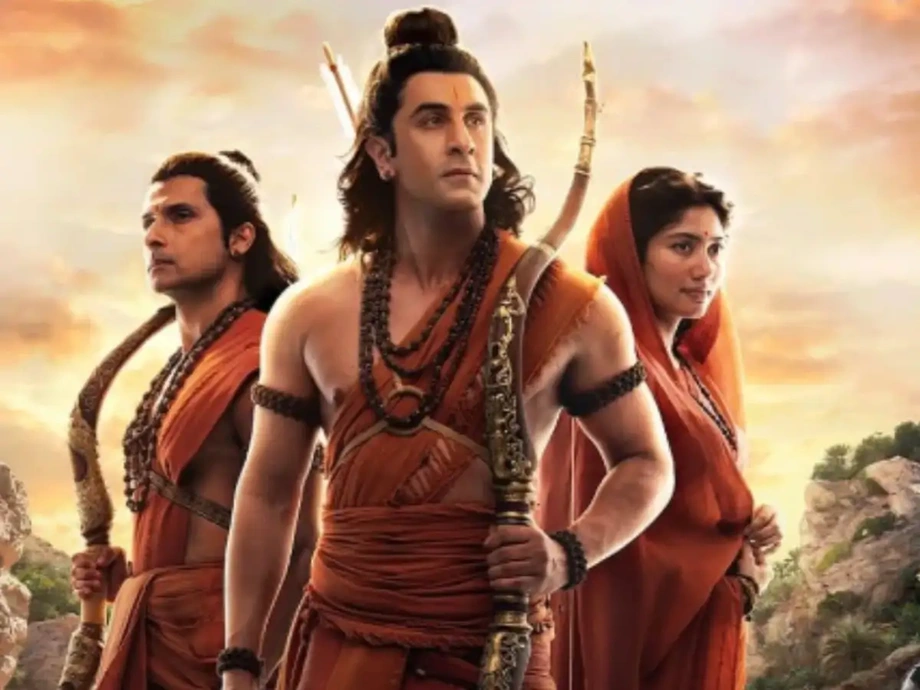
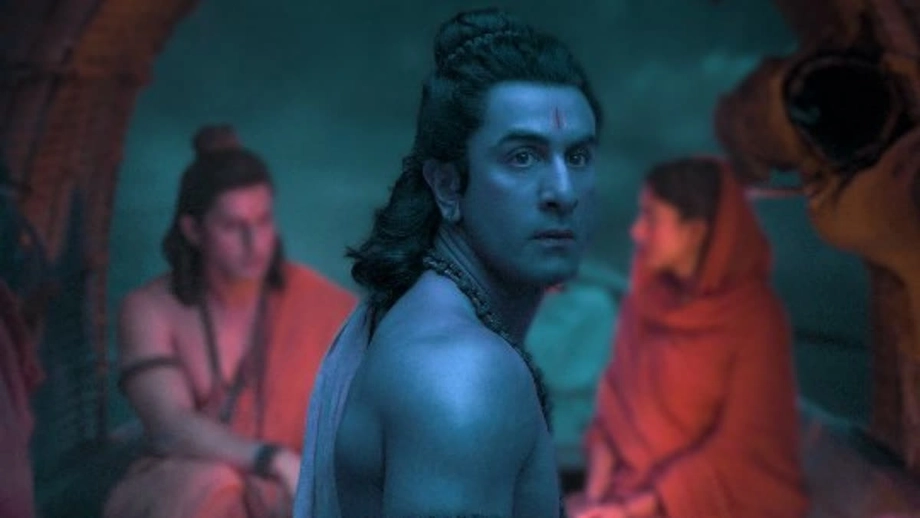
Ramayana: Part 1 is the first instalment of a screen adaptation planned in two parts. It draws principally on the Valmiki Ramayana, the ancient Sanskrit epic, and follows Rama's birth and upbringing through palace intrigue, his 14 year exile and Ravana's abduction of Sita. Ranbir Kapoor plays Rama, Sai Pallavi plays Sita and Yash portrays Ravana in his Hindi film debut. Ravie Dubey appears as Lakshman and Sunny Deol as Hanuman, supported by Arun Govil, Indira Krishnan, Lara Dutta, Kajal Aggarwal, Rakul Preet Singh, Vivek Oberoi, Anupam Kher and Kunal Kapoor.
Namit Malhotra's Prime Focus Studios produced the film with DNEG and Yash's Monster Mind Creations. Hans Zimmer and A. R. Rahman created the score, marking Zimmer's debut in Indian cinema. Discussing the research, Tiwari explained how the team approached Rama's appearance and the details of the adaptation.
The film will try its best to stay close to the image you get in your mind when you think of Lord Rama. Also, there are many reference points for it, such as texts and artworks that describe what he looked like, and even minute details like the texture of his hair. Although we primarily based our film on the Valmiki Ramayana, we also drew on other materials to support our work.
The film's run also brought a public political reception. Ranbir Kapoor, Malhotra, Tiwari, Sai Pallavi and co-producer Niraj Sanghai met Union Home Minister Amit Shah, and members of the team subsequently visited Bangla Sahib Gurudwara. Shah congratulated the filmmakers in a statement accompanying photographs of the meeting.
Congratulations to the entire team on this innovative effort to bring the ideals of duty, sacrifice and integrity that Lord Shri Ram, the embodiment of righteousness, set through his life to the new generation through modern cinematic technology.
What happens next in cinemas and on streaming
December will bring greater competition for screens. Shraddha Kapoor's Eetha and Salman Khan's Maatrubhumi: May War Rest in Peace are scheduled for December 4, while Shah Rukh Khan's King is expected toward the end of the month. Ramayana's immediate numerical target remains Dhurandhar 2, with holiday overseas business and the fourth weekend providing its next opportunities to add to the total.
The second film is scheduled for Diwali 2028. Ramayana: Part 1 will stream on JioHotstar after its theatrical run, although no streaming date has been given. For the present, the confirmed diary consists of the December cinema competition, the proposed international releases in 2027 and the much later arrival of Part 2.
Key Points
- Ramayana: Part 1 reached ₹1,000.55 crore net in India on Day 23 after earning ₹8.45 crore that day.
- India gross stood at ₹1,195.10 crore and overseas gross at ₹595 crore, producing a worldwide total of ₹1,790.10 crore.
- The film overtook Baahubali 2's ₹1,788.06 crore worldwide total and became the third highest grossing Indian film.
- Dhurandhar 2 is ₹23.29 crore ahead, while Dangal remains ₹280.20 crore ahead.
- Day 23 was the film's lowest earning day in India as its show count fell from 15,418 to 6,584.
- Estimated admissions reached 4.17 crore, or 41.7 million tickets, in 23 days.
- Ramayana became the fastest Indian film to ₹1,500 crore worldwide, reaching that level in 14 days.
- The producers claim records in 27 countries, with North America contributing about $29.20 million before Thanksgiving.
- The two films have a reported combined cost of ₹4,000 crore; a separate final financial account for Part 1 is unavailable.
- Part 2 is scheduled for Diwali 2028, and Part 1 will move to JioHotstar after cinemas.