Adani Sets 2027 Airport Milestone as Funding Plan Takes Shape
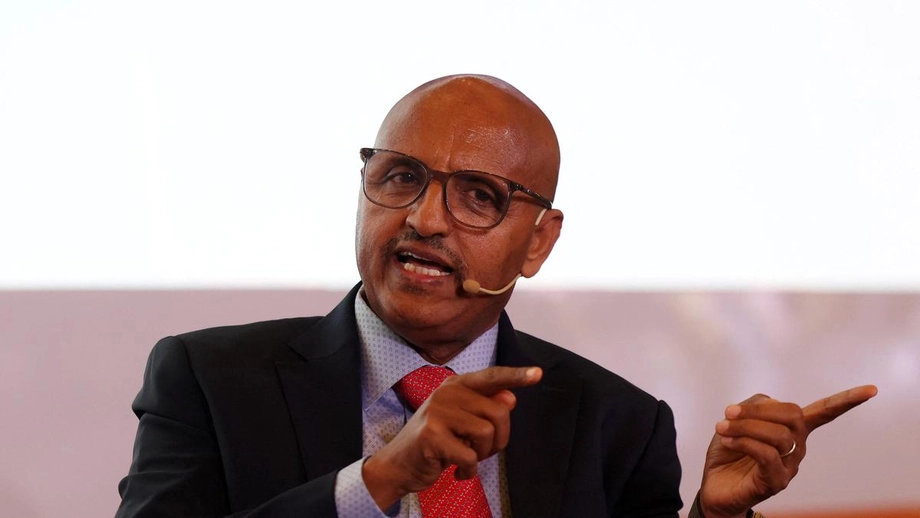
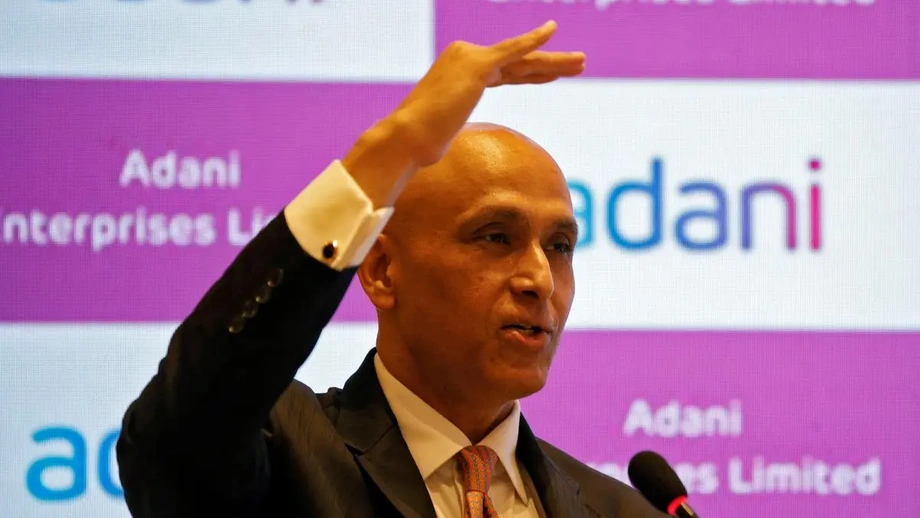
Adani Group used a debt market conference in Mumbai on Friday, November 27, 2026, to lay out a linked plan: make its airport business stand alone, seek a path into airline investment and raise a larger share of its future funding inside India. Group Chief Financial Officer Jugeshinder (Robbie) Singh said the airport corporate structure should be ready in 2027, opening the way for a demerger or an initial public offering in FY28. A demerger splits a business into a separate company; an IPO sells shares to public investors. The board will decide the exact route and timing after the business is ready.
Contents
- Adani Sets 2027 Airport Milestone as Funding Plan Takes Shape
- When Could Adani Airports Be Listed?
- Why Adani Wants a Door Into Airlines
- What Stands in the Way of Airport Airline Ownership
- How Big Is the Expansion Plan?
- How Will Adani Raise the Money?
- Why Dollar Bonds and Local Bonds Both Matter
- How Do Data Centres Fit the Same Story?
- What Changes for Travellers and Investors
- Key Points
Singh described the airport arm as the first Adani vertical likely to be separated. The group's wider ambition is to invest about $140 billion over five years in infrastructure and energy, while shifting more borrowing toward domestic markets. He also used a $120 billion figure for the commitment over five years in comments from the same event, a difference that matters because it sets the scale of the group's funding task.
The immediate message for investors was practical. Airports, power, ports, data centres and other businesses will keep raising money, but the airport unit is being reshaped so it can support its own investment programme before it becomes a separate listed company. For passengers, the plan could put more of the money earned at airports back into airports, including shops, restaurants, offices, advertising and other services connected with travel.
Singh spoke on the sidelines of the summit organised by the Trust Group. He framed the airport plan as part of a wider effort to let each Adani business raise money from investors who understand that sector, rather than relying on one group balance sheet.
When Could Adani Airports Be Listed?
The target has been expressed in several close forms. Singh's comments at the India Debt Capital Market Summit 2026 put operational readiness in calendar 2027 or the next financial year, with a possible listing in FY28. Earlier remarks from the group said the demerger would be executed by 2027 to 2028. At the summit, he said the corporate structure would be ready first and the board would then decide whether to demerge or launch an IPO.
Adani Airport Holdings Ltd owns, operates or holds majority stakes in eight airports. Seven are operational, and Navi Mumbai International Airport has been due for completion by the end of the year. The portfolio includes Mumbai, Ahmedabad, Lucknow and Guwahati, and the group's airports handle more than one fourth of India's air passenger traffic.
In September 2026, Adani Airport Holdings raised about $1 billion, or Rs 9,825 crore, in primary equity for a 5.54 percent stake from Alpha Wave Global, Premji Invest, Temasek and BlackRock-managed funds, at a pre-money valuation of roughly $18 billion. On November 23, 2026, it agreed to raise a further Rs 2,790 crore ($300 million) from 360 ONE Alternates Asset Management Ltd through newly issued shares, giving 360 ONE up to 1.55 percent on the same terms and valuation. The two transactions take total equity fundraising to about $1.35 billion, with the investors collectively holding approximately 7.01 percent after both are completed. That roughly $18 billion pre-money valuation is the benchmark against which the FY28 listing will be judged.
- 1994: Adani Enterprises goes public; the group later incubates and lists six other businesses with a combined market value above $10 billion.
- 2019: Adani Airport Holdings is formed as a subsidiary after the group wins concessions to operate six airports.
- August 2024: Adani Enterprises launches a public bond issue to repay some existing borrowing.
- July 2026: The group says it is not evaluating a proposal to enter the airline business.
- November 3, 2026: Airport Holdings chief executive Arun Bansal rules out launching an airline.
- November 27, 2026: Singh says the group has asked the government to allow investment in airlines and puts airport readiness at 2027.
- FY28: A demerger or IPO remains a possible route after the structure is ready.
Group CFO Jugeshinder (Robbie) Singh has set out three tests for a demerger. The business must be able to fund itself, have the organisational capability to work with its own board and management team, and show it can keep investing at a pace that supports growth. He introduced those conditions while discussing the airport separation in August 2024.
First, the business must be fully capable of supporting itself financially. Second, it must have the organisational capability to operate independently at both the board and management levels. Finally, it must demonstrate the ability to consistently invest at a rate that supports its growth,
Group CFO Jugeshinder (Robbie) Singh said the airport arm was moving toward those tests. He said airports were expected to be the first Adani business ready for separation.
We remain on track to execute this by 2027-28,
Singh said the commercial side of airports was also getting closer to the group's target. Commercial revenue from shops, food and drink, advertising, property and passenger services is about 60 percent of the airport business now, and he wants it at 65 percent or more before separation.
Why Adani Wants a Door Into Airlines
Singh said the group is not asking to run an airline itself. He said it wants permission to invest in an airline, a fund or an entrepreneur who could start one. The issue matters because India's two largest carriers, Air India, controlled by the Tata Group, and IndiGo, together hold about 90 percent of the domestic market. IndiGo's operational problems last year led to thousands of cancellations and renewed calls for more carriers.
The CFO's arithmetic is simple. He said more than 60 crore people in India, or more than 600 million, have the capacity to fly. India has roughly 3,200 to 3,300 flights a day, he said, while the country could eventually support 30,000. A plane trip is still out of reach for many households, so adding routes and aircraft could open demand that existing capacity cannot serve.
The shift in position is sharp. In July, Adani Enterprises told stock exchanges it was not evaluating a proposal to enter the airline business and described market talk as "entirely baseless and factually incorrect". On November 3, Adani Airport Holdings chief executive Arun Bansal ruled out launching an airline, saying it was not a good strategy to compete with customers. Last December, Jeet Adani, who looks after the group's aviation business, said running a carrier did not fit the group's capital discipline.
Singh did not name a potential airline. Civil Aviation Minister K Rammohan Naidu said in September that no decision had been taken and the matter was under deliberation. Any change would also require approval from the Union Cabinet.
What Stands in the Way of Airport Airline Ownership
The obstacle is not a general ban on owning airlines. It sits in contracts for some privatised airports. The operation, management and development agreement, known as an OMDA, for Mumbai and Delhi limits scheduled airlines and their group entities to a stake of no more than 10 percent in the airport operator. The arrangement is designed to keep an airport neutral between carriers, much like a referee owning one of the teams.
Article 2.5(l)(ii) of the agreement says that the joint venture company undertakes that at no point during the term:
Shall the aggregate shareholding of Scheduled Airlines and their respective Group Entities (other than such Group Entities that were airport operators on the date of the issue of the Invitation to Register an Expression of Interest and the Request for Proposal documents issued by AAI during the competitive bidding procedure undertaken by AAI for the purposes of the selection of the private participants in the JVC ) exceed ten (10) percent of the total issued and paid up capital of the JVC.
The wording directly caps ownership by scheduled airlines and their group entities in the airport operator. But it "can also be applied in reverse", effectively restricting the airport operator and its group entities from investing in or promoting a scheduled airline. The Navi Mumbai and Jewar pacts, by contrast, allow up to 26 percent.
Adani Airport Holdings chief executive Arun Bansal wrote to the Airports Authority of India chairman in June seeking a waiver or clarification of the Mumbai airport agreement. The letter sought room for the group to invest in, acquire, promote or control a scheduled airline. The group holds 74 percent of Mumbai airport, while GMR holds 74 percent of Delhi airport. In a written Rajya Sabha reply on August 10, 2026, Minister of State for Civil Aviation Murlidhar Mohol confirmed that AAI had received the waiver request, without naming Adani.
Responding to CPI(M) MP John Brittas, Mohol said, "There is no such government policy restricting operators of major airports from holding substantial equity in or operating scheduled airlines." He added that existing public-private partnership agreements for some airports "contain certain restrictions on scheduled airlines and their group entities/associates from holding equity in the concessionaires". His written reply confirmed: "Request seeking waiver of the relevant agreement provision has been received by Airports Authority of India (AAI). The matter has not yet been examined by the Ministry of Civil Aviation."
That "not yet examined" position has since given way to an examination of the proposal, but not to a decision. In September, Naidu said the government was "examining the pros and cons" and would focus on maintaining market balance. He said no decision had been taken on Adani's request and the matter remained under deliberation.
Bansal argued that airport neutrality could be protected through existing and stronger safeguards, including slot allocation in line with International Air Transport Association rules and oversight from the Directorate General of Civil Aviation, the Airports Economic Regulatory Authority of India and the civil aviation ministry. He also pointed to transparent airport procedures, information barriers, separate operating systems and regulatory monitoring.
Rahul Bhatia, managing director of IndiGo, opposed the idea in strong terms in July. Introducing his remarks, Bhatia said a change in policy would create conflicts and harm travellers.
We are reading news as you are. All I can say is that, if the news has any merit, one, it has no global precedent...and typically (it will create) a massive conflict of interest. Over a period of time, it would actually be against the interest of consumers,
The dispute has a business logic on both sides. A group that owns airports, ground handling, maintenance, repair and overhaul, pilot training and a planned aircraft assembly line with Brazil's Embraer can help a new carrier start. A carrier linked to an airport operator could also receive better slot access or treatment, which is why regulators focus on neutrality. The government has said it will weigh market balance before acting.
How Big Is the Expansion Plan?
Adani's airport and airline plans sit inside a much larger investment programme. Singh said the group plans to invest about $140 billion over five years across infrastructure and energy. At the same event, he also used a $120 billion figure for the commitment over five years. The group has committed capital to ports, power, airports, roads, cement, metals, media and digital infrastructure.
The capex figure, or capital spending, has been rising quickly. Singh put FY27 capex at Rs 2.20 trillion, or about $23.72 billion, compared with Rs 1.56 trillion in FY26. Three years earlier, annual capex was about Rs 80,000 crore, then rose to Rs 1.1 trillion and Rs 1.56 trillion. The Rs 1.3 lakh crore FY25 plan was 40 percent higher than estimated FY24 spending and was to be funded 70 percent from internal cash, with the rest from debt.
Singh said the group has money available on paper well beyond what it can put to work. He put investment capacity at Rs 4.5 trillion to Rs 5 trillion a year, but said execution is closer to Rs 2 trillion because India needs more skills, factories, health systems, education systems and cold storage.
The energy side includes a revised Adani Green renewable target of 50,000 MW by 2030, up from 45,000 MW. The group also expects 6 GW to 7 GW of projects to be completed and a solar wafer manufacturing unit to reach scale.
The comparison helps explain why the group is focused on financing structures and corporate separations. Capital alone cannot build airports or power lines. Projects need land, equipment, contractors, workers and approvals. By making each business able to raise its own money, Adani wants to spread that work across separate boards and investor bases.
How Will Adani Raise the Money?
Group companies are expected to borrow Rs 1.3 trillion to Rs 1.4 trillion in each of FY27 and FY28. Singh said domestic capital markets should eventually account for about 70 percent to 75 percent of the group's total capital markets funding, compared with about 56 percent now. Over a longer period, he said the domestic share could reach 75 percent to 80 percent, with global funding making up the rest. In Australia and Japan, he said, domestic markets account for roughly that share.
This is a change in funding mix, not a retreat from overseas debt. Adani Power is expected to be a large issuer in public and private debt markets in India. Adani Power and Adani Energy Solutions are exploring qualified institutional placements, or QIPs, which are share sales to large institutional investors. The group plans to keep raising about $2 billion to $4 billion of equity a year, mainly to widen its shareholder base and attract investors who intend to stay for many years.
The group also plans to repay about $25 billion to $30 billion of bank borrowings over five to 10 years while raising fresh funds for expansion. Singh said net borrowings would rise by only about $25 billion over five years after those repayments. He put gross debt at about three to 3.2 times EBITDA, or roughly Rs 3.9 trillion. EBITDA means earnings before interest, tax, depreciation and amortisation, a rough measure of cash generated by operations before financing and accounting charges.
Singh said the group's aggregate credit quality improved from around A minus or BBB plus in 2018 to 2019 to AA plus now. "Ultimately infra is domestic and we have to create wealth for domestic participants; so we must create opportunities for them to participate," he said. The remark links the funding shift to the idea that Indian institutions and savers should have a role in financing assets that earn returns in India.
Why Dollar Bonds and Local Bonds Both Matter
Adani Enterprises returned to the public bond market in 2024 with its first public issue of secured, rated, listed redeemable debentures that cannot be converted into shares. Each debenture was priced at Rs 1,000. The base issue was Rs 400 crore, with a green shoe option of up to another Rs 400 crore, taking the possible size to Rs 800 crore. The issue opened on September 4, 2024 and closed on September 17, 2024.
The bonds offered maturities of 24, 36 and 60 months, with quarterly, cumulative and annual interest options across eight series. The effective yield was up to 9.90 percent a year, and the debentures were listed on BSE and NSE. The proceeds were meant mainly to prepay or repay existing borrowing. A yield is the return a buyer receives if the bond is held under its terms. Adani Power's recent Rs 7,500 crore bond issue gives a local currency example.
In the overseas market, Adani Ports and Special Economic Zone is expected to tap public dollar bonds after April, with a maturity of 20 years. Around $600 million of debt is approaching maturity. Singh said the businesses have enough cash to retire it, but a new bond would lengthen the maturity profile of borrowings. He said the issue would mainly refinance debt and give the group bonds with a longer maturity.
APSEZ previously raised $750 million through an unsecured bond issue with two parts, becoming the first Indian infrastructure company to raise money with a maturity of 20 years from international markets. A longer maturity helps a company match assets that last for decades with debt that does not need early repayment.
How Do Data Centres Fit the Same Story?
Data centres are the newest large funding need. Adani's data centre platform runs through AdaniConneX, a joint venture between Adani Enterprises and EdgeConneX. These buildings house servers and network equipment for cloud computing and digital services. They need power, cooling, land and connectivity, which is why a group with energy and infrastructure businesses sees a link to its existing assets. The platform uses renewable power from group companies.
Singh said the group has secured about $3 billion of funding for the business, of which about $900 million has been drawn down. The facility is expected to be drawn in two parts, $1.6 billion and $1.4 billion. Funding needs could rise to about $10 billion over the next four years as the business expands.
For now, the group is using external commercial borrowings, or ECBs, because that is the easiest route. An ECB is a loan raised from lenders outside India in a foreign currency. It can be quicker than selling shares or issuing bonds to the public, but it exposes the borrower to currency and interest rate movements. The Adani plan links this funding style to the wider aim of eventually moving a larger share of capital raising into Indian markets.
What Changes for Travellers and Investors
For airport users, the most visible effect of a separate listing would be clearer accountability. A listed airport company has its own board, its own reports and its own investors. Singh said commercial revenue, meaning money from retail, food and drink, advertising, commercial property and passenger services, is about 60 percent of the airport business now. He wants it at 65 percent or more before a demerger.
That matters because runway operations can be volatile. Passenger numbers fall when airlines cut flights or the economy slows. Revenue from shops, advertising, parking and property gives an airport operator other ways to earn from the same passengers. A target of 65 percent means that, for every Rs 100 of revenue, about Rs 65 would come from activities other than charges linked to flights.
For investors, the airport listing would create another way to own a piece of Adani's infrastructure business without buying the whole group. The model is not new for Adani Enterprises. Since its IPO in 1994, it has incubated and listed six other businesses, with a combined market value above $10 billion. The airport unit would add a transport asset with a large domestic passenger base. Adani Enterprises shares were at Rs 3,169 on the BSE, 0.80 percent lower, after recovering all losses from the January 2023 Hindenburg shock.
The airline question could change competition if approval comes. The government has wanted more carriers after the market narrowed to IndiGo and Air India. Adani has said it would rather invest and let an entrepreneur run a carrier. Singh also said foreign trade agreements could help ports and airports by strengthening logistics links between India and other economies. The central policy question is whether an airport operator can back an airline while keeping airport access fair.
Key Points
- Adani Group is preparing the airport business for a demerger or IPO in FY28 after the corporate structure is ready in 2027.
- Adani Airport Holdings owns, operates or holds stakes in eight airports, including Mumbai and Navi Mumbai.
- Adani Airport Holdings raised about $1 billion for 5.54 percent in September 2026 and Rs 2,790 crore from 360 ONE in November, setting a roughly $18 billion pre-money valuation benchmark for the FY28 listing.
- Commercial revenue from shops, advertising, property and other services is about 60 percent of airport revenue, with a target of 65 percent or more.
- The group has asked the government to allow investment in airlines, while saying it would prefer to back an entrepreneur rather than run a carrier.
- India has roughly 3,200 to 3,300 daily flights now; Singh said it could support 30,000.
- Adani plans about $140 billion of infrastructure and energy investment over five years, with a $120 billion figure also used at the same event.
- FY27 capex is planned at Rs 2.20 trillion, up from Rs 1.56 trillion in FY26.
- Data centre funding may rise to about $10 billion over four years, after $900 million was drawn from a $3 billion facility.