A Relationship Put in Writing
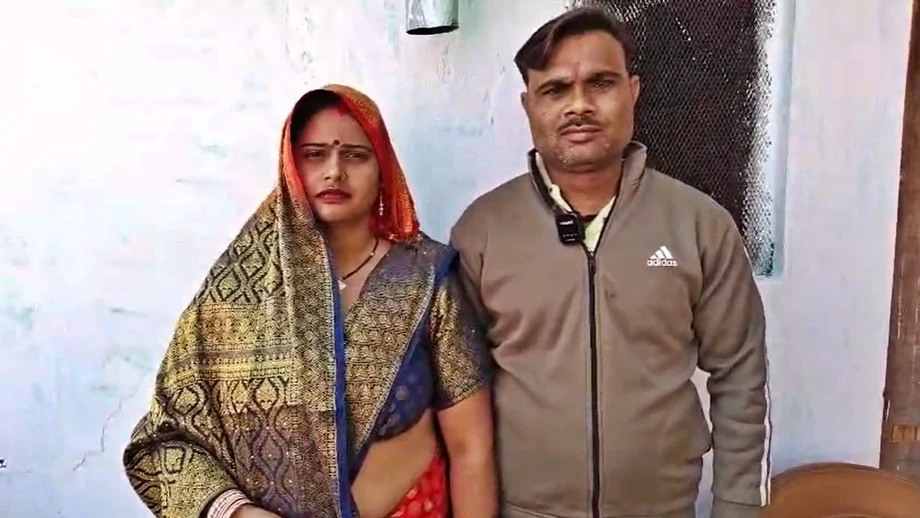
In Moradabad, a 23 year old woman from Amroha and her 37 year old partner have drawn attention after signing a notarised nine clause agreement before moving in together. Roshni Raghav, from Patei Khalsa village in the Didoli Kotwali area of Amroha district, is living with Amit Kumar, a resident of the Bhagatpur police station area of Moradabad. Amit is already married and has two children. Their agreement was notarised on September 15, 2026, on a Rs 100 stamp paper, and sets out duties about money, future children, property, care and what they expect from each other.
Contents
- A Relationship Put in Writing
- Who Is Caught Up in the Dispute
- A Short Timeline
- What the Nine Clause Agreement Says
- The First Wife and the Two Children
- What Indian Law Says About Such an Agreement
- Claims, Denials and the Question of Pressure
- Why the Agreement Became a Talking Point
- What Is Still Unclear
- Key Points
Roshni and Amit met on Instagram about a year before the agreement. Roshni has said her husband will not give her a divorce and that she left her marital home because of conflict and violence. Amit has said she is living with him by choice. The agreement also says Amit's first wife did not agree to Roshni living with them. Roshni has moved into Amit's house, but the two women are staying in separate spaces within it.
The document made the case unusual because it turns private promises into a formal paper. In a country where live in relationships can still stir family and police disputes, the agreement gives the couple a written record of consent. It also places Roshni, who is not legally divorced, and Amit, who is still married, in a complicated space between personal choice, family resistance and Indian law.
The agreement was notarised in September 2026, but it became a wider talking point in late November, when videos and detailed accounts spread online across Uttar Pradesh.
Who Is Caught Up in the Dispute
Roshni is also identified in video interviews as Sarojni Raj, daughter of Surendra Chauhan. Her village is written as Patei Khalsa and also as Fateh Khalsa, both pointing to Amroha district. She married a man from Amroha in 2018. Her former husband is identified as Rajiv Kumar or Rajiv Raghav, from Pachak (Amiyapur), Amroha.
Roshni has accused that husband of drinking, taking other women and beating her. She has said she was thrown out of the marital home after disputes. She has also said she chose to leave and knew Amit was married. Those statements matter because they address the question of pressure, a common issue when a married woman leaves one household for another man.
Amit Kumar is 37, about 14 years older than Roshni. He lives in the Bhagatpur police station area of Moradabad. His first wife and their two children live with him. The children are not named, and their ages were not given. That detail is central to the agreement, because Roshni has accepted responsibility for their care and education while also promising to treat them like her own children.
A Short Timeline
A few dates explain how the relationship moved from social media to a written arrangement.
- 2018: Roshni married a man from Amroha, later identified as Rajiv Kumar or Rajiv Raghav.
- About one year before the agreement: Roshni and Amit began talking on Instagram.
- September 15, 2026: Their nine clause agreement was notarised on a Rs 100 stamp paper.
- November 25, 2026: Detailed descriptions of the agreement and the separate living arrangement appeared.
- November 27, 2026: Video interviews and wider local coverage brought the case into broader discussion.
The order matters because the agreement came after months of contact, not before. It records an existing decision to live together and tries to set rules for the household that followed.
What the Nine Clause Agreement Says
The agreement is described as bearing signatures and a notary stamp. A notary public is a licensed official who checks that people sign a document and records the date. The stamp does not make the document a court judgment. The full word for word text has not been made public, so the nine points are best understood from the summaries that have been shared.
- Both agreed to live together voluntarily, without force or financial pressure.
- Any future child from their relationship would be described as the legitimate child of Amit, called the second party in the document.
- Amit would give that child rights over his moveable and immovable property and pay for maintenance, education, medicine and marriage expenses.
- Amit would have his name entered as father in documents such as the child's Aadhaar card and PAN card.
- Roshni promised to remain in the relationship properly, perform her duties and avoid giving cause for complaint.
- Amit promised to meet Roshni's reasonable expenses, avoid mental or physical harm and look after her comfort.
- Roshni promised to care for the two children from Amit's first marriage like her own children, without discrimination.
- Both promised to follow the agreement and not give the other cause for complaint.
- Neither partner gave any other person the right to object to the agreement.
Clauses 2 to 4 focus on a child who may be born later. Clauses 5 to 9 focus on daily behaviour, money, existing children and outside interference. The paper reads less like a love letter and more like a household rulebook.
The First Wife and the Two Children
Amit's first wife is the fact that most complicates the new arrangement. His first wife has not agreed to Roshni being kept with them. Roshni has moved into Amit's house, but she is expected to live separately from the first wife inside that house. This is not a full separation of households. It is a separation within one home, with all adults sharing the same address.
The agreement asks Roshni to care for the children of the first marriage as if they were her own. That promise covers upbringing and education. It does not name the children or say how old they are. It also does not explain how the two women will divide space, meals, expenses or decision making. Those practical details will shape whether the arrangement works day to day.
For the first wife, the change is immediate. Her husband has brought another woman into the house against her stated wish. For Roshni, the move gives her distance from the husband she says she wants to leave, but it places her in a household where another woman holds a longstanding family role. For Amit, the agreement tries to promise stability to both sides at once.
What Indian Law Says About Such an Agreement
Consenting adults in India can live together without being married. That basic freedom has been recognised by courts, including in cases where police were asked to separate couples. The protection is strongest when both adults are clearly consenting and can speak for themselves.
A named ruling on the limits of that protection came on November 20, 2026, when a Rajasthan High Court division bench of Justice Munnuri Laxman and Justice Ashutosh Kumar held that a man claiming to be in a live-in relationship with a married woman cannot seek her production through a habeas corpus petition solely on the basis of an agreement to live together, when her earlier marriage continues to subsist. The court said an agreement opposed to public policy is void ab initio and could not confer locus standi. It distinguished live-in relationships where neither party was in a subsisting valid marriage and chose to live together without solemnizing their marriage, which might be regarded as being in the nature of marriage and attract legal rights, from relationships where either or both parties were in valid subsisting marriages with different people.
The court said: "Where a valid marriage continues to subsist, the rights of the existing spouse cannot be disregarded merely because one of the parties has entered into a live-in relationship with another person…The mere fact that two adults have voluntarily entered into an agreement to live together does not, by itself, establish that every such relationship is entitled to recognition as a relationship in the nature of marriage." On the evidence needed for the writ, it said: "The nature of the evidence required must be sufficient to justify the issuance of the writ, particularly where the relief sought would entail the removal of the corpus from the custody or control of the person with whom he or she is residing. The nature of such relief may be compared, to some extent, with a suit seeking mandatory injunction, as distinguished from one seeking a mere prohibitory injunction." It also said: "Where the corpus is residing under the care and protection of her parents or husband, cogent and compelling evidence is required to establish that she is being illegally detained." It dismissed the petition and imposed costs of Rs 25,000 on the petitioner, payable to Child Secretariat within 4 weeks.
The document in Moradabad is not a marriage certificate. It does not dissolve Roshni's marriage or Amit's marriage. Notarisation means a notary recorded signatures and date. It gives the paper a clean formal appearance, but it cannot change personal law on marriage or divorce by itself.
Under Section 82 of the Bharatiya Nyaya Sanhita, India's criminal code, marrying again while a legally wedded spouse is alive can lead to a bigamy charge. The agreement says the couple will live together, not that they will marry each other. That difference matters. A written promise about living together may still help if someone later alleges abduction or forcible detention, because it shows both people signed the same understanding. The clauses are not automatically enforceable like a commercial contract.
Claims, Denials and the Question of Pressure
Roshni has said she left her first husband voluntarily. In on camera remarks, she denied that Amit or his family forced her and said she knew Amit was married before moving in. This directly answers the concern that a married woman may have been taken away by another family.
Amit has said Roshni is living with him happily by choice. He alleged that her first husband is refusing divorce and that her in-laws have been visiting and harassing the in-laws of Amit's younger brother, who live near Roshni's marital village. He asked them to stop searching for her or troubling them.
CO City Dr Pradeep Kumar denied having information about the case. No legal action has been taken so far. No court has been asked in the described events to decide who may live where, and no divorce date has been announced.
Why the Agreement Became a Talking Point
The document turns a private decision into a public argument. In Amroha and Moradabad, attention has focused on the image of a couple writing rules for love on cheap stamp paper, with a notary stamp and nine numbered promises. The fact that both adults were already married made the discussion sharper.
The agreement uses the language of duty. Roshni promises behaviour and care. Amit promises expenses, safety and support for both a possible future child and his existing children. The clause saying no outsider may object is the most confrontational line, because it tries to shut the door on relatives and former partners who may claim a say.
Money, children, a difficult marriage and a shared house make the case easy for ordinary readers to follow. The stamp paper gives those pressures a visible shape. The document may not settle them, but it shows what the couple says they want settled.
What Is Still Unclear
The full, word for word text of all nine clauses has not been released. The published clauses are summaries, so small differences in wording could matter if a court or police officer ever had to read the document.
The house, household money and arrangements for the children from Amit's first marriage remain unclear. The ages and names of those children were not given. No date has been given for any divorce, family meeting, court hearing or police step.
Name differences also remain. Roshni is called Sarojni Raj in some on camera remarks, and her village appears as Patei Khalsa and Fateh Khalsa. Her former husband is called Rajiv Kumar or Rajiv Raghav. These differences matter for records, and official documents would settle the spellings. No official record has been made public.
Key Points
- Roshni Raghav, 23, moved from Amroha to live with Amit Kumar, 37, in Moradabad.
- The pair met on Instagram about a year before signing their agreement.
- Their nine clause agreement was notarised on September 15, 2026, on a Rs 100 stamp paper.
- The clauses cover consent, future children, property, expenses, identity documents, behaviour, Amit's existing children and outside interference.
- Amit is already married and has two children, and his first wife did not agree to Roshni living with them.
- Roshni has moved into Amit's house but is expected to live separately from the first wife within it.
- Roshni alleges abuse and refusal of divorce; Amit says she chose to live with him.
- No legal action has been taken so far, and CO City Dr Pradeep Kumar denied having information about the case.
- The agreement is not a marriage certificate and does not end either existing marriage.
- A Rajasthan High Court division bench held on November 20, 2026, that an agreement to live with a woman whose earlier marriage subsists cannot by itself support a habeas corpus petition.