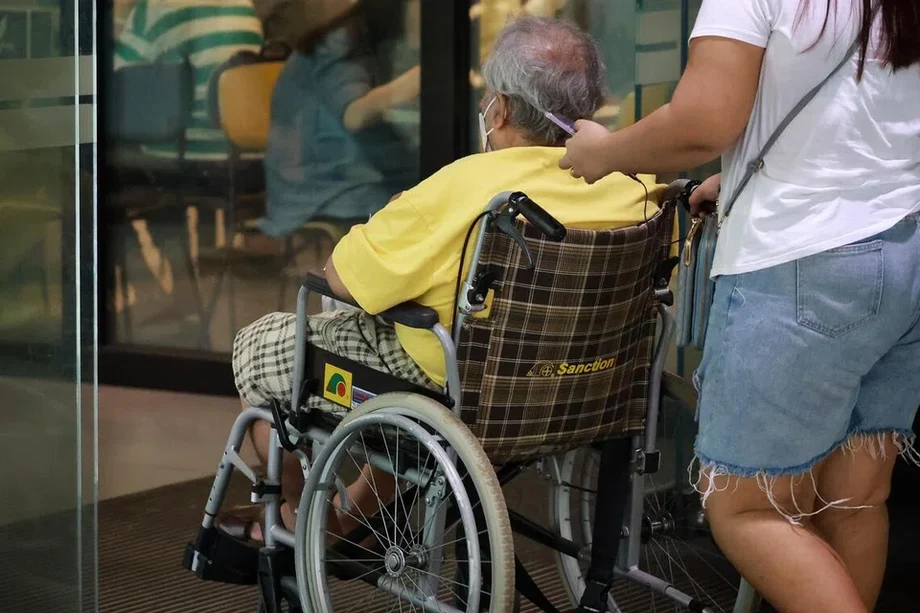
A record year for medical help
The Ministry of Health gave out $175.1 million in Singapore dollars from the Medical Endowment Fund, known as MediFund, in the financial year ending March 31, 2026. It was the highest annual amount since the scheme began, $10 million more than the year before and 6.1 percent higher. More than 1.14 million applications were approved, up 3.8 percent. The combined rise matters because it shows more approvals and more money paid out in the same year.
Contents
- A record year for medical help
- What MediFund pays for and who can get it
- Hospitals received the largest share
- Long term care grew at a faster pace
- What the application figure shows
- A short timeline of the fund
- MediFund Silver will be counted differently
- Who guides the fund now
- What changes in practical terms
- Key Points
A financial year is a budget period lasting 12 months. The latest one closed on March 31, 2026. The Ministry of Health (MOH) announced the figures on Nov 27, 2026, together with a change in how one part of the fund will be counted in future annual reports.
What MediFund pays for and who can get it
MediFund began on April 1, 1993 as a safety net for needy Singaporean patients. An endowment fund is money set aside for a continuing purpose. In this case, the purpose is to help patients who still cannot afford medical bills after other payment routes have been used.
A patient does not usually turn to MediFund at the start. Government subsidies first lower the bill. MediShield Life, the national health insurance scheme, can then help with large medical costs. MediSave, the personal medical savings scheme, can also be used. MediFund steps in after those routes are exhausted. A means test, a check of a patient's finances, helps decide who qualifies and keeps the help focused on genuine financial hardship.
The Ministry of Health, the government department responsible for the scheme, said in its Nov 27 announcement that the fund protects access to care for people who cannot pay:
With MediFund, no Singaporean would be denied access to appropriate, subsidised care due to an inability to pay,
For families, this means MediFund can cover the remaining gap on a subsidised medical bill. The scheme does not replace insurance or savings. It works after them, so the patient does not face an unaffordable bill alone.
Hospitals received the largest share
Public healthcare institutions (PHIs), such as public hospitals and polyclinics, received $125.6 million in MediFund help in the financial year ending March 31, 2026. That was $6.6 million more than the previous year, a rise of 5.5 percent. Polyclinics provide outpatient care, while public hospitals handle more complex treatment and specialist services.
Intermediate and long term care (ILTC) facilities received $49.5 million. That was 7.5 percent more than the year before. These facilities include community hospitals and nursing homes, which support patients who need care beyond a short hospital visit. By calculation from the published figures, PHIs received 71.7 percent of the total aid, while ILTC facilities received 28.3 percent.
Long term care grew at a faster pace
The 7.5 percent rise for ILTC facilities was faster than the 5.5 percent rise for PHIs. Of the $10 million increase in total aid, $6.6 million went to PHIs and about $3.4 million went to ILTC facilities. In other words, ILTC facilities received 28.3 percent of all MediFund aid but about 34 percent of the extra money added during the year.
That detail helps explain where pressure is growing. Community hospitals and nursing homes care for people who may need rehabilitation, continuing nursing support or help with long lasting conditions. When support in this part of the system rises faster, more MediFund money is following patients into care that can last for months or years.
What the application figure shows
Approved applications grew by 3.8 percent and passed more than 1.14 million in the last financial year. The word application matters here. The ministry gave approved applications rather than a count of different people, and it gave the next financial year rather than an exact report date for the new format.
A higher approval count can mean more requests passed the means test, more care episodes were billed, or both. A care episode means one period of treatment or support. The figures combine those cases in one approval count, so the reader can see overall demand on the fund but cannot separate each reason from the number alone.
A short timeline of the fund
The record payout is the latest point in a timeline shaped by three decades of healthcare support and a recent reporting change.
- April 1, 1993: MediFund started.
- November 2007: MediFund Silver was set up for needy Singaporean patients aged 65 and above.
- March 31, 2026: The financial year covered by the record figures ended.
- April 1, 2026: The 12th MediFund advisory council began a term of three years.
- Nov 27, 2026: MOH announced the yearly figures and the reporting change.
- Next financial year: MediFund Silver statistics will no longer appear separately in the annual report.
Placed in order, the dates show that the new reporting rule comes after a year in which both total aid and approved applications rose. The fund itself remains much older than the reporting change.
MediFund Silver will be counted differently
MediFund Silver was created in November 2007 as a specific part of the MediFund scheme for needy Singaporean patients aged 65 and above. From the next financial year, statistics for this group will no longer be shown separately. They will be included in the general MediFund figures in the annual report.
Ringfencing means setting money aside for a specific group or purpose. MOH has lifted the ringfencing requirement for MediFund Silver. The ministry said this makes reporting simpler because the separate reporting rule is no longer needed.
The Ministry of Health added that the change was purely administrative and would leave help unchanged:
will not affect the assistance available to eligible patients, regardless of age
The practical point is that the annual table will look different, while eligibility rules and the help available to patients remain as before. Older patients do not lose a separate category of assistance because of the reporting change.
Who guides the fund now
The Ministry of Health annual MediFund report lists the members of the 12th MediFund advisory council. The council was appointed on April 1 for a term of three years. Its chair remains Thali Koattiath Udairam, former chief executive of Sheares Healthcare Group.
The full list is:
- Mr Benedict Cheong (Chairman), Director and CEO, Temasek Foundation International CLG Limited
- Mr T K Udairam, Group Chief Operating Officer, Sheares Healthcare Group Pte Ltd
- Ms Wee Wan Joo, Retired, (Former GM of St Luke's Eldercare and Director of Corporate Development of St Luke's Hospital)
- Mr Louis Lim Hee Thuang, Advocate & Solicitor, Supreme Court of the Republic of Singapore, WILLIAM POH & LOUIS LIM
- Mr Mohd Ismail Bin Hussein, Consultant, Encompass Corporation (UK Ltd)
- Ms Khoo Kim Geok Jacqueline, Director, JC Trust Ltd
- Mr Kenneth Au-Yong Kok Keong, Advocate & Solicitor, M/s Ramdas & Wong
- Mr Abhimanyau Pal, CEO, SPD
- Mdm Azita Abdul Aziz, Senior Director, Family Services, Singapore Muslim Women Association (PPIS)
- Mr Francis Ngui Tet Shin, Psychiatrist, Ngui Psychiatry Associates
- Ms Kuah Boon Theng, Lawyer, Legal Clinic LLC
- Ms Tan Li San, CEO, National Council of Social Services
An advisory council gives guidance to the scheme it oversees. Keeping the same chair provides continuity as the ministry changes the way MediFund Silver is reported. The council listing and the new figures were both part of the same annual record.
What changes in practical terms
For patients and families, the record figure means more money was available to cover bills that remained after subsidies, insurance and savings. A household facing a medical bill can use MediFund as the final layer of support when the amount left is beyond its means.
The faster rise in ILTC support means more of that help went into community hospitals and nursing homes, where patients may stay longer. Care in these settings can be harder for families to plan for because it may continue after the immediate medical problem is treated.
The reporting change affects the annual statistics rather than the patient journey. A smaller set of reported categories can make the annual figures easier to follow, while the same groups of eligible patients continue to receive help based on need and age rules that remain in place.
Key Points
- MediFund gave out a record $175.1 million in the financial year ending March 31, 2026.
- The amount rose by $10 million, or 6.1 percent, from the previous year.
- More than 1.14 million applications were approved, an increase of 3.8 percent.
- Public healthcare institutions received $125.6 million, while intermediate and long term care facilities received $49.5 million.
- MediFund Silver statistics will be merged into general MediFund reporting from the next financial year.
- MOH said the reporting change will not reduce assistance for eligible patients, regardless of age.
- The 12th MediFund advisory council began a term of three years on April 1 and is still chaired by Thali Koattiath Udairam.